
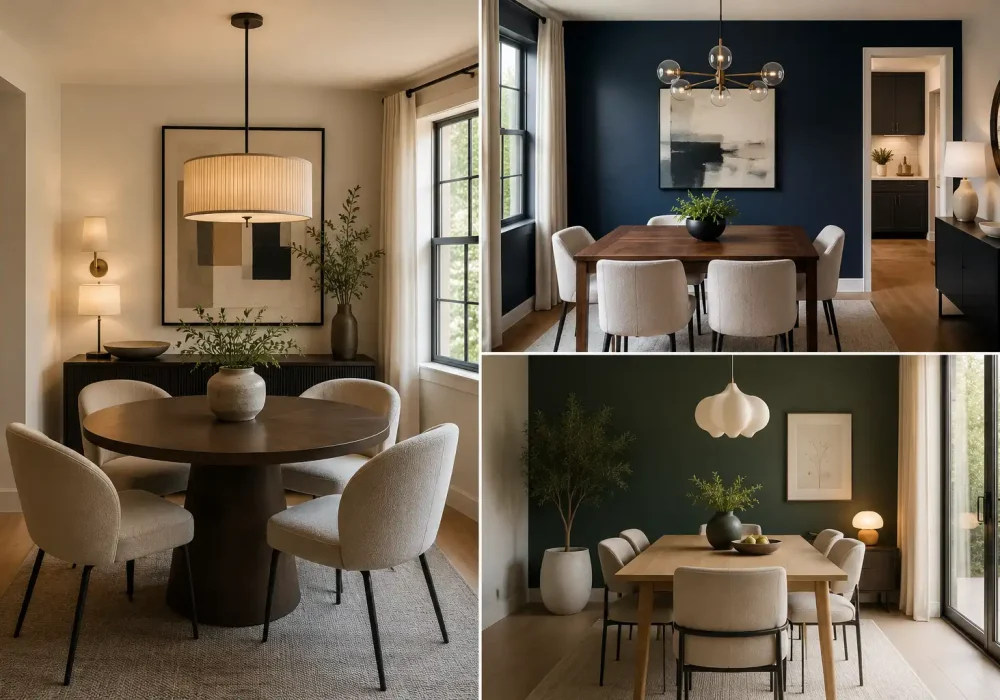
A small dining room doesn’t have to feel like an afterthought. With the right proportions, finishes, and layout, even a compact space can feel polished, comfortable, and intentionally designed.
Modern interiors are moving toward dining spaces that balance everyday practicality with strong visual character. Instead of filling the room with furniture, thoughtful seating, lighting, color, and placement can make a much bigger impact.
From compact round tables to statement walls and built-in seating, these dining room inspirations show how smaller dining areas can feel both functional and sophisticated without sacrificing personality.
Design Directions That Make Small Dining Spaces Stand Out
These dining room ideas focus on smart layouts, contemporary furniture, layered lighting, refined color combinations, and practical details that suit smaller homes. Each approach offers a different way to create a dining area that feels comfortable, stylish, and connected to the rest of the home.
Also Read: 11 Brilliant Dining Room Makeover Ideas for a Stylish Space
Also Read: 11 Modern Dining Room Ideas with Sophisticated Style
1. Bring Personality to a Compact Dining Room With Colorful Chairs
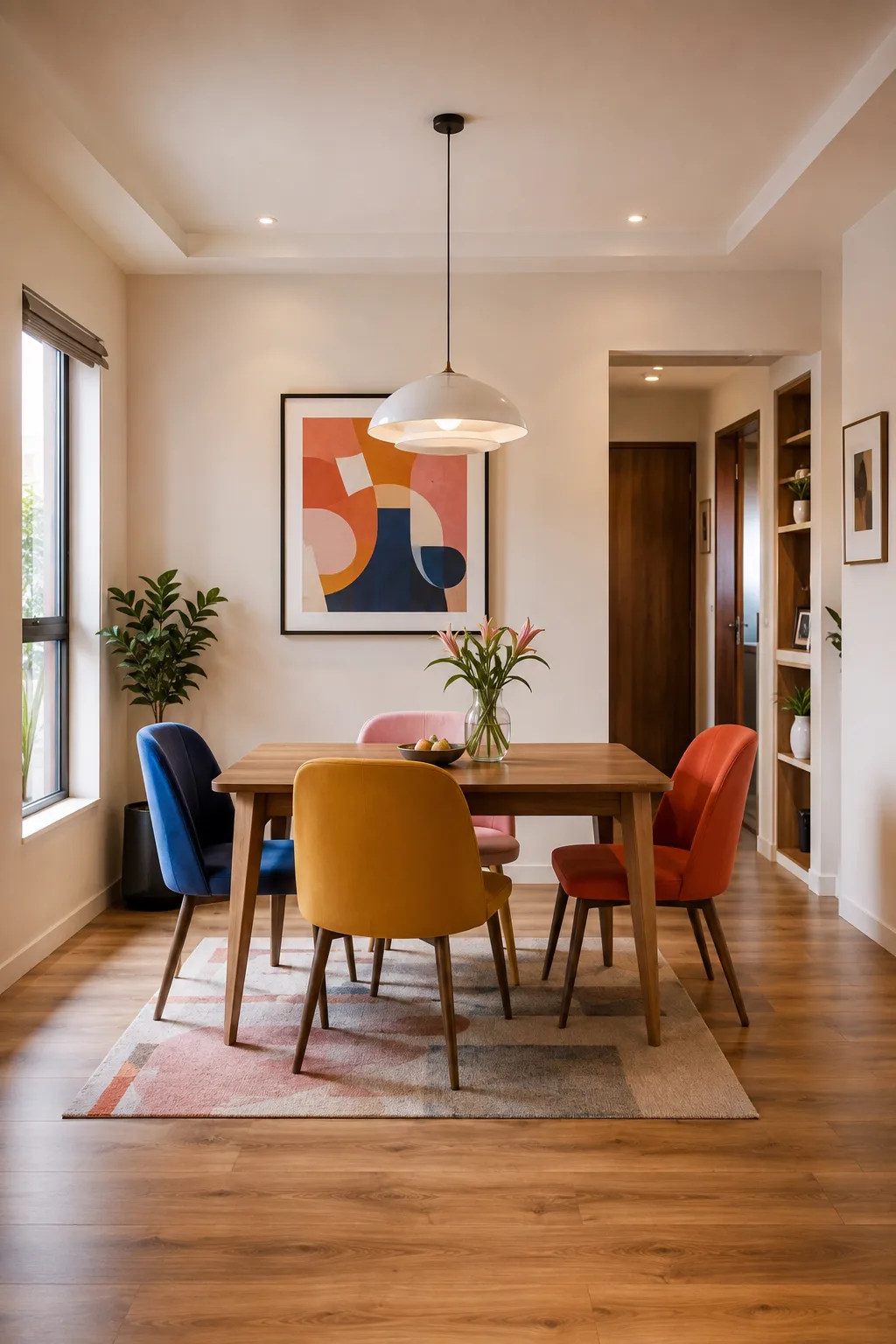
A small dining room can handle plenty of personality when the furniture is kept simple and the color comes through in carefully chosen places. This space uses a warm wood dining table as a neutral foundation, allowing the blue, mustard, pink, and terracotta chairs to become the main visual feature.
The different chair colors create a playful layered look without making the room feel chaotic. A soft patterned rug underneath the table helps tie those shades together, while the warm wood flooring keeps the overall palette grounded. The large abstract artwork also echoes the colors used around the dining set, giving the room a more considered designer feel.
Lighting plays an important role here, too. The simple white pendant keeps the ceiling area clean while adding a strong focal point above the table. With natural light coming through the tall window and a few restrained accessories around the room, the dining area feels bright, comfortable, and genuinely lived in.
Pro Tip: When mixing colorful dining chairs, repeat at least two of the chair colors somewhere else in the room through artwork, a rug, or small accessories. This makes the combination feel intentional rather than mismatched.
2. Turn a Bright Window Corner Into an Inviting Dining Nook
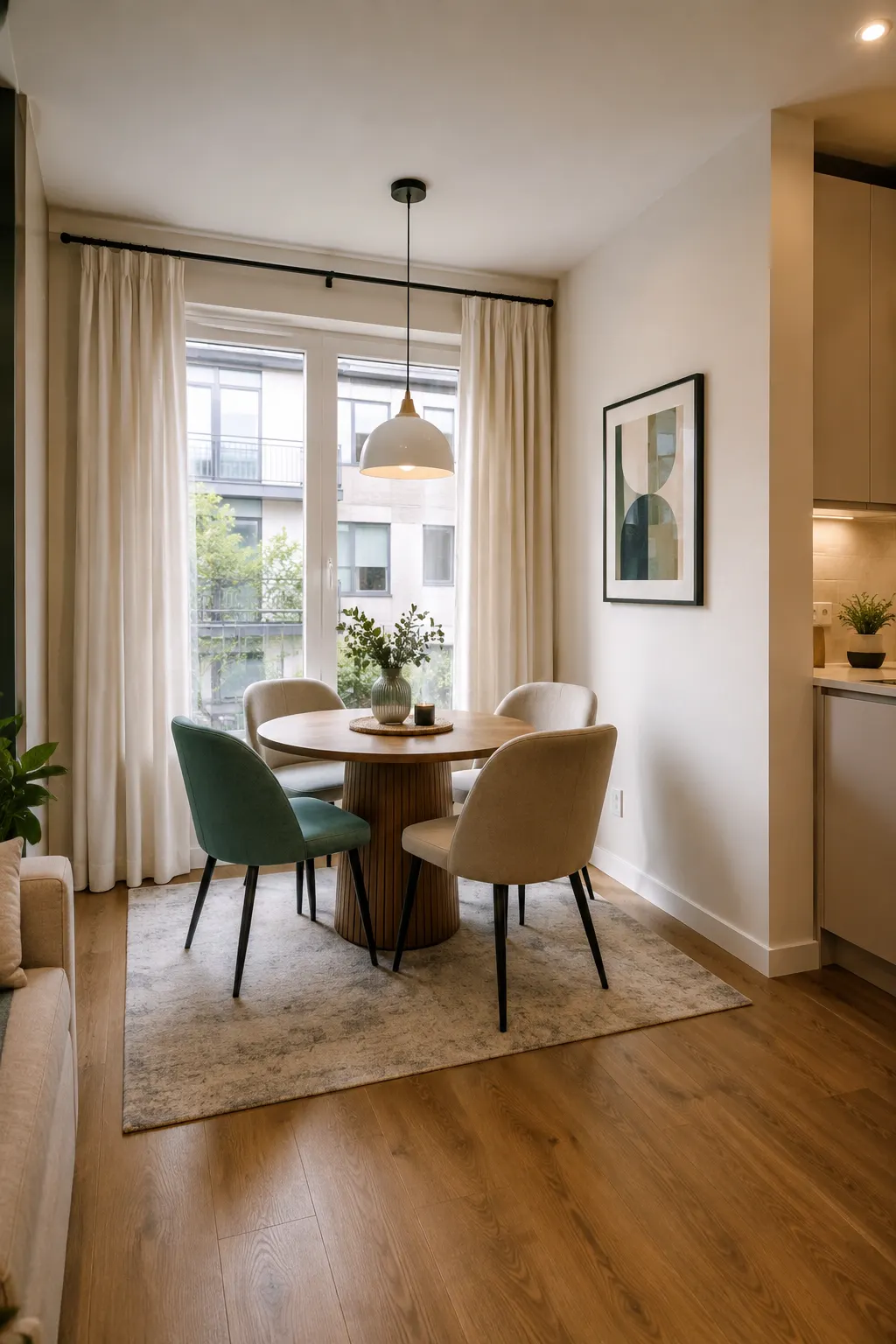
A window-side dining nook is a smart way to make a compact dining area feel brighter and more open. This setup places a round pedestal table directly in front of the window, allowing natural light to become part of the design. The rounded shape also makes it easier to move around the table without awkward corners getting in the way.
The upholstered chairs add a comfortable, refined touch while keeping the overall palette soft and balanced. One deep green chair introduces just enough contrast against the cream seating, while the warm wood table and flooring bring depth to the neutral setting. Floor-length curtains frame the window and make the dining corner feel more finished.
A simple pendant light centered above the table adds another layer of visual interest without overwhelming the space. The nearby artwork, soft rug, and small centerpiece keep the area polished but relaxed. Since the dining nook sits close to the kitchen, the layout also works well for homes where the dining area needs to share space with another room.
Pro Tip: Place a round table near a window whenever possible, and choose curtains that extend close to the floor. The combination can make a compact dining corner feel taller, brighter, and more spacious.
3. Add Warm Walnut Tones for a Refined Dining Room
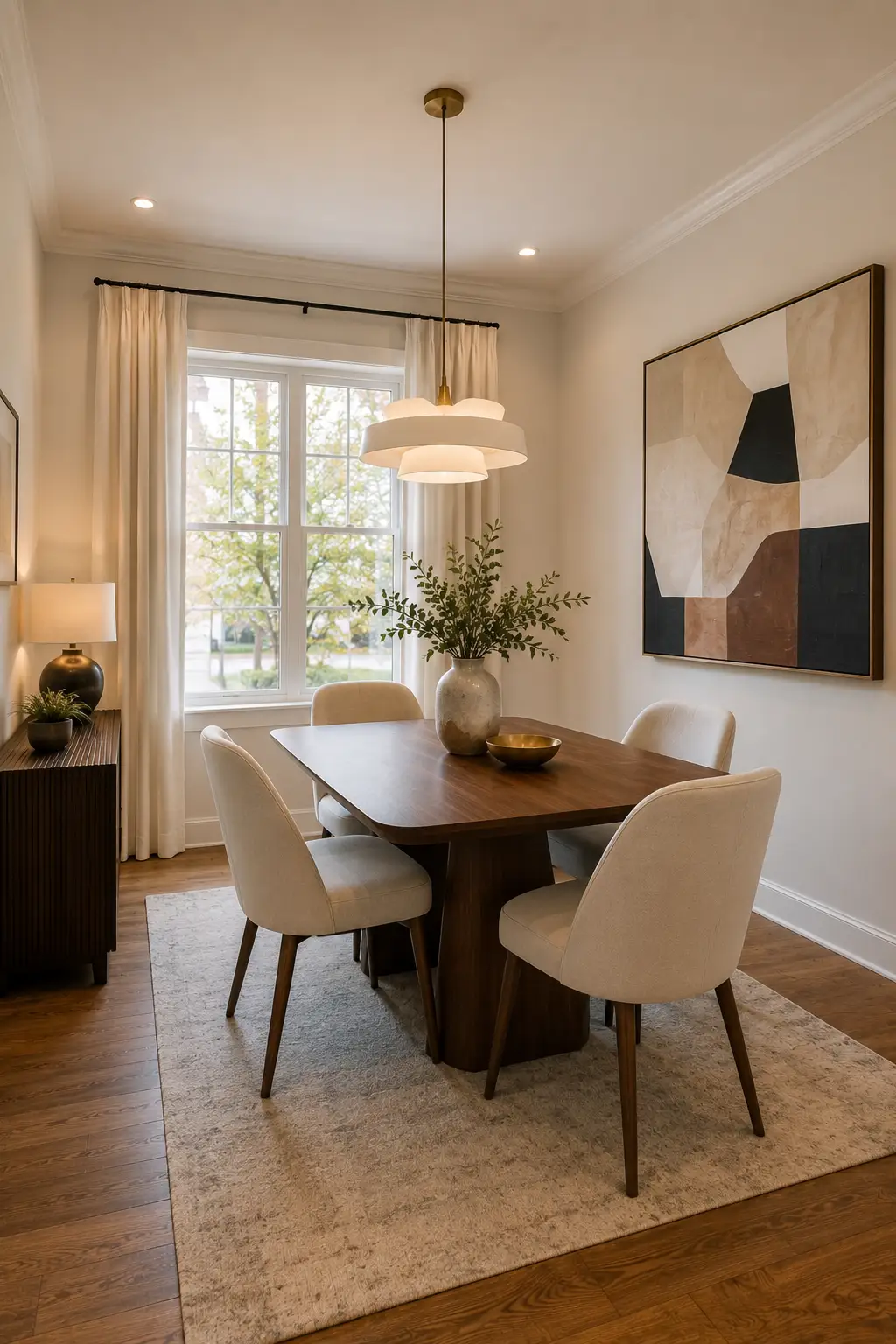
A warm walnut dining table can instantly give a small dining room a more polished and substantial feel. Here, the rich wood finish becomes the foundation of the space, while the clean rectangular shape keeps the arrangement practical. Its rounded edges also soften the overall look without taking away from the table’s presence.
Cream upholstered chairs create a beautiful contrast against the darker wood and help keep the room feeling light. Their curved backs add comfort and a subtle softness, while the neutral fabric works naturally with the warm walls and flooring. A large abstract artwork brings another layer of visual interest without competing with the furniture.
The layered pendant above the table adds a sophisticated focal point and helps define the dining zone. Meanwhile, the large window brings in plenty of natural light, making the deeper wood tones feel warm rather than heavy. A textured neutral rug underneath the furniture pulls the entire arrangement together and gives the compact room a finished appearance.
Pro Tip: If you’re using dark walnut furniture in a smaller dining room, balance it with light upholstery, warm neutral walls, and plenty of natural light to keep the space feeling open.
4. Make a Small Dining Room Feel Larger With a Round Table
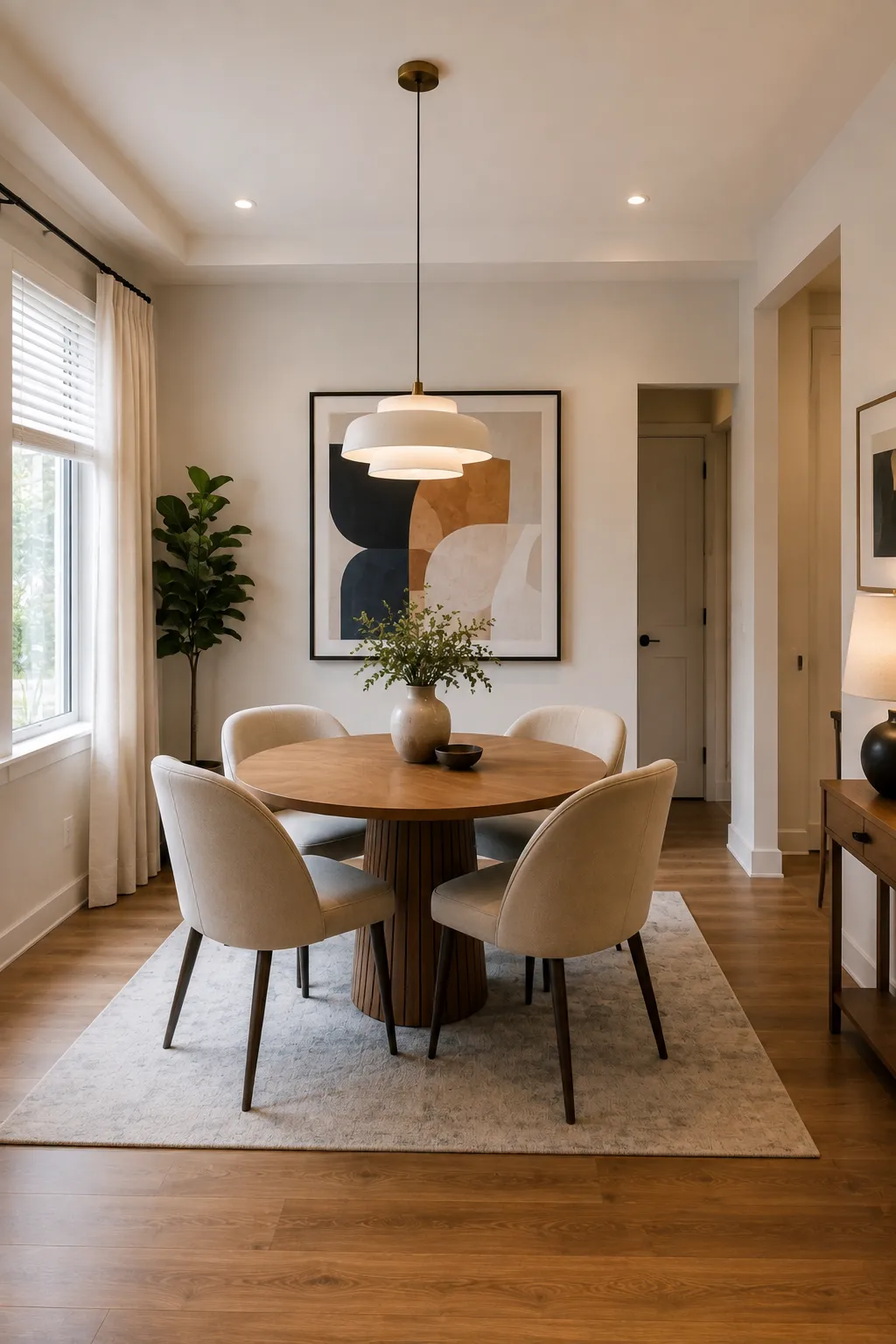
A round dining table is a particularly effective choice when you’re working with limited floor space. Its curved profile makes the room easier to navigate and removes the visual bulk that can come with a rectangular table. In this setting, the warm wood pedestal adds character while keeping the base relatively streamlined.
Four softly upholstered chairs surround the table without making the arrangement feel crowded. Their cream fabric keeps the furniture visually light, while the darker chair legs create a subtle connection with the black-framed artwork and other accents throughout the room. The neutral rug also helps define the dining zone without adding visual heaviness.
The layered pendant above the table gives the room a clear focal point and adds a designer touch to the otherwise calm palette. Natural light from the window keeps the warm wood and cream finishes looking fresh, while the artwork brings just enough contrast to prevent the room from feeling flat.
Pro Tip: For a narrow dining area, measure the clearance around the table before buying it. A round pedestal design can improve circulation, but you’ll still want enough room to comfortably pull each chair out.
5. Use Terracotta Accents to Warm Up a Modern Dining Space
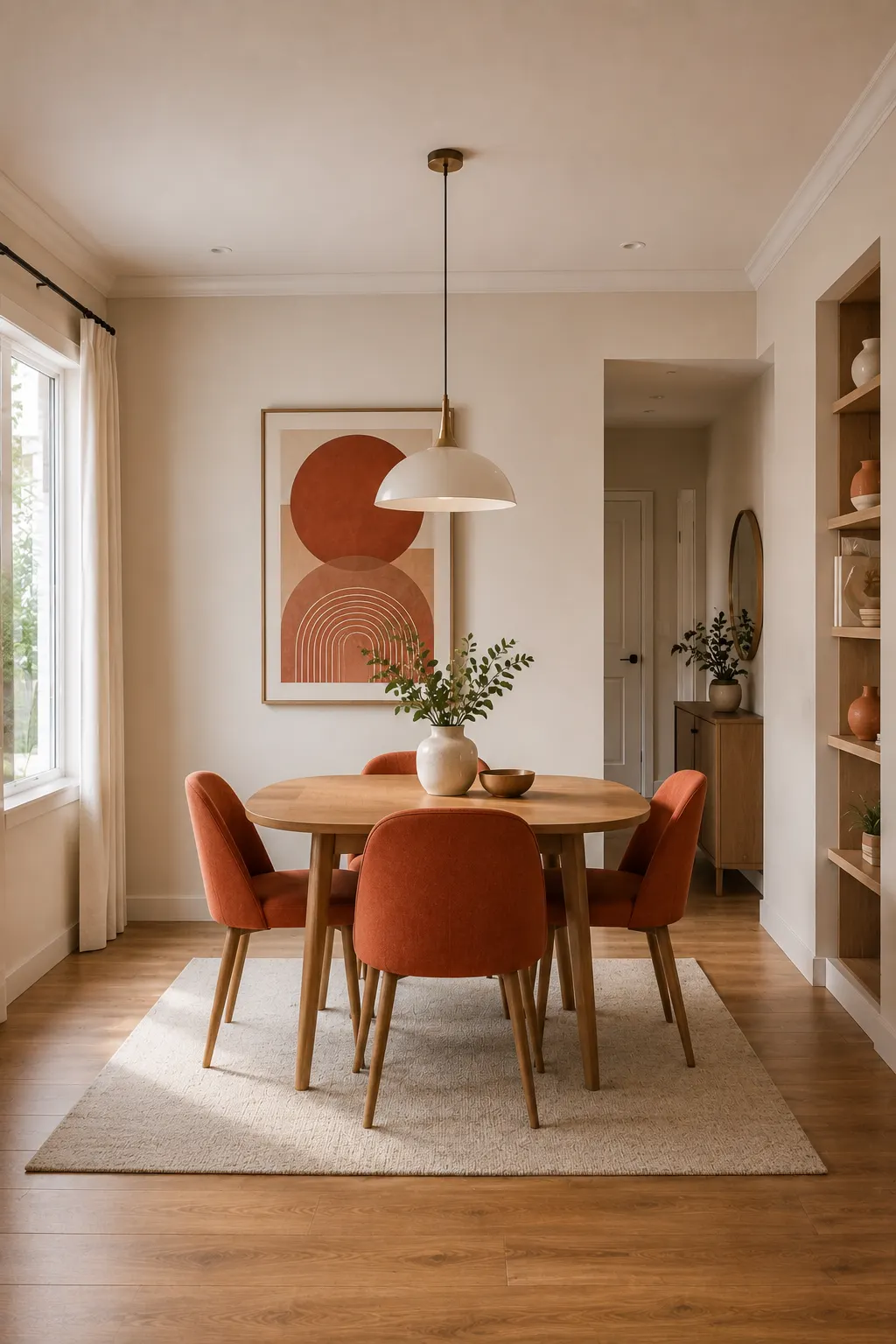
Terracotta can bring warmth and personality to a small dining room without making the space feel overly decorated. In this setting, the muted terracotta chairs create an inviting focal point while the light wood dining table keeps the overall look balanced. The warm tones also work beautifully with the soft neutral walls and flooring.
The upholstered chairs add comfort while their simple curved silhouettes keep the furniture feeling contemporary. A large abstract artwork repeats the terracotta shades behind the table, creating a visual connection between the seating and the wall. Open shelving on the side adds useful display space without taking up valuable floor area.
A simple dome pendant keeps attention centered on the dining table, while the large window brings in natural light from the side. The neutral rug creates a clear boundary for the dining zone and prevents the warm colors from becoming too dominant. Altogether, the combination feels relaxed, polished, and easy to live with.
Pro Tip: Use terracotta in two or three places rather than throughout the entire room. Repeating the shade in chairs, artwork, or accessories creates cohesion while keeping the color feeling fresh.
Also Read: 13 Dining Room Wall Decor Ideas for a Fresh Modern Makeover
Also Read: 15 Dining Room Ideas That Bring Modern Style Into Your Home
6. Define the Dining Area With a Sophisticated Color-Blocked Wall
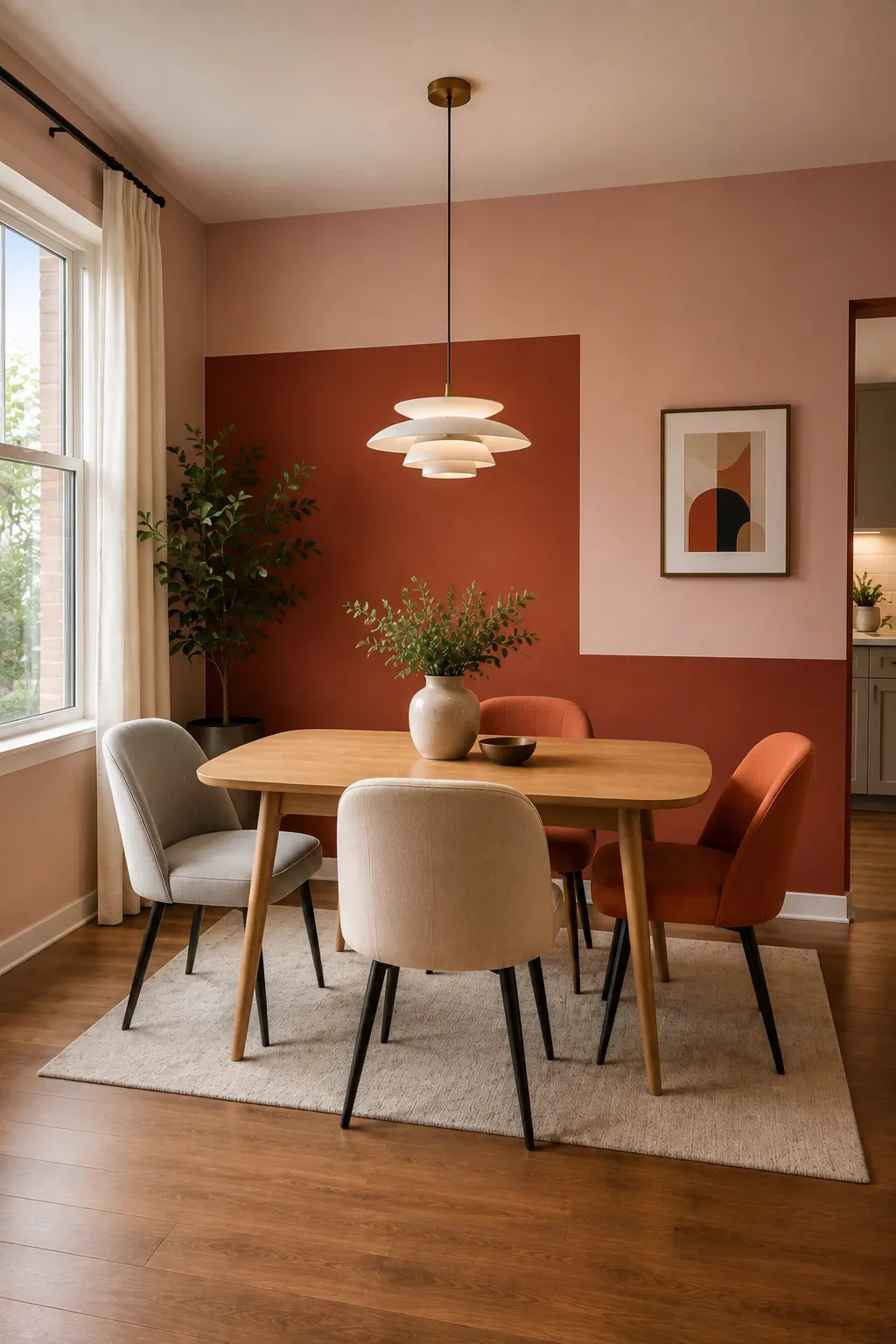
A color-blocked wall can give a small dining room a strong architectural presence without requiring bulky furniture or complicated décor. This room uses warm terracotta and soft blush tones in a clean geometric arrangement, creating a defined backdrop for the dining table while keeping the overall atmosphere inviting.
The light wood table provides a natural contrast against the richer wall colors, while the mix of cream and terracotta chairs adds another layer of visual interest. Because the furniture itself has simple contemporary shapes, the bold wall treatment feels intentional rather than overwhelming. A neutral rug underneath also helps soften the stronger colors.
The sculptural pendant becomes another focal point above the table, balancing the large painted wall behind it. Natural light from the window keeps the warm palette looking fresh throughout the day, while the framed artwork adds a smaller coordinated detail. Together, these elements create a dining area that feels distinctive without taking up additional floor space.
Pro Tip: Use one dominant color and one softer supporting shade when color-blocking a small dining room. Keeping the palette controlled will make the wall feel architectural rather than visually busy.
7. Create a Calm Designer Look With Soft Blue Upholstery
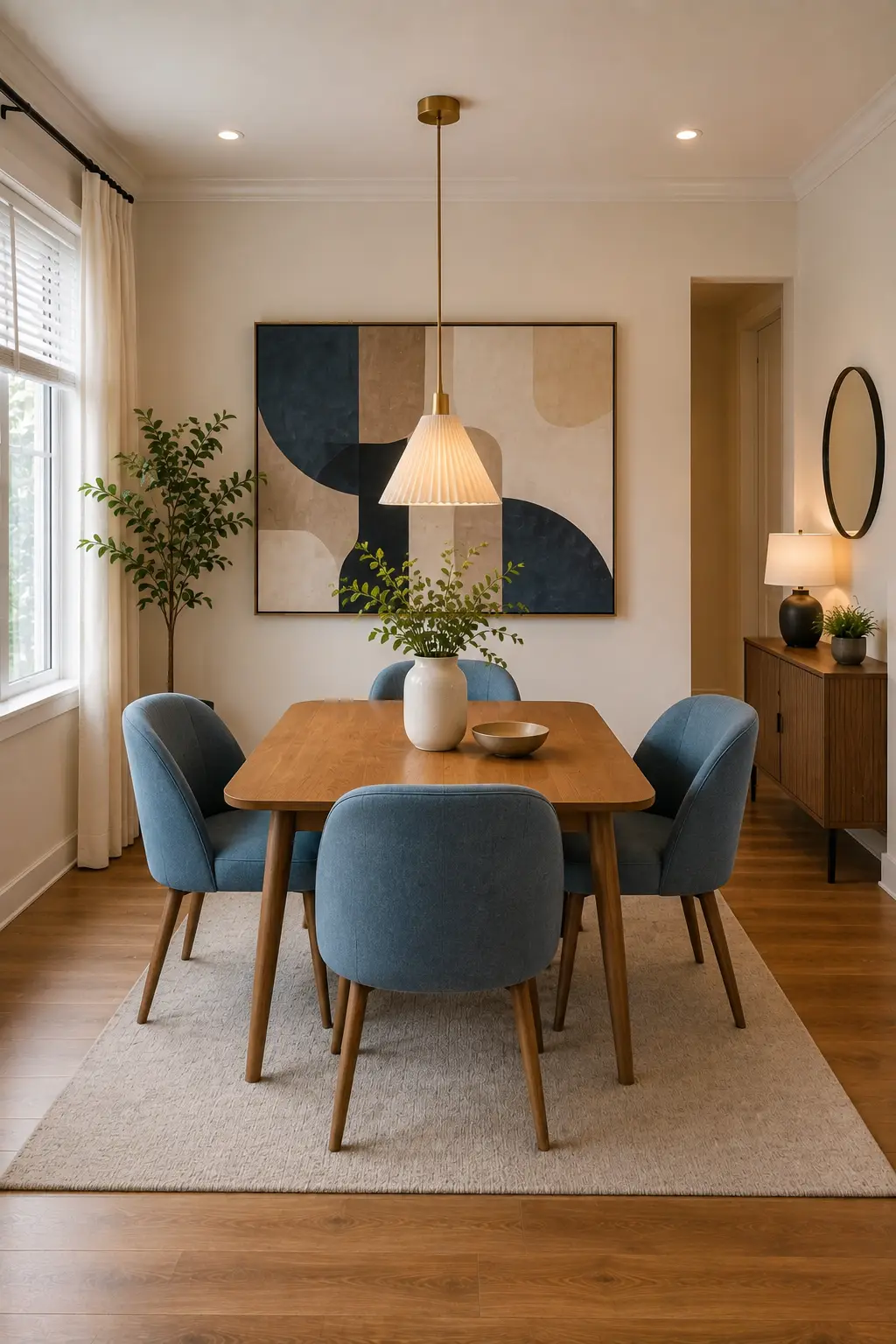
Soft blue upholstery can bring color into a small dining room while keeping the overall atmosphere calm and sophisticated. In this space, the muted blue chairs provide a gentle contrast against the warm wood table and neutral walls. Their rounded backs also soften the straight lines of the dining furniture.
The large abstract artwork reinforces the same blue tones while introducing cream, charcoal, and warm beige shades. This creates a visual connection between the furniture and the wall without making the room feel overly coordinated. The warm wood flooring and neutral rug add enough contrast to keep the palette balanced.
A pleated pendant light above the table adds texture and a subtle designer detail. Natural light from the nearby window keeps the blue upholstery looking fresh, while the simple console and round mirror add function and depth along the adjacent wall. The result is a dining area that feels composed without being overly formal.
Pro Tip: Choose a muted or dusty blue instead of a very bright shade for smaller dining rooms. It adds personality while keeping the space visually calm and easy to pair with warm wood and neutral finishes.
8. Give a Narrow Dining Room Impact With a Deep Accent Wall
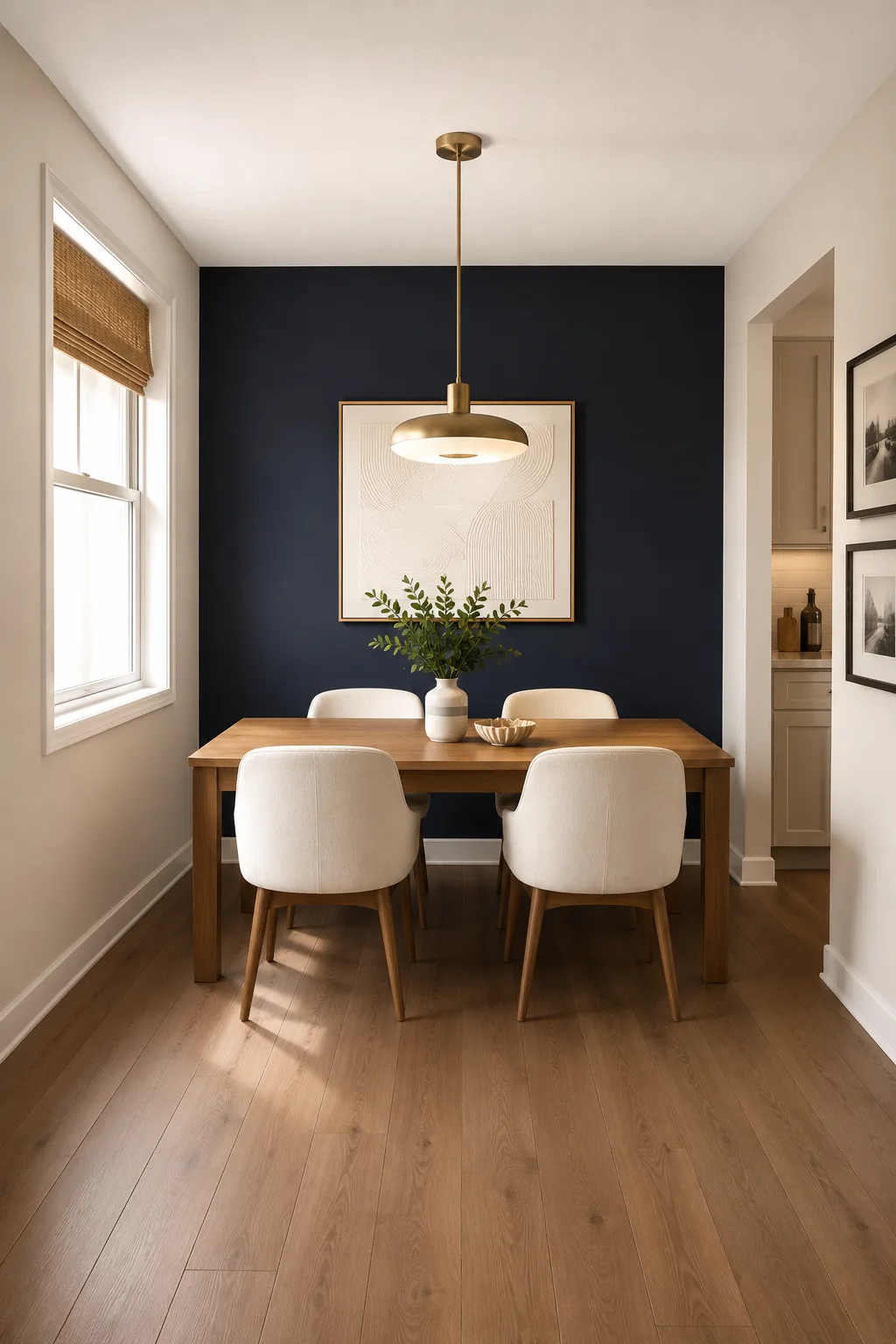
A deep navy accent wall can give a compact dining room a sophisticated focal point without requiring extra furniture or decoration. In this space, the dark wall clearly defines the dining zone and creates a dramatic backdrop for the warm wood table and light upholstered chairs.
The contrast between the navy wall and cream chairs keeps the room feeling balanced rather than heavy. The natural wood table and flooring introduce warmth, while the simple framed artwork adds texture without competing with the bold wall color. Keeping the rest of the walls light also helps preserve the room’s sense of openness.
A streamlined brass pendant brings a subtle touch of warmth and draws attention toward the center of the dining area. The nearby window provides natural light that softens the darker wall during the day, while the restrained décor keeps the narrow room from feeling cluttered.
Pro Tip: In a small dining room, use a deep color on the wall behind the table and keep the surrounding walls lighter. This creates a strong focal point while maintaining visual balance.
9. Maximize Seating With a Built-In Dining Bench
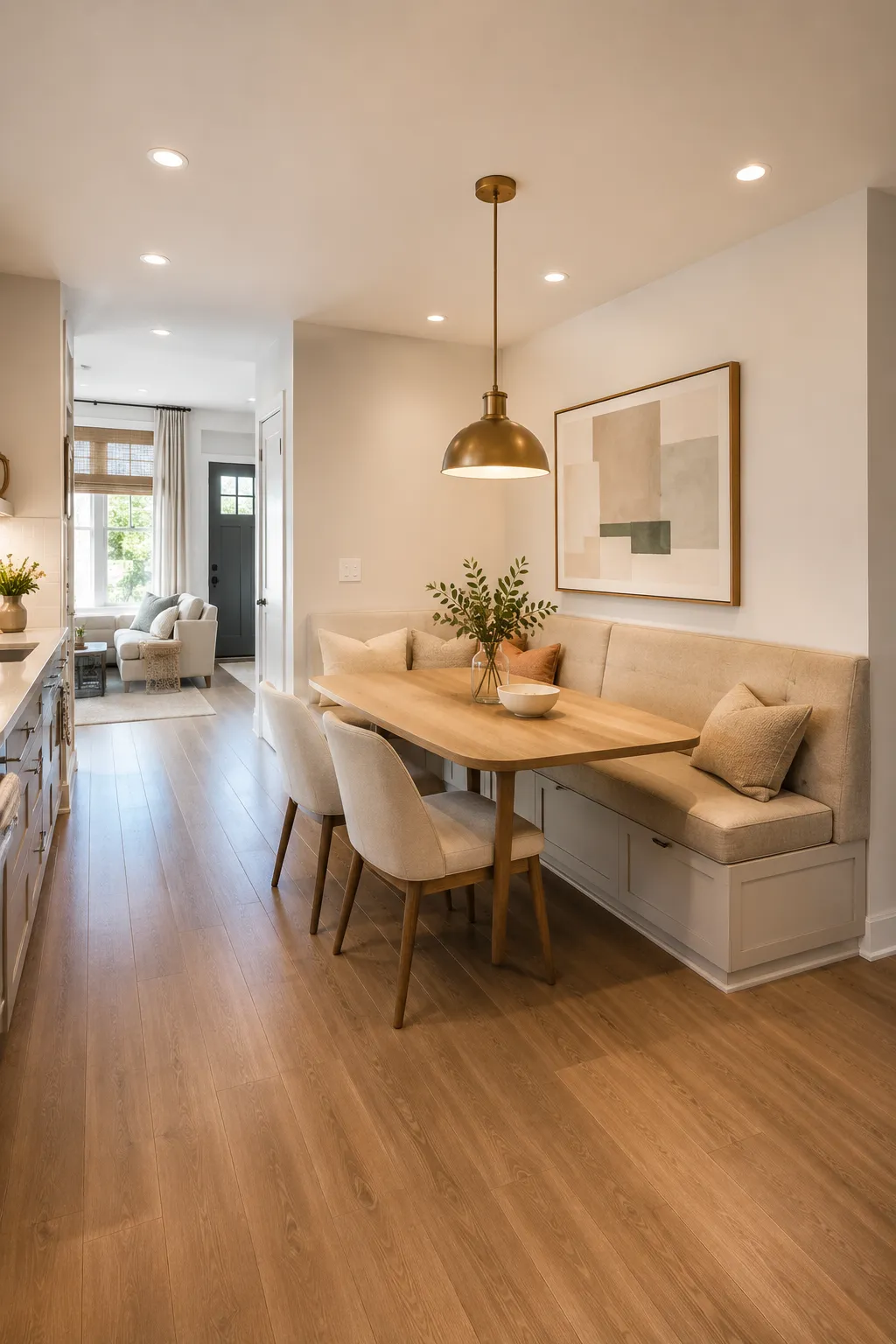
A built-in dining bench is one of the smartest ways to make a compact dining area work harder. This design uses an upholstered bench along the wall, creating comfortable seating without requiring extra floor space behind multiple chairs. The result feels generous without making the room physically larger.
The warm wood table sits neatly in front of the bench, while two upholstered chairs complete the opposite side. Rounded table edges soften the arrangement and make movement around the furniture easier. The built-in bench also includes storage underneath, adding practical value to an area that might otherwise go unused.
Keeping the palette light helps the dining area blend naturally with the adjoining kitchen and living space. A large abstract artwork adds personality above the bench, while the brass pendant creates a clear focal point over the table. Natural wood flooring then carries the same warmth through the open-plan layout.
Pro Tip: If you’re adding a dining bench to a narrow room, choose a table that can tuck close to the seating. This keeps the walkway open while making the most of every available inch.
Also Read: 12 Small Dining Room Ideas That Feel Open and Elegant
Also Read: 13 Maximalist Dining Room Ideas That Feel Rich and Bold
10. Create a Sophisticated Focal Point With an Emerald Accent Wall
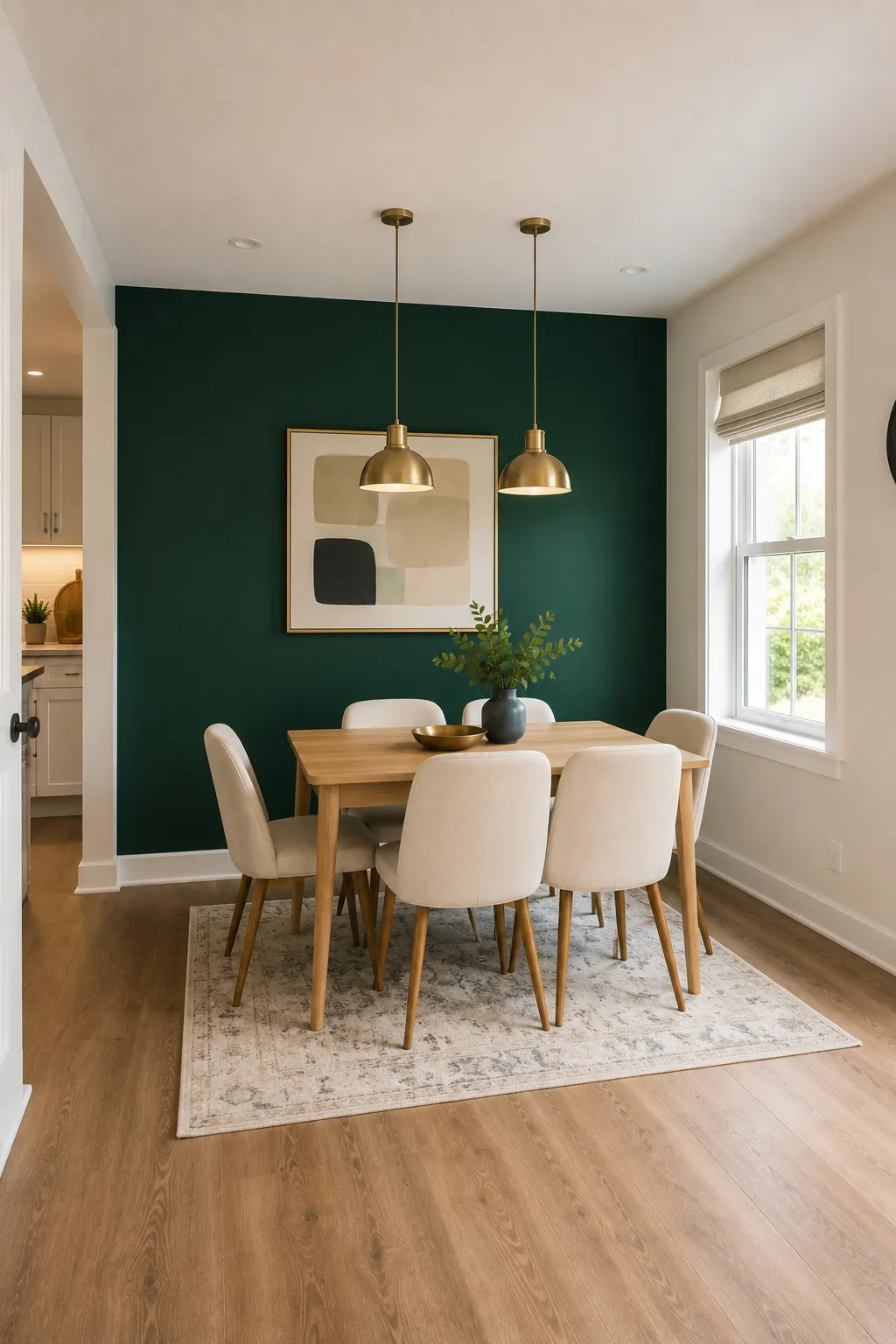
An emerald green accent wall can give a small dining room a confident, sophisticated identity without adding bulky decoration. Here, the deep green backdrop creates an immediate focal point behind the dining table, while the warm wood furniture keeps the room feeling approachable and inviting.
The cream upholstered chairs provide a crisp contrast against the darker wall and help prevent the color from making the space feel too heavy. Their simple silhouettes work well with the clean-lined table, while the neutral rug adds softness underneath. A single abstract artwork introduces another layer of detail without competing with the rich wall color.
Two matching brass pendant lights bring symmetry and a subtle touch of warmth above the table. The nearby window balances the darker accent wall with plenty of natural light, making the dining area feel brighter during the day. The restrained palette also allows the emerald backdrop to remain the star of the room.
Pro Tip: When using a deep green wall in a compact dining room, pair it with light upholstery and warm metallic accents. This keeps the color dramatic while maintaining a comfortable, balanced atmosphere.
11. Build a Personal Dining Focal Point With a Curated Gallery Wall
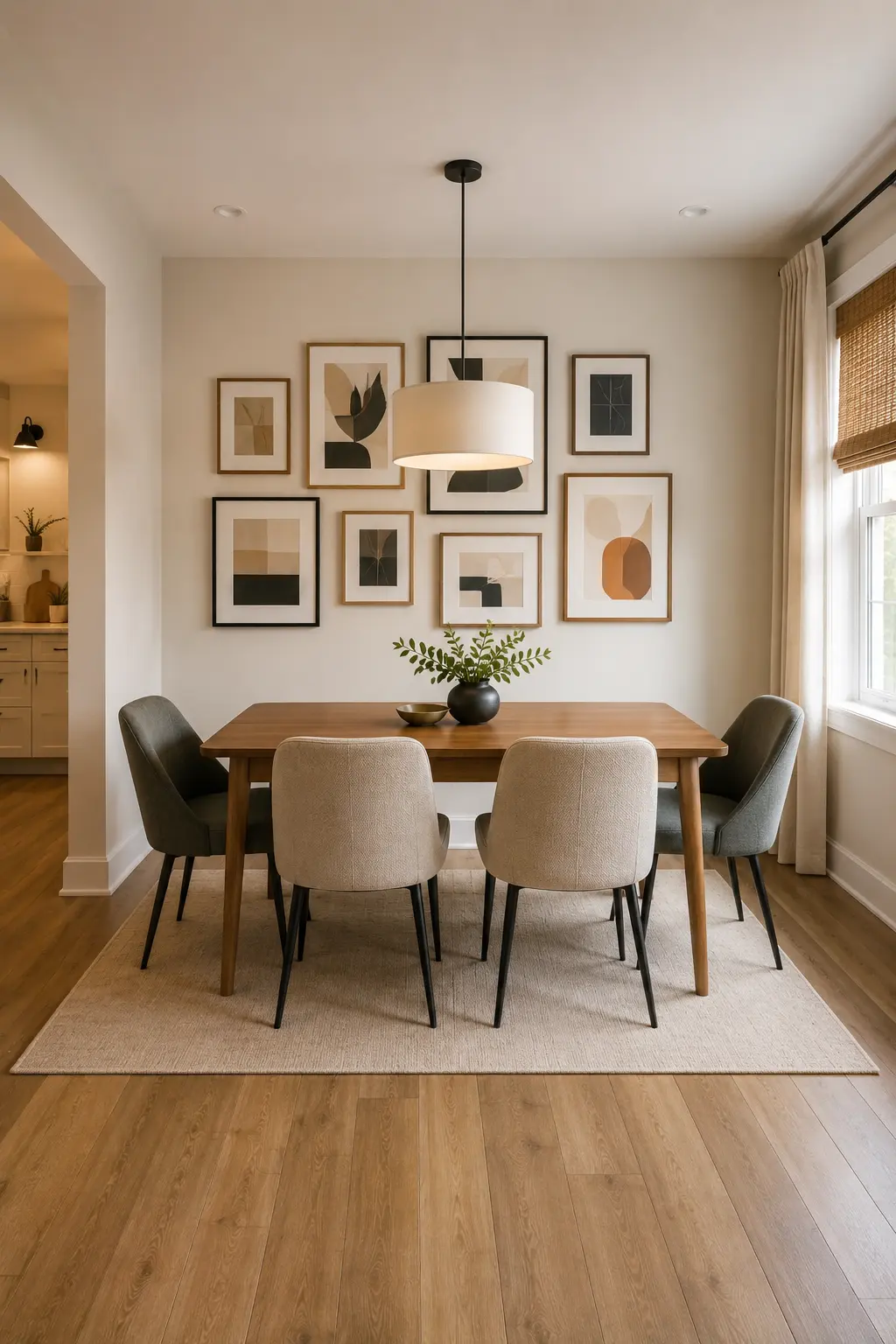
A gallery wall can turn the blank wall behind a small dining table into a strong design feature without taking up any floor space. This arrangement uses a mix of framed abstract prints in different sizes, creating an intentionally collected look while keeping the overall palette calm and sophisticated.
The warm wood dining table provides a simple foundation for the artwork, while the combination of cream and charcoal upholstered chairs adds subtle contrast. Because the frames vary in size and orientation, the wall feels more dynamic than a single large print would. At the same time, the neutral artwork keeps the dining area from becoming visually overwhelming.
A large fabric pendant hangs low enough to visually connect the artwork with the table, creating a cohesive composition from top to bottom. The window on the side brings in natural light, while the warm wood floor keeps the room inviting. It’s a great example of how wall décor can add character to a small dining area without making it feel crowded.
Pro Tip: Before hanging a gallery wall, arrange the frames on the floor first. Keep the gaps fairly consistent and make sure the overall arrangement is centered with the dining table rather than the entire wall.
12. Balance a Dark Dining Table With Soft Neutral Seating
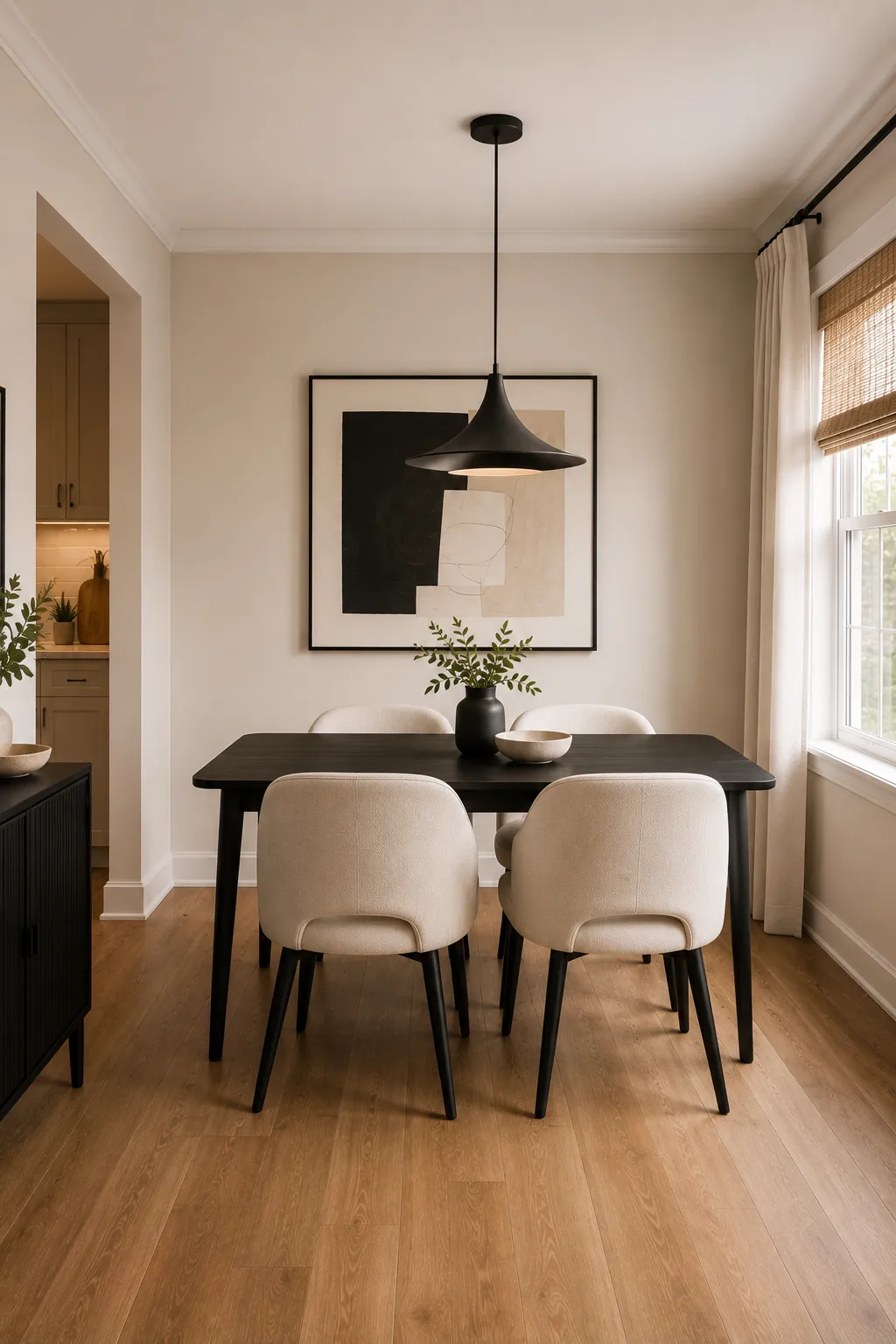
A dark dining table can add a sophisticated edge to a small dining room, especially when the surrounding finishes remain light. This room uses a matte black table as the main anchor, creating a crisp contrast against the warm cream walls, light flooring, and soft upholstered chairs.
The rounded edges of the table keep the darker furniture from feeling too severe, while the cream chairs bring comfort and visual softness. A large abstract artwork behind the table repeats the black and neutral tones, creating a cohesive backdrop without adding unnecessary decoration. The simple centerpiece adds a small touch of natural texture.
The oversized black pendant reinforces the darker accents and gives the dining area a strong architectural focal point. At the same time, the large window keeps the room bright and prevents the darker furniture from making the space feel closed in. The result is a modern dining room that feels polished but still comfortable enough for everyday use.
Pro Tip: If you choose a dark dining table for a compact room, pair it with lighter seating and warm neutral walls. This contrast keeps the furniture visually defined without making the entire space feel heavy.
13. Define a Cozy Dining Zone With a Sculptural Round Table
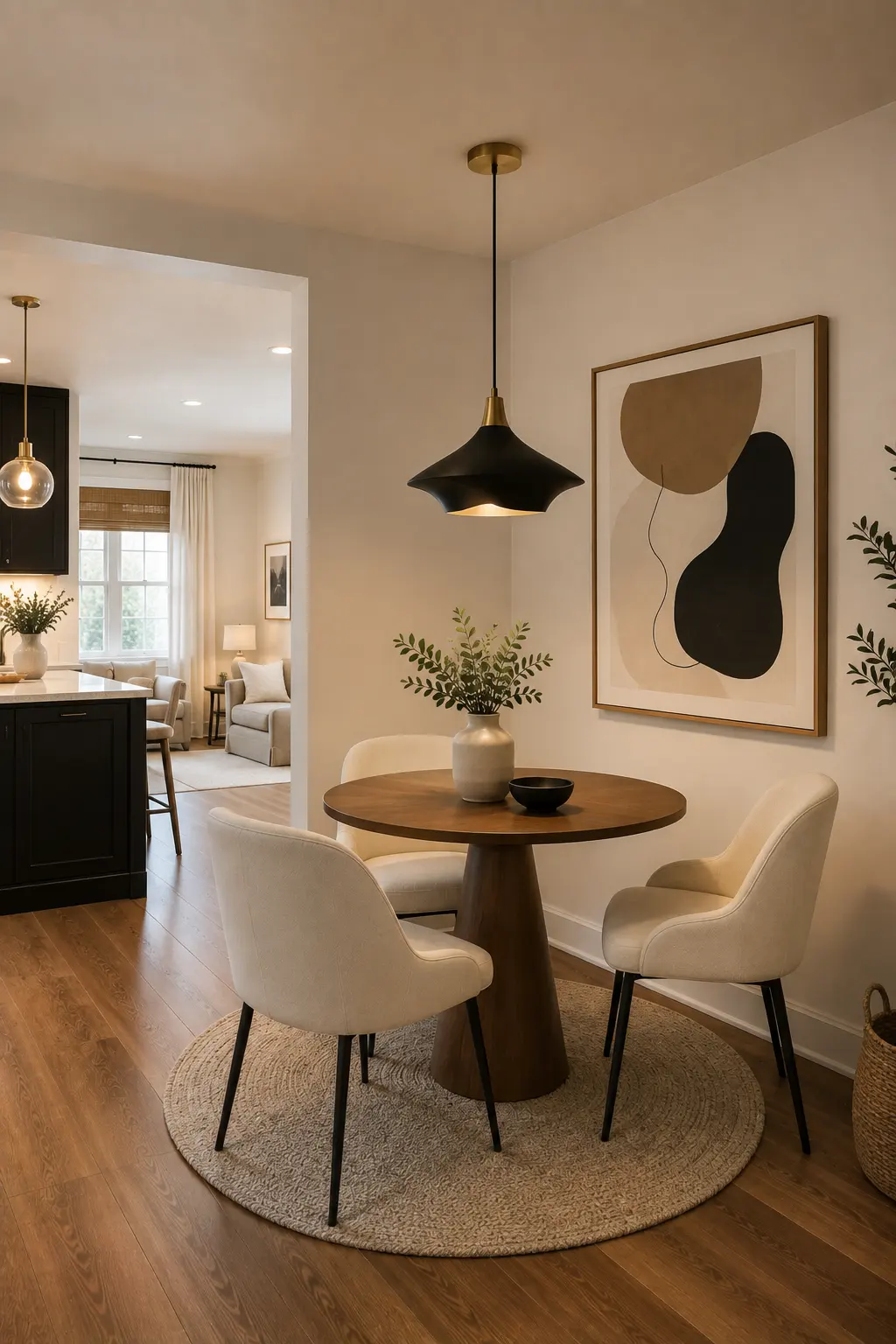
A sculptural round table can make a compact dining area feel more intentional while also improving the flow around the furniture. This design uses a warm wood pedestal table as the centerpiece, giving the room a strong focal point without the visual clutter of multiple table legs.
The curved upholstered chairs complement the table’s rounded shape and add a comfortable, refined feel. Their light cream fabric works beautifully against the warm wood flooring and neutral walls, while the large abstract artwork introduces deeper charcoal and earthy tones for contrast.
The oversized black pendant reinforces the room’s modern character and visually anchors the table from above. A round textured rug echoes the shape of the tabletop and helps define the dining area within the open-plan space. With the kitchen and living room visible nearby, the arrangement also shows how a small dining zone can feel connected without losing its own identity.
Pro Tip: Repeating the same shape at different scales can make a compact dining area feel more cohesive. Try pairing a round table with a circular rug or rounded light fixture for an intentional layered look.
Also Read: 12 Rustic Dining Room Ideas for a Cozy Farmhouse Look
14. Let a Sculptural Pendant Become the Dining Room’s Focal Point
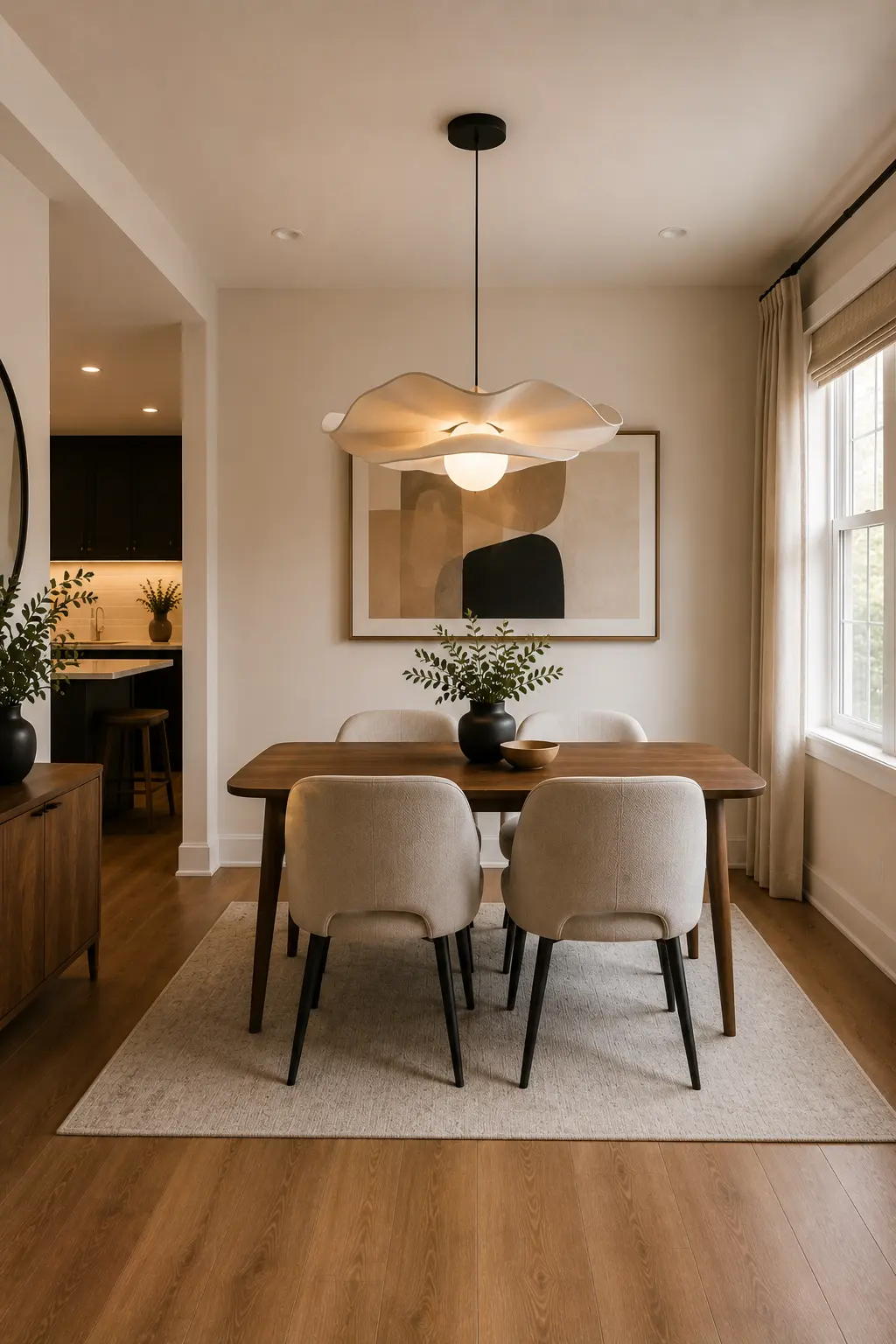
A sculptural pendant can completely change the character of a small dining room without taking up any floor space. In this setting, the flowing white fixture immediately draws attention toward the dining table and creates a striking contrast against the otherwise simple interior. It gives the room a designer feel while keeping the furniture understated.
The warm wood table and cream upholstered chairs provide a calm foundation beneath the dramatic light fixture. Their rounded edges and soft upholstery balance the more artistic shape overhead, while the large abstract artwork continues the same neutral and earthy palette. This keeps the room visually interesting without relying on excessive decoration.
Natural light from the nearby window adds brightness throughout the space, while the warm wood flooring gives the neutral palette enough depth. The open connection to the kitchen also makes the dining area feel naturally integrated into the home. It’s a good example of how one carefully chosen statement piece can give a compact room plenty of personality.
Pro Tip: When choosing a statement pendant for a small dining room, let the light fixture be the star. Keep the table, chairs, and surrounding décor relatively simple so the room feels sophisticated rather than overcrowded.
Final Thoughts on Dining Room Inspirations
Small dining rooms can feel surprisingly polished when every element has a clear purpose. The ideas above show that you don’t need a large footprint to create a dining area with personality. A well-proportioned table, comfortable seating, thoughtful lighting, and a strong wall treatment can completely change how the room feels.
The key is to work with the space rather than against it. Whether you prefer colorful chairs, a dramatic accent wall, built-in seating, warm wood, or a sculptural light fixture, choose a few elements that make an impact and allow the rest of the room to breathe. With the right balance of function and visual character, even a compact dining area can feel comfortable, refined, and distinctly your own.
