
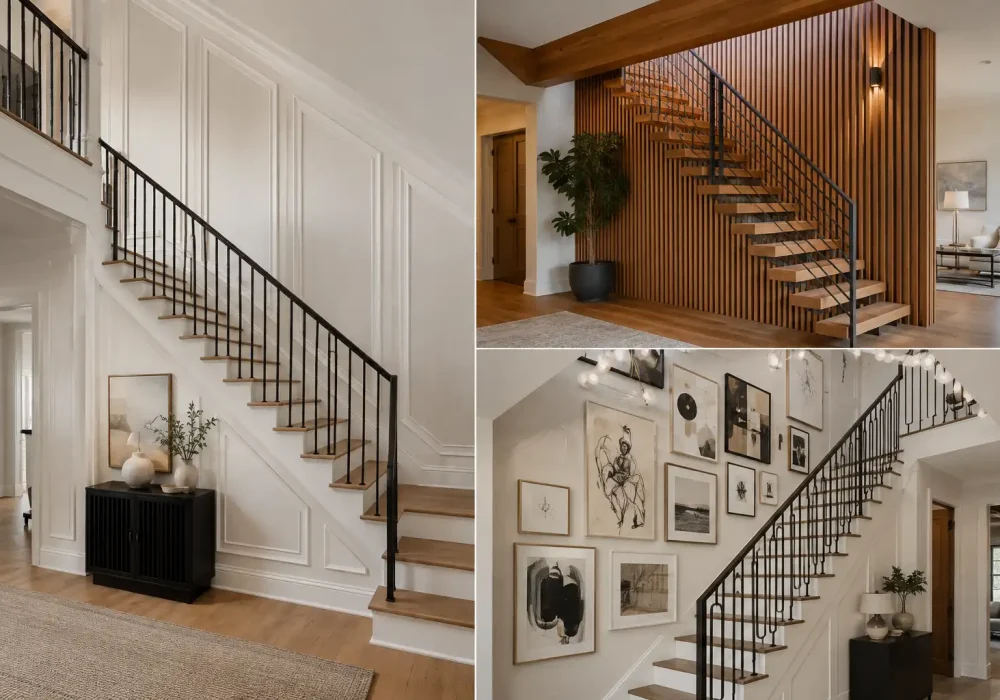
A staircase wall can easily become one of the most overlooked areas in a home. With the right details, though, that tall stretch of wall can add character, depth, and a polished finish to your interior.
From elegant molding and oversized artwork to wood slats, mirrors, and curated gallery walls, there are plenty of ways to make the space feel intentional without making it look crowded.
Whether your style leans modern, classic, or somewhere in between, these staircase walls ideas will help you turn an ordinary staircase wall into a feature that feels beautifully connected to the rest of your home.
Stylish Ways to Transform Your Staircase Wall
These staircase wall ideas cover a range of decorating approaches, from simple artwork updates to more architectural changes. Each one offers a different way to use the vertical space while keeping the staircase stylish, balanced, and visually inviting.
Also Read: 12 Staircase Paneling Ideas That Add Instant Architectural Charm
Also Read: 17 Basement Staircase Ideas for a Beautiful Home Upgrade
1. Create a Curated Gallery Wall Along the Staircase
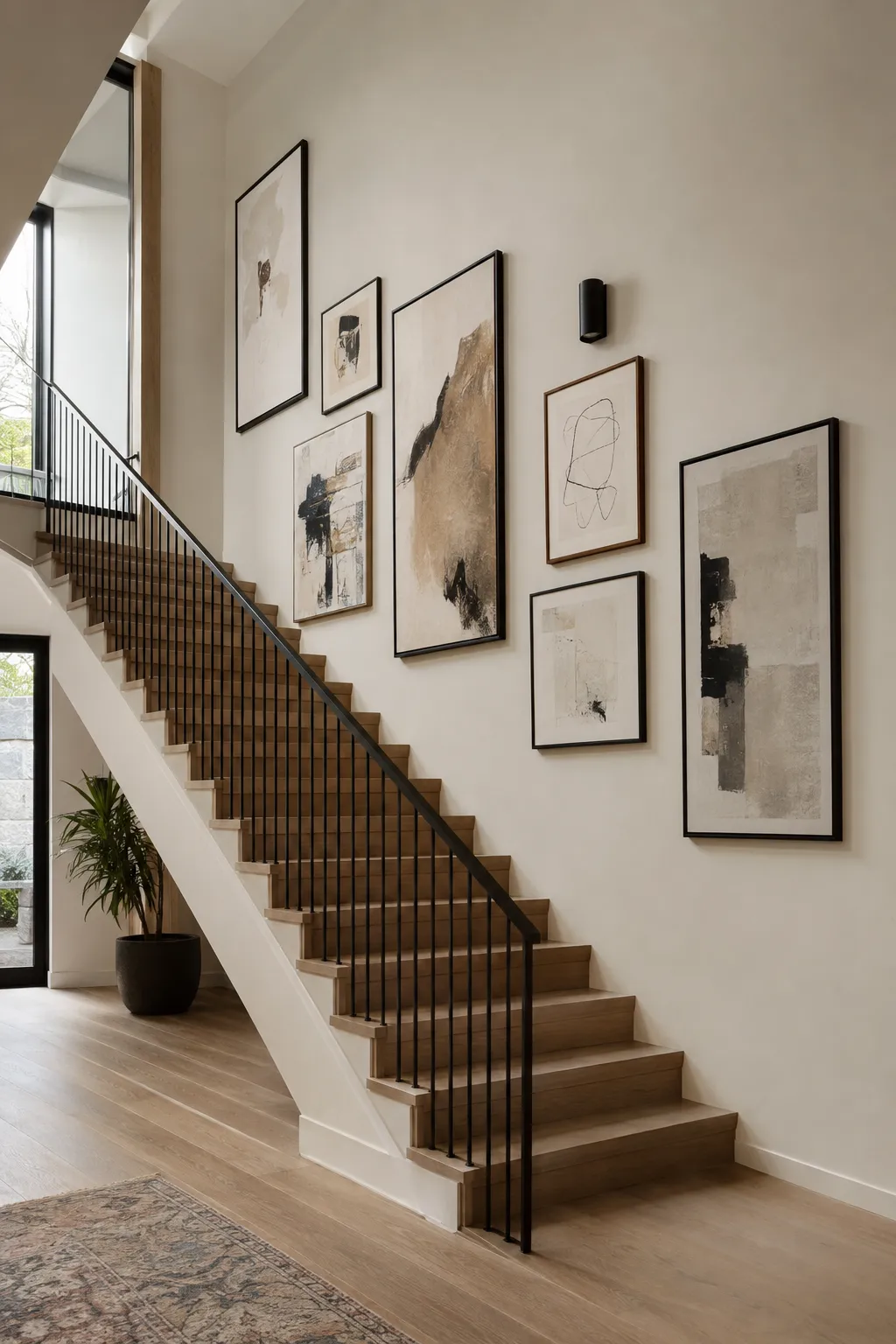
A staircase wall is an ideal place for a thoughtfully arranged gallery wall, especially when you have a tall stretch of space that feels too plain. Instead of using identical frames in a strict grid, mix different sizes and orientations to create a more natural composition. The artwork can follow the upward movement of the stairs while giving the wall plenty of visual interest.
For a sophisticated look, choose artwork that shares a similar color palette rather than matching every frame. Neutral abstracts, minimalist sketches, photography, and subtle landscape prints work beautifully together. In this example, the combination of cream, beige, charcoal, and muted brown artwork keeps the collection cohesive while the varied frame sizes make it feel collected rather than overly coordinated.
Placement matters just as much as the artwork itself. Start by considering the staircase as one large visual area, then arrange the frames so they feel balanced from the bottom step to the upper landing. Leave enough breathing room between pieces, and keep the larger artwork toward the center to create a strong focal point without making one side feel too heavy.
Pro Tip: Before hanging anything, arrange your frames on the floor and photograph the layout from the angle where the staircase is usually viewed. This makes it much easier to adjust the spacing and balance before putting holes in the wall.
2. Install Floating Picture Ledges for Flexible Stairway Style
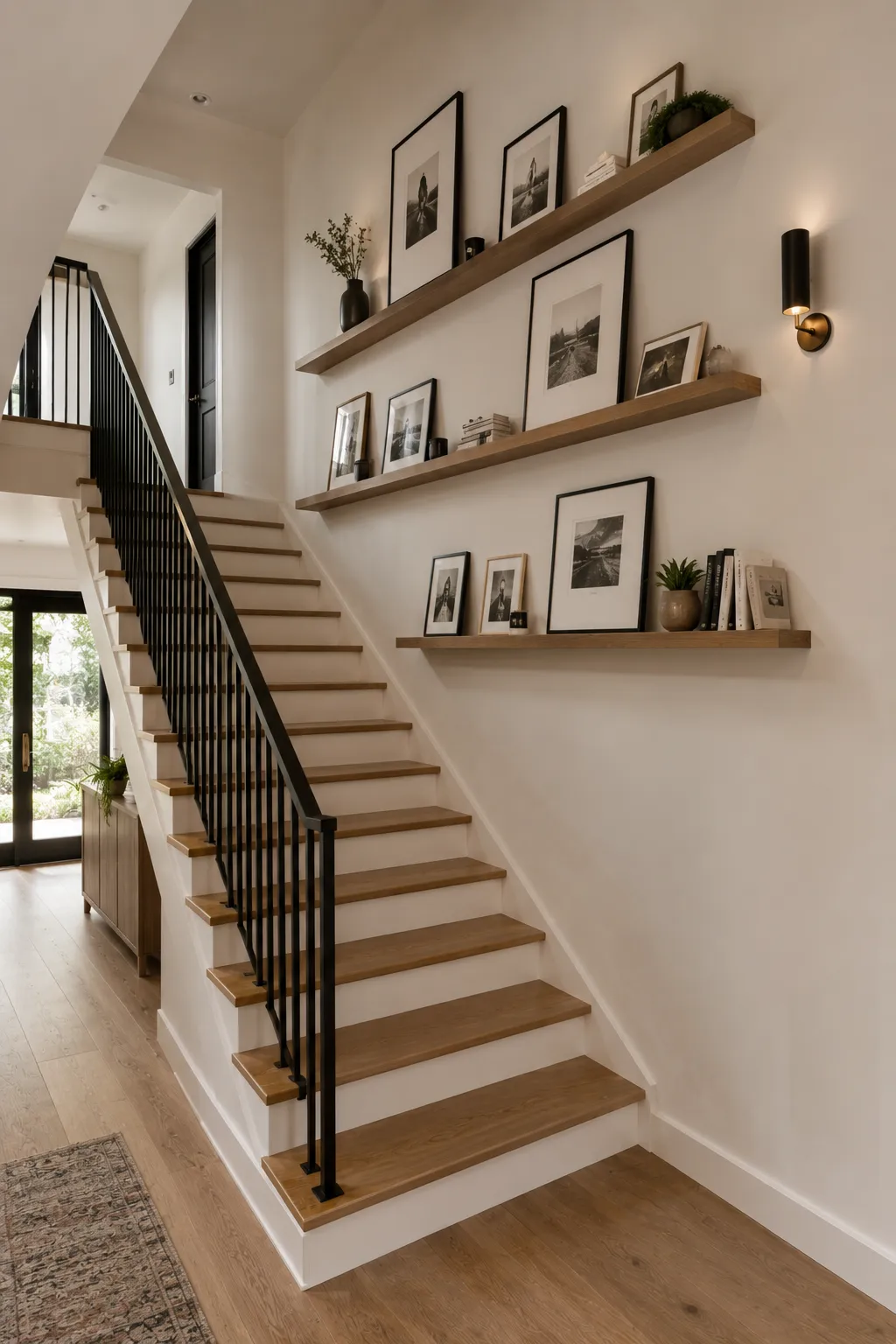
Floating picture ledges are a smart way to decorate a staircase wall when you want something more flexible than permanently hanging individual frames. Long wooden shelves can run along the wall at different heights, creating a layered arrangement that naturally follows the direction of the stairs. They also make a large blank wall feel finished without overwhelming the space.
Style the ledges with a mix of framed artwork, black-and-white photographs, small books, ceramic vases, and a few carefully chosen decorative objects. Using pieces in similar neutral tones keeps the arrangement cohesive, while mixing frame sizes gives it a more collected and relaxed appearance. Warm wood shelves also add texture against a light painted wall.
One of the biggest advantages is that you can easily change the display whenever you want. Move the artwork around for a new seasonal look, replace a photograph, or add a new decorative piece without drilling additional holes into the wall. Keep the shelves relatively shallow and leave enough space between them so the staircase still feels open and uncluttered.
Pro Tip: Position the shelves at slightly different heights and let the arrangement visually rise with the staircase. Keep the heaviest artwork toward the center of each shelf so the display feels balanced from the bottom of the stairs.
3. Transform the Staircase With a Vertical Wood Slat Wall
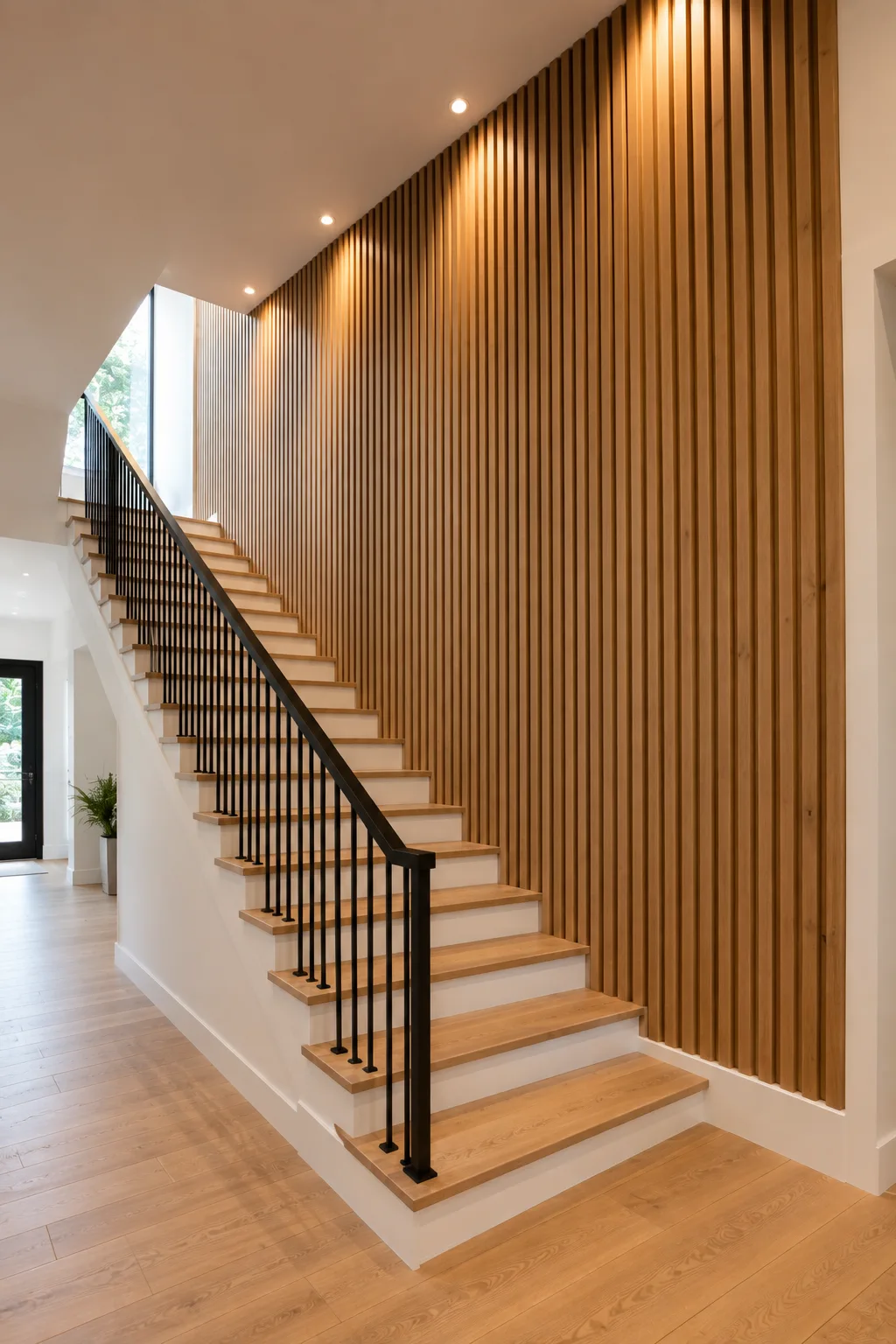
A vertical wood slat wall can turn a plain staircase into a striking architectural feature without relying on artwork or accessories. The repeated lines add texture and dimension while drawing the eye upward, making the staircase feel taller and more dramatic. It works especially well in contemporary homes with simple, clean architectural details.
Choose a natural wood finish that complements the existing stairs and flooring rather than trying to match every surface perfectly. Warm oak is a great option because its natural grain adds warmth while the slim vertical profiles keep the overall design modern. Pair the wood with a simple black railing and neutral walls so the feature wall remains the main attraction.
Lighting can make this idea even more effective. Recessed ceiling lights positioned along the slatted surface highlight the changing depth between the wood strips and create soft shadows in the evening. If the wall is especially tall, extending the slats close to the ceiling can emphasize the height and give the staircase a more custom, built-in appearance.
Pro Tip: Choose slats with a consistent width and spacing, but let the natural wood grain vary slightly. That small variation keeps the wall looking authentic instead of overly manufactured.
4. Make the Stairway Stand Out With a Deep Accent Wall
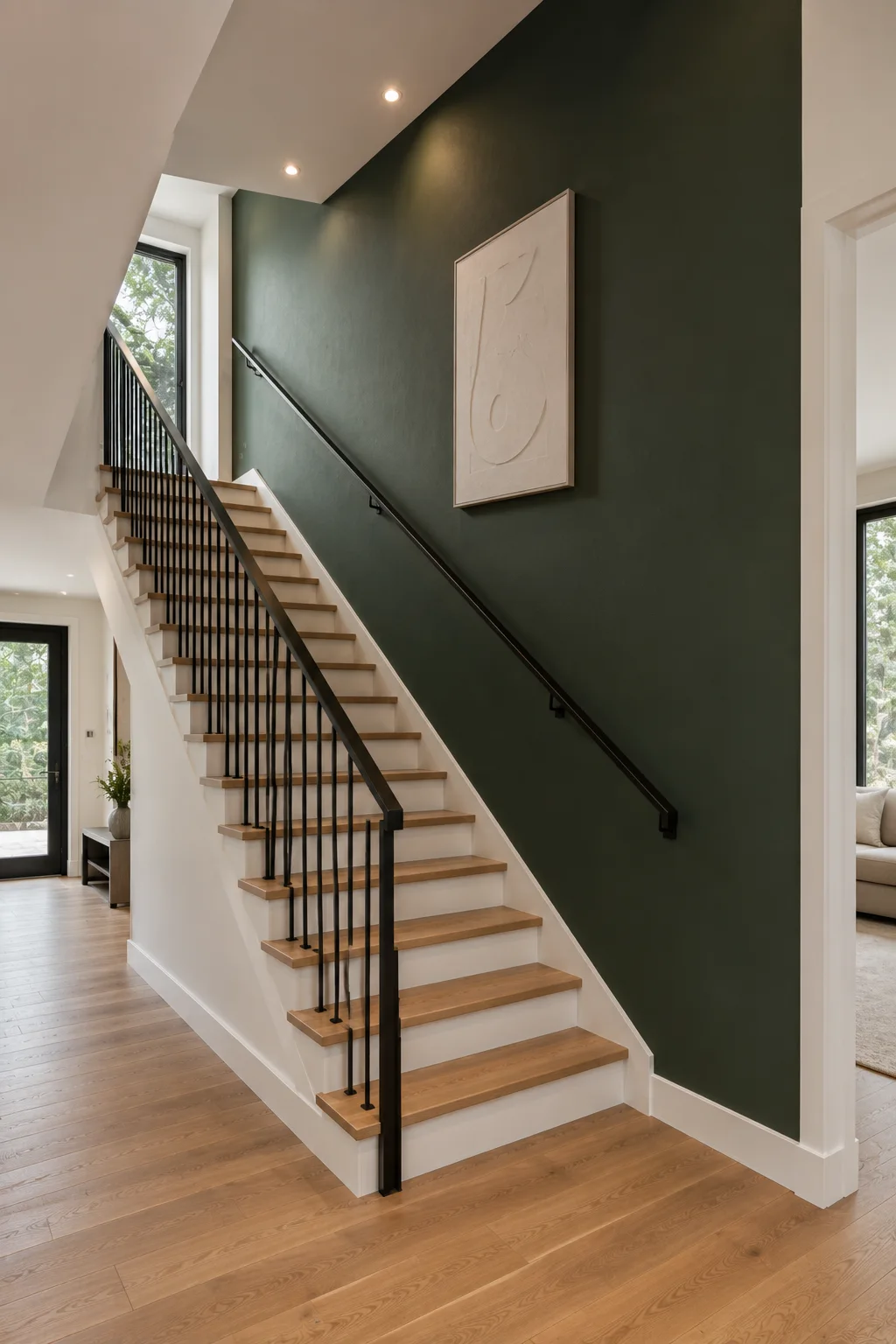
A deep accent color can completely change the character of a staircase without requiring a complicated decorating scheme. Instead of trying to fill every inch of the wall with artwork, choose a rich shade that gives the entire stairway a stronger architectural presence. Deep forest green, charcoal, navy, and muted brown can all create this effect.
For a balanced modern look, keep the staircase itself relatively simple and let the wall provide most of the visual impact. Warm wood stair treads and a slim black railing pair especially well with deeper wall colors. One large piece of artwork can then add a softer focal point without competing with the dramatic background.
Lighting becomes especially important when using a darker shade. Natural light can bring out subtle variations in the paint during the day, while recessed ceiling lights or wall fixtures can highlight the surface in the evening. If the staircase receives limited daylight, choose a color with enough warmth to prevent the space from feeling flat or overly dark.
Pro Tip: Test your accent color on several parts of the staircase wall before committing. Dark shades can look dramatically different depending on whether they’re receiving direct daylight, indirect light, or warm evening illumination.
5. Create Recessed Display Niches for a Built-In Look
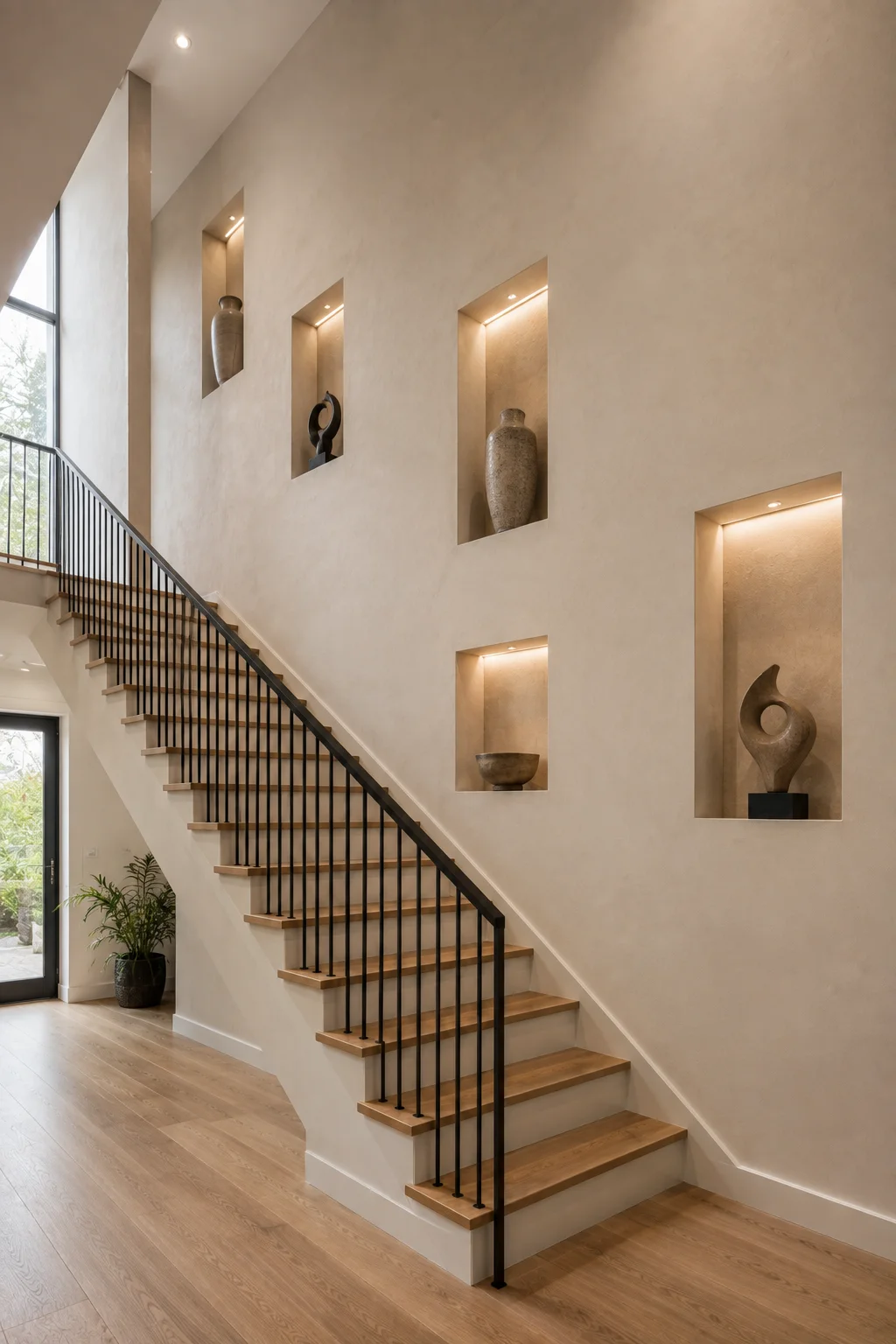
Recessed display niches can turn a large staircase wall into a feature that feels intentional from the start. Rather than adding shelves or artwork onto the surface, these niches are built directly into the wall, creating depth while keeping the surrounding area clean. They work particularly well on tall stairway walls where a few carefully placed details can make a big difference.
Use niches in different sizes and heights to create a balanced architectural composition that follows the staircase. Fill them with a small collection of sculptural ceramics, textured vases, stone objects, or other simple pieces that complement the room. Keeping the color palette neutral helps the niches feel like part of the architecture rather than a collection of unrelated decorations.
Lighting is what really brings this idea to life. Small recessed spotlights or concealed LED strips can illuminate each niche and create soft pools of light around the objects. During the evening, the combination of warm lighting, textured plaster, and natural wood can give the staircase a custom, high-end appearance without adding visual clutter.
Pro Tip: Use fewer, larger decorative pieces instead of filling every niche with small accessories. Leaving some breathing room around each object will make the entire wall feel more refined and intentional.
6. Use an Oversized Round Mirror to Open Up the Stairway
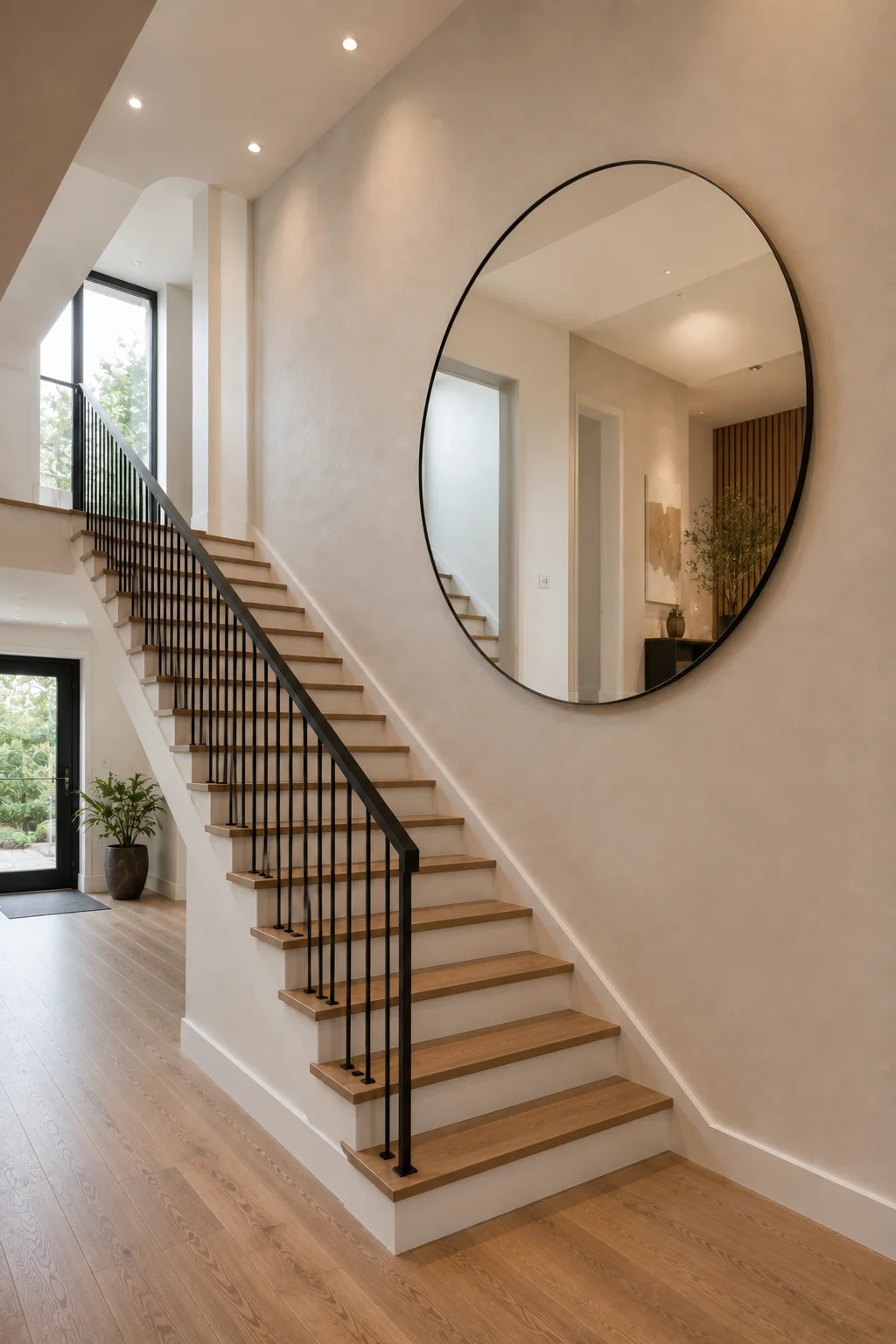
An oversized round mirror can make a staircase wall feel brighter, more spacious, and visually balanced without adding a lot of decoration. The curved shape also creates a nice contrast against the straight lines of the stairs and railing. On a large blank wall, one substantial mirror can have more impact than several smaller pieces.
Choose a simple frame in matte black, dark bronze, or another understated finish that complements the staircase hardware. A large circular design works particularly well in modern interiors because it softens the sharper architectural lines without making the space feel overly decorative. Keep the surrounding wall mostly clear so the mirror remains the focal point.
Where you place the mirror matters, too. Hang it at a comfortable viewing height and make sure it reflects something attractive, such as a window, artwork, or another part of the home’s architecture. Natural light bouncing off the mirror can also brighten the stairway and make the entire area feel more open.
Pro Tip: Check what the mirror will reflect before installing it. Positioning it opposite a window or an attractive architectural feature can make the staircase feel noticeably brighter and more spacious.
Also Read: 14 Vertical Decor Ideas That Make High Ceilings Stand Out
Also Read: 15 Modern Accent Wall Designs That Instantly Impress
7. Bring Nature Indoors With Refined Botanical Artwork
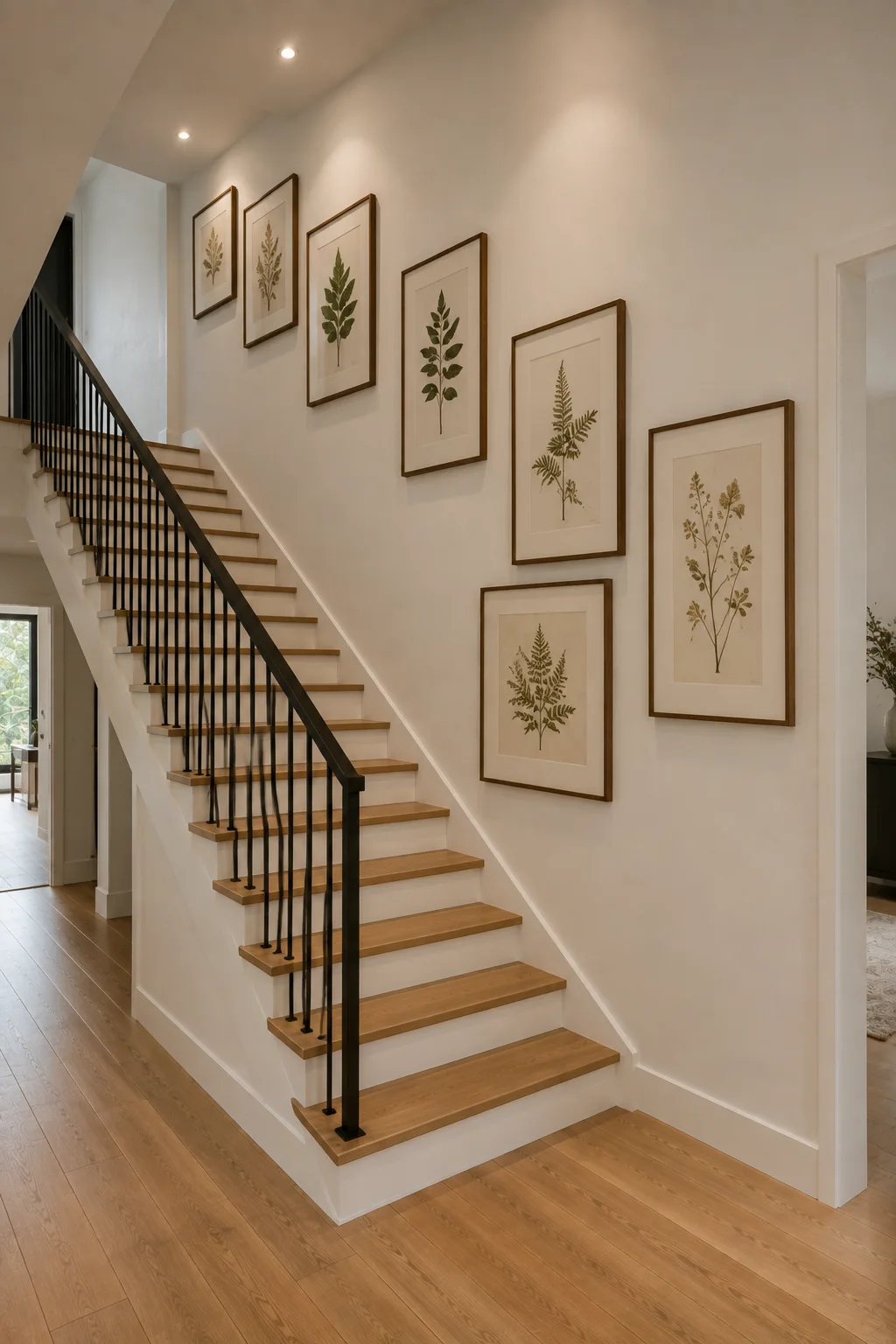
Botanical artwork can add softness and character to a staircase wall while keeping the overall design polished. Instead of using real plants across the stairs, a curated collection of botanical prints gives you the natural feel without taking up valuable floor or walking space. It’s a particularly good choice for a tall wall that needs decoration but still feels calm and uncluttered.
Choose botanical illustrations with a restrained color palette, such as olive green, muted sage, warm beige, and soft brown. Framing them in matching or coordinated wood frames creates a cohesive gallery effect, while using different frame sizes keeps the arrangement from feeling too rigid. Arrange the prints so they gradually follow the upward direction of the staircase for a more natural flow.
The beauty of botanical prints is that they can work with several interior styles without taking over the room. Pair them with warm wood stairs and a simple black railing for a contemporary look, or choose lighter frames for a softer traditional feel. Keep enough space between each piece so the artwork remains easy to appreciate from both the bottom and upper landing.
Pro Tip: Use artwork with a similar background color across the entire collection. Even when the botanical subjects vary, a consistent paper tone will make the whole staircase gallery look thoughtfully curated.
8. Make a Statement With One Oversized Artwork
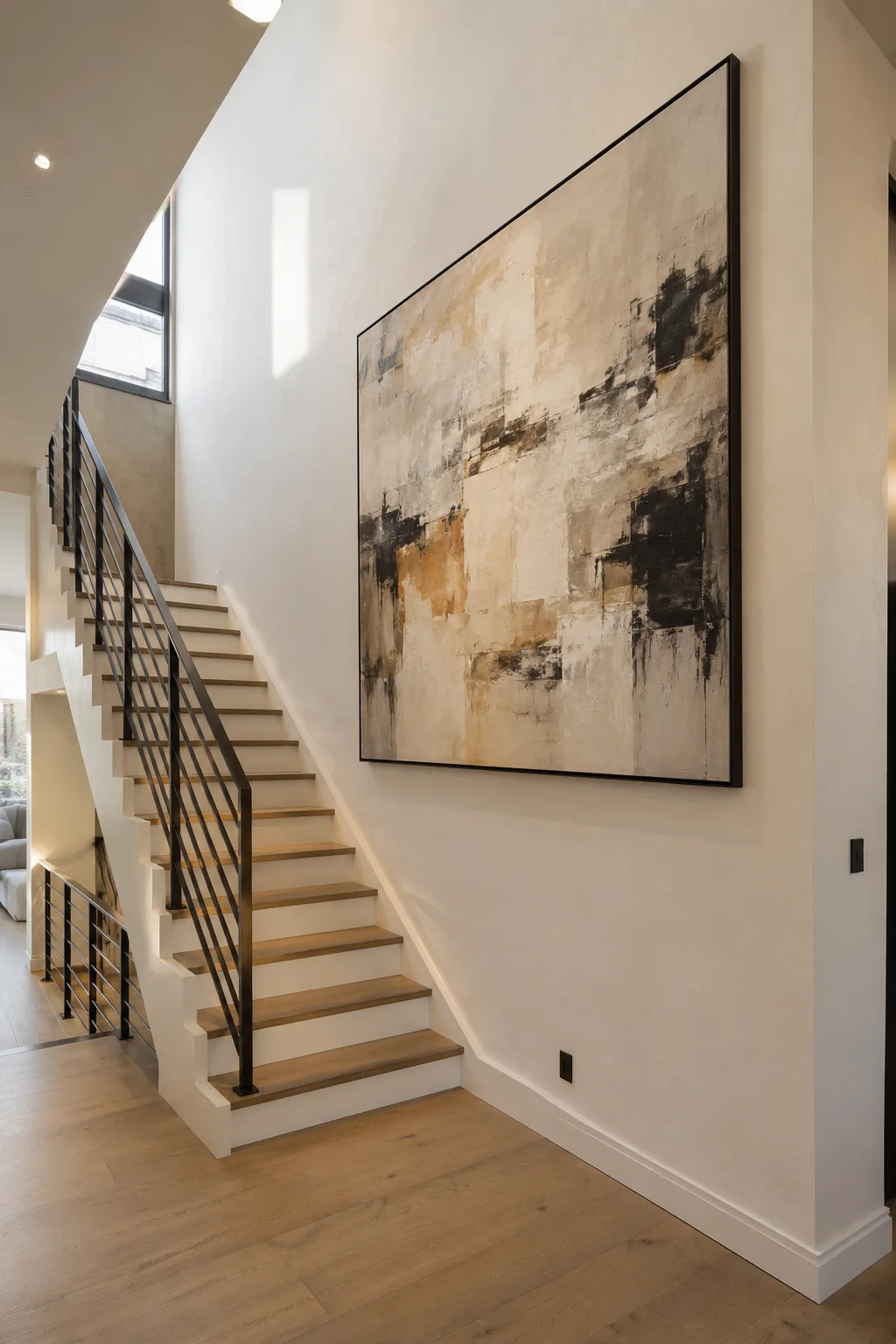
A single oversized artwork can make a staircase wall feel intentional without requiring a collection of smaller decorations. This approach works particularly well when the wall is tall and spacious because one large piece gives the eye a clear focal point. Instead of competing with the architecture, the artwork becomes the main feature as you move up the stairs.
Choose a piece with enough scale to relate to the size of the wall, such as a large abstract painting, textured canvas, architectural print, or contemporary landscape. Neutral shades like cream, beige, charcoal, muted brown, and soft black can blend beautifully with modern interiors. A thin frame keeps the overall look clean while allowing the artwork itself to take center stage.
Placement is important with a statement piece. Hang it where it can be seen comfortably from the lower landing without sitting too close to the staircase railing or ceiling. Leave some open wall around the artwork so its size feels deliberate rather than cramped, and let the surrounding architecture provide the visual balance.
Pro Tip: When choosing the artwork, use the staircase wall itself as your measuring guide. A piece that looks large in a store can appear surprisingly small once it’s placed on a tall stairway wall.
9. Add Floor-to-Ceiling Panel Molding for a Luxe Finish
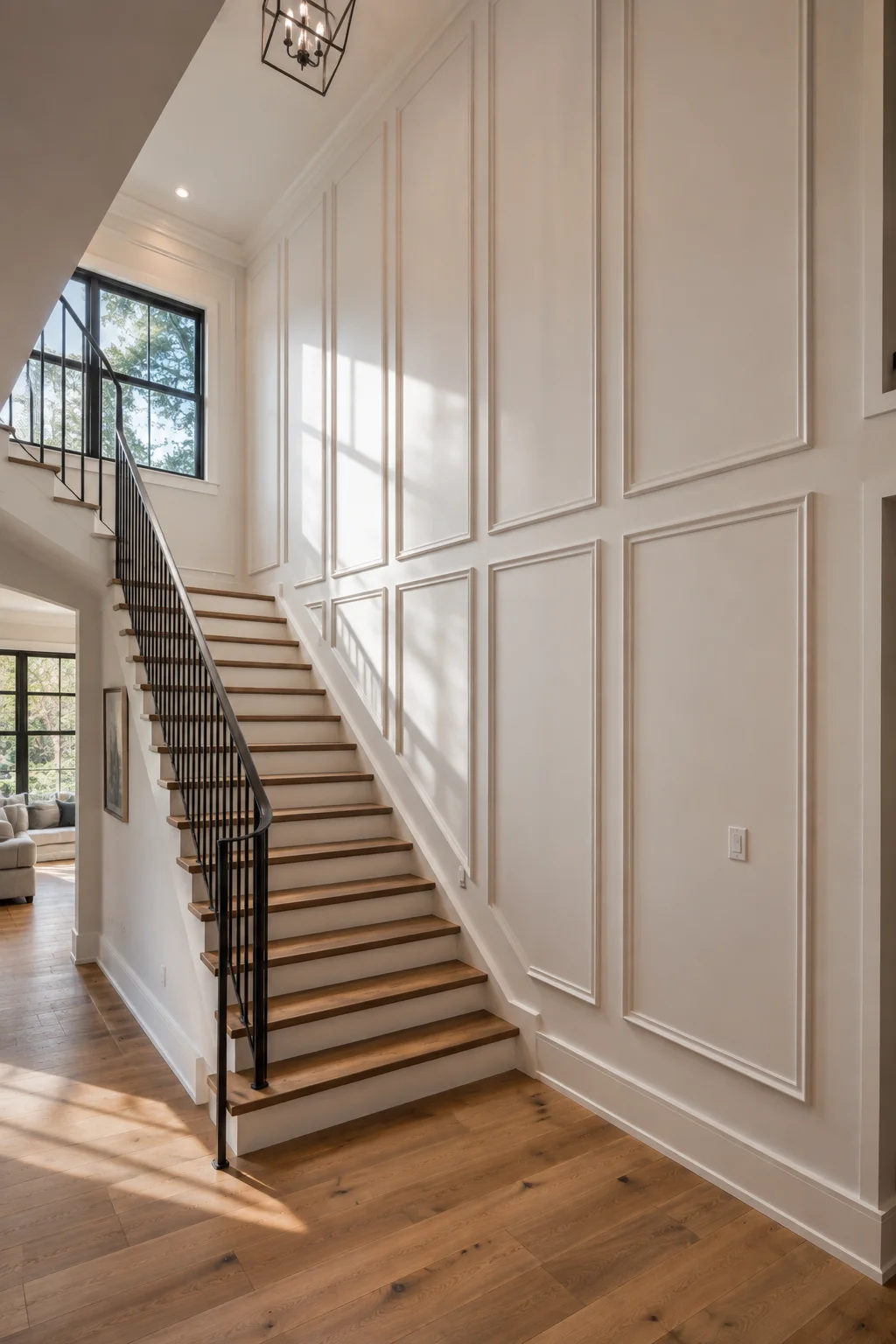
Floor-to-ceiling panel molding can make a staircase wall feel taller, more substantial, and beautifully finished without relying on lots of accessories. This approach works especially well on large blank walls because the repeated panels create structure across the entire surface. The result feels architectural and custom while still keeping the staircase visually calm.
For a modern interpretation, use tall rectangular panels with clean proportions and generous spacing. A warm white or soft ivory finish keeps the look bright and elegant, while subtle differences in panel size can help follow the shape of the staircase. Pairing the molding with natural wood stairs and a simple dark railing creates just enough contrast to keep the design from feeling too formal.
You can also let the molding become the main decoration rather than covering it with artwork. This keeps the staircase open and allows natural light to highlight the raised edges throughout the day. If the wall is particularly tall, extending the panels close to the ceiling can make the entire stairway feel more cohesive and intentionally designed.
Pro Tip: Use painter’s tape to map out your panel sizes before installation. This lets you adjust the spacing around switches, railings, corners, and doorways so the finished molding looks balanced from the main viewing angle.
10. Layer Modern Paneling for a Structured Stairway Wall
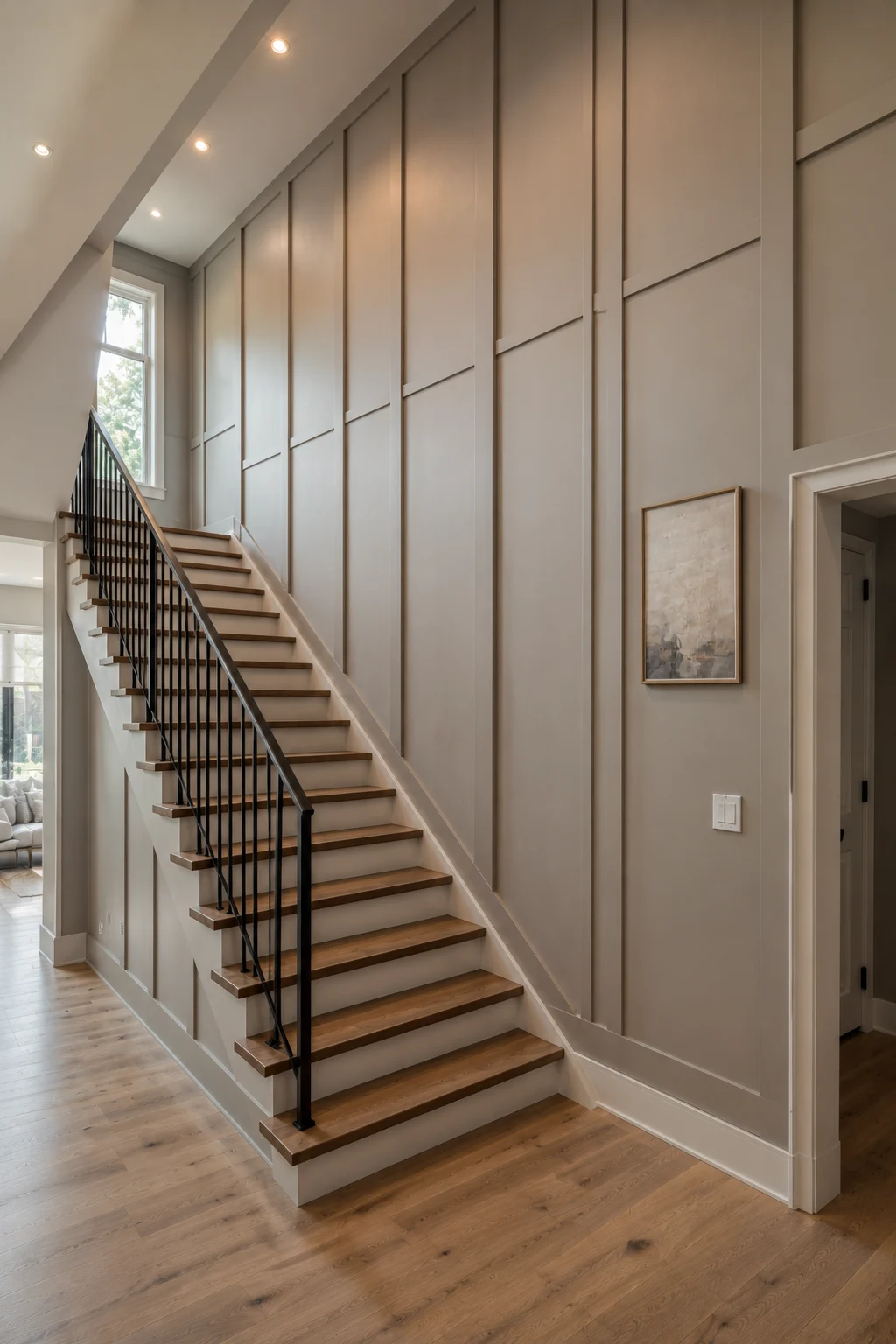
Modern paneling is a great way to give a tall staircase wall more structure without filling it with decorative objects. Instead of leaving the surface completely plain, use long vertical panels with subtle horizontal divisions to create a clean architectural rhythm. The result feels tailored and contemporary while still allowing the staircase itself to remain the focus.
For a sophisticated finish, choose a soft greige, warm taupe, or muted beige that works with the flooring and stair treads. Keep the panel profiles slim and the spacing consistent so the wall looks intentional rather than overly ornate. Natural wood stairs and a simple black railing add enough contrast to keep the neutral paneling from feeling flat.
This approach is especially effective when the staircase wall is unusually tall. Extending the panels toward the ceiling emphasizes the vertical proportions and makes the stairway feel more connected to the surrounding architecture. You can leave most of the wall undecorated or add a single understated artwork to one section for a more relaxed finish.
Pro Tip: Plan the panel layout around existing doors, switches, outlets, and railing angles before installation. Keeping those elements visually integrated with the panel lines will make the finished wall look professionally designed.
11. Introduce a Statement Wallpaper With Subtle Geometry
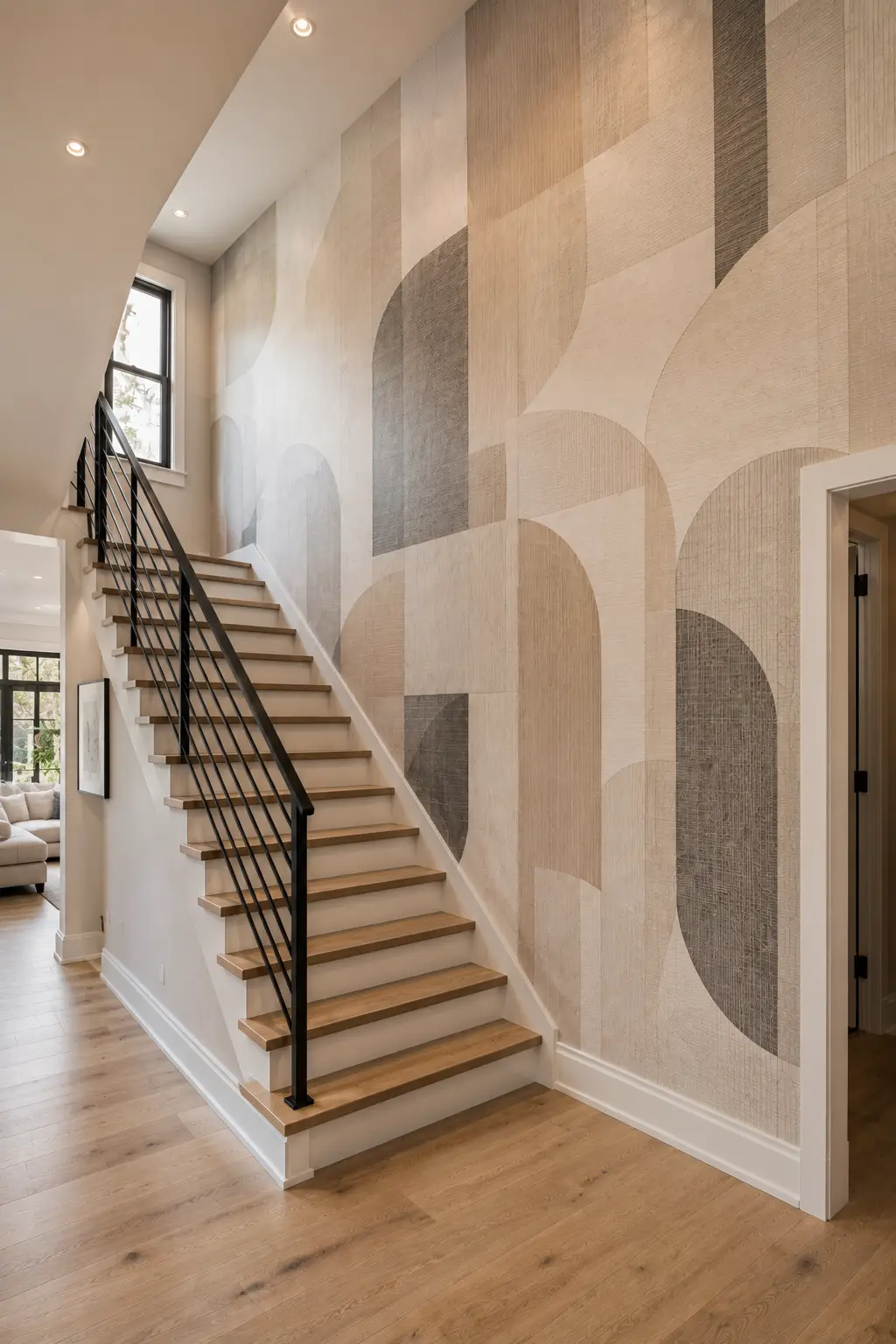
Wallpaper can completely change the personality of a staircase wall, especially when the space has a large uninterrupted surface that needs more character. A large-scale pattern gives the wall visual depth and makes the staircase feel like a deliberately designed part of the home. Instead of choosing a small repetitive print, look for an oversized pattern that can be appreciated from the bottom landing.
For a contemporary interior, soft geometric shapes, architectural curves, abstract lines, or layered neutral patterns can work beautifully. Keep the palette restrained with shades such as cream, beige, taupe, warm gray, and muted brown so the wallpaper feels sophisticated rather than overwhelming. The staircase itself can remain simple with natural wood treads and a dark railing to let the wall carry the design.
Scale is particularly important on a staircase because the wall is often taller than a standard room wall. A pattern that’s too small can look busy and repetitive, while an oversized design can make the entire surface feel more cohesive. Make sure the pattern is aligned carefully around corners, doors, and trim so the finished result looks professionally installed.
Pro Tip: Order a large wallpaper sample before committing and view it from both the bottom and top of the stairs. A pattern that looks subtle up close can appear much bolder when it covers an entire stairway wall.
12. Add Sculptural Wall Art for a Contemporary Focal Point
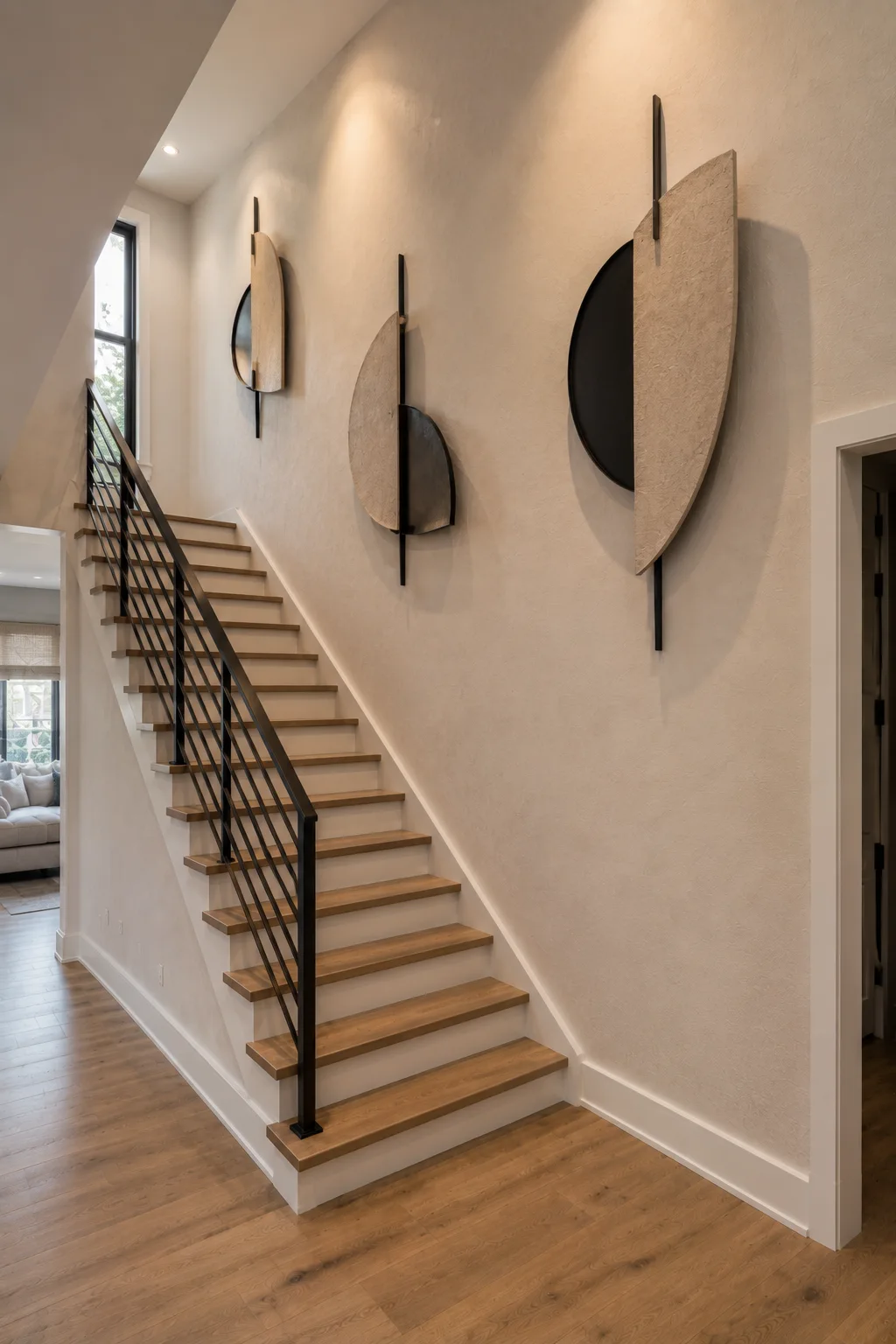
Sculptural wall art offers a more dimensional alternative to traditional framed pictures, making it an excellent choice for a staircase wall that feels too plain. Layered shapes, curved forms, and contrasting textures can create a striking focal point while adding depth that flat artwork simply can’t provide.
For a refined contemporary look, choose pieces in a restrained palette of black, warm beige, ivory, natural stone, or textured plaster. Arrange several sculptural works at different heights so they follow the visual movement of the staircase without forming a perfectly straight line. The combination of smooth and textured surfaces can make the wall feel much more dynamic.
Keep the rest of the staircase relatively simple so the sculptural pieces have room to stand out. Natural wood stairs, a slim dark railing, and warm neutral walls create an ideal backdrop for dimensional artwork. Soft directional lighting can also emphasize the shadows and layered shapes, making the pieces look even more dramatic as the light changes.
Pro Tip: Choose sculptural pieces with different shapes but at least one shared material or color. That connection will make the collection feel curated rather than like several unrelated decorations.
13. Arrange Warm Wood Shelves Along the Staircase Wall
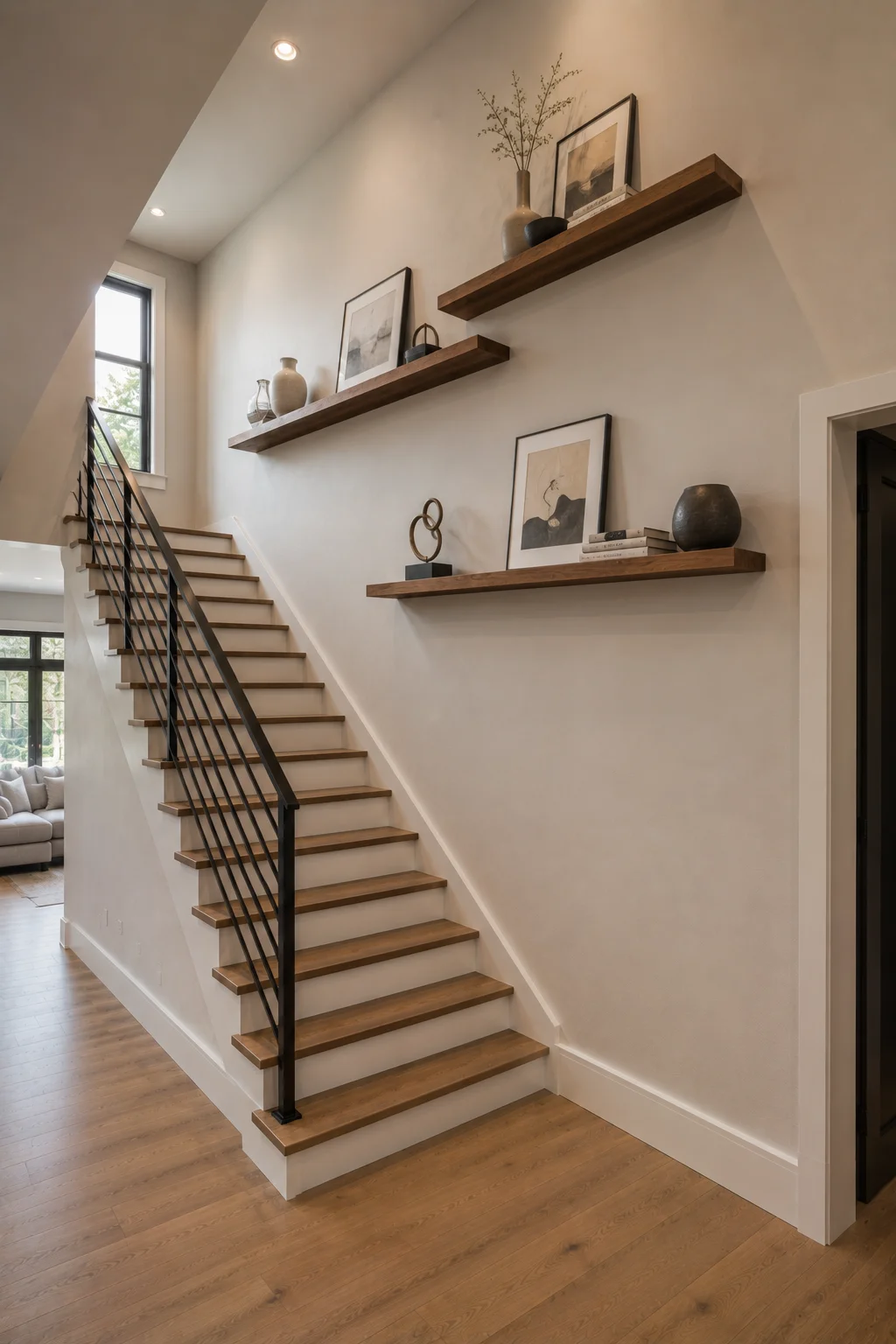
Long floating wood shelves can turn an empty staircase wall into a practical display area while adding warmth and texture to the space. Instead of covering the wall with dozens of frames, use a few carefully positioned shelves to create a clean, layered arrangement that follows the natural direction of the staircase.
Style the shelves with a thoughtful mix of framed artwork, ceramic vases, small sculptures, stacked books, and simple decorative objects. Warm walnut or natural oak works particularly well against a soft neutral wall, creating contrast without making the staircase feel heavy. Vary the height and placement of the shelves so the display feels relaxed rather than perfectly symmetrical.
The key is to keep the styling edited. A few larger objects usually look more sophisticated than filling every inch with accessories. Leave some open shelf space between the groupings, and combine different heights and textures to give the arrangement depth. The result is both decorative and useful, especially in a hallway where storage space may be limited.
Pro Tip: Keep the shelves visually aligned with the staircase rather than installing them at random heights. A gentle upward progression can make the entire wall feel more connected to the architecture.
14. Build a Monochrome Photography Gallery Along the Stairs
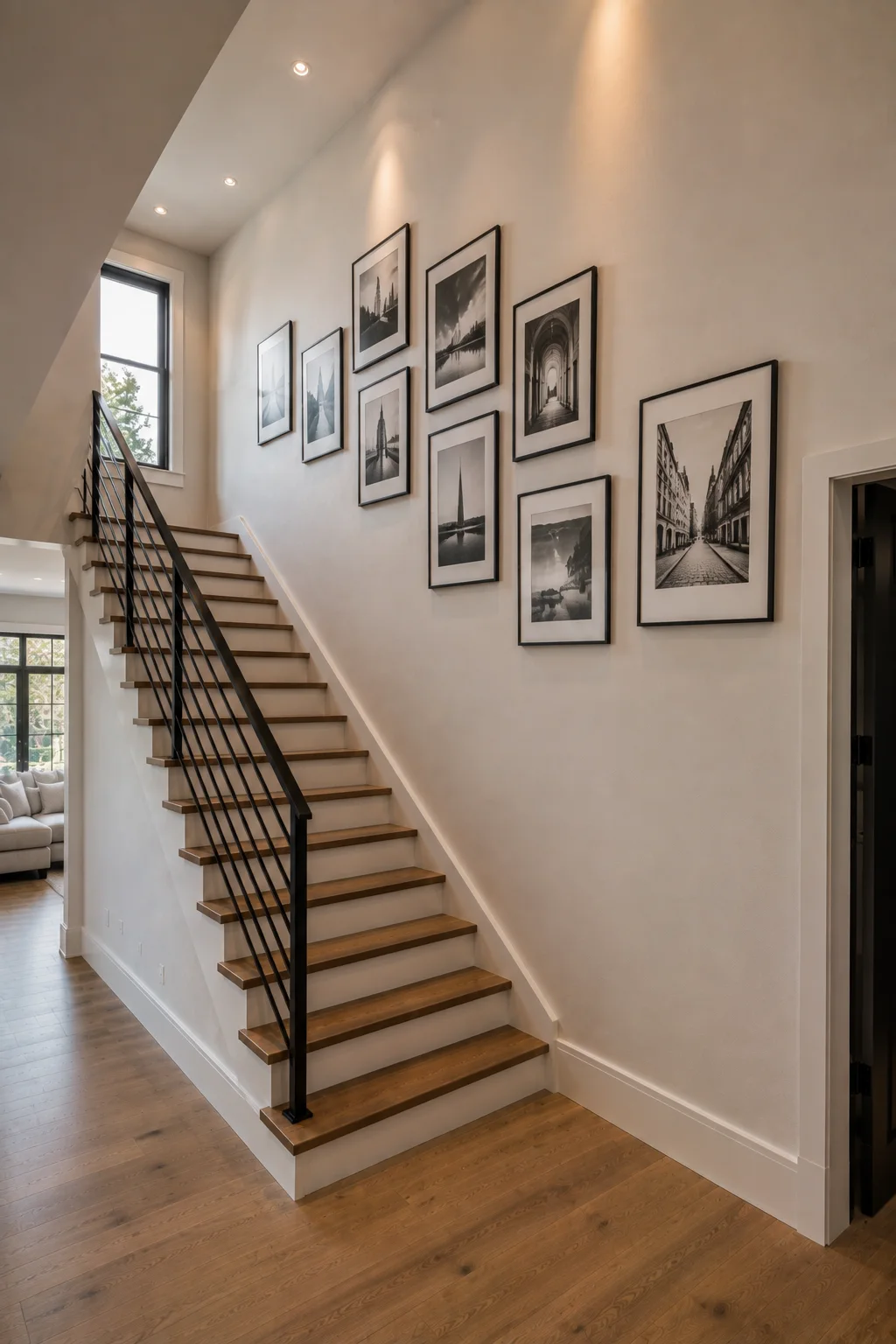
A monochrome photography gallery can give a staircase wall a sophisticated, timeless character without making the space feel overly decorated. Black-and-white photographs work particularly well because they create visual consistency even when the subjects and frame sizes are different. The result feels more like a curated collection than a group of unrelated pictures.
Choose photographs with a common visual theme, such as architecture, city streets, landscapes, travel scenes, or quiet interior details. Use simple black frames with light or white mats to create a crisp contrast against a warm neutral wall. Mix vertical and horizontal frames, but arrange them in a loose composition that gradually moves upward with the staircase.
The arrangement should feel intentional while still having a little flexibility. Start with the largest photographs as anchors, then fill the surrounding areas with smaller pieces. Keep the spacing relatively consistent and avoid pushing the artwork too close to the railing or ceiling. When viewed from the lower landing, the entire collection should read as one cohesive visual story.
Pro Tip: Choose all of the photographs from the same tonal range. Consistent contrast and similar black-and-white processing will make even a varied collection of images look professionally curated.
15. Create a Dramatic Focal Point With an Oversized Wall Clock
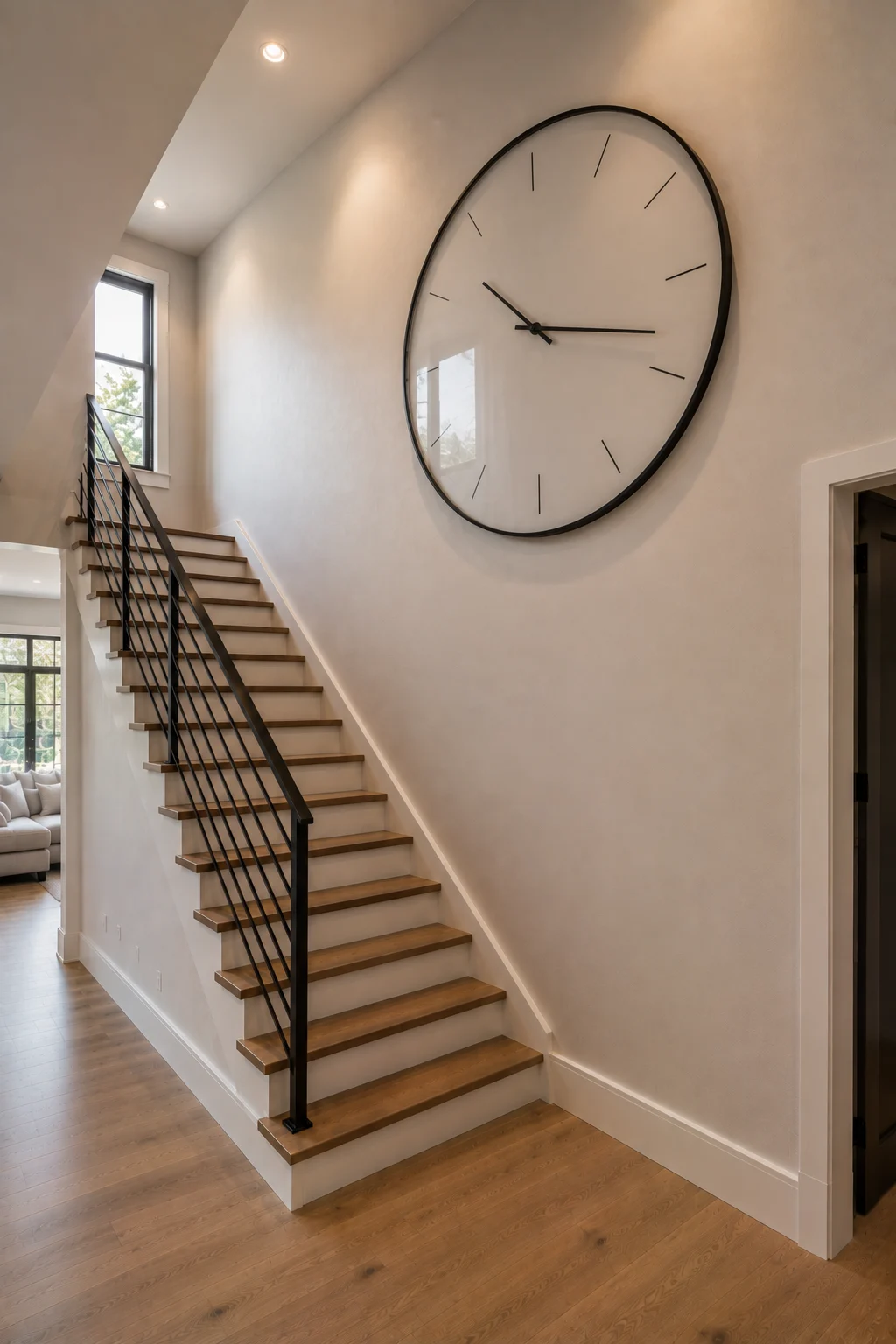
An oversized wall clock can give a staircase a strong focal point while adding a practical element to the space. Its large scale works especially well on tall, open walls where smaller decorations might look lost. A simple clock with a clean face and slim frame can also complement modern staircase architecture without making the area feel cluttered.
Choose a design that relates to the finishes already used around the stairs. A matte black frame works beautifully with dark railings, while a brushed brass or bronze finish can add a warmer, more refined touch. Keep the clock face simple and easy to read, especially if the staircase wall is already visually interesting.
Placement is key because the clock should feel connected to the staircase rather than simply attached to an empty section of wall. Center it within the most visible portion of the wall and leave enough surrounding space for its size to feel intentional. If the staircase has strong vertical or diagonal lines, the circular shape of the clock can provide a welcome contrast.
Pro Tip: Choose the clock based on the scale of the wall, not just the available space. On a tall staircase wall, a generously sized clock usually looks more balanced than a small design that can easily get lost.
16. Highlight Staircase Artwork With Picture Lighting
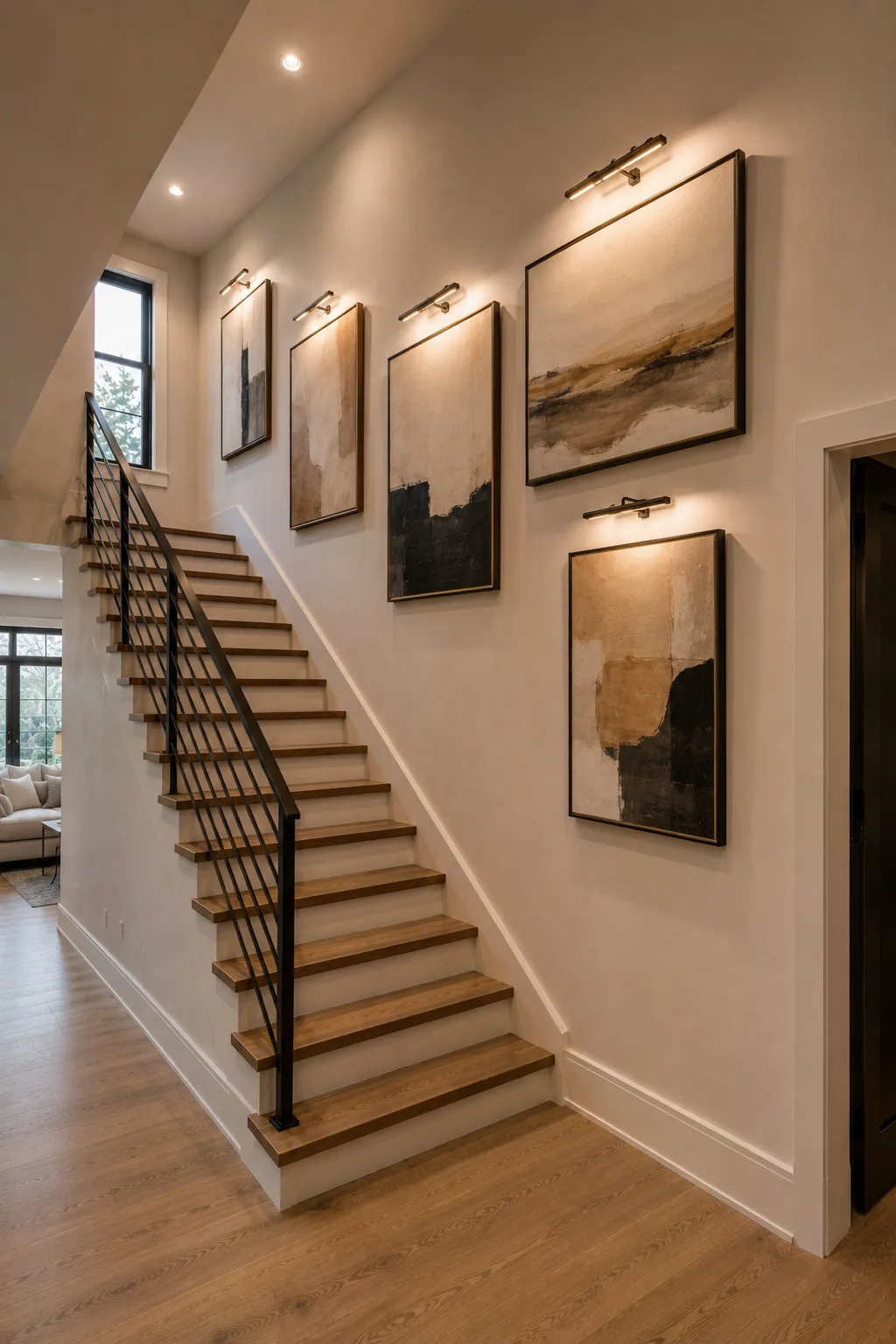
Picture lighting can make a staircase gallery feel far more intentional and luxurious while adding another layer of warmth to the wall. Slim picture lights mounted directly above individual artworks draw attention to the pieces and create a soft glow that works beautifully in the evening. This approach is especially effective when the staircase wall is already being used as an art display.
Choose artwork with a coordinated palette so the lighting enhances the collection rather than competing with it. Warm brass, aged bronze, or matte black picture lights can complement the frames and staircase railing, while neutral abstract artwork keeps the overall composition sophisticated. Mix vertical and horizontal pieces to create movement and use different artwork sizes to fill the tall wall naturally.
The lighting should be positioned carefully so each fixture illuminates its artwork evenly without creating harsh glare or distracting shadows. When several pieces are displayed together, consistent fixture placement helps the collection feel cohesive. The warm pools of light can also make a neutral staircase wall feel more inviting after sunset.
Pro Tip: Use warm-white bulbs with a high color-rendering index for artwork lighting. They’ll reveal the subtle tones and textures in your pieces while keeping the staircase feeling warm and refined.
Final Thoughts on Decorating Staircase Walls
A staircase wall offers far more decorating potential than it may seem at first. Whether you prefer the collected look of a gallery wall, the architectural impact of molding and wood slats, or the simplicity of one oversized mirror or artwork, the right treatment can turn an overlooked passage into one of the most memorable areas of your home.
The key is to work with the scale and architecture of your staircase rather than simply filling an empty wall. Choose a decorating approach that complements your home’s existing finishes, keep the composition balanced, and give each feature enough room to stand out. With a thoughtful plan, even a plain staircase can become a polished design feature that feels intentional from every angle.
