
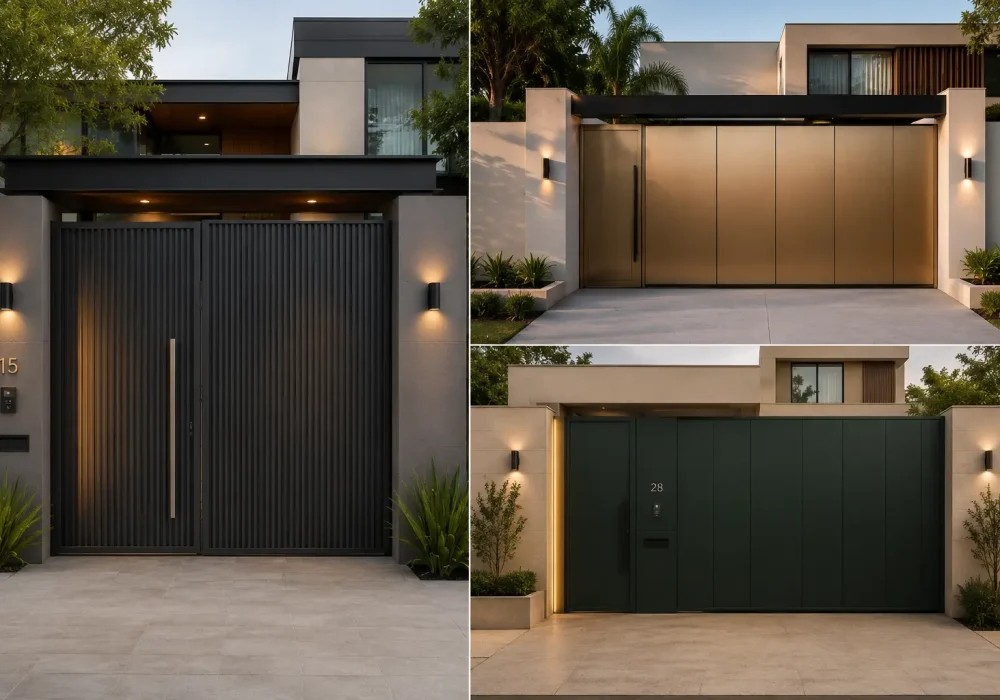
Your entrance gate is one of the first details people notice about your home. The right design can make the exterior feel more polished, stylish, and thoughtfully put together before anyone even steps inside.
Modern gates are moving beyond basic metal panels and predictable patterns. Clean lines, architectural textures, statement finishes, subtle lighting, and creative panel layouts can turn a practical entrance into a standout exterior feature.
Whether you prefer something sleek and understated or bold enough to command attention, there are plenty of ways to give your entrance its own character. The key is choosing a gate that complements the home while still making a memorable first impression.
The Entrance Gate Ideas Setting a New Standard for Curb Appeal
This collection brings together entrance gates with distinctive materials, proportions, textures, and architectural details. From streamlined metal panels and sculptural vertical fins to sophisticated finishes and integrated lighting, each idea offers a different way to make the entrance feel considered, contemporary, and visually impressive.
Also Read: 18 IKEA Mudroom Ideas That Transform Busy Entryways
Also Read: 15 Stylish Entryway Console Table Ideas for Any Home
1. Floating Horizontal Slats Create a Sleek Modern Entrance
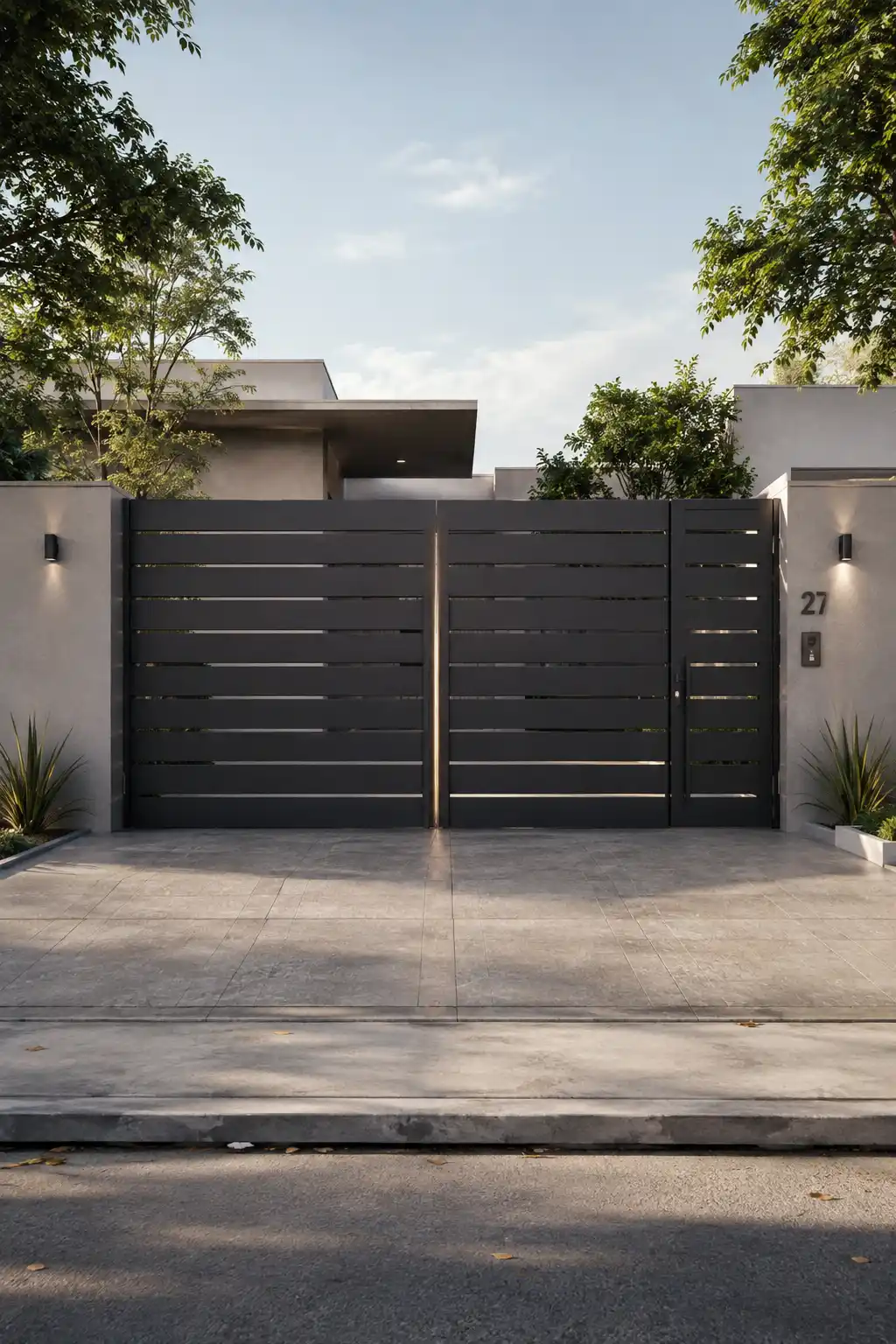
Wide horizontal slats give this entrance gate a clean, structured appearance without making it feel too heavy. The dark graphite finish creates a strong contrast against the light boundary walls, while the simple rectangular construction keeps the overall look sharp and contemporary.
Narrow gaps between each metal slat introduce just enough openness to break up the solid surface. They also create subtle lines of light throughout the gate, adding depth while still providing plenty of privacy for the property behind it.
The matching pedestrian gate helps the entire entrance feel connected rather than pieced together. Minimal wall lights, simple house numbers, and restrained landscaping complement the gate without distracting from its strong horizontal design.
Pro Tip: Keep the gaps between horizontal slats narrow and consistent to maintain privacy while creating a lighter, more refined appearance.
2. Vertical Fluted Panels Give the Entrance a Stronger Presence
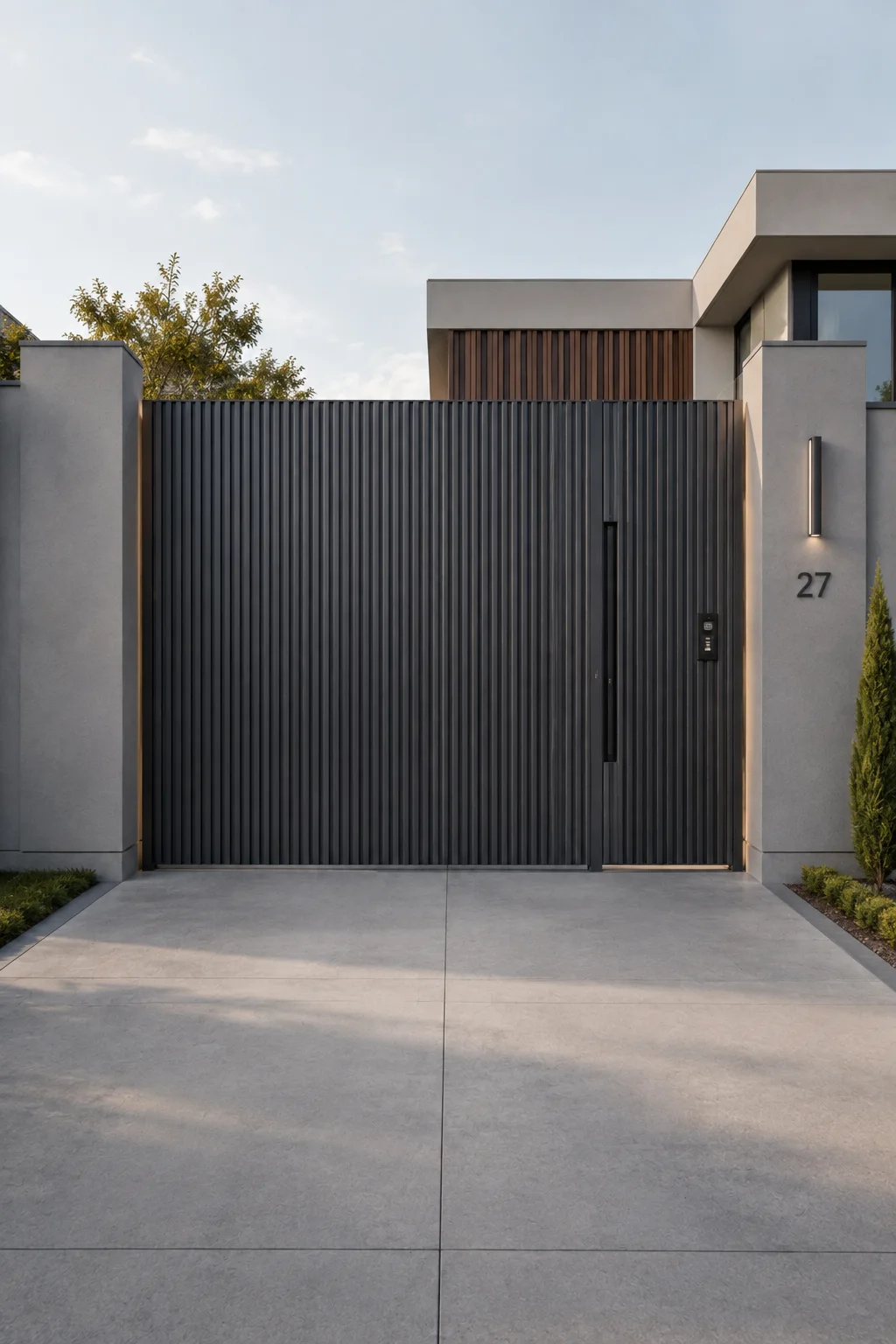
Tall vertical fluted panels give this entrance gate a bold architectural character while keeping the overall design remarkably clean. The narrow ribs draw the eye upward, making the gate appear taller and more substantial without relying on decorative patterns or complicated detailing.
The deep charcoal finish works beautifully with the pale concrete walls surrounding the entrance. As natural light moves across the surface, the raised vertical lines create subtle highlights and shadows that give an otherwise monochromatic gate plenty of depth and texture.
A slim integrated pedestrian door keeps the broad surface visually uninterrupted, while the recessed handle and compact access panel maintain the minimalist appearance. Warm lighting along the edges adds another layer of detail and makes the dark gate feel more inviting in the evening.
Pro Tip: Pair fine vertical fluting with simple, light colored boundary walls so the texture becomes the focal point without making the entrance feel visually busy.
3. Perforated Metal Panels Turn Privacy Into a Design Feature
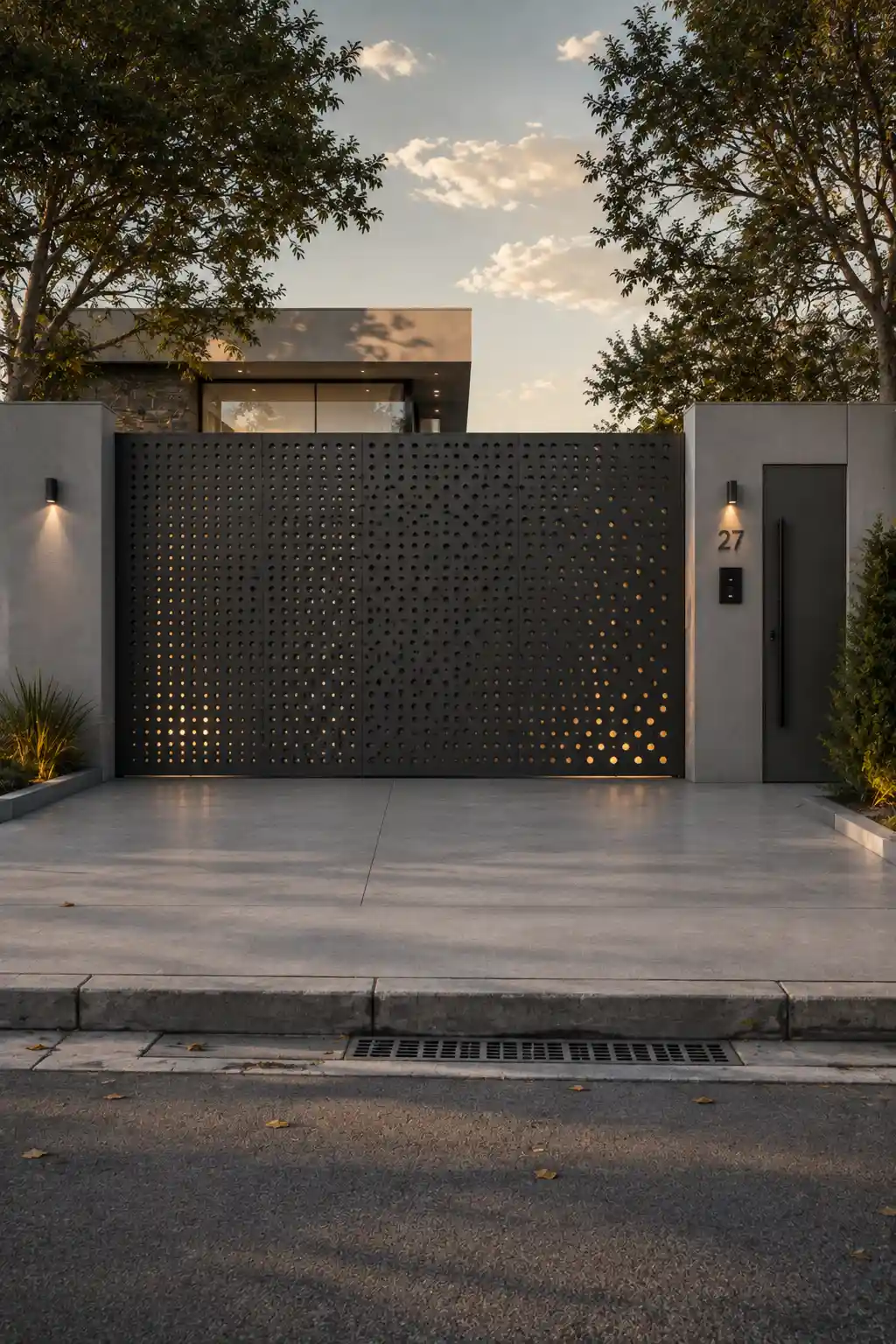
Perforated metal gives this entrance gate a distinctive look without sacrificing the clean character of a modern exterior. The dark solid panels are filled with carefully spaced openings, creating a textured surface that feels more interesting than a conventional flat privacy gate.
The perforations also allow small amounts of daylight to filter through during the day while maintaining separation from the property behind. As evening arrives, warm lighting from inside shines through the openings and transforms the pattern into a subtle illuminated feature.
Simple light grey boundary walls provide a calm backdrop for the detailed gate surface. A separate flush pedestrian door, understated house numbers, and restrained wall lighting keep the surrounding entrance minimal, allowing the perforated metalwork to command attention.
Pro Tip: Use perforations that gradually change in size or spacing across the gate to create visual movement while keeping the overall pattern refined and architectural.
4. Deep Vertical Fins Add Sculptural Depth to the Entrance
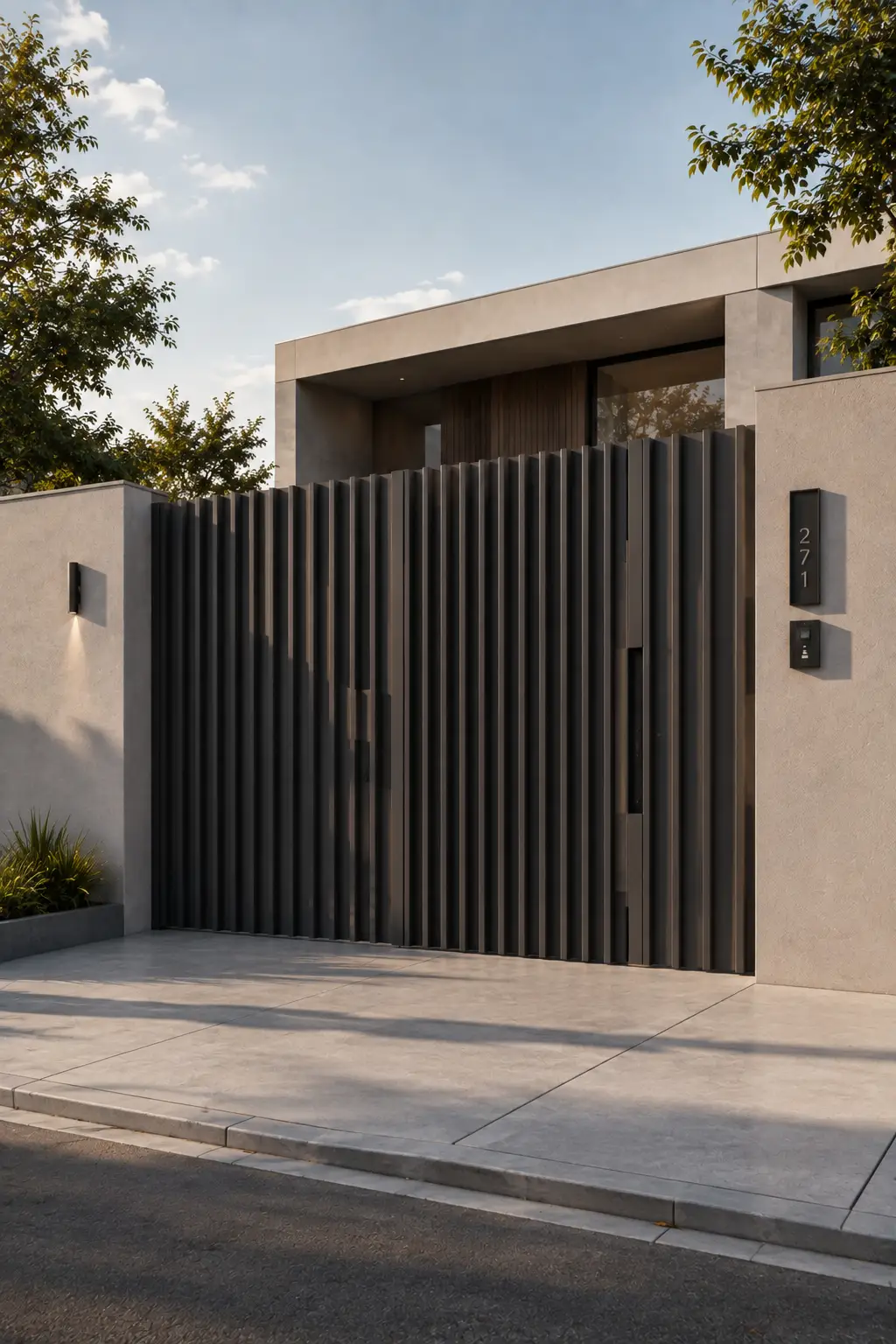
Deep vertical fins give this entrance gate a much stronger three dimensional quality than ordinary flat metal panels. Their tall proportions emphasize height, while the repeating graphite elements create a bold architectural rhythm across the entire entrance.
The real impact comes from the depth of each fin. As sunlight moves across the facade, some surfaces catch the light while others fall into shadow, allowing the appearance of the gate to subtly change throughout the day without relying on extra decoration.
Warm neutral boundary walls provide a clean contrast that lets the dark metal structure stand out. Minimal wall lighting, vertical house numbers, and a discreet access panel continue the sharp architectural language without competing with the gate itself.
Pro Tip: Choose deeper fins with controlled spacing if you want stronger shadows and visual dimension while still maintaining privacy from the street.
5. Micro Ribbed Bronze Brings Warmth to a Minimal Entrance
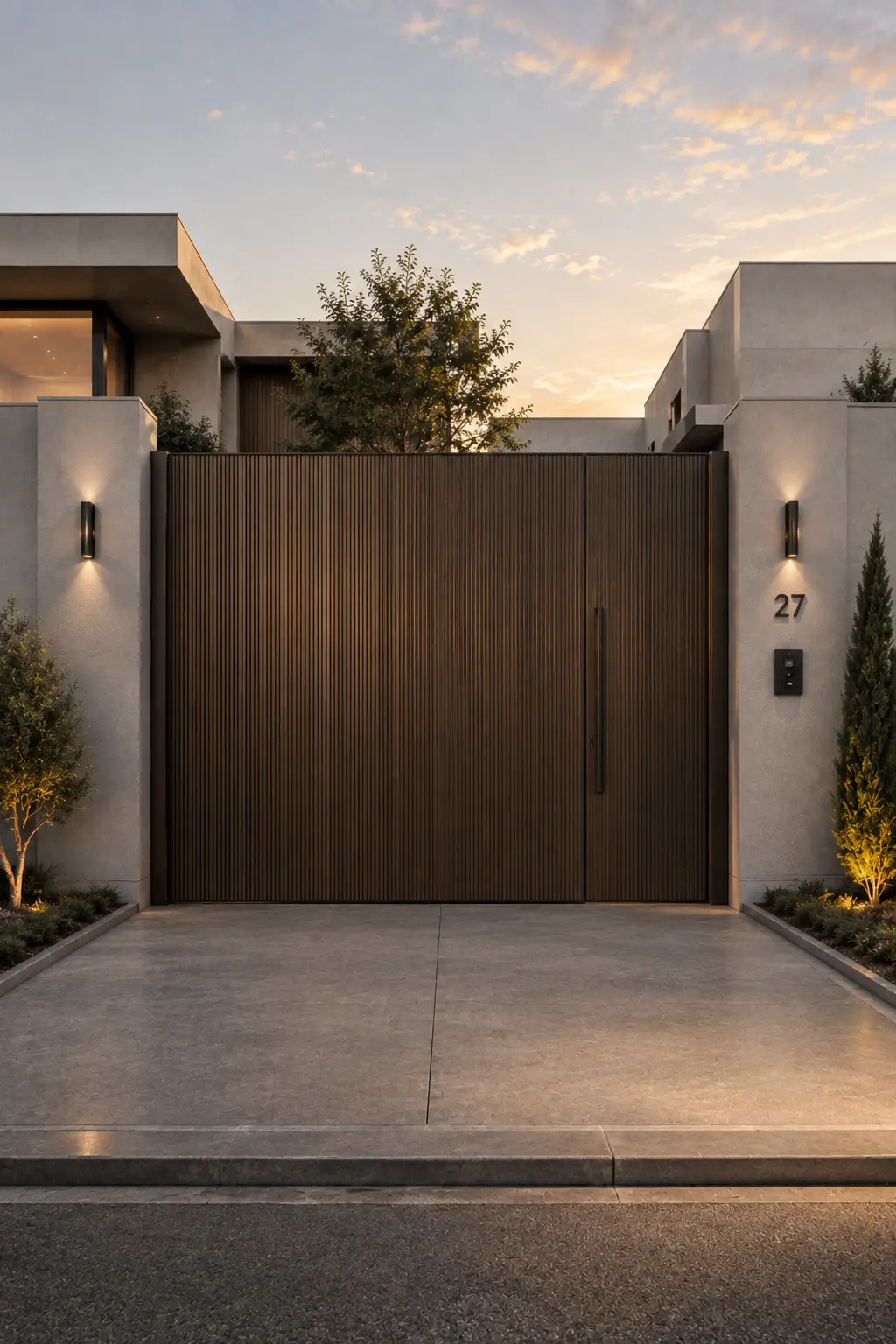
Fine vertical ribbing gives this entrance gate a rich sense of texture while preserving its clean, understated form. The closely spaced lines stretch across the tall panels, creating a refined surface that feels detailed without relying on decorative patterns or unnecessary ornament.
The muted bronze finish brings warmth to the design and offers a softer alternative to the black and graphite tones often used on modern gates. Under natural light, the narrow ribs catch subtle highlights that make the bronze appear deeper and more dimensional throughout the day.
Light neutral boundary walls balance the darker gate and help its warm metallic character stand out. Slim wall lights, discreet house numbers, and the integrated pedestrian access keep every element visually connected, giving the entire entrance a polished architectural finish.
Pro Tip: Choose a dark or muted bronze rather than a bright gold finish to keep ribbed metal sophisticated and easier to coordinate with neutral exterior materials.
6. Integrated Lighting Turns a Solid Gate Into a Nighttime Feature
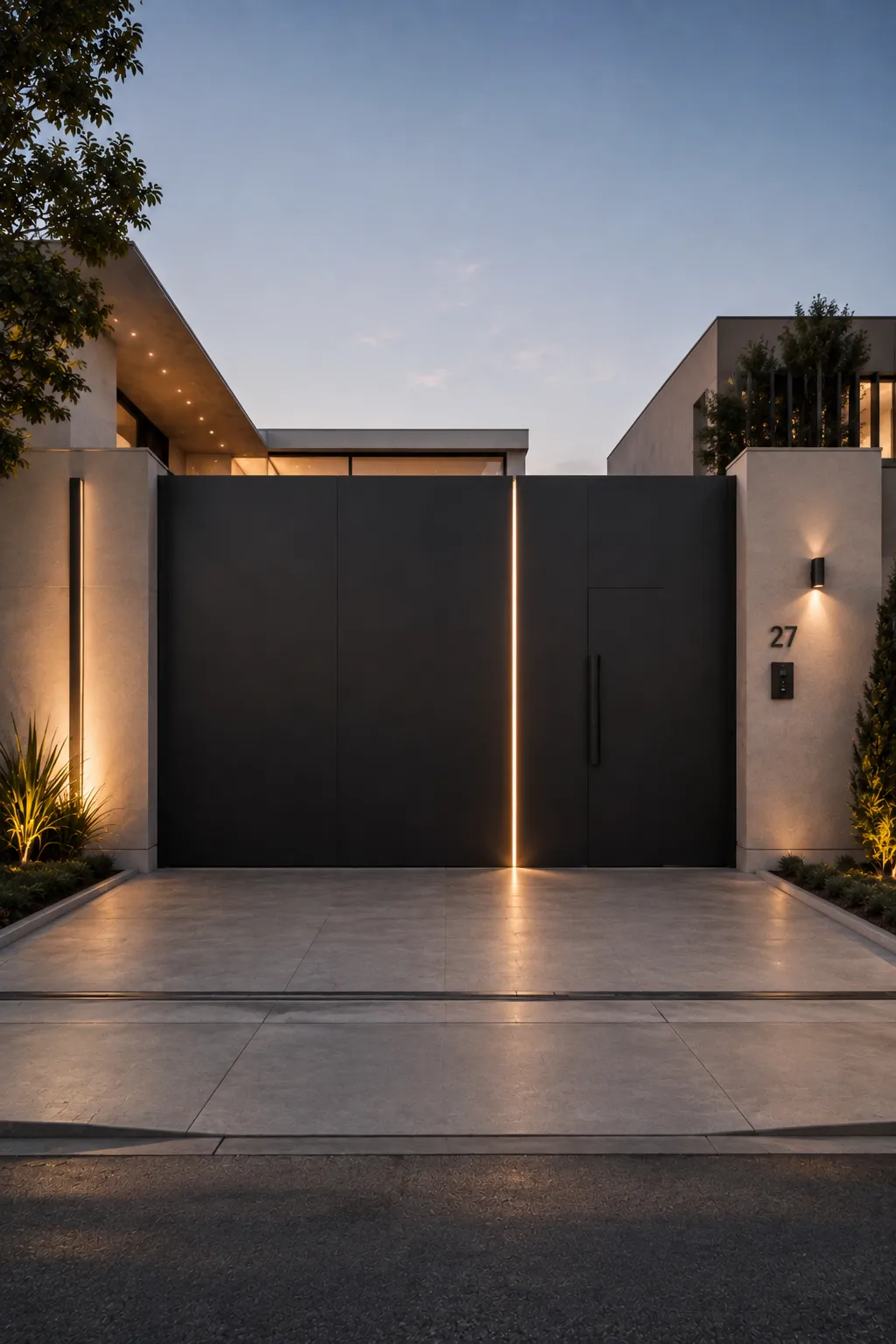
A smooth graphite gate creates a bold, uninterrupted surface that feels especially refined when paired with carefully integrated lighting. Instead of decorative panels or patterns, this design relies on clean proportions and a nearly seamless finish to give the entrance its strong architectural presence.
The narrow vertical light reveal becomes the defining feature of the gate. Its warm glow cuts through the dark metal with precision, creating a striking contrast after sunset while also emphasizing the height of the entrance. The effect feels dramatic without making the design overly complicated.
Matching lighting along the boundary wall brings the whole frontage together and adds useful illumination around the driveway. Light neutral walls soften the dark gate, while discreet house numbers, minimal hardware, and concealed pedestrian access preserve the streamlined appearance.
Pro Tip: Recess the LED source inside a narrow channel rather than leaving the strip exposed to create a softer, more architectural line of light.
Also Read: 12 Chic Narrow Hallway Decor Ideas for Entryways
Also Read: 12 Smart Entrance Hall Ideas That Blend Style and Function
7. Champagne Bronze Panels Give a Dark Frame a Refined Contrast
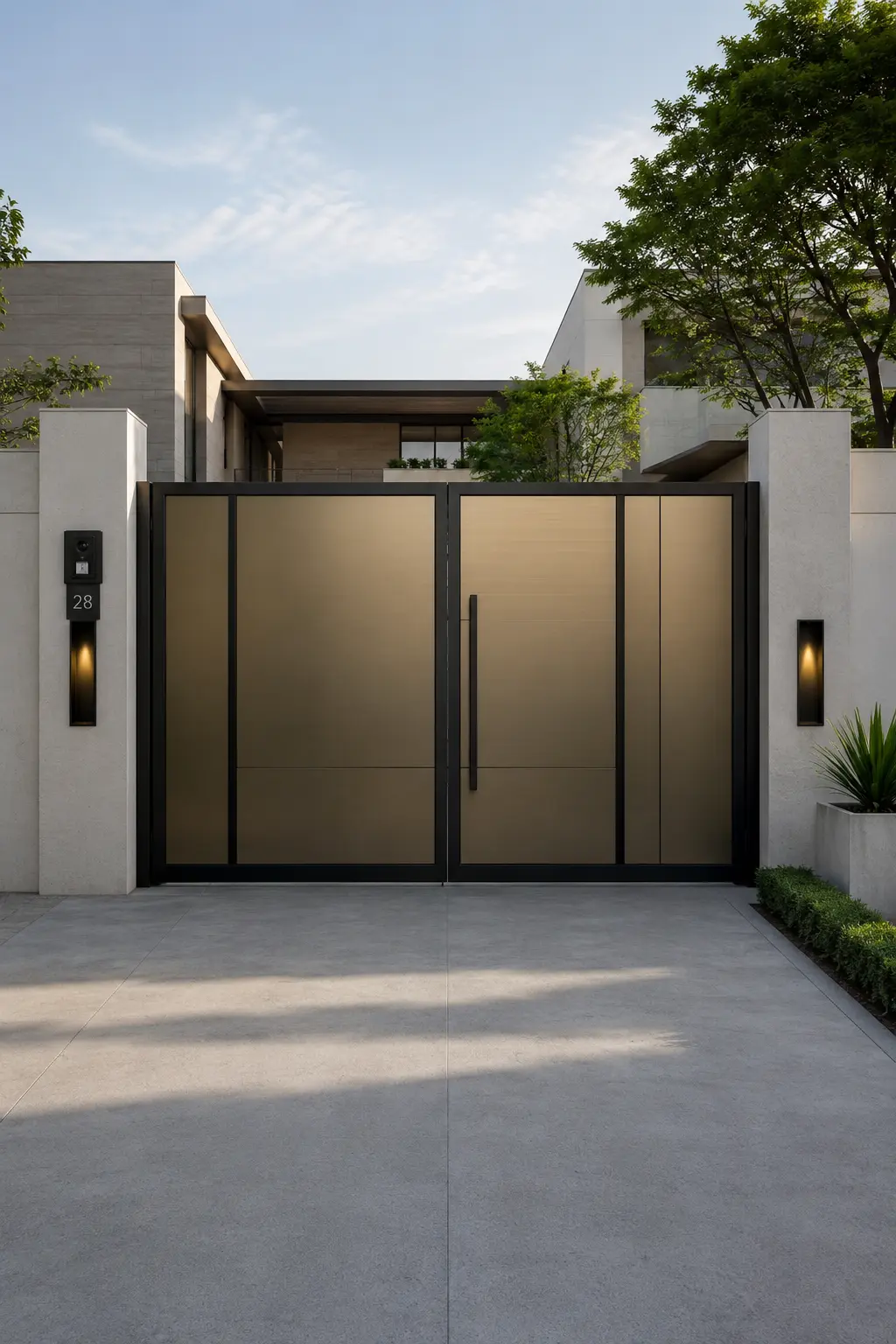
Large champagne bronze panels bring a softer, more polished character to this modern entrance gate. Instead of relying on decorative patterns, the design uses broad uninterrupted surfaces that allow the metallic finish itself to become the main visual feature.
A slim matte black frame creates crisp divisions around each panel and gives the warm bronze tone a stronger architectural edge. The contrast also helps define the gate’s proportions, while the integrated pedestrian section keeps the overall frontage looking neat and cohesive.
Light neutral boundary walls make the bronze finish stand out without creating an overly flashy entrance. Minimal wall lighting, a long dark handle, and simple access controls complete the design with details that feel purposeful rather than decorative.
Pro Tip: Choose a muted champagne or brushed bronze finish instead of bright gold, then pair it with matte black framing to create a warmer look that still feels distinctly modern.
8. Asymmetrical Panels Give the Entrance a Custom Built Look
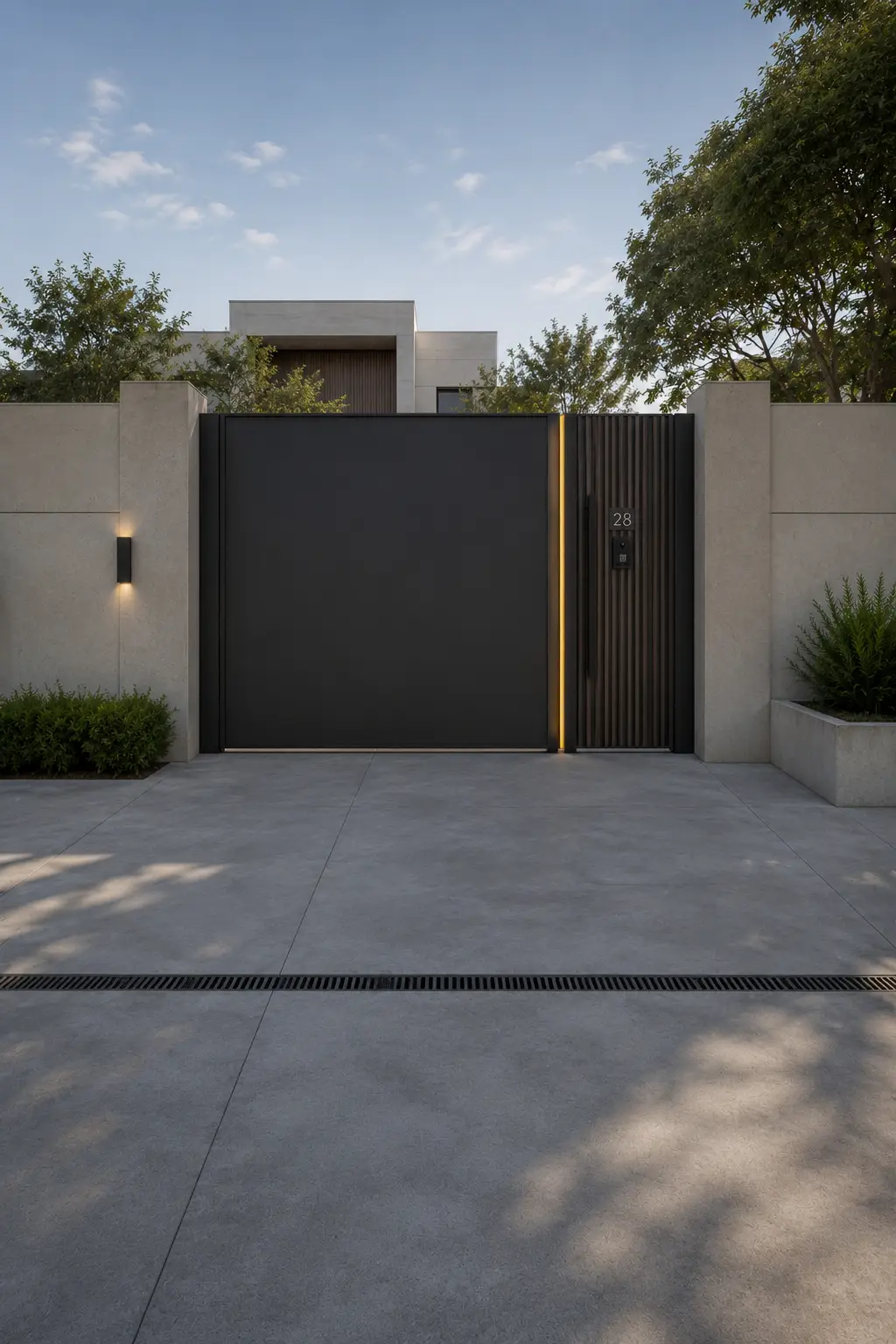
An asymmetrical layout makes this entrance feel more architectural than a conventional gate with matching panels. The broad solid graphite section creates a strong sense of privacy, while the narrower vertical ribbed section introduces texture and breaks up the large dark surface.
A slim illuminated reveal between the two sections makes the contrast even more intentional. During the day, it acts as a precise dividing line between the smooth and textured finishes. In the evening, the warm glow adds depth and gives the entrance a distinctive identity from the street.
The narrow section also provides a natural place for house numbers and access controls without cluttering the main gate. Paired with pale concrete walls and restrained planting, the uneven proportions feel balanced, purposeful, and tailored to the architecture of the home.
Pro Tip: Let one panel dominate the composition and keep the secondary section noticeably narrower so the asymmetry looks intentional rather than like two mismatched gates.
9. Deep Green Panels Bring a Sophisticated Twist to Minimal Design
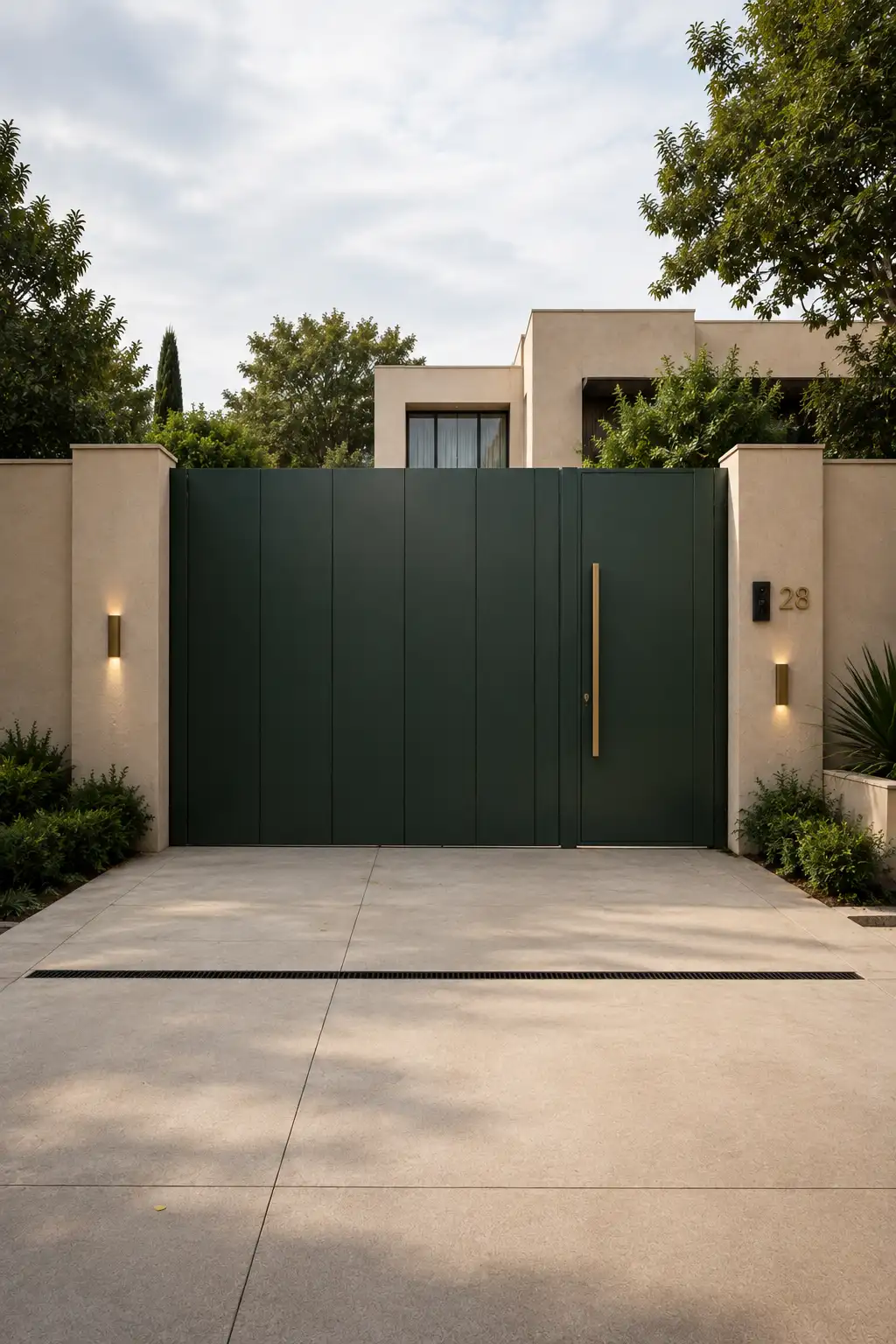
Deep green gives this entrance gate a distinctive identity while preserving the simplicity of a modern exterior. The tall flush panels create a broad, uninterrupted surface, with narrow vertical joints adding just enough definition to keep the design from feeling overly plain.
The muted forest tone offers a refreshing alternative to the graphite and black finishes commonly seen on contemporary gates. Against warm beige boundary walls, the green feels rich and grounded, while changing daylight brings out subtle variations in its color without making it appear overly bold.
A long brass toned handle introduces a warm metallic accent that immediately elevates the simple panel design. Coordinated wall lights, understated house numbers, and carefully placed greenery complete the entrance while allowing the unusual gate color to remain the main attraction.
Pro Tip: Pair deep green metal with warm neutral walls and restrained brass details to create contrast without introducing too many competing colors.
10. Two Tone Block Panels Create a Bold Geometric Entrance
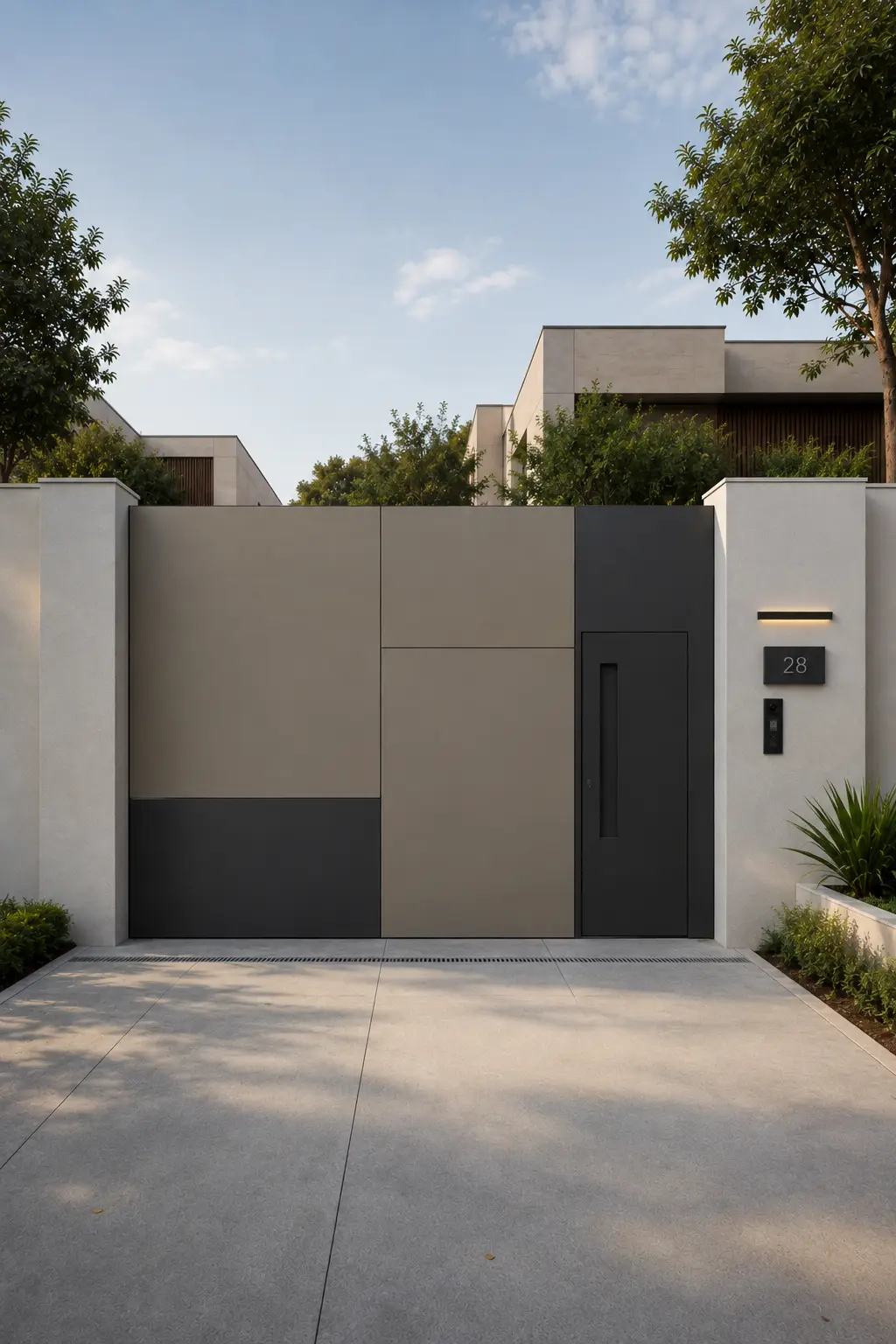
Large color blocked panels give this entrance gate a graphic architectural quality without introducing unnecessary decoration. Warm greige sections cover most of the surface, while deep graphite panels create contrast and visually divide the broad gate into carefully proportioned areas.
The asymmetrical arrangement is what makes the design feel distinctive. Instead of repeating identical panels across the entrance, different sized rectangular sections create a subtle geometric composition while the flush surfaces keep everything looking streamlined and sophisticated.
A dark pedestrian door blends naturally into the graphite section, helping it feel like part of the overall design rather than a separate addition. Simple wall lighting, minimal house numbers, and pale boundary walls complete the entrance without competing with the strong two tone layout.
Pro Tip: Limit the palette to two complementary neutral finishes and use larger color blocks rather than many small panels to keep the entrance refined and visually balanced.
11. Smoked Glass Panels Bring a Lighter Feel to a Private Entrance
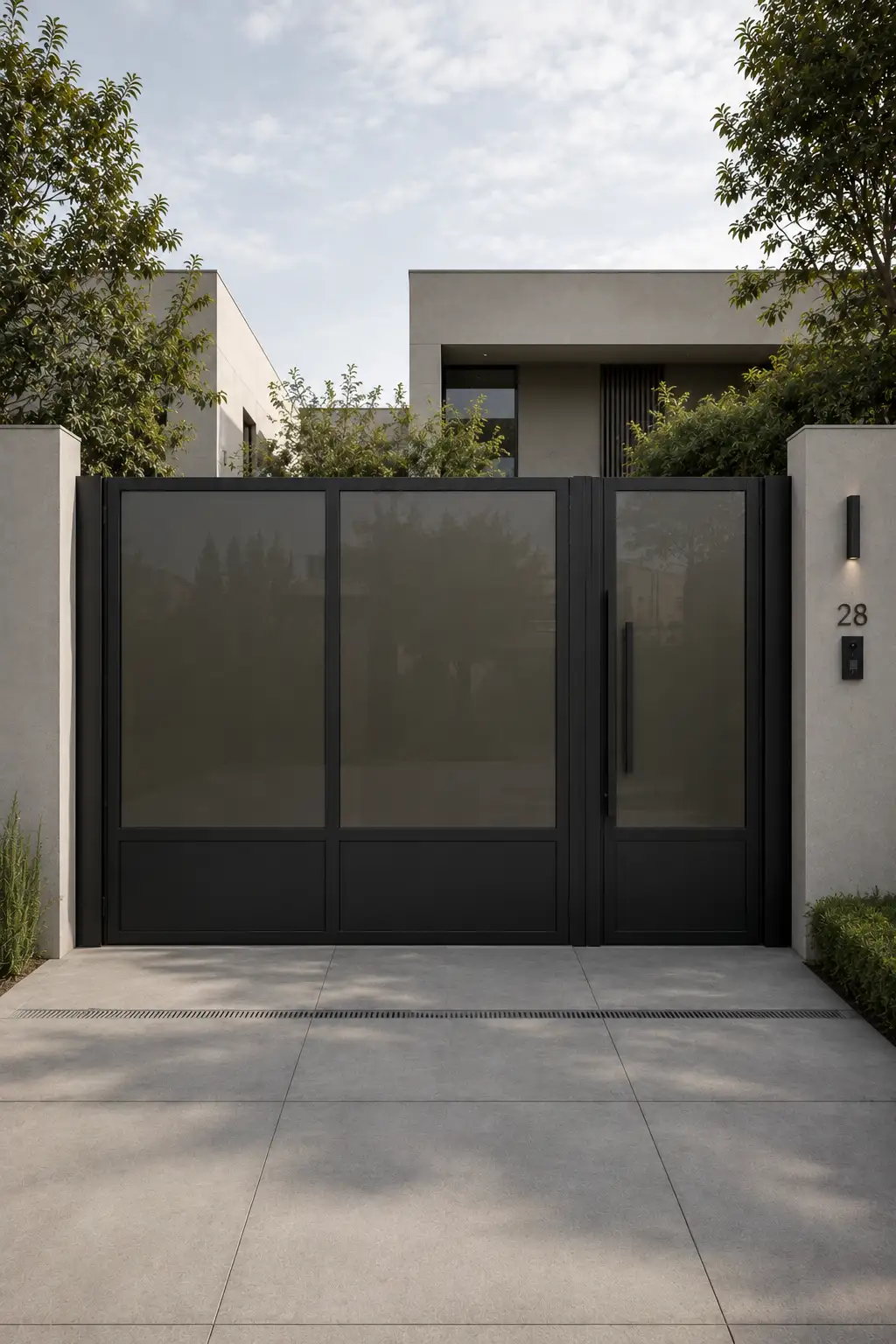
Smoked glass gives this entrance gate a lighter visual presence while still keeping the property behind it comfortably screened. Large glass panels replace the usual solid metal surface, giving the entrance a more open and sophisticated character without sacrificing its sense of privacy.
The slim black metal framework creates crisp borders around each panel and adds enough structure to make the gate feel secure. Dark lower panels provide additional coverage near ground level, while the smoked upper sections softly reflect the surrounding trees and architecture throughout the day.
A matching pedestrian section keeps the design consistent across the full entrance. Paired with pale boundary walls, a long minimal handle, subtle wall lighting, and simple house numbers, the glass becomes an elegant architectural feature rather than an overly decorative element.
Pro Tip: Choose laminated privacy glass with a neutral smoked finish so you get soft reflections and filtered light without leaving the interior of the property clearly visible.
12. Layered Geometric Frames Turn the Gate Into a Sculptural Feature
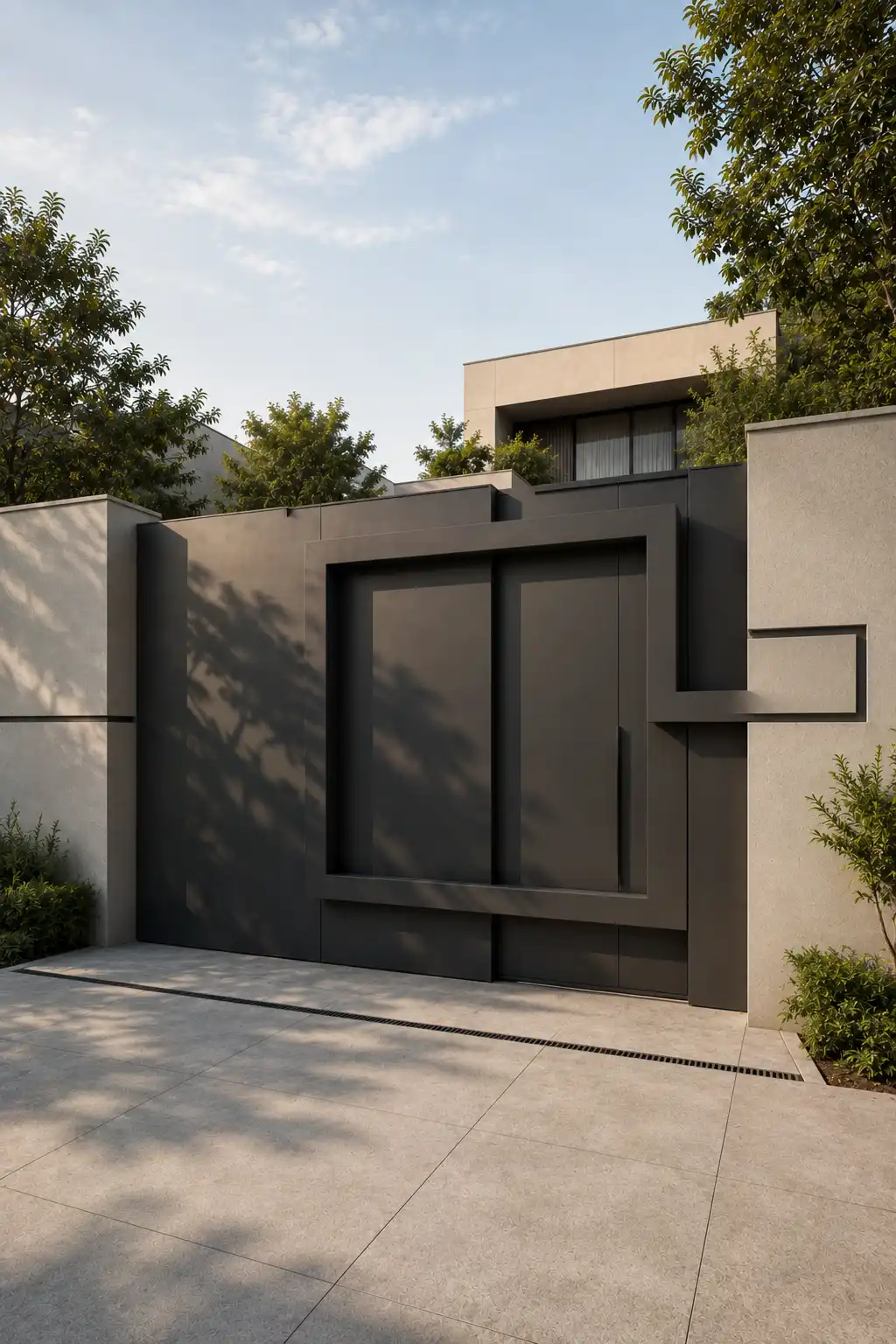
Layered framing gives this entrance gate a strong three dimensional presence without depending on decorative patterns. The oversized rectangular forms project slightly from the solid dark panels, creating a bold composition that feels more like part of the architecture than a conventional gate.
The different depths become especially noticeable when natural light moves across the entrance. Projecting sections cast defined shadows onto the panels behind them, adding visual interest to an otherwise restrained graphite finish and making the design look different from various viewing angles.
Extending parts of the geometric framework toward the surrounding boundary wall helps connect the gate with the wider facade. Neutral wall finishes and simple paving keep the backdrop understated, allowing the layered structure and its unusual proportions to remain the main focal point.
Pro Tip: Keep the number of projecting frames limited and vary their depth slightly so the design feels sculptural and intentional rather than crowded with unnecessary geometry.
13. Integrated Gate and Entry Wall Create One Seamless Facade
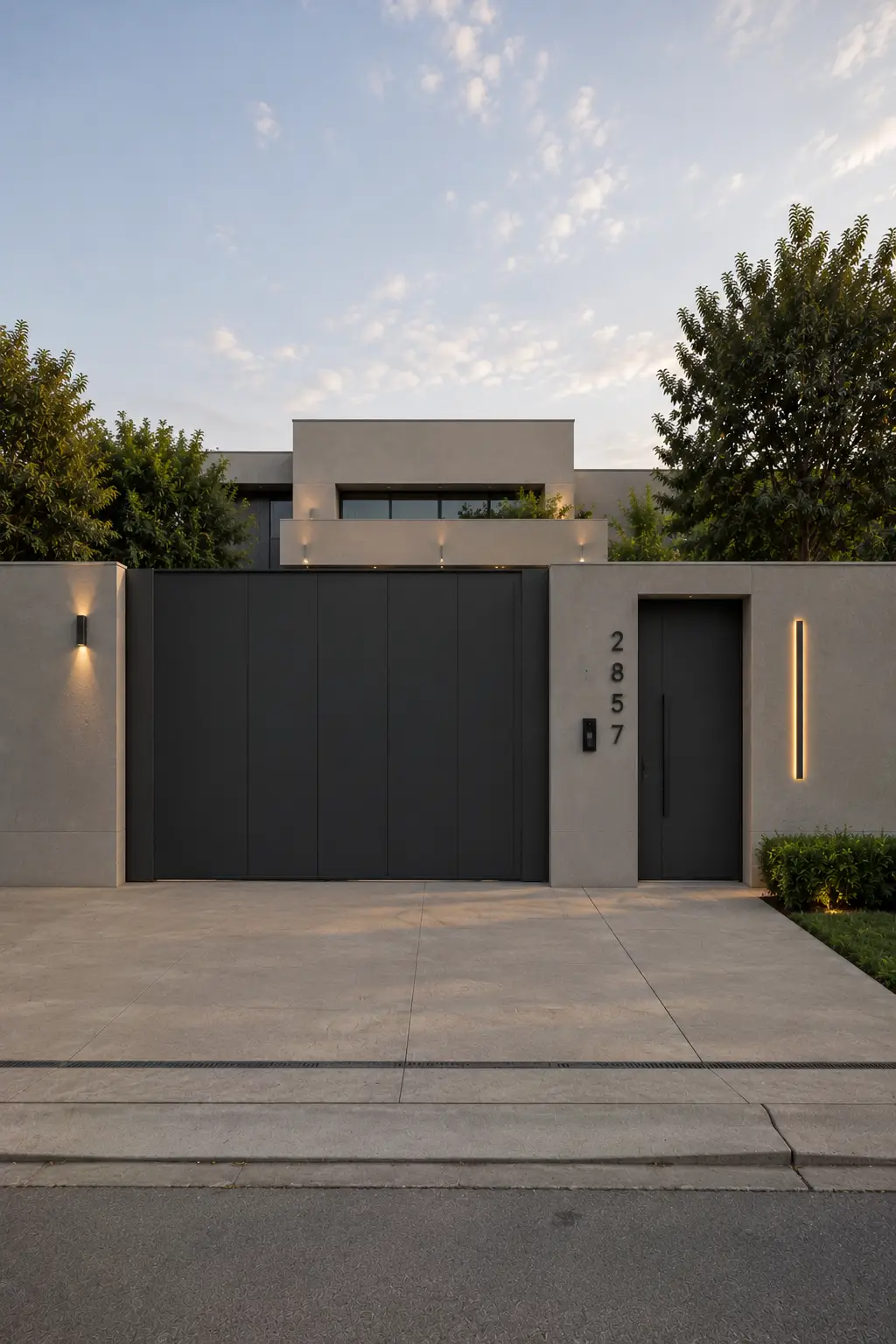
Treating the driveway gate and pedestrian entrance as one architectural composition gives this frontage a particularly polished appearance. The broad graphite gate sits flush with the surrounding structure, allowing its simple vertical panels to feel like a natural extension of the home rather than a separate feature.
The recessed pedestrian door adds depth without disrupting the clean lines of the facade. Vertical house numbers and a discreet access panel occupy the space between the two entrances, giving practical details a deliberate place within the overall design.
Warm architectural lighting completes the composition and softens the contrast between the dark metal and pale rendered walls. With the gate, doorway, lighting, signage, and boundary wall sharing the same visual language, the entire entrance feels carefully planned from the start.
Pro Tip: Coordinate the gate, pedestrian door, house numbers, and lighting during the initial design stage so every element aligns naturally with the surrounding wall proportions.
A Strong Entrance Starts With the Right Details
A well designed entrance gate can do much more than provide privacy and security. Materials, proportions, color, texture, lighting, and the relationship between the gate and boundary wall all shape how the exterior is experienced. Even a simple design can make a striking first impression when these details feel intentional and connected.
The best choice is one that complements the architecture of the home rather than competing with it. Whether that means warm bronze, deep green, smoked glass, sculptural fins, or a streamlined graphite finish, keeping the overall composition balanced will help the entrance feel distinctive today while maintaining a polished appearance for years to come.
