
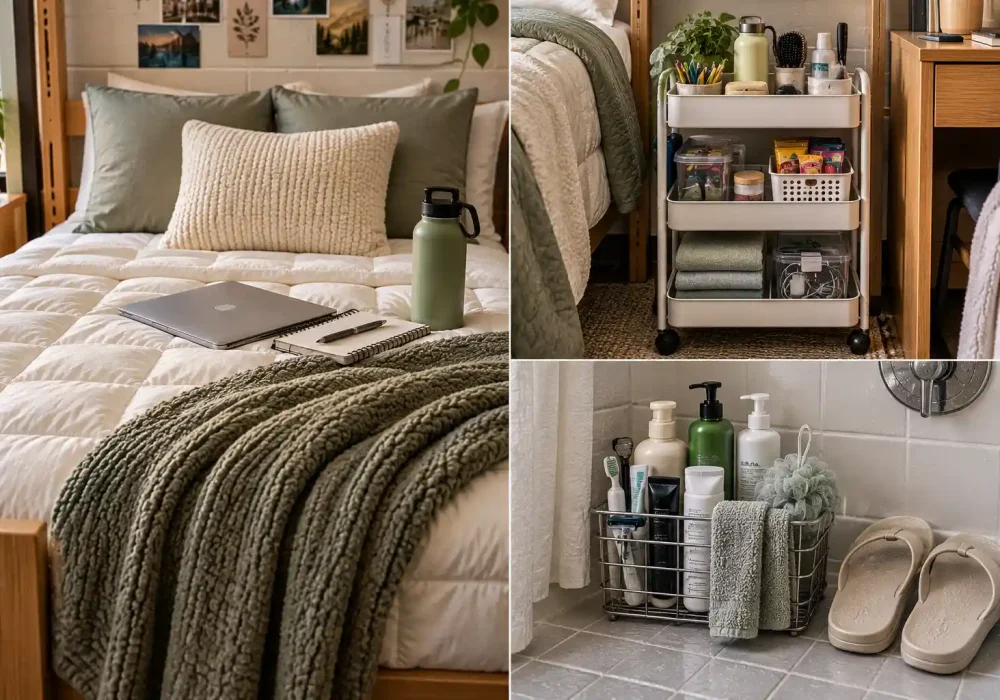
Move-in day has a way of exposing exactly what nobody warned you about. Standard sheets that do not fit, one outlet for four devices, a closet that fits roughly half of what you actually brought. The list below is not padded with items that sound nice in theory but rarely get used. Each one made the cut because there is a genuine, practical reason behind it.
Below are 18 dorm room essentials, each explained with the actual reasoning behind why it matters and a realistic, estimated price so you know what to budget for before move-in.
18 Dorm Room Essentials and Why Each One Matters
Every item below solves a specific, common dorm problem rather than existing purely for decoration.
More Ideas:
- 12 Pink Dorm Room Ideas for a Cozy and Stylish Space
- 10 Winter Bedroom Decor Ideas With Prices to Shop
- 11 Romantic Bedroom Decor Ideas for a Dreamy Space
- 14 Realistic Fall Bathroom Decor Ideas That Actually Work
1. Twin XL Sheets, Two Sets
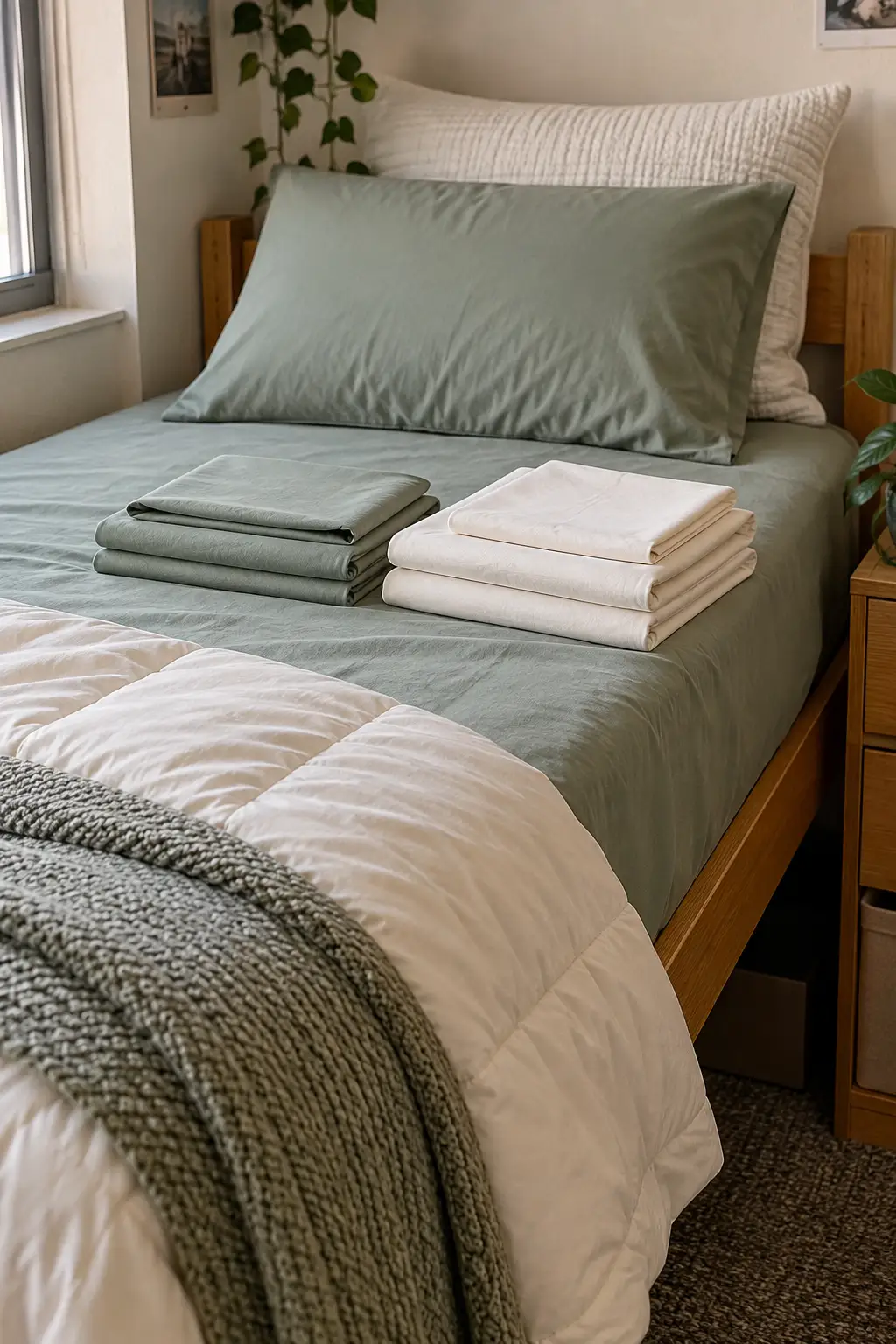
Dorm mattresses are Twin XL, not standard Twin, which means regular sheets genuinely will not fit properly no matter how close the size seems on paper. Buying two sets means one is always clean while the other is in the wash, which matters considerably more once laundry becomes a weekly chore rather than something handled automatically at home.
- A fitted sheet, flat sheet, and pillowcase set sized specifically for Twin XL
- A second matching or coordinating set for rotation
- Fabric suited to your dorm’s typical room temperature
- A laundry bag to keep the spare set contained until wash day
Estimated Cost: $25 to $50 per set, so roughly $50 to $100 for two.
2. Mattress Topper
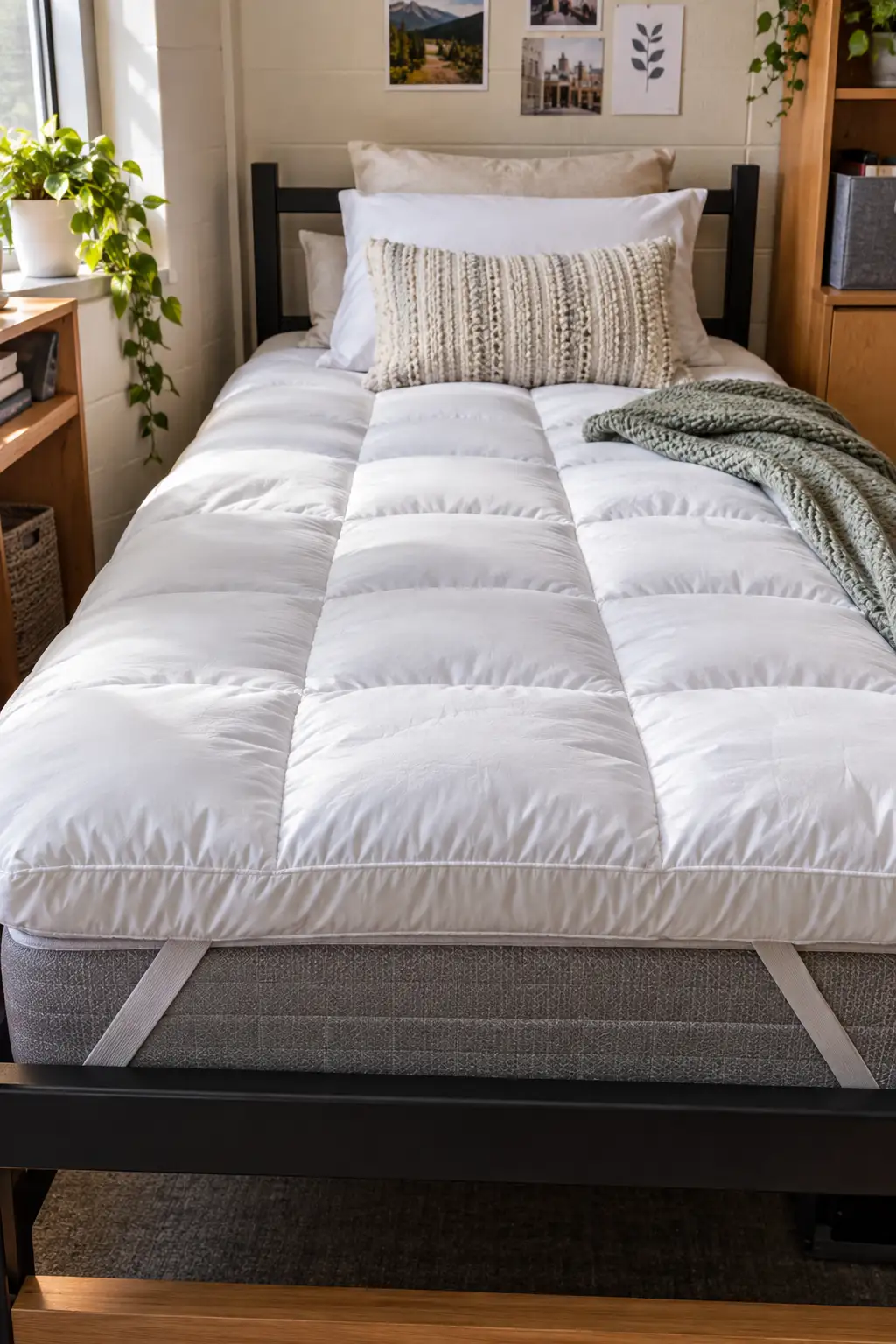
Dorm mattresses are notoriously thin and stiff, and a topper is the single upgrade most returning students consistently say made the biggest actual comfort difference in their room.
- A memory foam or gel-infused topper sized for Twin XL
- A topper cover or protector for easy washing
- Enough thickness to genuinely soften the base mattress
- Storage space considered, since toppers do take up room when not in use
Estimated Cost: $40 to $90, depending on thickness and material.
3. Comforter or T-Shirt Quilt

A dorm bed doubles as a couch, a desk, and a dining spot for most students, which means the bedding needs to feel good to sit on throughout the day, not just to sleep under at night.
- A comforter or quilt in a durable, easy-to-wash fabric
- A design or color that can handle daily use rather than just display
- A size suited to a Twin XL mattress
- A washable duvet cover, if using a comforter insert
Estimated Cost: $30 to $80, depending on material and whether it is a store-bought comforter or a custom t-shirt quilt.
4. Extra Pillows

Beyond actual sleep, pillows genuinely prop up laptop work and studying sessions done directly in bed, making this a real daily-use item rather than something purely decorative.
- Two or three additional pillows beyond a standard sleeping pillow
- At least one firmer pillow suited to sitting upright
- Washable pillowcases for each one
- A mix of sizes if space allows for variety
Estimated Cost: $10 to $25 per pillow.
5. Under-Bed Storage Bins
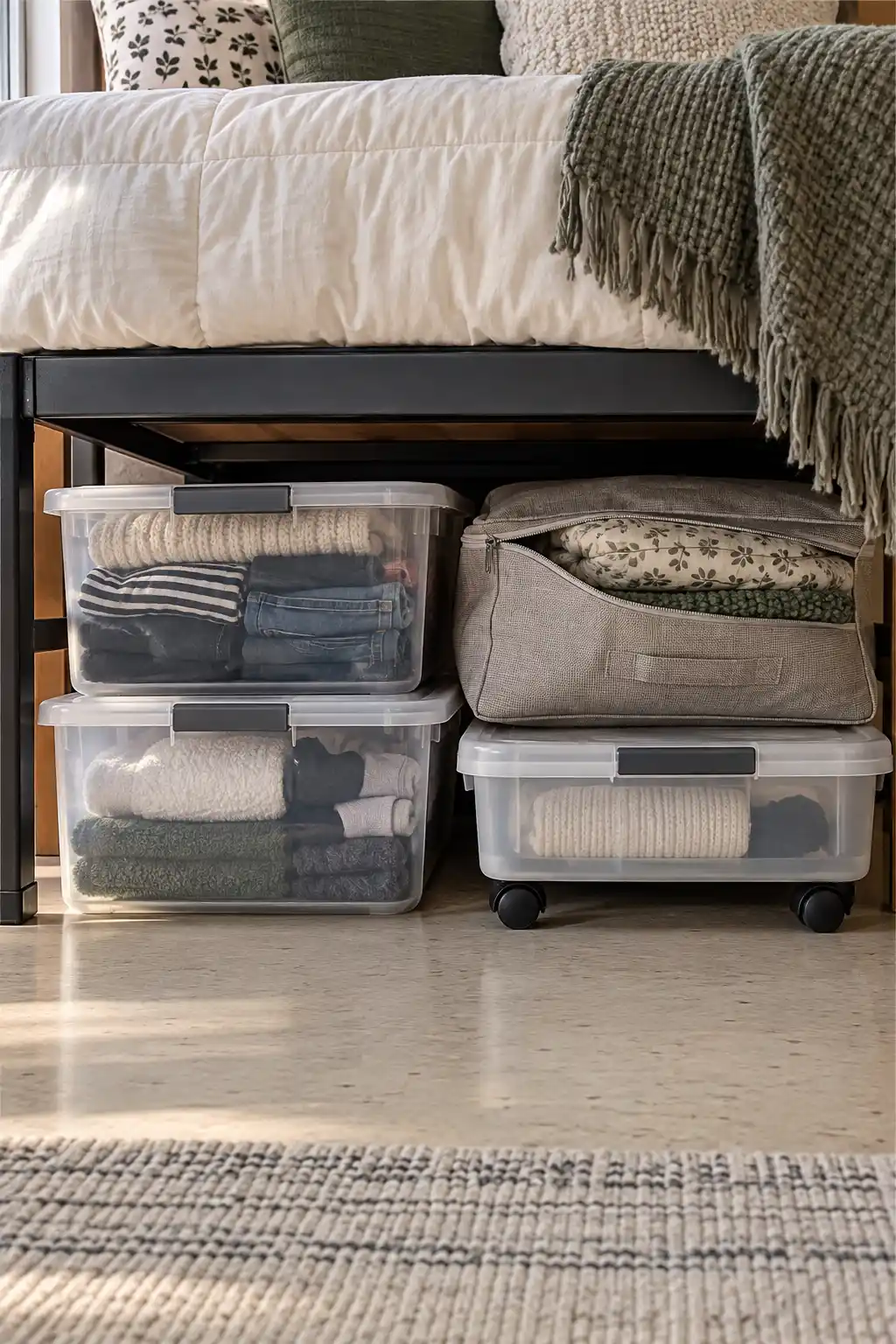
Dorm closets are genuinely tiny, and the space underneath a lofted or raised bed is often the only real extra storage available anywhere in the room.
- Flat, stackable bins sized to fit under a raised or lofted bed frame
- Clear bins for easy identification of contents
- Lids to keep stored items protected from dust
- A measurement of your specific bed’s clearance before buying
Estimated Cost: $10 to $25 per bin.
6. Stackable Drawers or a Rolling Cart
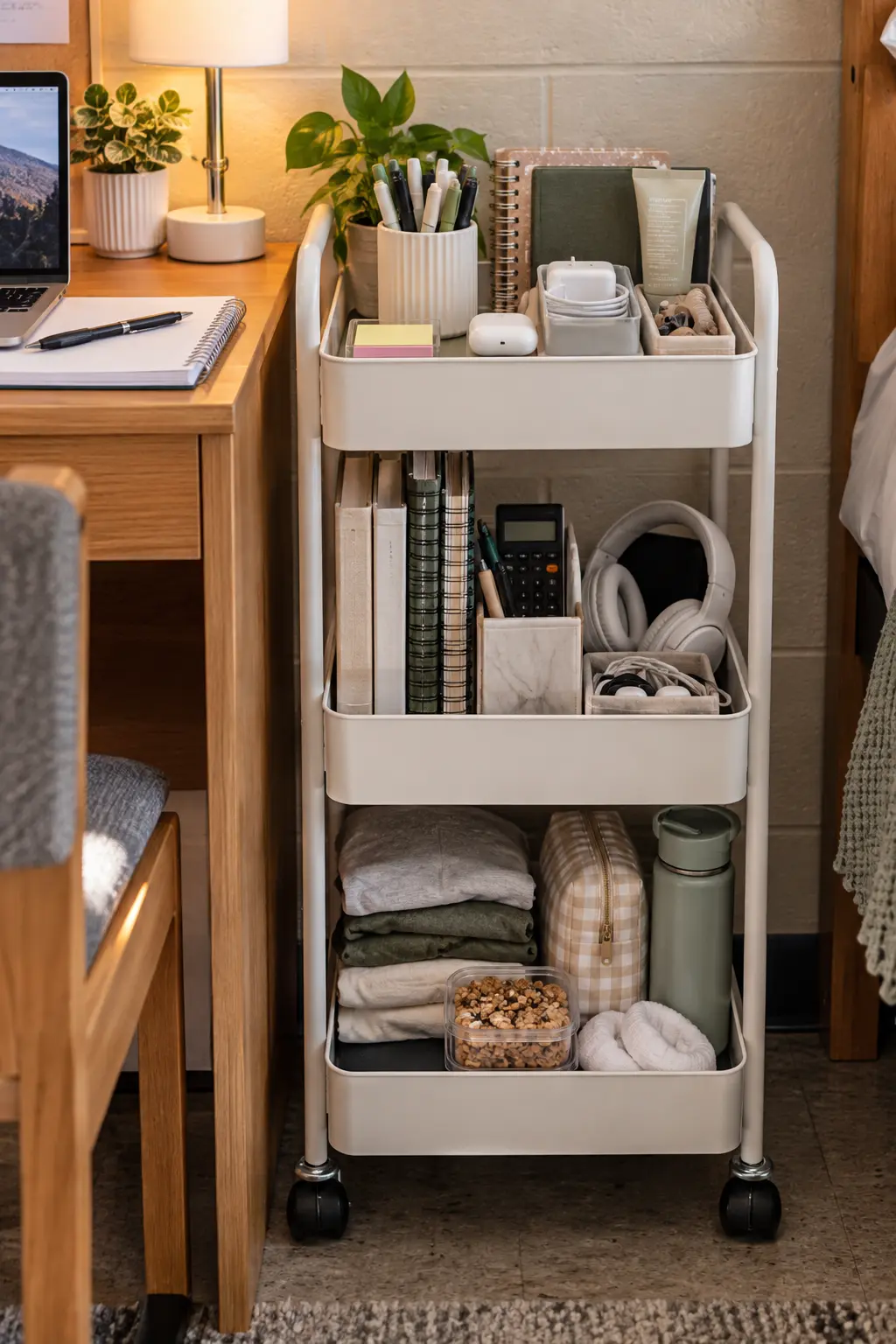
When closet space is shared with a roommate and cannot be divided evenly, stackable drawers or a rolling cart provide genuinely useful additional storage for clothes or supplies outside the closet entirely.
- Stackable plastic drawers or a rolling cart with multiple tiers
- A size that fits realistically within your specific room layout
- Wheels, if choosing a cart, for easy repositioning
- Labels or dividers for organizing contents within each drawer
Estimated Cost: $25 to $60.
7. Over-the-Door Hooks or Organizer
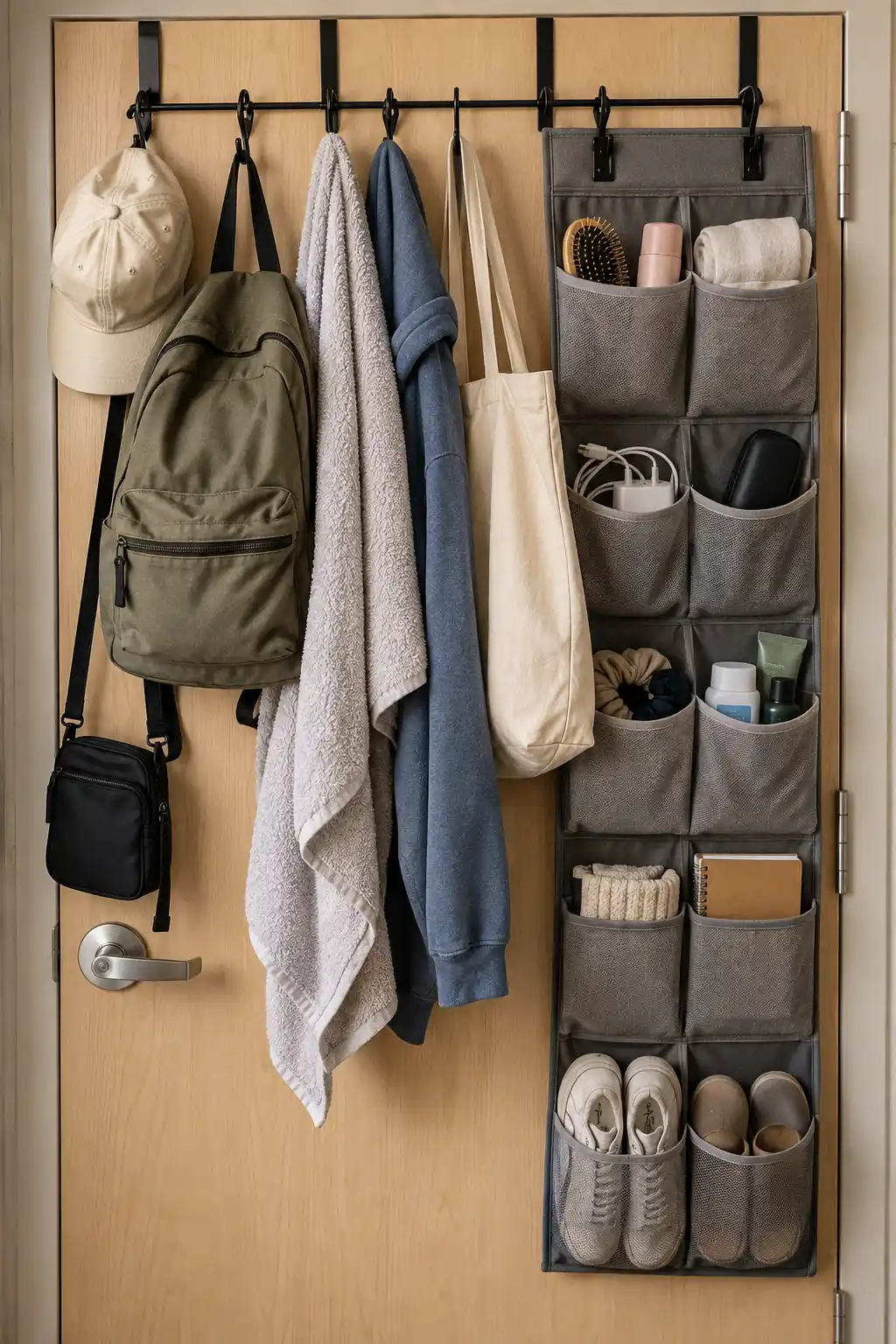
This uses vertical door space that would otherwise sit completely wasted, and it works particularly well for towels, bags, or a small shoe rack.
- An over-the-door hook rack or hanging organizer
- A door thickness measurement to confirm proper fit
- Weight capacity suited to what you plan to hang
- Placement that does not interfere with the door closing fully
Estimated Cost: $10 to $25.
8. Desk Lamp

Dorm overhead lighting is usually harsh fluorescent, and a warm desk lamp genuinely makes late-night studying easier on the eyes while making the whole room feel considerably less institutional.
- A desk lamp with a warm, not cool white, bulb
- An adjustable neck or head for directing light where needed
- A USB port built in, if you want extra charging convenience
- A stable base that will not tip easily on a shared desk
Estimated Cost: $15 to $35.
9. String Lights or Ambient Lighting

String lights soften that same harsh fluorescent glare and remain one of the easiest, lowest-cost ways to make a small, shared dorm room feel genuinely personal.
- Warm white string lights, battery-operated or plug-in depending on outlet access
- Command hooks or clips for damage-free hanging
- A length appropriate for your specific wall or ceiling layout
- A check of your school’s specific policy on string lights before purchasing
Estimated Cost: $10 to $20.
10. Power Strip or Surge Protector
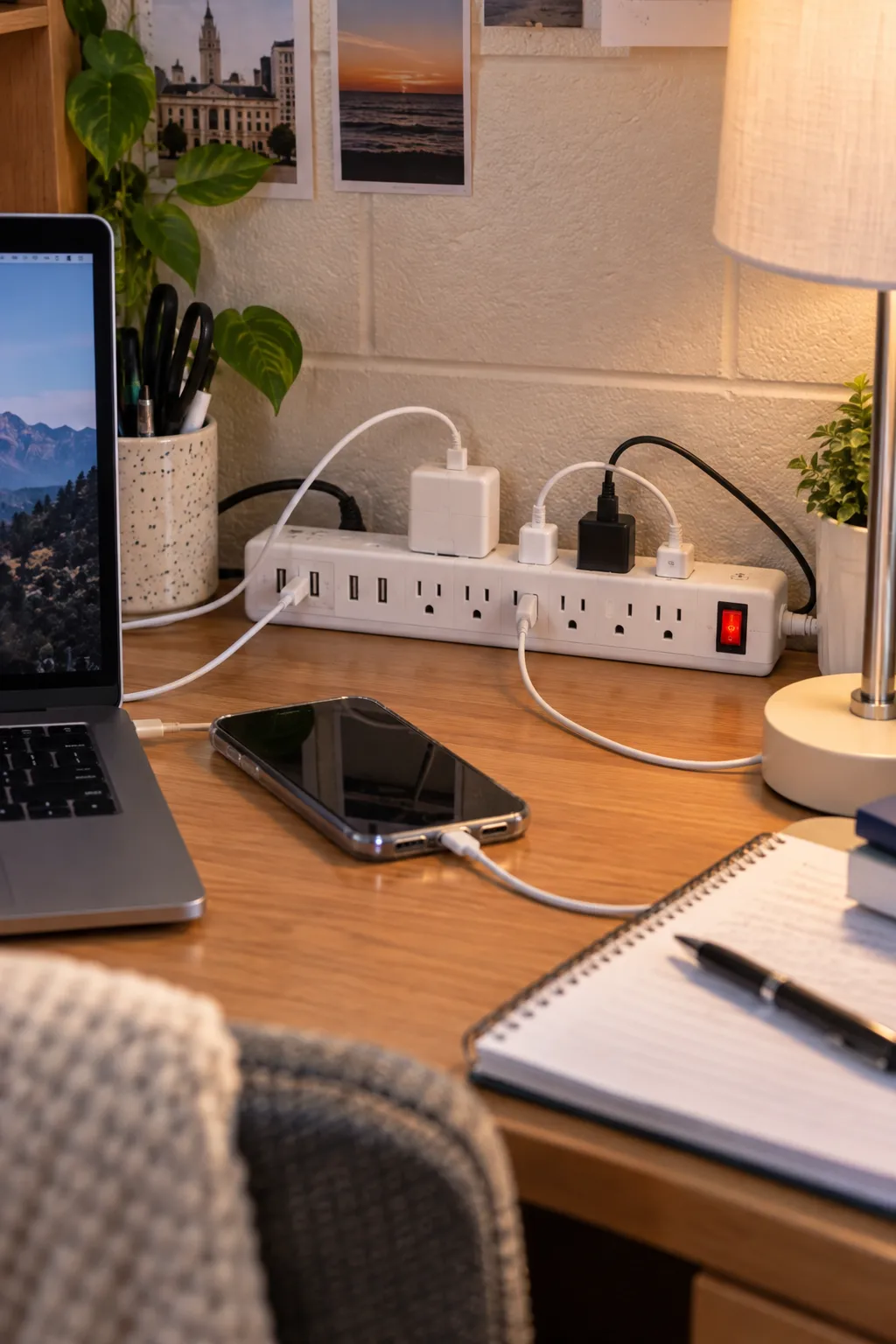
Dorm rooms rarely have enough outlets for a laptop, phone, lamp, and mini fridge all running at once, which makes a power strip a genuine necessity rather than a nice-to-have. Check your school’s specific rules first, since some schools restrict certain types of power strips entirely.
- A surge protector rather than a basic extension cord
- Enough outlets for your actual device count
- USB ports built in, if useful for your specific devices
- Confirmation of your school’s specific policy before purchasing
Estimated Cost: $15 to $30.
11. Shower Caddy
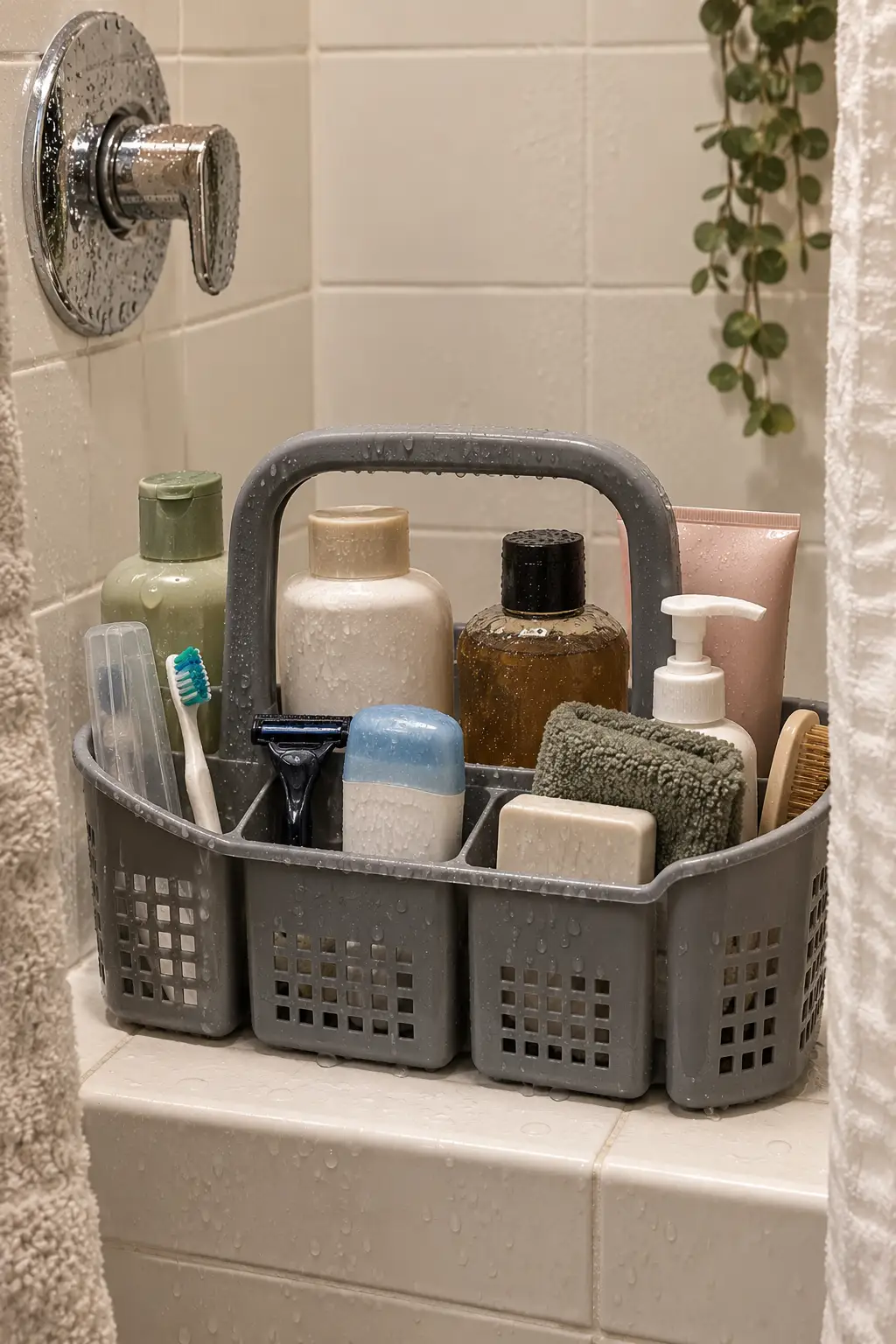
This is essential for anyone using a shared bathroom, keeping toiletries genuinely portable and off wet, communal surfaces between uses.
- A caddy with drainage holes to prevent water pooling
- A sturdy handle for easy carrying to and from the bathroom
- Compartments sized for your specific toiletry bottles
- A hook or hanging option for drying between uses
Estimated Cost: $10 to $20.
12. Shower Shoes or Flip-Flops
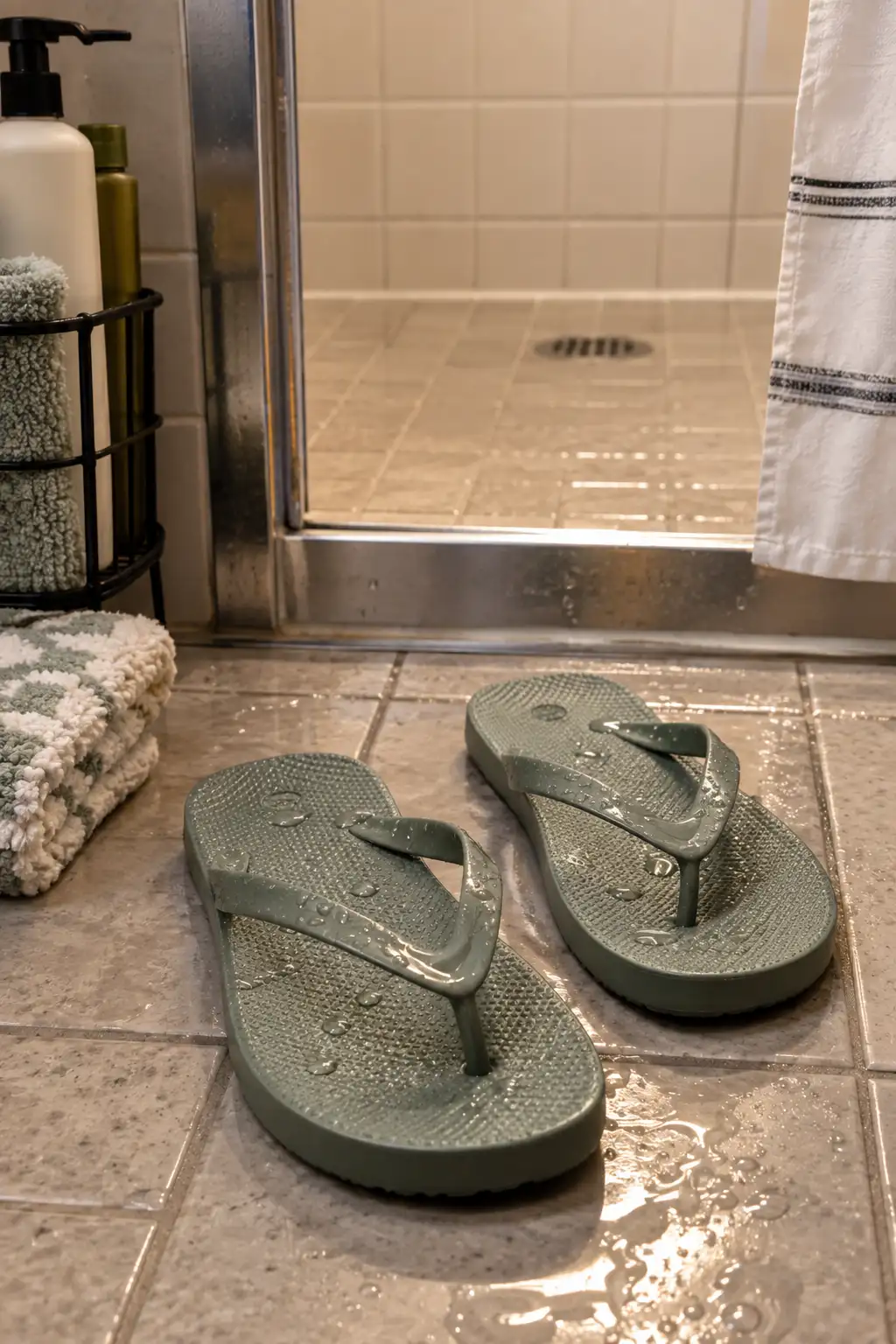
This is a genuine hygiene must for anyone using shared showers, and it shows up as non-negotiable on nearly every incoming student packing list for good reason.
- Waterproof flip-flops or shower shoes with good grip
- A size that fits comfortably for regular wear
- Quick-dry material to avoid lingering dampness
- A dedicated spot near the shower caddy for easy grabbing
Estimated Cost: $8 to $20.
13. Reusable Water Bottle

A reusable bottle cuts down on precious dorm-fridge space and repeated trips to buy bottled water, while also functioning as a simple hydration reminder during long study sessions.
- A durable, leak-proof reusable water bottle
- A size that fits standard dorm room cup holders or bag pockets
- Easy-to-clean materials, given limited communal sink access
- Insulation, if you want drinks to stay cold longer between refills
Estimated Cost: $15 to $35.
14. Microwave-Safe Bowl, Mug, and Utensils

These cover the genuinely realistic late-night ramen or dining-hall-is-closed moments, and they need to be lightweight and easy to wash in a shared communal sink.
- A microwave-safe bowl and mug
- Basic utensils, fork, spoon, and knife
- Lightweight, durable materials that will not chip easily
- A small drying rack or towel for the communal sink area
Estimated Cost: $15 to $30 for a basic set.
15. Mini Fridge, Shared With a Roommate
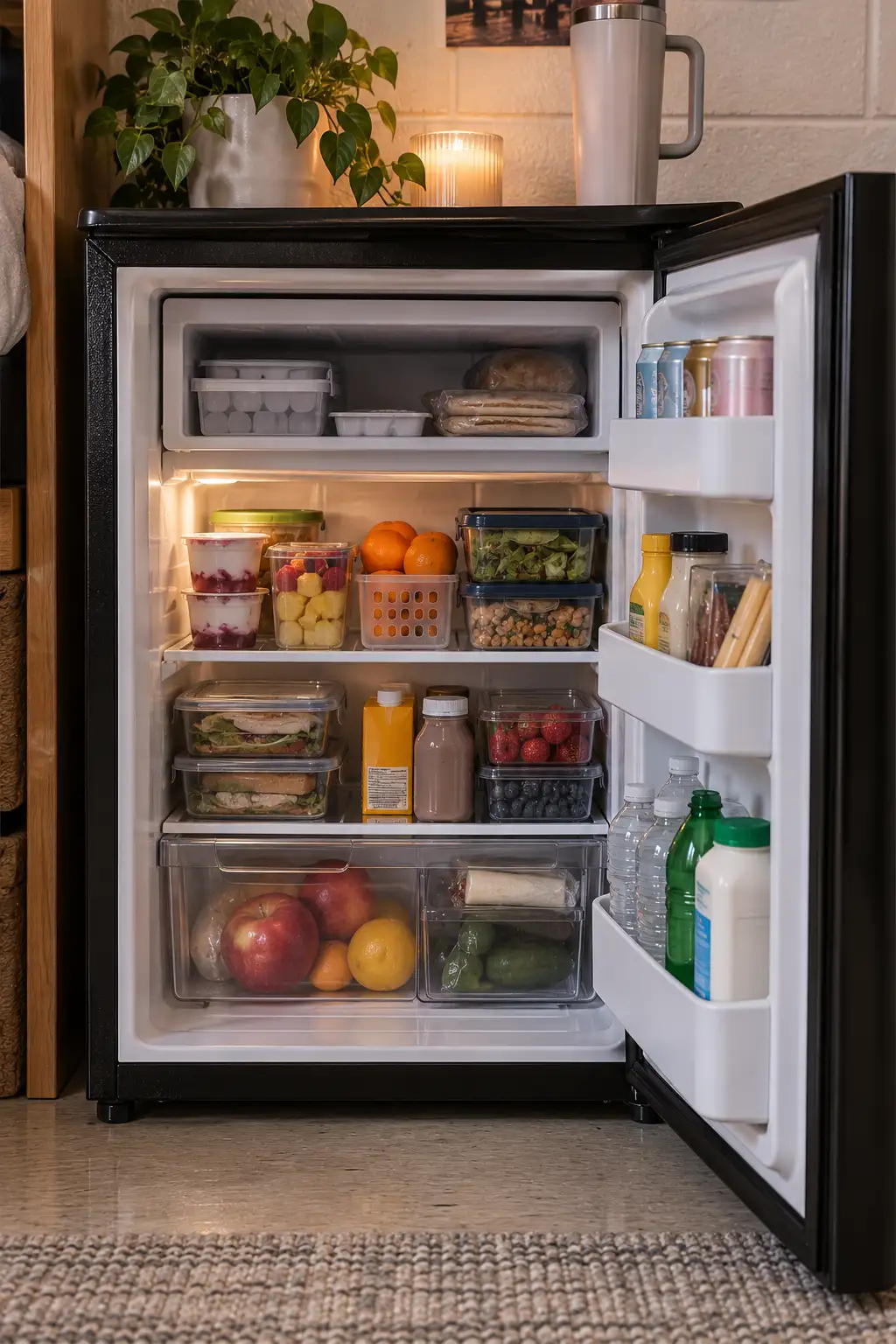
Most dorm rooms are genuinely too small for two separate mini fridges, which makes this a coordinate-before-you-buy item rather than something to purchase independently before checking with your roommate.
- A mini fridge sized appropriately for your specific room’s space and school policy
- A confirmed agreement with your roommate on cost splitting
- A checked wattage limit against your dorm’s electrical policy
- A defrosting and cleaning plan for shared responsibility
Estimated Cost: $80 to $150, typically split between roommates.
16. Small Trash Can and Trash Bags
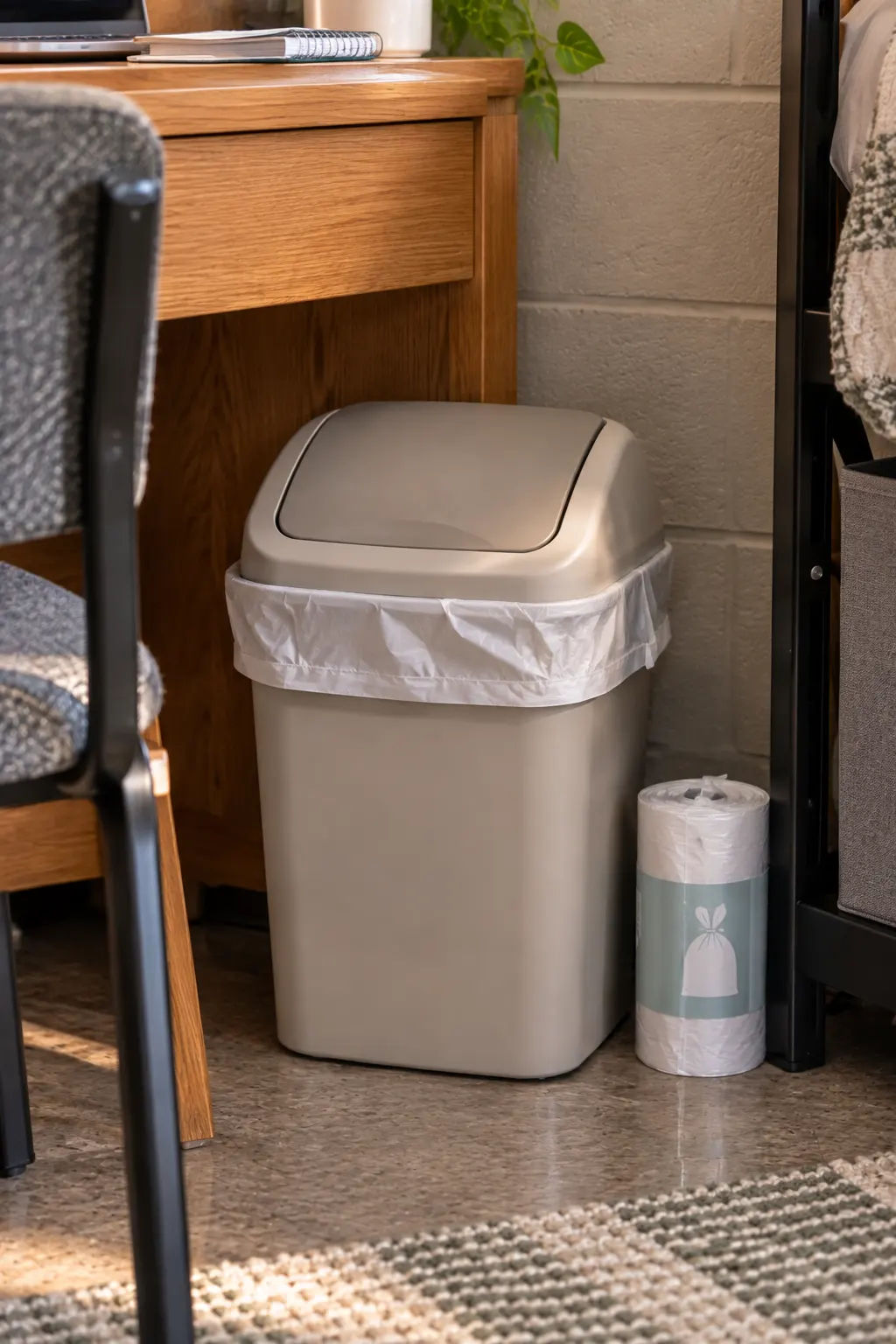
This is often not provided by the school at all, and small rooms genuinely fill up fast, making it easy to forget entirely until move-in day is already underway.
- A small trash can sized appropriately for a compact room
- A supply of trash bags sized to fit the can
- A lid, if odor control matters for your specific space
- A designated spot that does not block walkways
Estimated Cost: $10 to $20 for the can, plus $5 to $10 for a supply of bags.
17. Disinfecting Wipes and a Small Handheld Vacuum
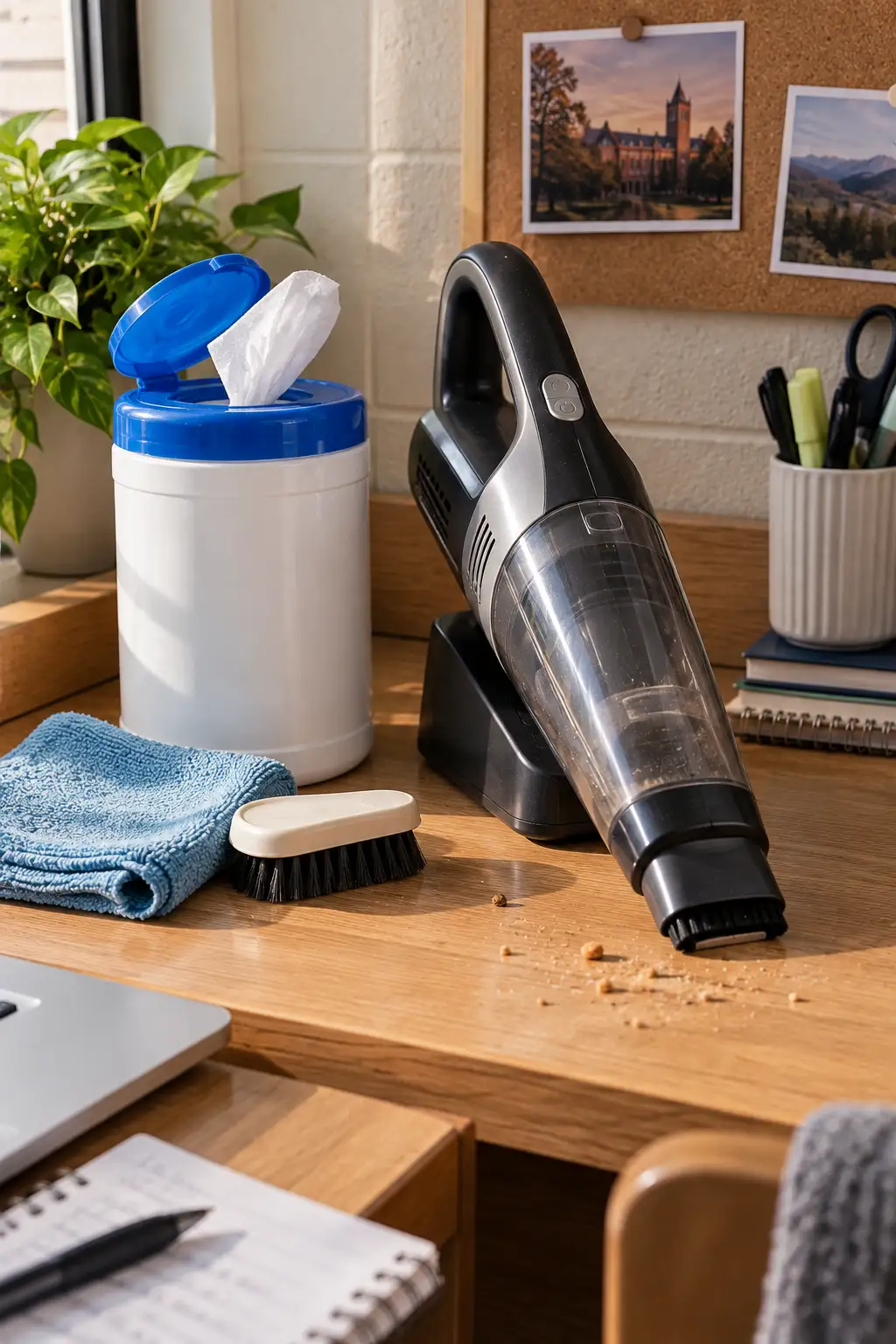
Shared, small spaces get dusty and messy considerably faster than a full bedroom at home, which means quick-clean tools matter more here than an elaborate, full-scale cleaning kit.
- A container of disinfecting wipes for quick surface cleanup
- A small, handheld or cordless vacuum sized for a compact room
- Storage space considered for the vacuum between uses
- A regular cleaning habit, since small rooms show mess quickly
Estimated Cost: $5 to $10 for wipes, $25 to $50 for a small handheld vacuum.
18. Earplugs
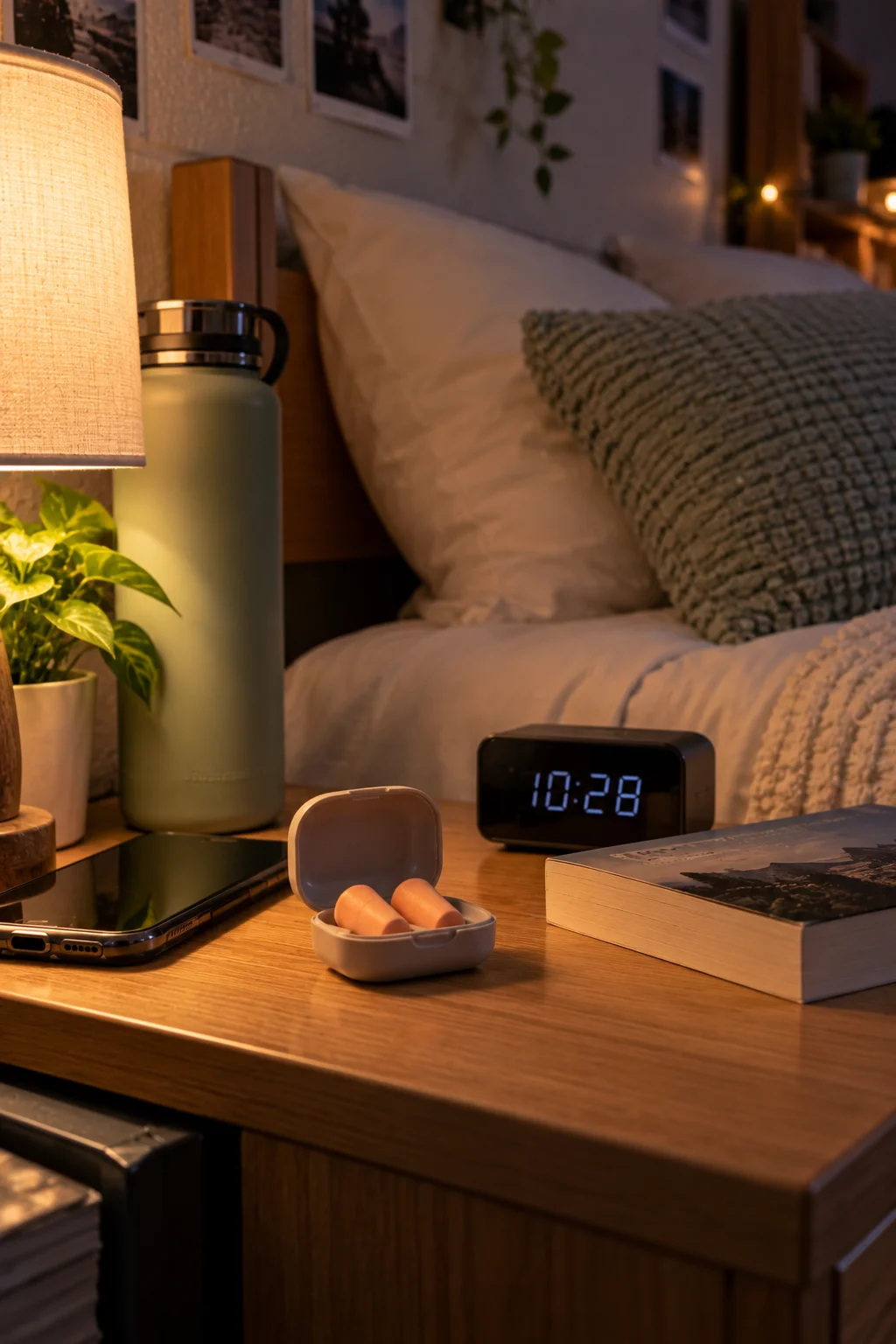
Thin dorm walls and unpredictable roommate schedules, or snoring, make this a genuinely small item with an outsized impact on actual sleep quality throughout the semester.
- A pack of reusable or disposable earplugs
- A case for storage and easy nightly access
- A comfortable fit for regular, ongoing use
- A backup pair kept somewhere separate in case one gets lost
Estimated Cost: $5 to $15 for a multi-pack.
A Note Before You Buy
One tip came up repeatedly across returning students: check your specific dorm’s rules before buying anything that heats up, candles, certain appliances, extension cords, since policies genuinely vary a lot by school and it is worth confirming before you spend money on something that will not be allowed in your actual room.
Final Thoughts
None of these 18 items are padding. Each one solves a specific, common problem that shows up almost immediately once move-in day actually happens, from mismatched sheet sizes to a genuine lack of outlets and storage space.
Budget realistically using the price ranges above, coordinate with your roommate on shared items like the mini fridge, and double-check your school’s specific policies before buying anything electrical or heat-related. Getting these essentials right before move-in day saves a surprising number of return trips and last-minute purchases once the semester is already underway.