
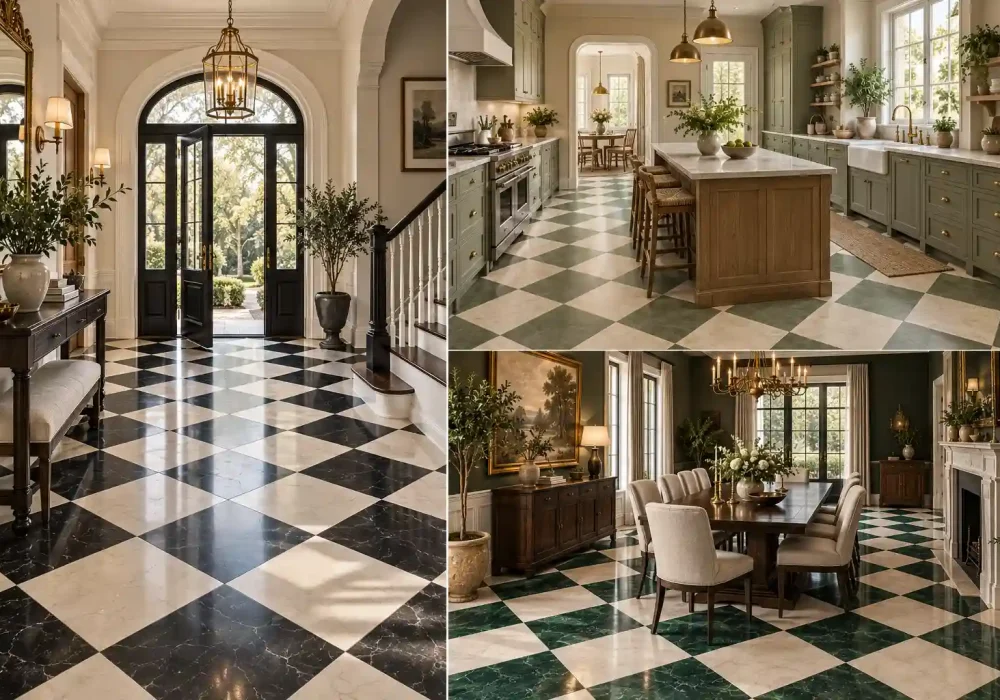
Checkerboard flooring has stayed in constant rotation for a genuinely simple reason: alternating two colors or tones in a grid pattern is one of the most reliable ways to add visual interest to a floor without needing a busy, complicated pattern. It reads as classic in a traditional kitchen and equally at home in a sleek, modern bathroom, depending entirely on the colors and scale chosen.
That flexibility is exactly why checkerboard flooring shows up across so many different room types and design styles. Below are 14 checkerboard floor ideas, ranging from timeless black and white to bold emerald and ivory, each broken down by its core elements and exactly how to bring it together.
Why Checkerboard Flooring Keeps Working Across Every Style
The strength of a checkerboard pattern comes down to how much it can shift just by changing color, scale, and material. A large-format charcoal and gray grid reads as contemporary and moody, while the same pattern in small black and white tiles reads as a retro diner. The grid itself never changes, only what fills it does, which is why this one flooring idea can genuinely suit almost any room in a home.
Scale matters just as much as color. Oversized squares tend to read as calmer and more modern, since fewer grid lines means less visual noise, while smaller tiles create a busier, more detailed look that suits compact spaces or intentionally playful, vintage-inspired rooms.
Also Read More Ideas:
- 16 Fun Summer Rock Painting Ideas for Beginners to Try!
- 13 TV Wall Designs That Bring a Refined Look Home Today
- 12 Corner Wall Gallery Ideas for a More Artful Home Style
- 11 Old Tire DIY Ideas That Give Waste a Stylish New Life
1. Classic Black and White Revival
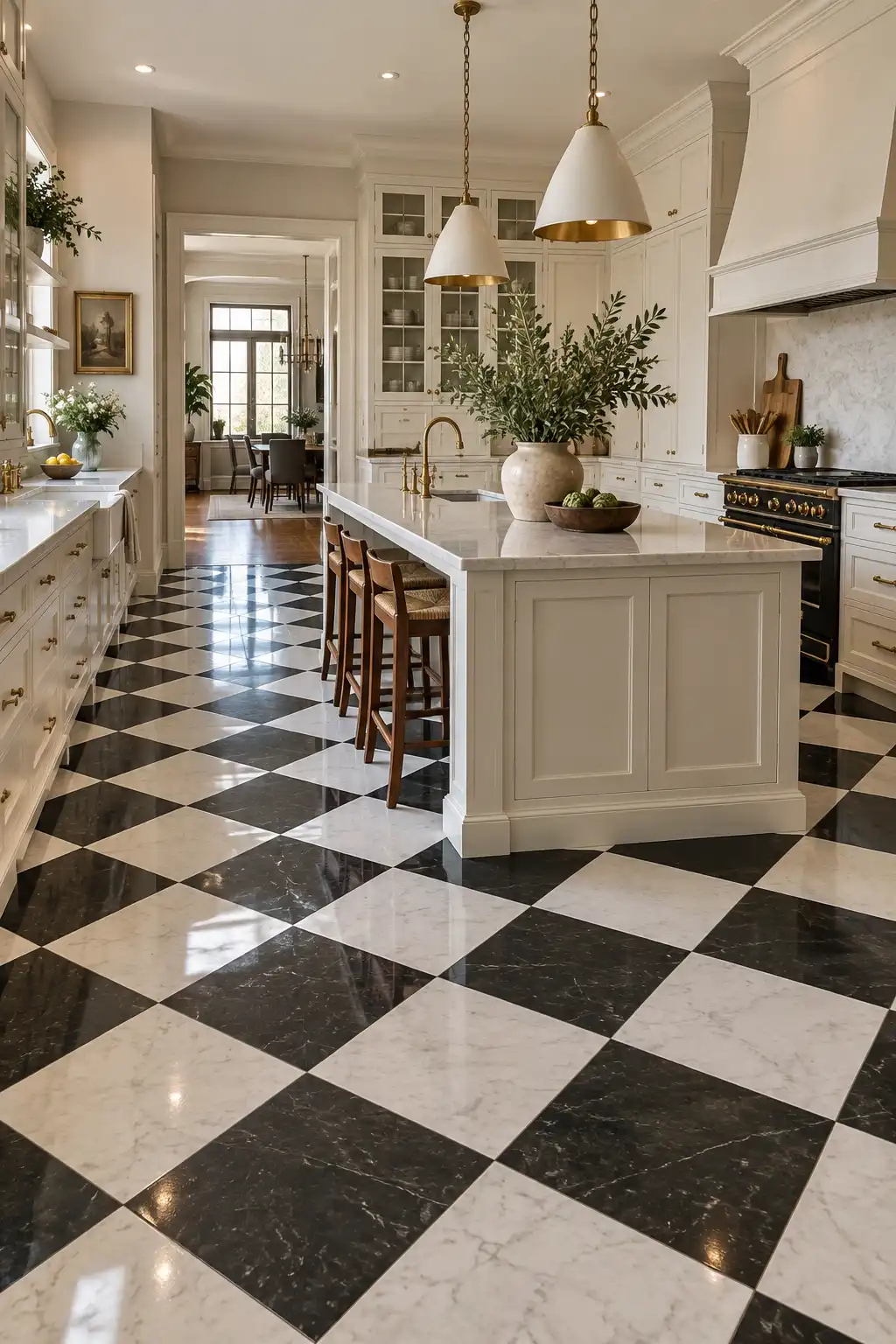
This is the most enduring version of checkerboard flooring, and it works because the contrast is so absolute that it never really goes out of style. A glossy finish pushes the look toward polished and formal, while a matte finish softens it slightly for hallways and entryways that see heavier daily traffic.
- Black and white floor tile in a classic checkerboard grid
- A glossy or matte finish depending on the room’s formality
- Brass fixtures or hardware for warmth
- A neutral wall color that lets the floor stand out
How To Do It: Lay the black and white tiles in a straight, evenly spaced grid rather than offsetting the pattern, choose glossy tile for kitchens and entryways where a polished look is wanted, and add brass hardware or light fixtures nearby so the stark contrast has a warm counterpoint.
2. Soft Sage Checkerboard
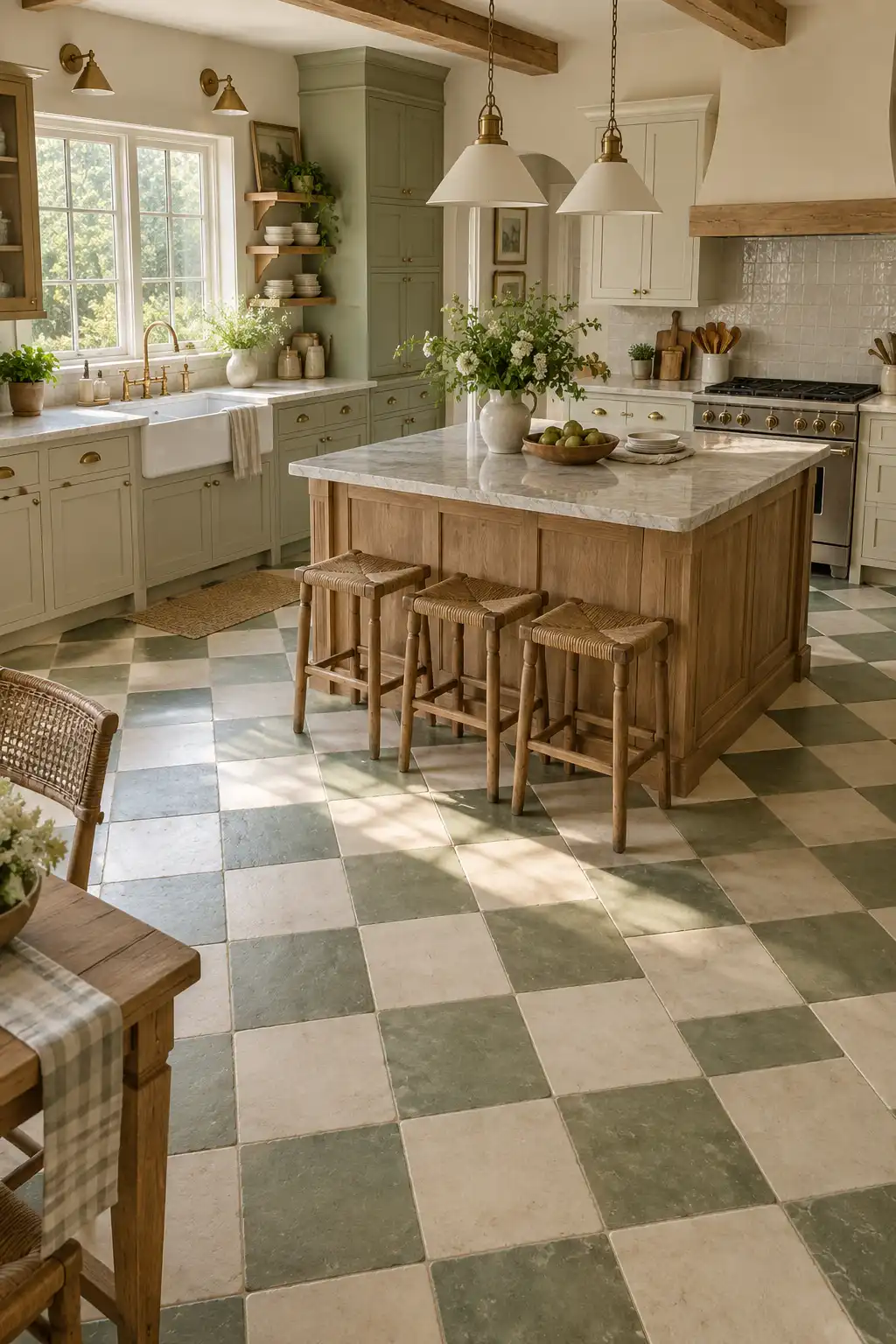
This version softens the checkerboard concept considerably, swapping black and white for a gentler sage green and warm ivory combination. A slightly weathered or matte tile finish keeps the look feeling lived-in rather than sharp, which suits a cottage-style kitchen especially well.
- Sage green and warm ivory floor tile
- A weathered or matte tile finish
- Wood cabinetry in a warm, natural tone
- Woven baskets or natural textures as accents
How To Do It: Choose tile in a slightly muted, weathered finish rather than a glossy one so the sage and ivory read as soft rather than crisp, pair the floor with warm wood cabinetry, and add a few woven baskets nearby to reinforce the cottage-kitchen feel.
3. Moody Charcoal Grid
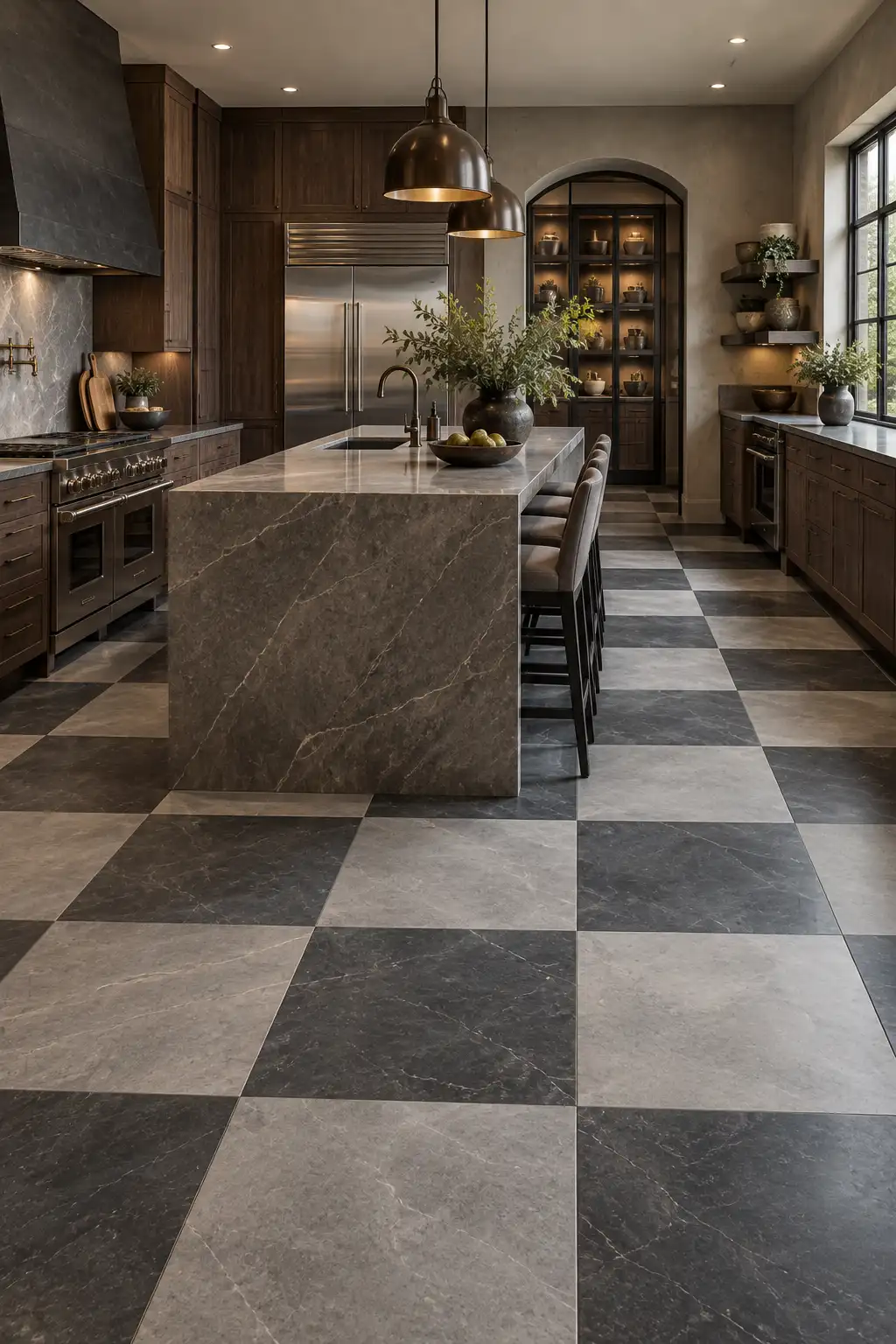
This is a contemporary, dramatic take on checkerboard flooring, using large-format squares in charcoal and pale gray instead of a stark black and white. The bigger scale keeps the pattern from feeling busy, which lets the moody color palette carry the drama instead.
- Large-format charcoal and pale gray floor tile
- Walnut cabinetry
- Brushed metal fixtures
- Minimal additional flooring accents
How To Do It: Choose the largest tile size the room can reasonably support to keep the grid lines minimal and the look calm, pair it with walnut cabinetry for warmth against the cooler floor tones, and finish with brushed metal fixtures rather than anything polished or shiny.
4. Marble Luxe Checkerboard
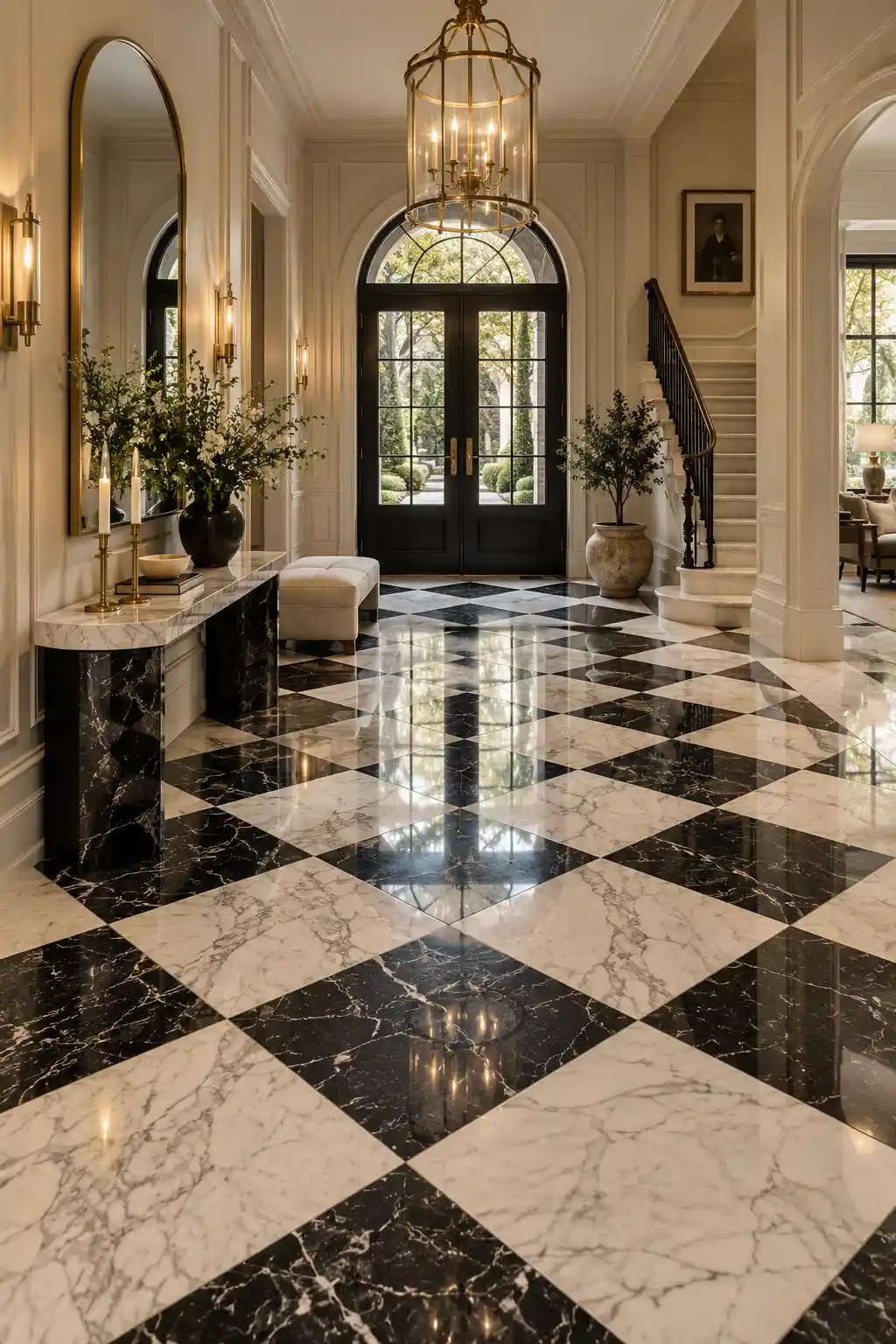
This is the most glamorous version of the pattern, replacing standard tile with black and white veined marble. The natural veining in the marble adds movement and texture within each square, which elevates the whole look well beyond a standard ceramic checkerboard.
- Black and white veined marble tile
- Minimal, sleek furniture to keep focus on the floor
- Simple, unobtrusive lighting
- A neutral color palette elsewhere in the room
How To Do It: Have the marble tiles cut and laid so the veining runs in a consistent direction across each square, keep furniture and decor deliberately minimal so the marble remains the room’s clear focal point, and avoid heavily patterned rugs or textiles that would compete with the veining.
Warm and Nautical Interpretat ions
5. Navy and Cream Nautical Check
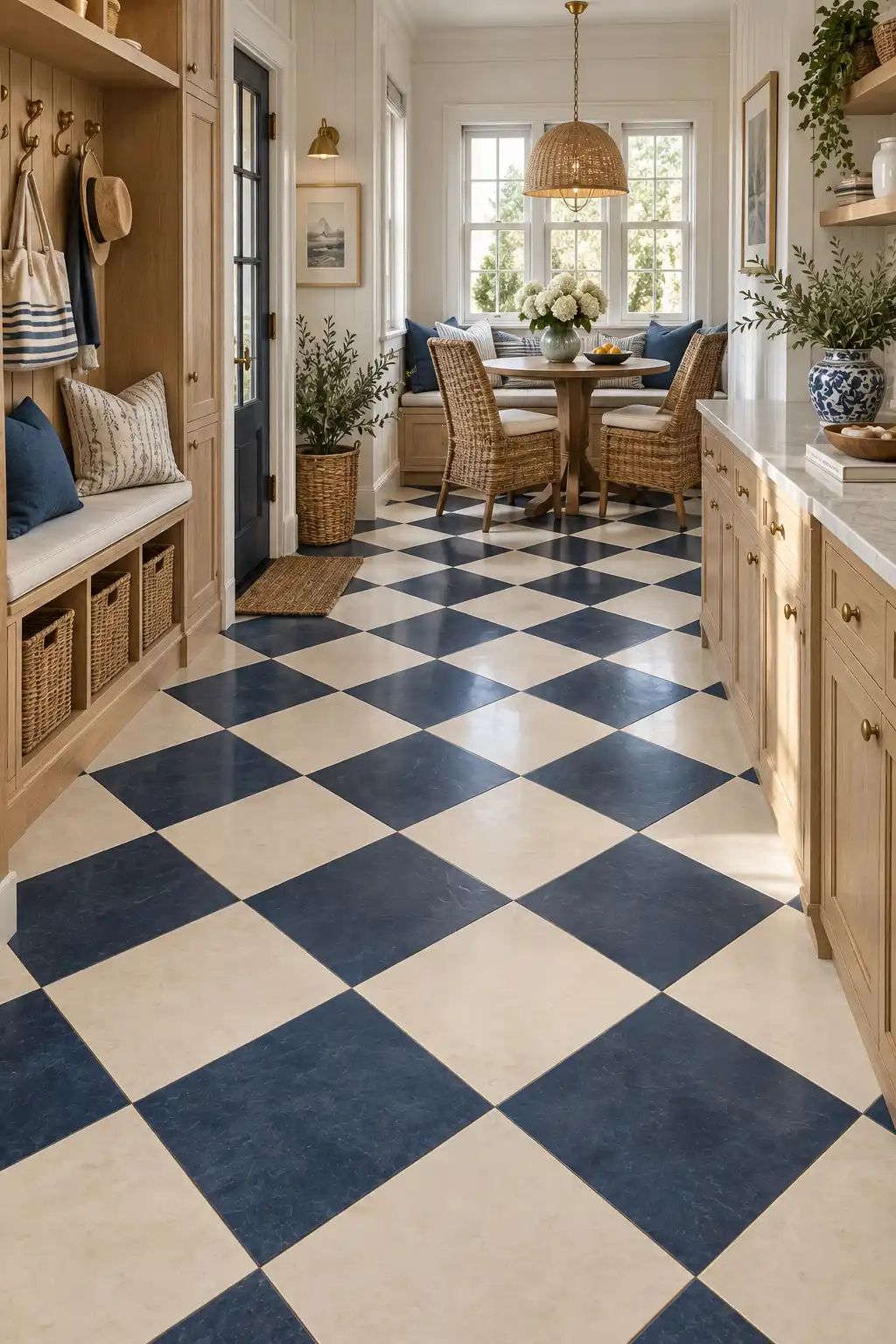
This version brings a coastal feel into the checkerboard pattern, using matte navy and cream ceramic tile instead of the usual black and white. Rattan furniture and aged brass details reinforce the nautical theme, making it a natural fit for mudrooms or breakfast nooks near an entryway.
- Matte navy and cream ceramic floor tile
- Rattan furniture pieces
- Aged or antique brass hardware
- Simple, coastal-toned textiles
How To Do It: Choose a matte rather than glossy finish for the navy and cream tile to keep the coastal feel casual rather than polished, furnish the space with at least one rattan piece, a bench or stool works well, and finish with aged brass hardware on any nearby cabinetry or fixtures.
6. Mini Mosaic Checkerboard
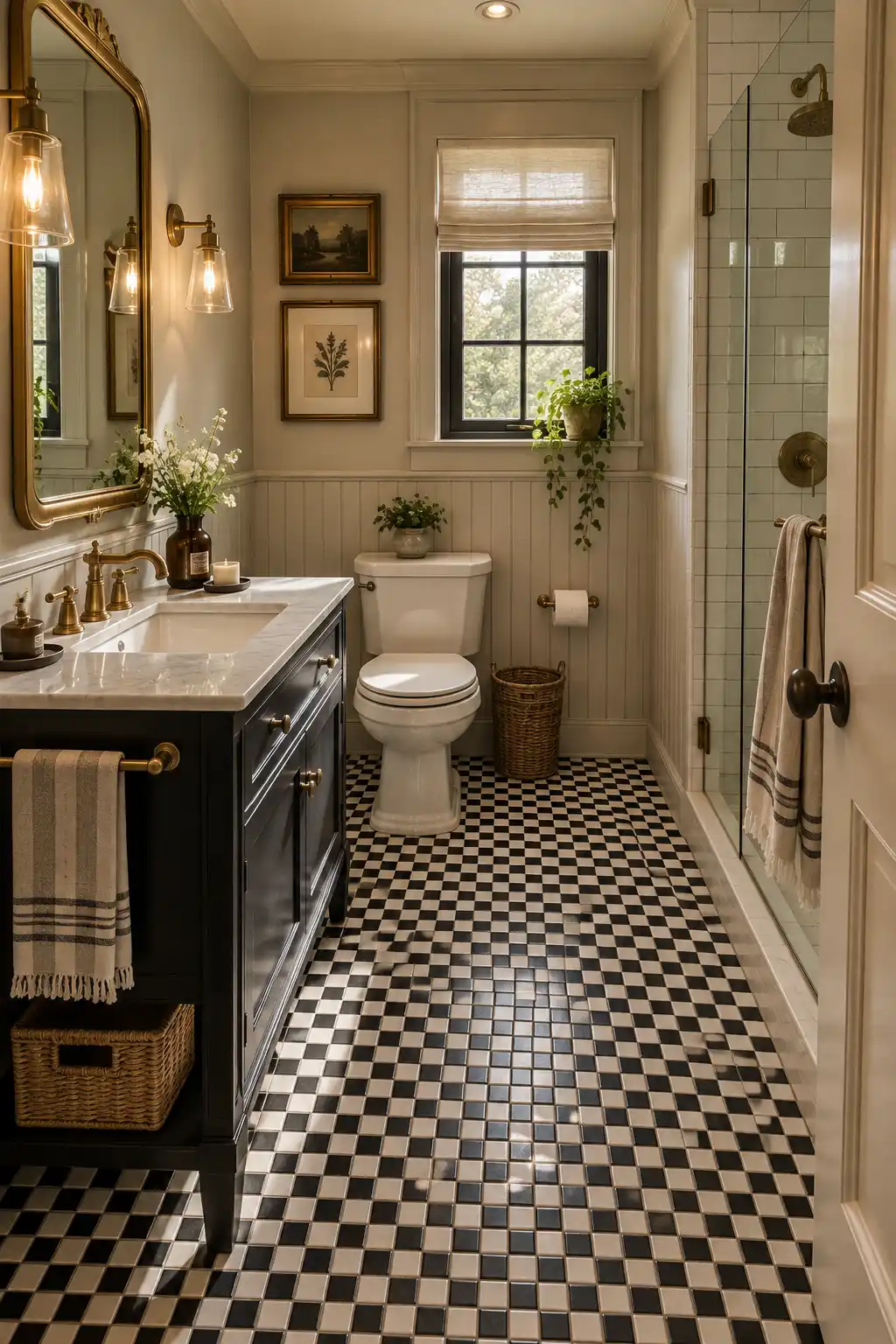
This is a compact, detail-forward version of the pattern, using tiny alternating tiles instead of standard-sized squares. The smaller scale suits tight spaces particularly well, since it creates visual interest without overwhelming a compact bathroom or laundry room.
- Small mosaic-scale checkerboard floor tile
- Vintage-style fixtures and hardware
- A compact vanity or utility sink
- Minimal additional flooring pattern elsewhere
How To Do It: Use the mini mosaic tile specifically in smaller rooms where a larger checkerboard scale would feel oversized, pair it with vintage-style fixtures like an aged faucet or reproduction hardware, and keep the rest of the room simple so the small-scale pattern reads as a genuine jewel-box detail rather than getting lost.
7. Warm Beige and Espresso
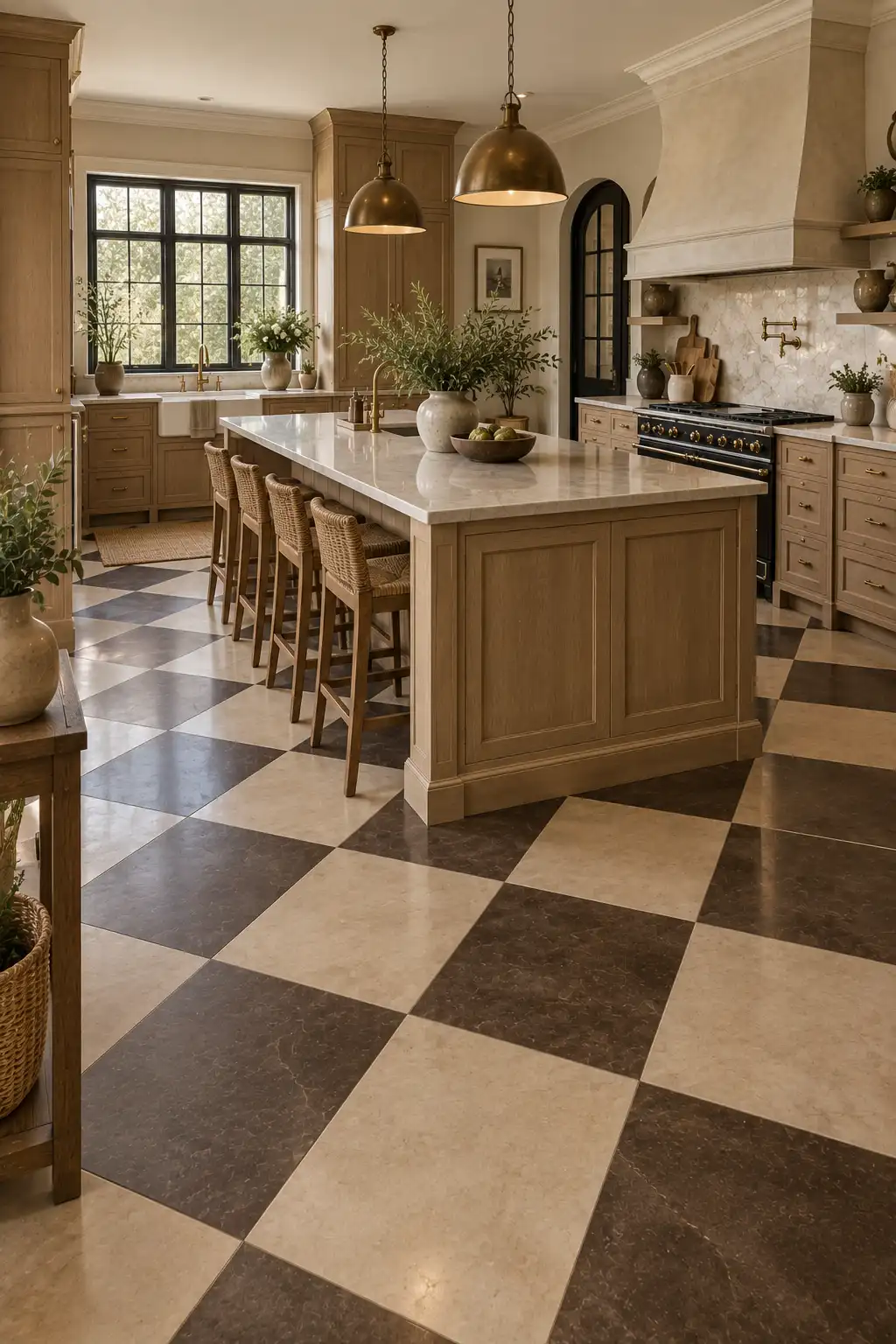
This is a more transitional take on checkerboard flooring, replacing the usual monochrome contrast with espresso brown and sandy beige instead. Oak cabinetry bridges the two floor tones, creating a warmer overall palette that suits a wider range of home styles than a strict black and white grid.
- Espresso brown and sandy beige floor tile
- Oak cabinetry
- Warm-toned lighting
- Neutral wall paint in a complementary sandy tone
How To Do It: Lay the espresso and beige tiles in a standard checkerboard grid, pair the floor with oak cabinetry that picks up the beige undertone, and keep the walls in a similarly warm neutral so the whole room reads as cohesive rather than split between two competing palettes.
8. Retro Diner Checkerboard
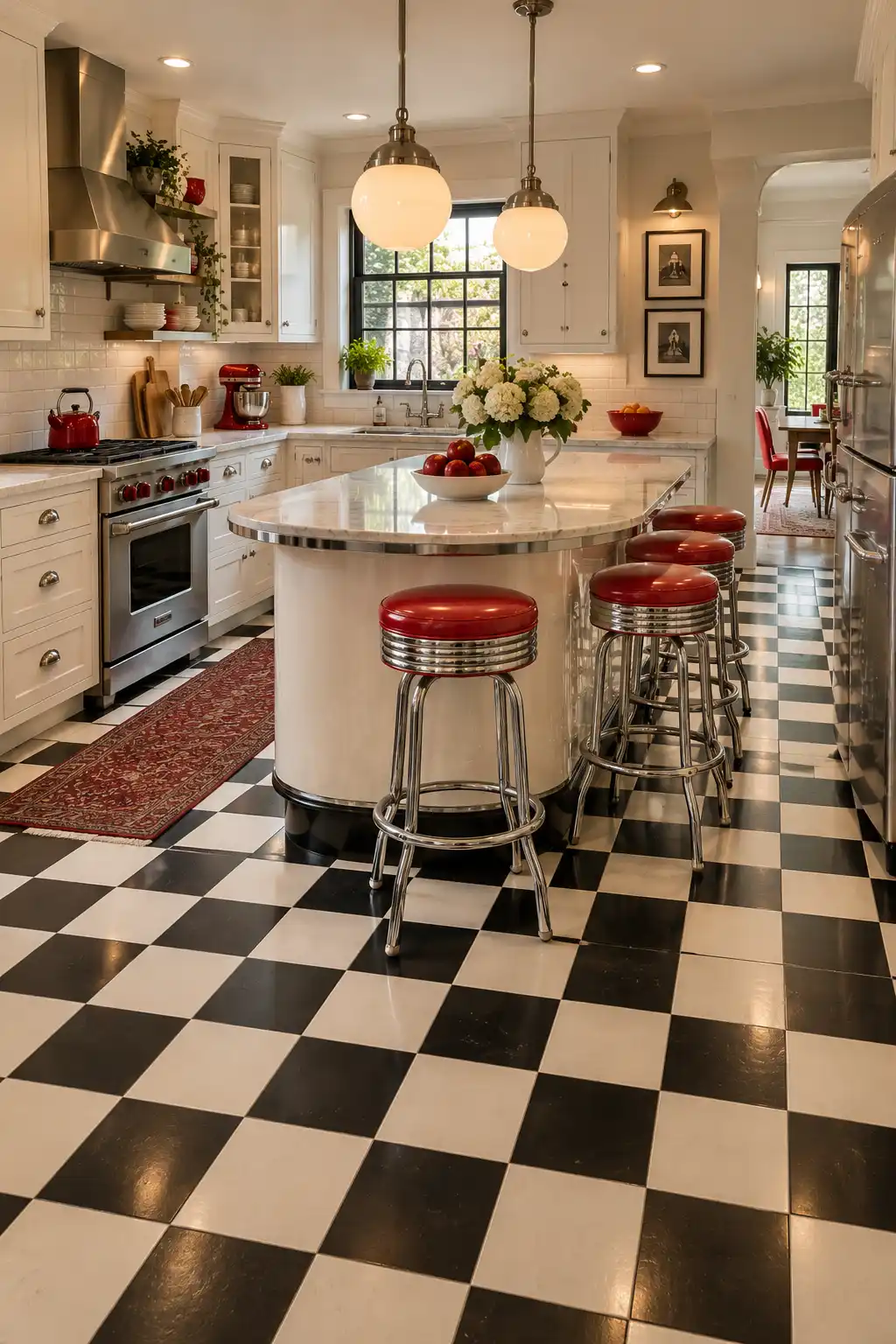
This version leans fully into a playful, mid-century aesthetic, using small black and white tiles alongside chrome stools and red accents. It works especially well in a kitchen that wants a genuinely nostalgic, diner-inspired feel rather than a more formal, restrained look.
- Small black and white checkerboard floor tile
- Chrome stools or barstools
- Red accent pieces, like stools, decor, or small appliances
- Simple, bright overhead lighting
How To Do It: Choose small-scale tile to match the busier, more playful proportions of a classic diner floor, add chrome stools as the main seating element, and bring in red accents through a few key pieces rather than spreading the color evenly across the whole room.
Modern, Statement, and Outdoor Applications
9. Oversized Minimalist Check
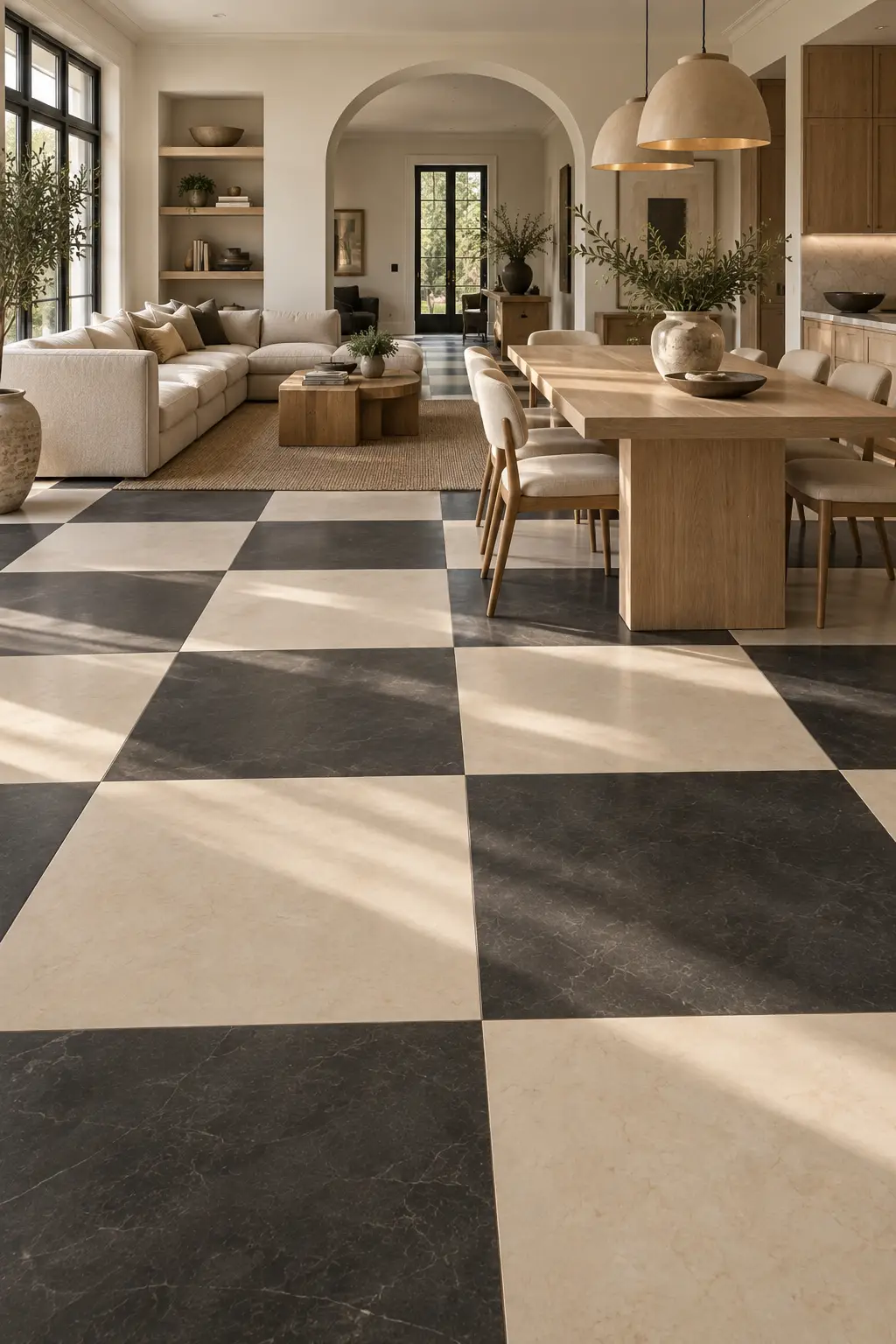
This is the calmest version of checkerboard flooring on the list, using large-scale black and ivory squares to create a pattern that reads as modern rather than busy. Because the squares are so large, the grid lines themselves become minimal, letting the pattern feel architectural rather than decorative.
- Large-scale black and ivory floor tile
- Minimalist furniture with clean lines
- Timber accents for warmth
- A restrained color palette elsewhere in the room
How To Do It: Choose the largest format tile available to keep grid lines to a minimum, furnish the room with simple, clean-lined furniture rather than anything ornate, and add one or two timber accent pieces to soften the black and ivory contrast slightly.
10. Black and Blush Glamour
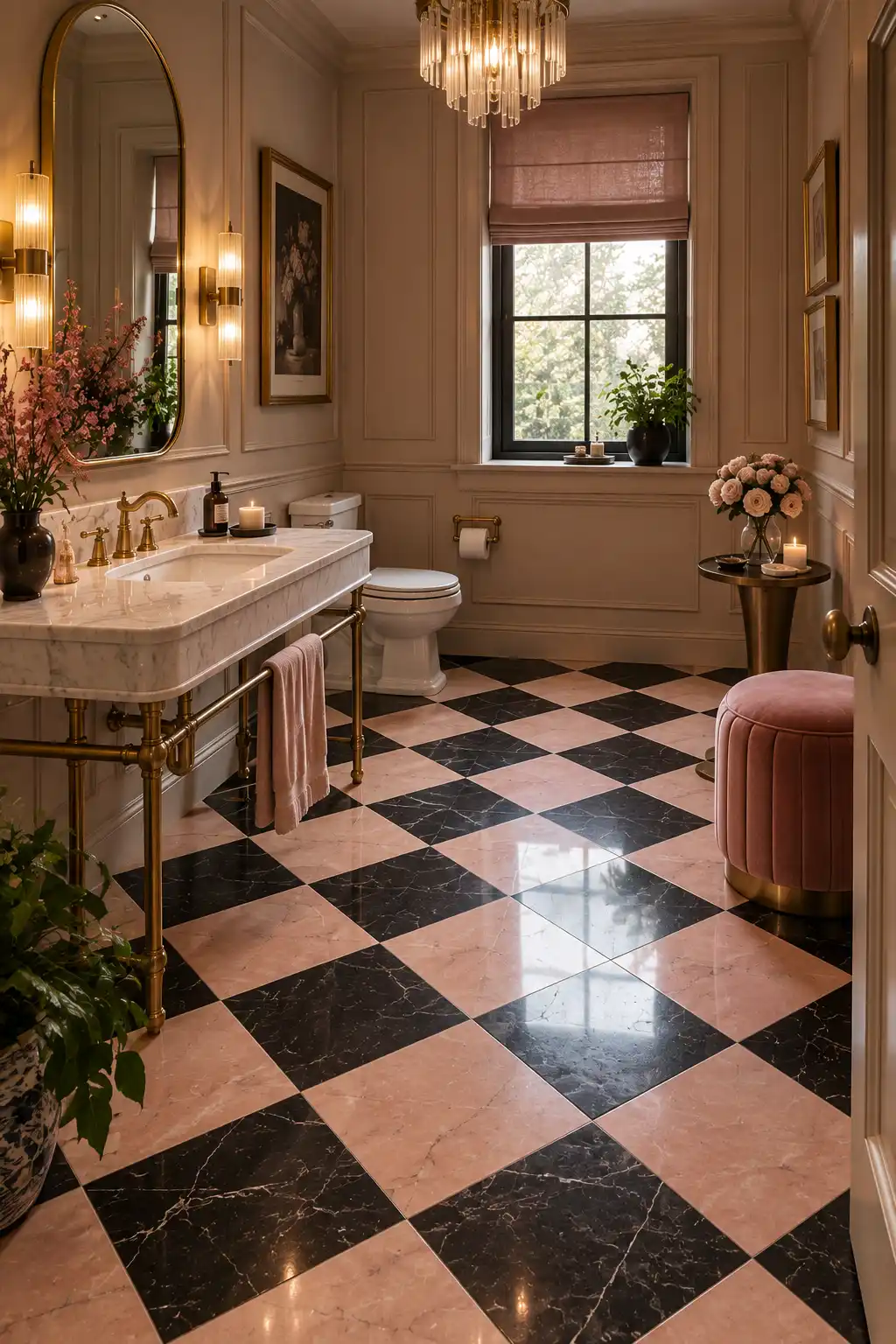
This is a distinctly feminine, glamorous take on the pattern, pairing black tile with soft blush pink instead of white or cream. Brass fixtures and velvet seating push the look further into dressing-room or powder-room territory, where a bolder color choice feels appropriate.
- Black and blush pink floor tile
- Brass fixtures and hardware
- Velvet seating or upholstered accents
- Soft, warm lighting
How To Do It: Lay the black and blush tile in a standard checkerboard grid, install brass fixtures throughout the space to complement the pink undertone, and add at least one piece of velvet seating, a bench or vanity stool, to reinforce the glamorous, dressing-room feel.
11. Emerald and Ivory Opulence
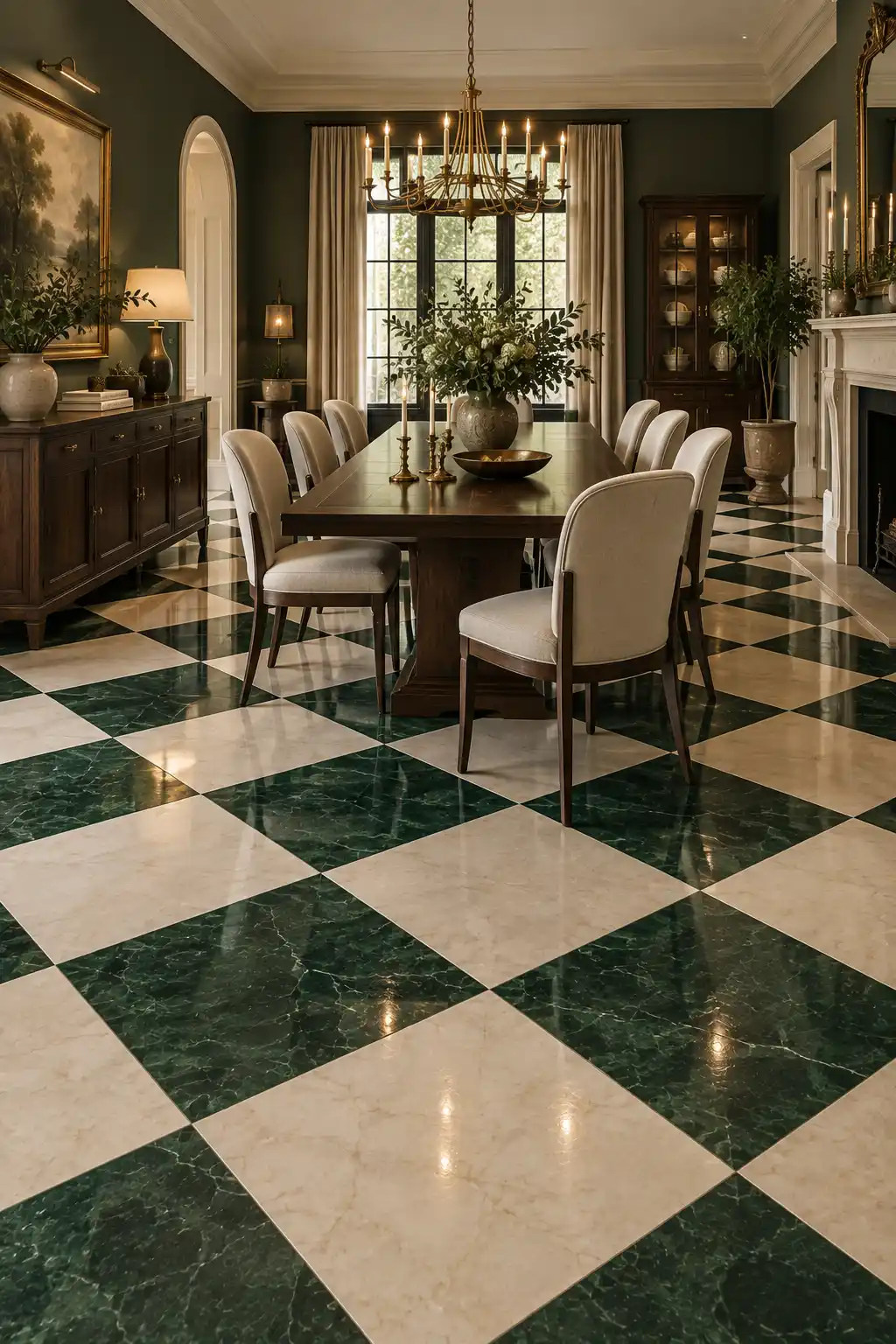
This is a rich, jewel-toned option built for rooms meant to make a statement, particularly dining rooms. Dark wood furniture grounds the bold green and ivory floor, while brass accents tie the whole look together with a touch of shine.
- Emerald green and ivory floor tile
- Dark wood dining furniture
- Brass accents and lighting fixtures
- Rich, saturated wall color or wallpaper, optional
How To Do It: Lay the emerald and ivory tile as the room’s foundation before selecting other finishes, pair it with dark wood furniture that grounds the bold color rather than competing with it, and add brass light fixtures or hardware to bring warmth and shine into the jewel-toned palette.
12. Graphite and White Modern Grid
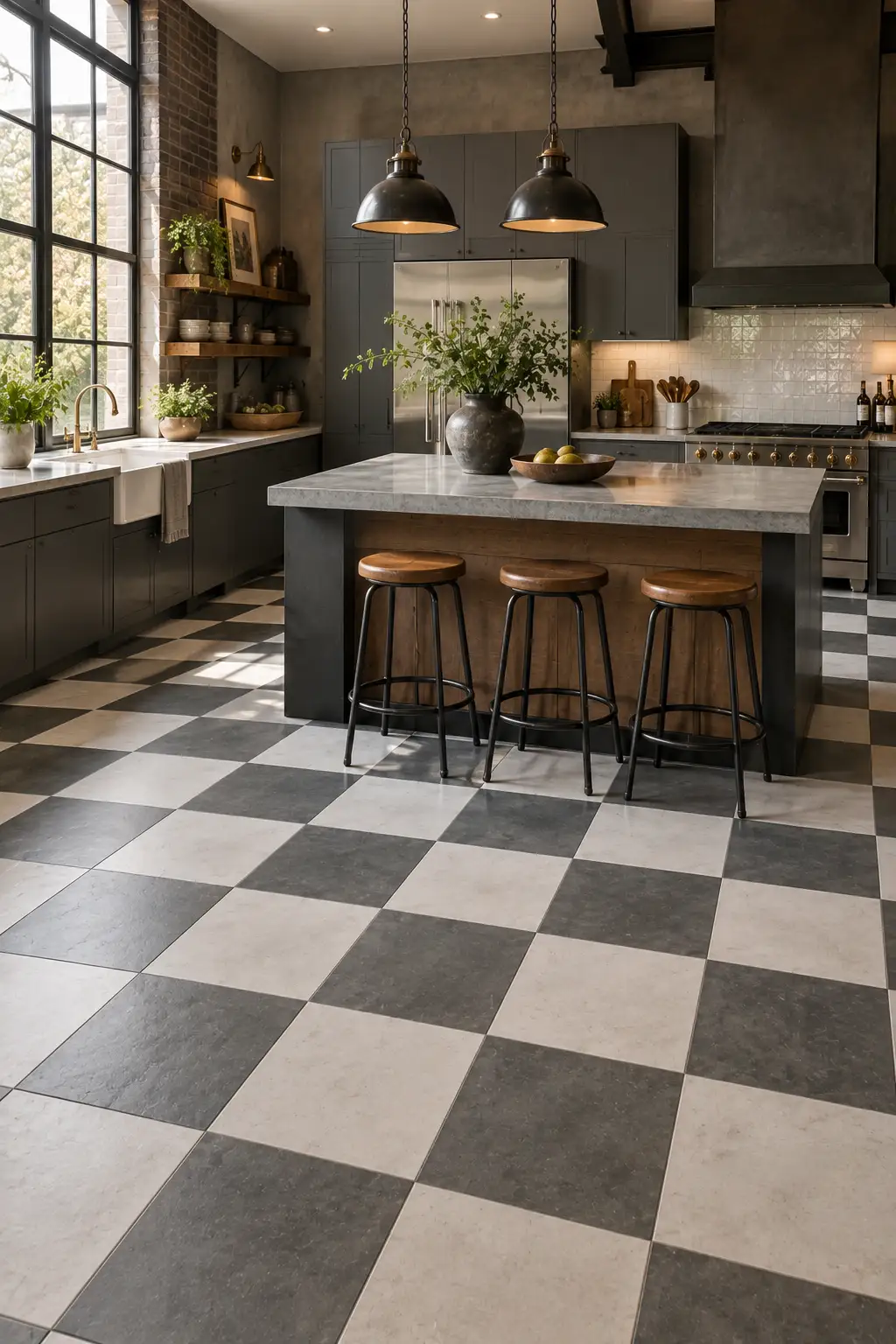
This is a cooler, more industrial take on checkerboard flooring, pairing graphite gray with white rather than a warmer charcoal. Streamlined cabinetry and concrete surfaces reinforce the modern, slightly industrial feel, making this a strong fit for a contemporary kitchen.
- Graphite gray and white floor tile
- Streamlined, handle-less or minimal cabinetry
- Concrete or concrete-look countertops
- Cool-toned lighting
How To Do It: Choose a cooler-toned graphite rather than a warm charcoal to keep the palette feeling crisp and modern, pair the floor with simple, streamlined cabinetry free of ornate detailing, and finish with concrete or concrete-look surfaces to reinforce the industrial-modern direction.
13. Checkerboard Patio Elegance
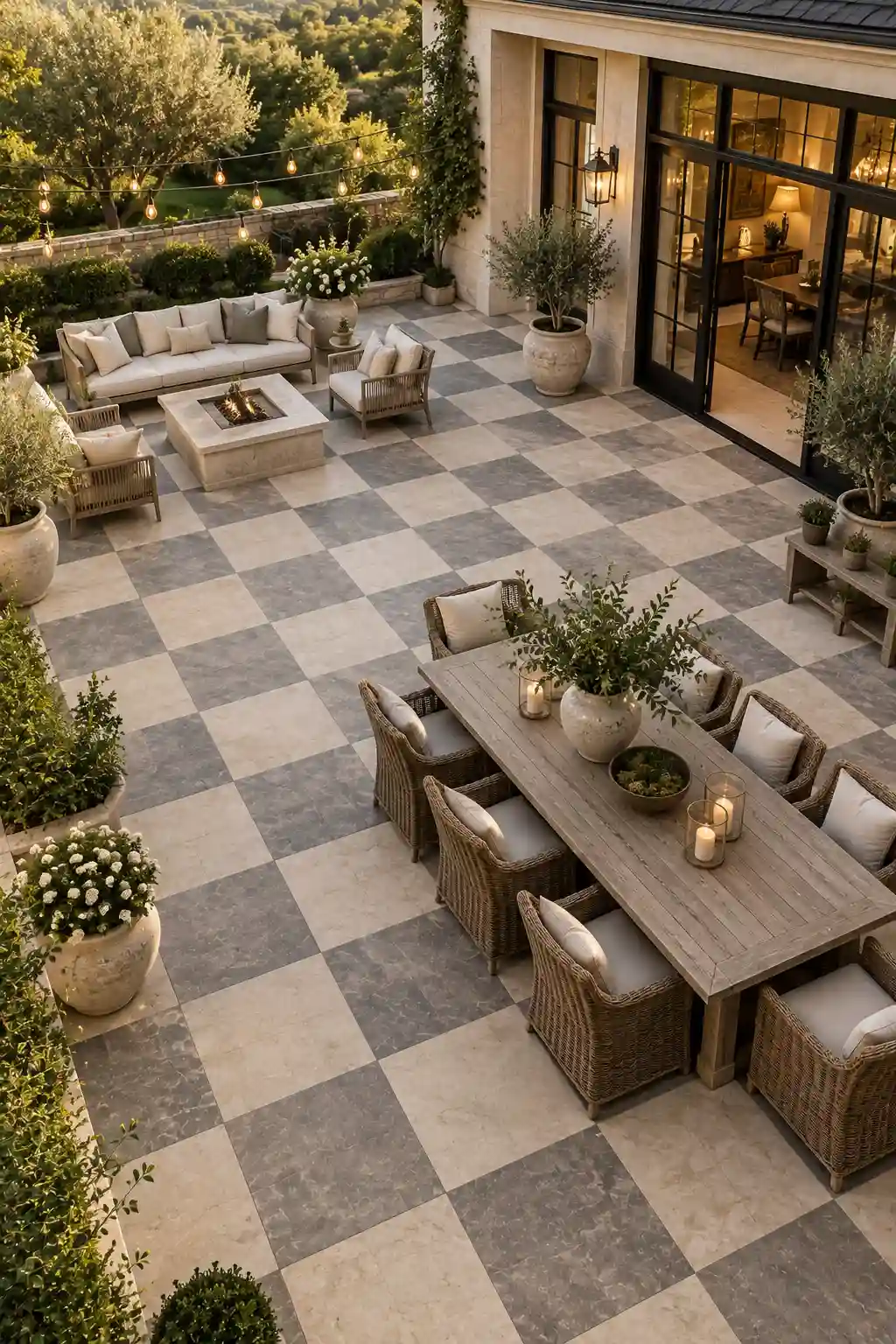
This is the only outdoor application on the list, translating the checkerboard concept into stone pavers instead of tile. Alternating neutral shades create the same visual pattern outdoors, while planters and string lights turn the space into a genuinely inviting spot for entertaining.
- Stone pavers in two alternating neutral shades
- Planters with greenery
- String lights strung overhead
- Simple outdoor furniture
How To Do It: Lay the stone pavers in a checkerboard pattern across the patio surface, position planters at the corners or edges of the space to frame it, string the lights overhead across the seating area, and furnish with simple outdoor pieces that don’t compete with the paved pattern underfoot.
14. Timeless Checkerboard Foyer
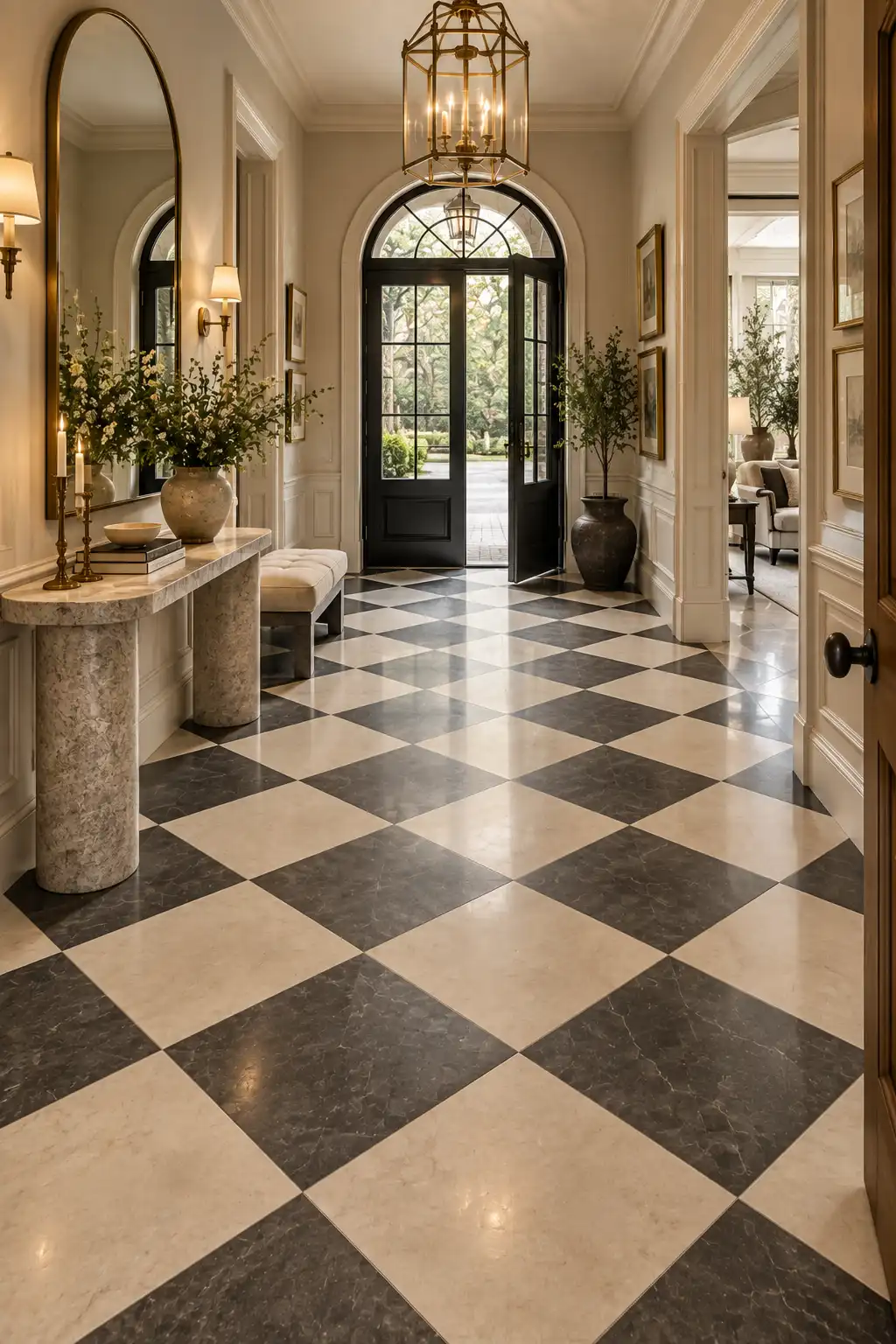
This is a classic entryway application, using medium-sized ivory and charcoal tile to create a strong but not overwhelming first impression. A sculptural console and a statement pendant light finish the space, giving the foyer a genuine sense of arrival.
- Medium-sized ivory and charcoal floor tile
- A sculptural console table
- A statement pendant light fixture
- Simple wall decor that doesn’t compete with the floor
How To Do It: Lay the ivory and charcoal tile in a medium-scale grid suited to a foyer’s typically smaller footprint, place a sculptural console table against the main wall, and hang a statement pendant light directly above the entry space so it draws the eye upward as guests walk in over the checkerboard floor.
Choosing Colors and Scale for the Right Room
Color choice for a checkerboard floor generally comes down to how bold the rest of the room already is. Neutral, monochrome options like Classic Black and White Revival, Oversized Minimalist Check, and Graphite and White Modern Grid work well as a foundation in a room that already has other colorful or textured elements, since the floor itself stays relatively quiet despite the pattern. Bolder combinations like Emerald and Ivory Opulence or Black and Blush Glamour work best when the floor is meant to be the room’s clear statement piece, which usually means keeping walls, cabinetry, and furniture simpler by comparison.
Scale should generally follow room size. Smaller rooms like powder rooms or laundry rooms tend to suit smaller tile, as seen in Mini Mosaic Checkerboard or Retro Diner Checkerboard, while larger open spaces like kitchens, dining rooms, and foyers can support the bigger, calmer proportions of Oversized Minimalist Check or Moody Charcoal Grid without the pattern overwhelming the room.
Final Thoughts on Checkerboard Floor Ideas
Checkerboard flooring endures because the underlying pattern is simple enough to support almost any color palette, material, or scale a room calls for, from real marble in a glamorous foyer to painted stone pavers on a backyard patio. The 14 looks above each take that same basic grid in a genuinely different direction, proving how much range one pattern can actually cover.
Pick whichever combination of color and scale fits the room’s size and the rest of the home’s existing style, and remember that the floor itself can carry most of a room’s visual interest, which means everything else, cabinetry, furniture, and lighting, can stay relatively simple by comparison.