
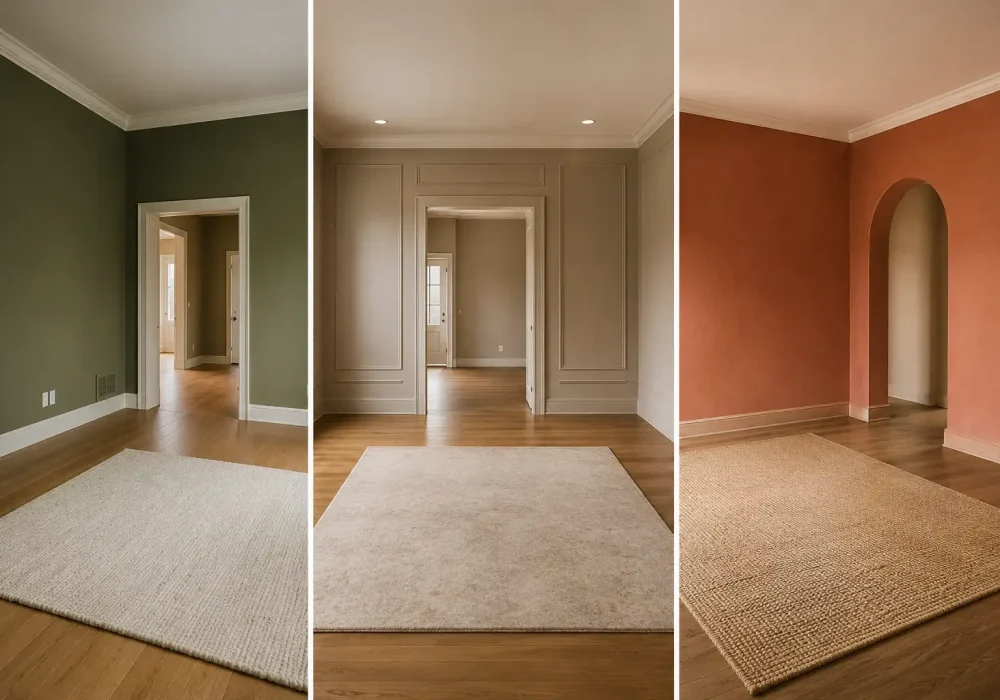
Paint color can completely change how a living room looks and feels. The right shade can make the space feel warmer, calmer, brighter, or more refined without changing the entire interior.
Current color trends are moving toward warm neutrals, earthy greens, rich browns, muted blues, and soft clay inspired shades. These colors bring personality to living room walls while still feeling comfortable and easy to style.
Whether you prefer a light and airy room or a deeper, moodier atmosphere, there is a trending shade for every interior style. These ideas can help you choose a wall color that feels fresh, inviting, and suitable for your home.
Trending Living Room Wall Colors Worth Trying
The following paint colors offer a balanced mix of warm neutrals, nature inspired greens, calming blues, earthy tones, and richer statement shades. Each option can create a distinct mood while giving living room walls a stylish and updated appearance.
Also Read: 11 Plum & Purple Paint Ideas to Transform Any Interior
Also Read: 14 Luxury Paint Color Ideas That Create a High End Home Look
Also Read: 13 Bathroom Paint Colors for a Spa Like Bathroom Makeover
1. Aquamarine Blue
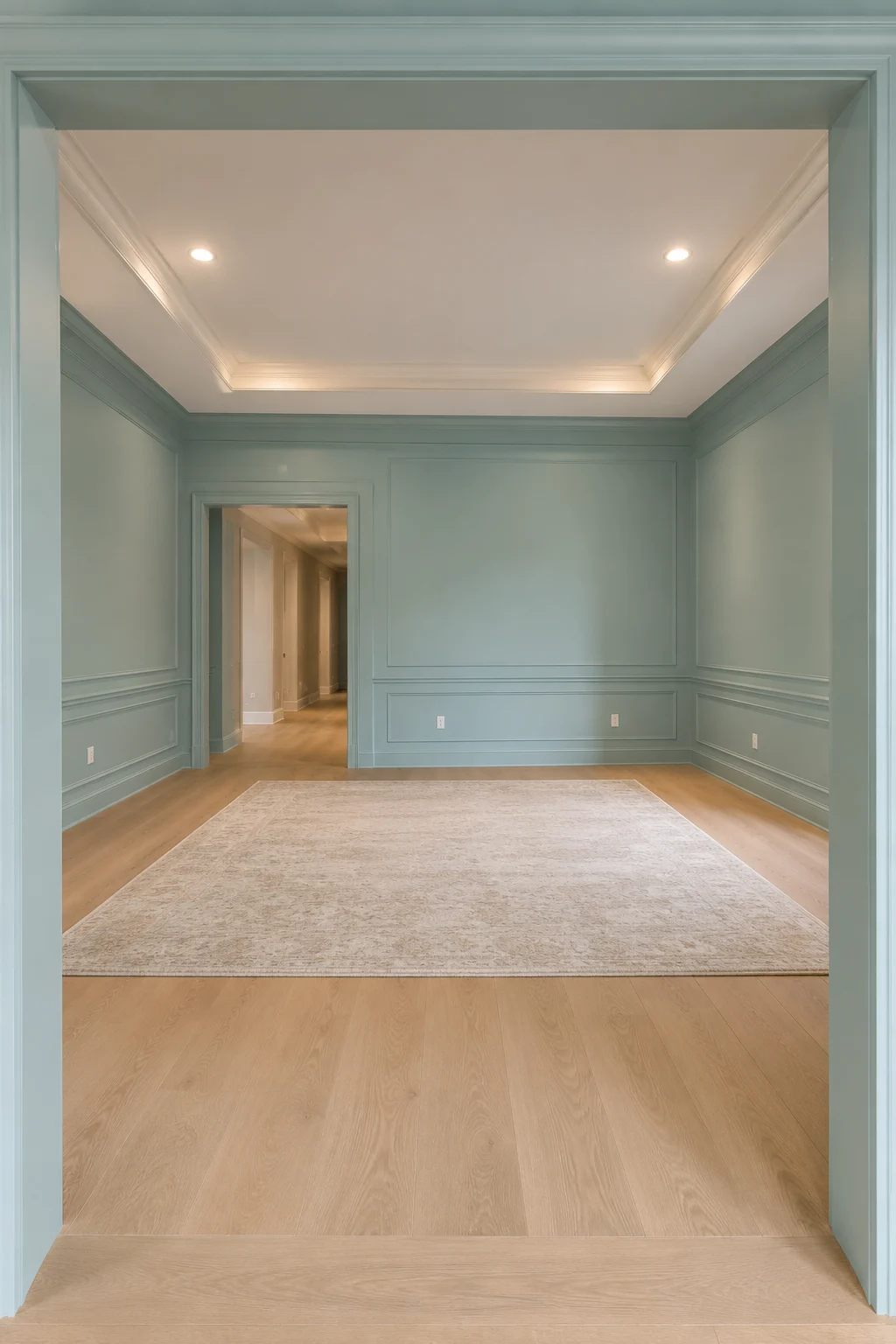
Aquamarine blue brings a calm and refreshing character to living room walls. Its soft blend of blue and green creates a peaceful backdrop that feels light without looking cold. Paired with warm wood flooring and a neutral rug, this color gives the room a balanced and welcoming appearance.
This shade works especially well with traditional wall molding, modern architectural details, and simple interiors. It can make a living room feel more open while adding enough color to create visual interest. Warm whites and natural wood tones help bring out its softer green undertones.
Pro Tip: Use warm white on the ceiling and trim to create gentle contrast while keeping aquamarine blue walls soft and inviting.
2. Sun Washed Terracotta
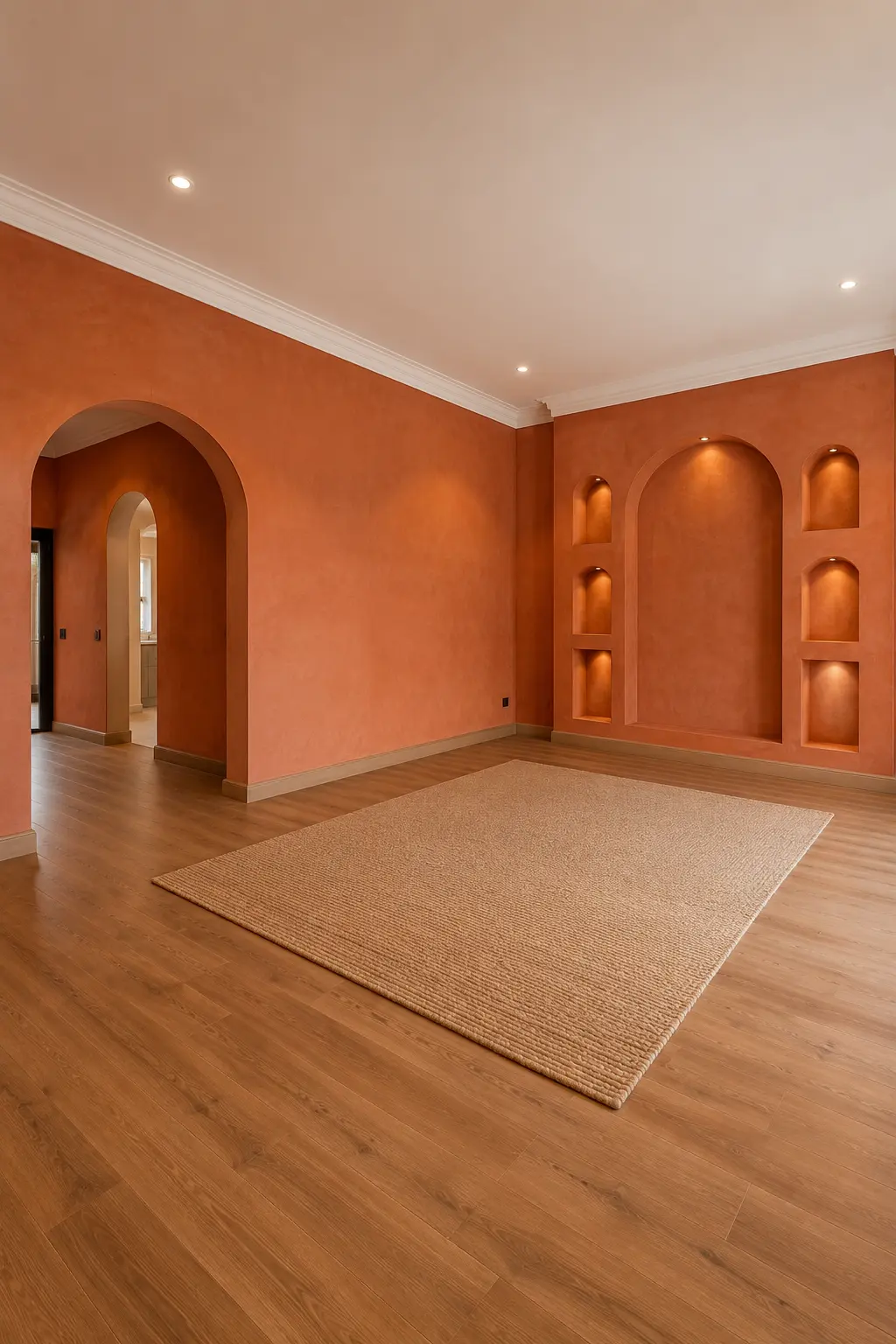
Sun washed terracotta gives living room walls a warm, grounded look inspired by natural clay. Its rich orange and earthy brown undertones bring character to the room while still feeling soft and welcoming. The shade looks especially striking with arched openings and warm wood flooring.
This color is a strong choice for Mediterranean, Spanish, rustic, and organic modern interiors. Neutral rugs and simple architectural details allow the walls to become the main feature of the room. Soft indoor lighting also brings out the subtle variations and depth in the painted finish.
Pro Tip: Pair sun washed terracotta with warm white ceilings, natural wood floors, and sandy beige rugs for a balanced earthy palette.
3. Warm Mushroom Beige
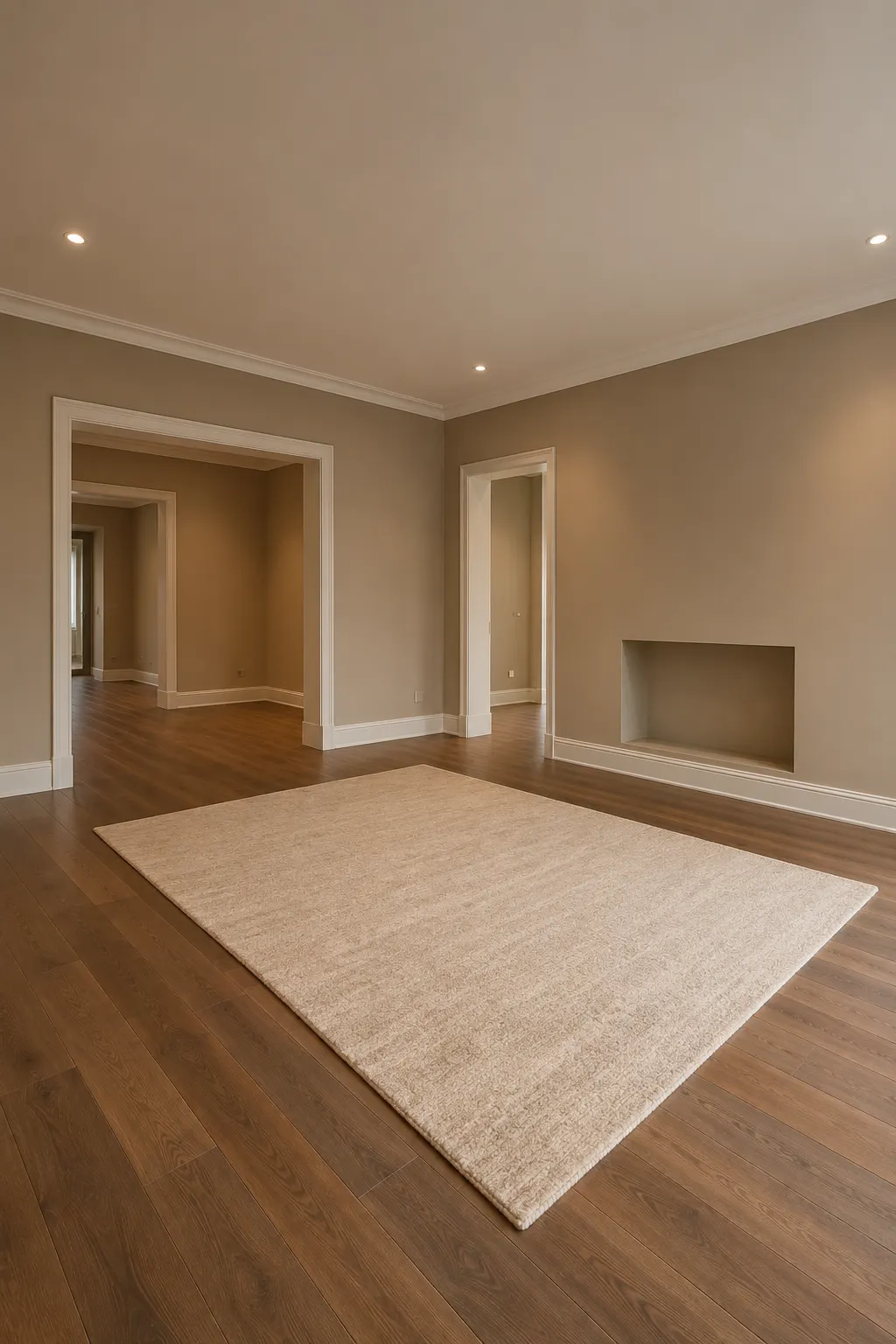
Warm mushroom beige gives living room walls a soft, grounded appearance with subtle taupe and brown undertones. It feels richer than classic beige but remains neutral enough to suit different interior styles. Dark wood flooring adds contrast, while cream rugs keep the overall space light and balanced.
This versatile shade works beautifully in traditional, transitional, and contemporary living rooms. Warm mushroom beige also creates a smooth connection between adjoining rooms, making open layouts feel more cohesive. Crisp white trim can define doorways and architectural details without overpowering the warmth of the walls.
Pro Tip: Combine warm mushroom beige walls with creamy white trim and medium to dark wood flooring for a layered, sophisticated look.
4. Muted Olive Green
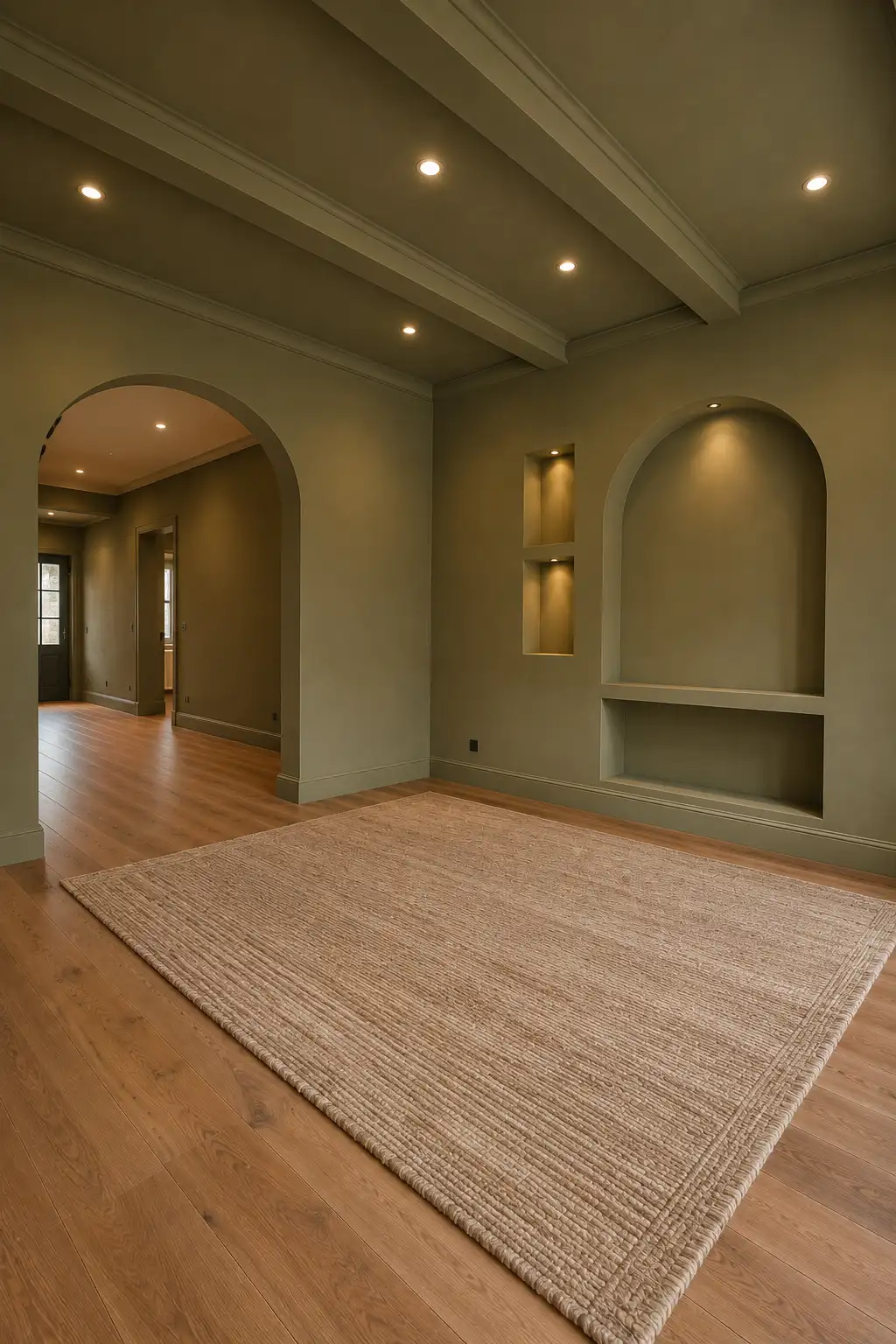
Muted olive green brings a rich, earthy mood to living room walls without feeling overly bold. Its warm green and subtle khaki undertones create a grounded atmosphere that works beautifully with natural wood flooring. The color also highlights arches, ceiling beams, and recessed wall niches with quiet depth.
This shade suits organic modern, Mediterranean, rustic, and transitional living rooms. Warm lighting brings out its softer undertones, while beige rugs and natural textures keep the space from feeling too dark. Using the same color across walls and architectural details can also create a more cohesive look.
Pro Tip: Pair muted olive green with warm oak flooring and soft beige textiles to create a balanced, nature inspired living room palette.
5. Mineral Blue
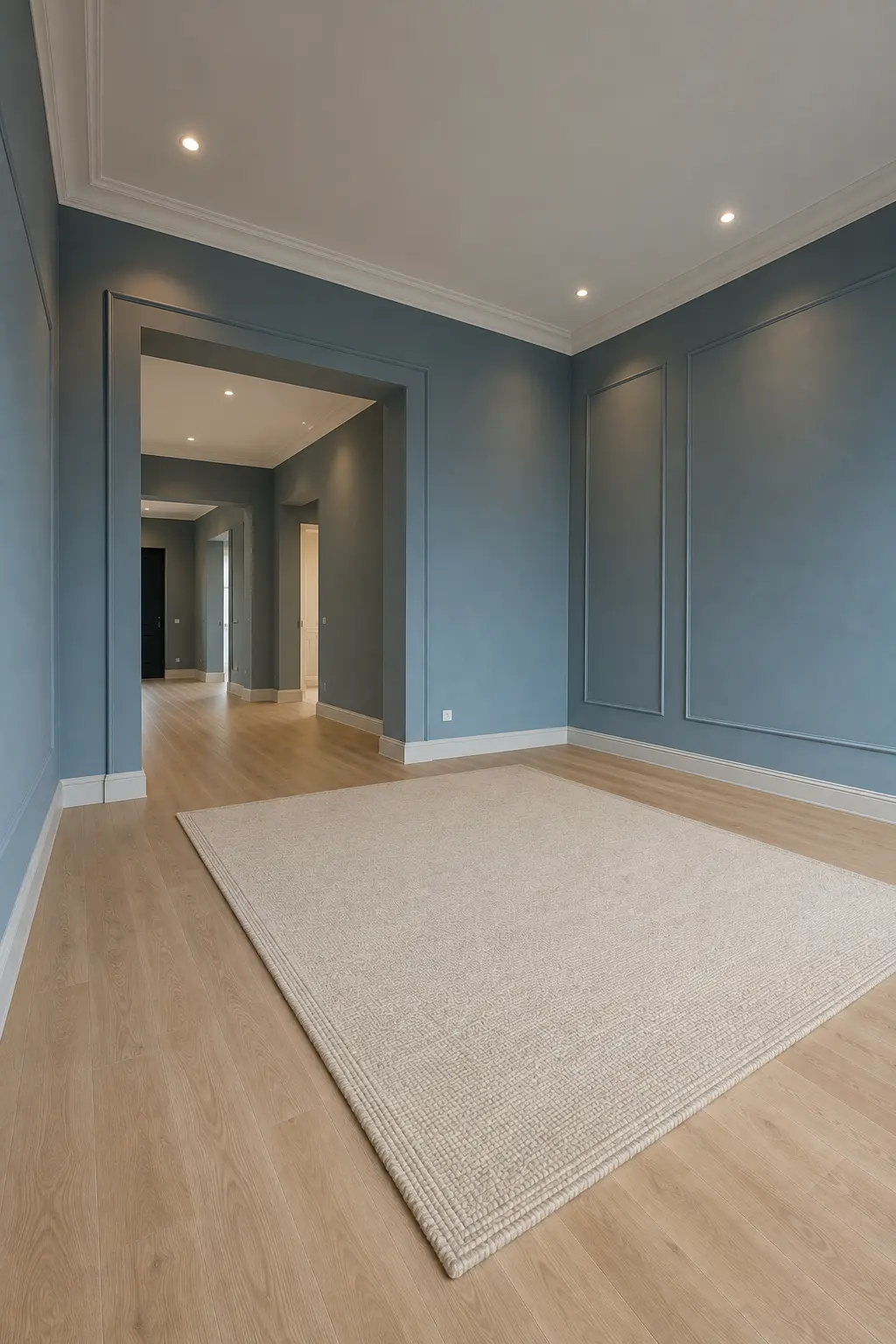
Mineral blue gives living room walls a calm, refined look with subtle gray and green undertones. The muted finish feels more sophisticated than a bright blue, while still adding noticeable color and depth. Light wood flooring and a soft neutral rug help balance the cooler character of the walls.
This versatile shade works especially well in modern, transitional, and contemporary living rooms. Decorative wall molding gives mineral blue more dimension, while crisp white ceiling trim creates clean contrast. The result is a polished space that feels peaceful without appearing plain or overly cool.
Pro Tip: Pair mineral blue walls with pale oak flooring, warm ivory rugs, and soft white trim to keep the living room balanced and inviting.
6. Deep Chocolate Brown
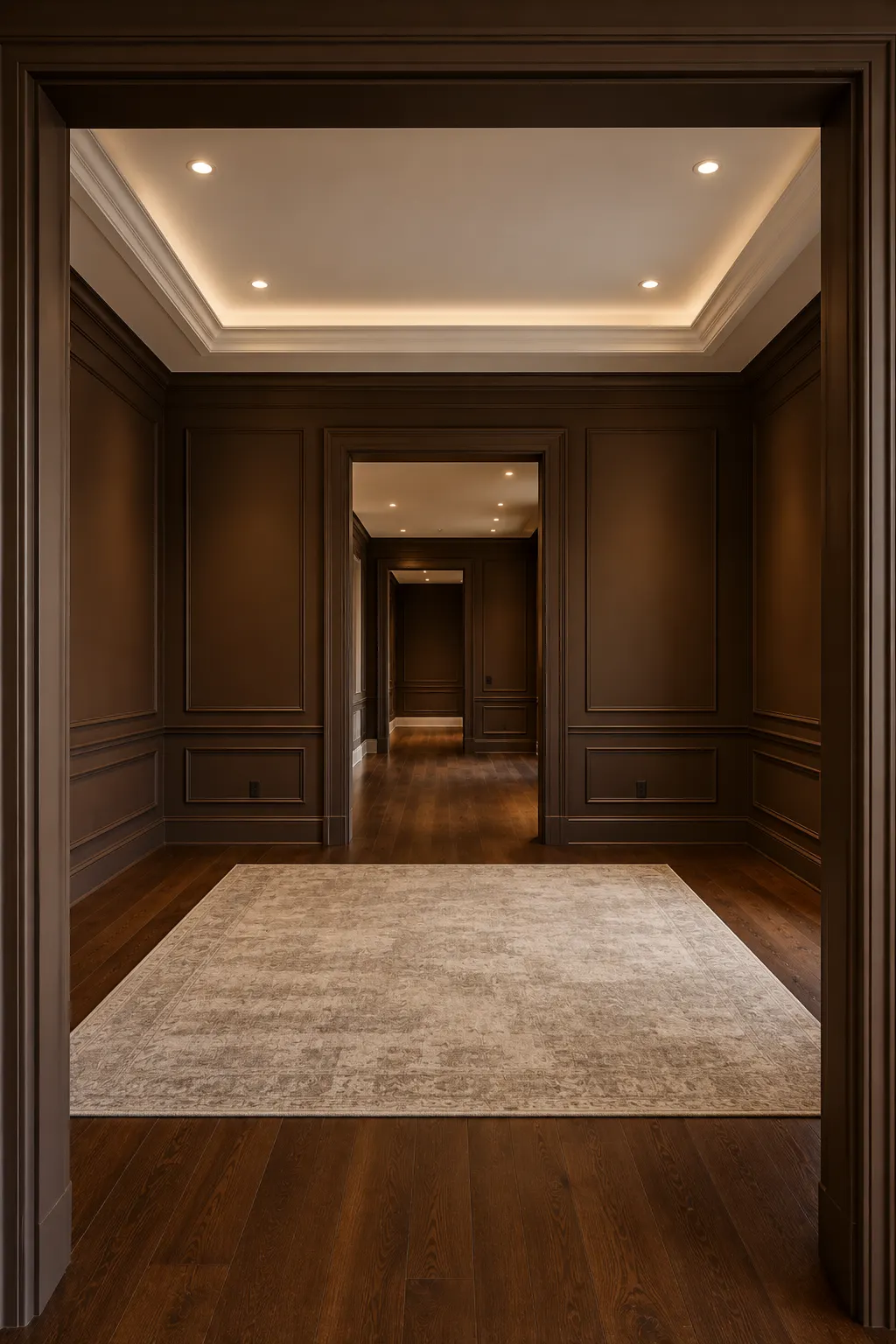
Deep chocolate brown creates a rich and sophisticated atmosphere that makes living room walls feel warm and luxurious. Its deep cocoa undertones add visual depth, while detailed wall molding gives the dark color more dimension. Warm ceiling lighting and dark wood flooring complete the refined, cohesive look.
This dramatic shade works particularly well in traditional, contemporary, and moody luxury interiors. Lighter elements, such as a soft beige rug and warm white ceiling, prevent the room from feeling too enclosed. The contrast allows the brown walls to remain bold while keeping the overall space balanced.
Pro Tip: Balance deep chocolate brown walls with warm ceiling lighting, creamy neutrals, and natural wood tones to create depth without making the room feel too dark.
7. Dusty Apricot
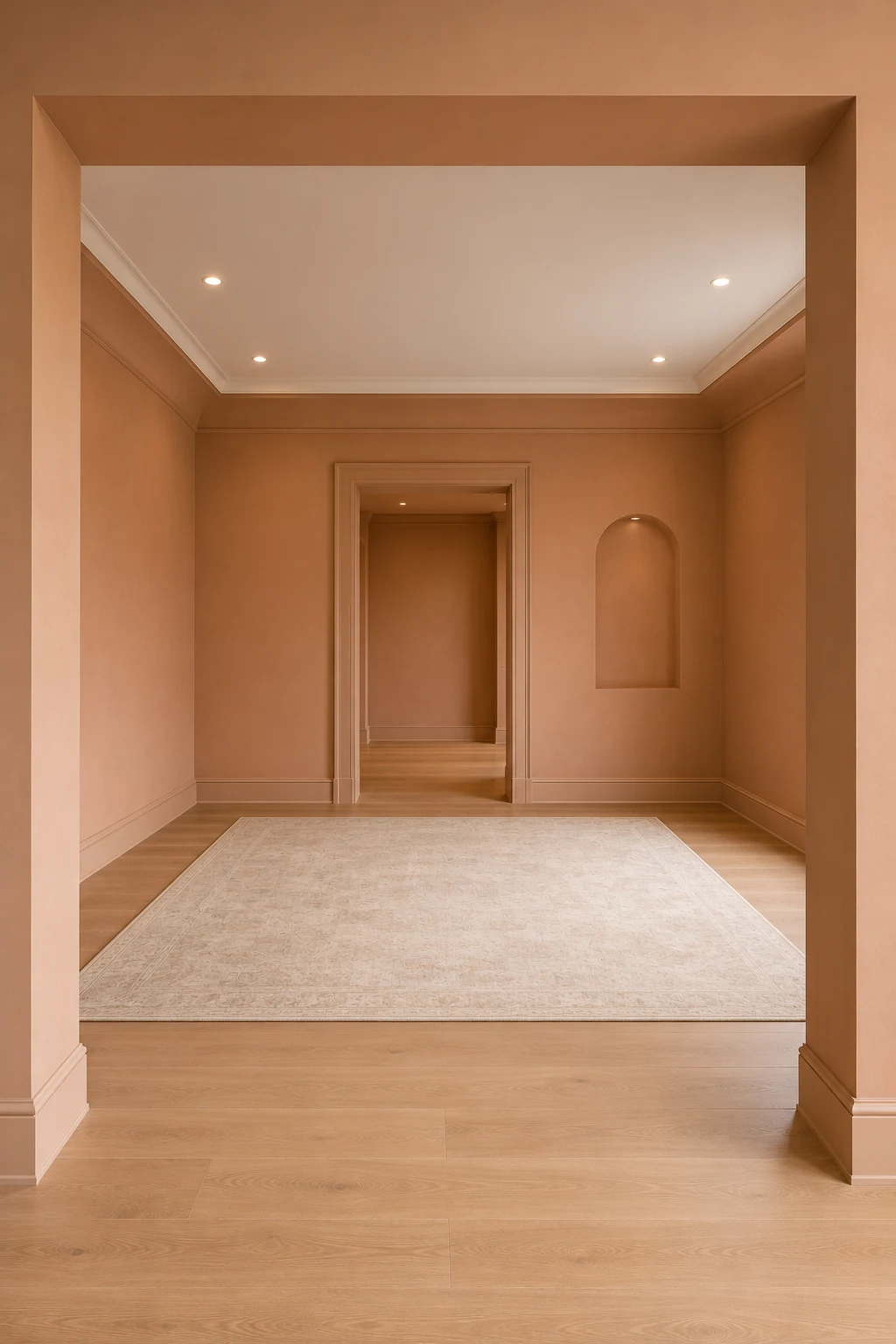
Dusty apricot brings gentle warmth to living room walls with its soft blend of peach, clay, and muted orange undertones. The color feels inviting without becoming too bright or overwhelming. Paired with pale wood flooring and a creamy rug, it creates a light and comfortable atmosphere.
This shade works beautifully in modern, organic, Mediterranean, and transitional interiors. Simple architectural openings and recessed niches allow the warm color to stand out without adding visual clutter. Soft neutral lighting helps preserve its subtle earthy character and keeps the room feeling refined.
Pro Tip: Pair dusty apricot walls with pale oak flooring, warm white ceilings, and creamy textiles for a soft, cohesive color scheme.
8. Chalky Ecru
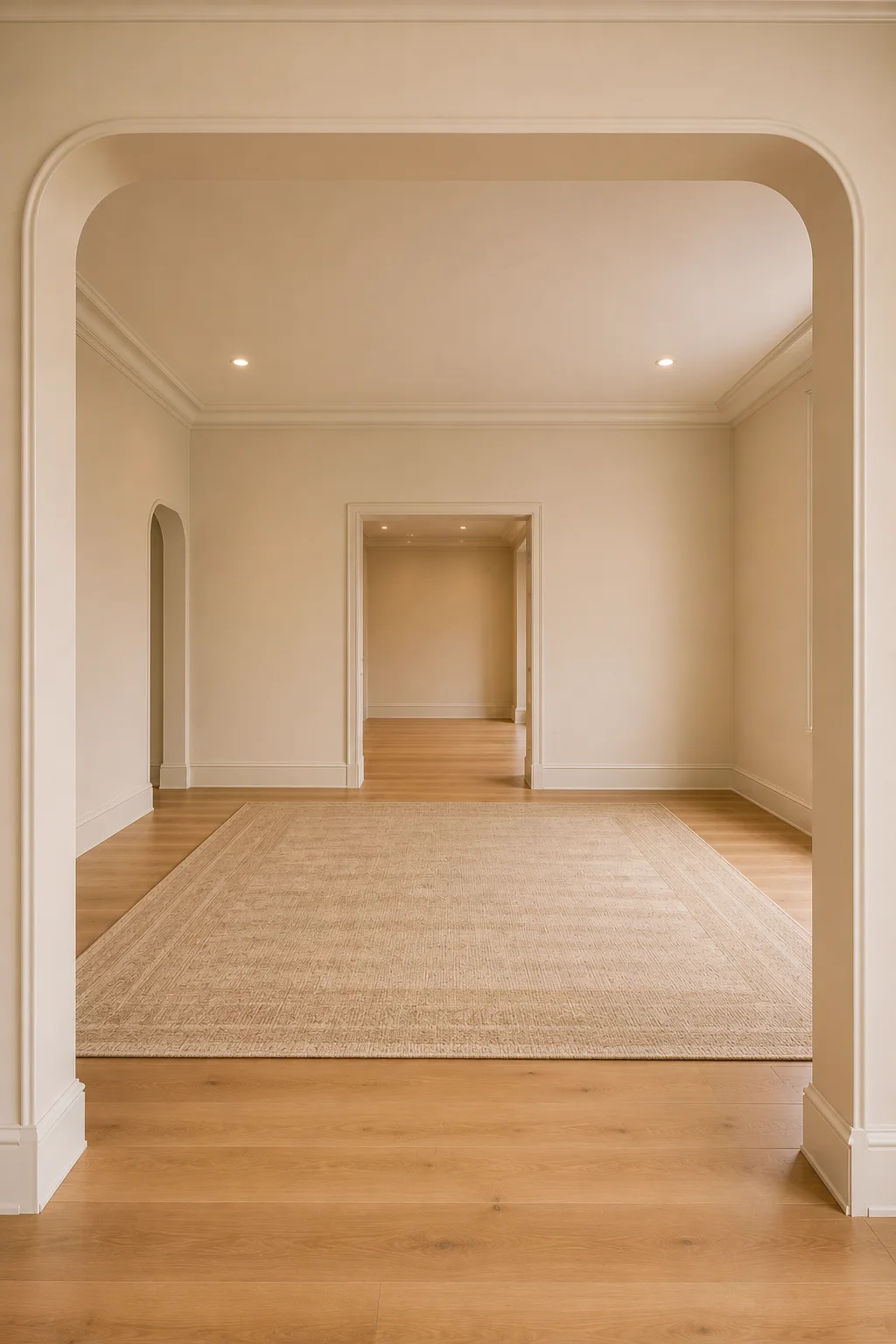
Chalky ecru gives living room walls a warm and understated look that feels softer than pure white. Its creamy beige and linen undertones create a gentle backdrop while helping the room feel open and comfortable. Warm wood flooring and a textured neutral rug enhance its natural, relaxed character.
This versatile shade works beautifully in minimalist, organic modern, transitional, and contemporary homes. It also pairs well with curved openings and subtle architectural details, creating a smooth flow between connected spaces. Unlike stark white, chalky ecru adds warmth without making the room feel heavy or overly yellow.
Pro Tip: Layer chalky ecru walls with warm oak flooring and slightly deeper beige textiles to create subtle contrast and prevent the room from looking flat.
9. Plum Brown
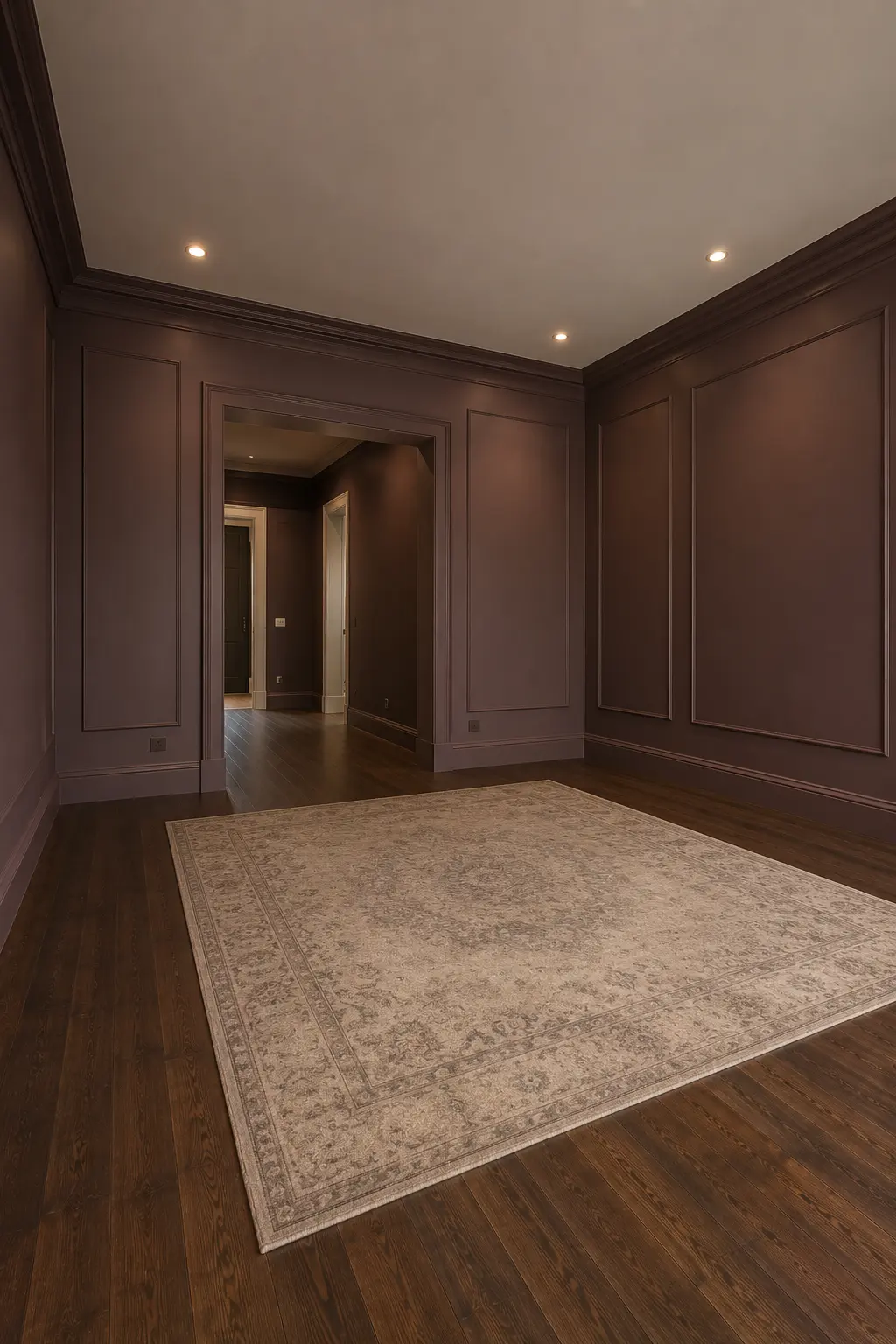
Plum brown brings a deep and dramatic character to living room walls with its blend of earthy brown and muted plum undertones. The rich color adds depth to traditional wall paneling and creates a sophisticated backdrop. Dark wood flooring enhances the moody palette, while a lighter patterned rug adds needed contrast.
This shade is ideal for classic, transitional, and modern luxury living rooms that need a stronger sense of character. Warm indoor lighting softens the darker walls and reveals the subtle plum tones within the brown. Keeping the ceiling lighter also helps maintain visual balance in the space.
Pro Tip: Pair plum brown walls with warm cream accents and lighter neutral rugs to soften the dark palette while preserving its rich, elegant character.
10. Sun Faded Peach
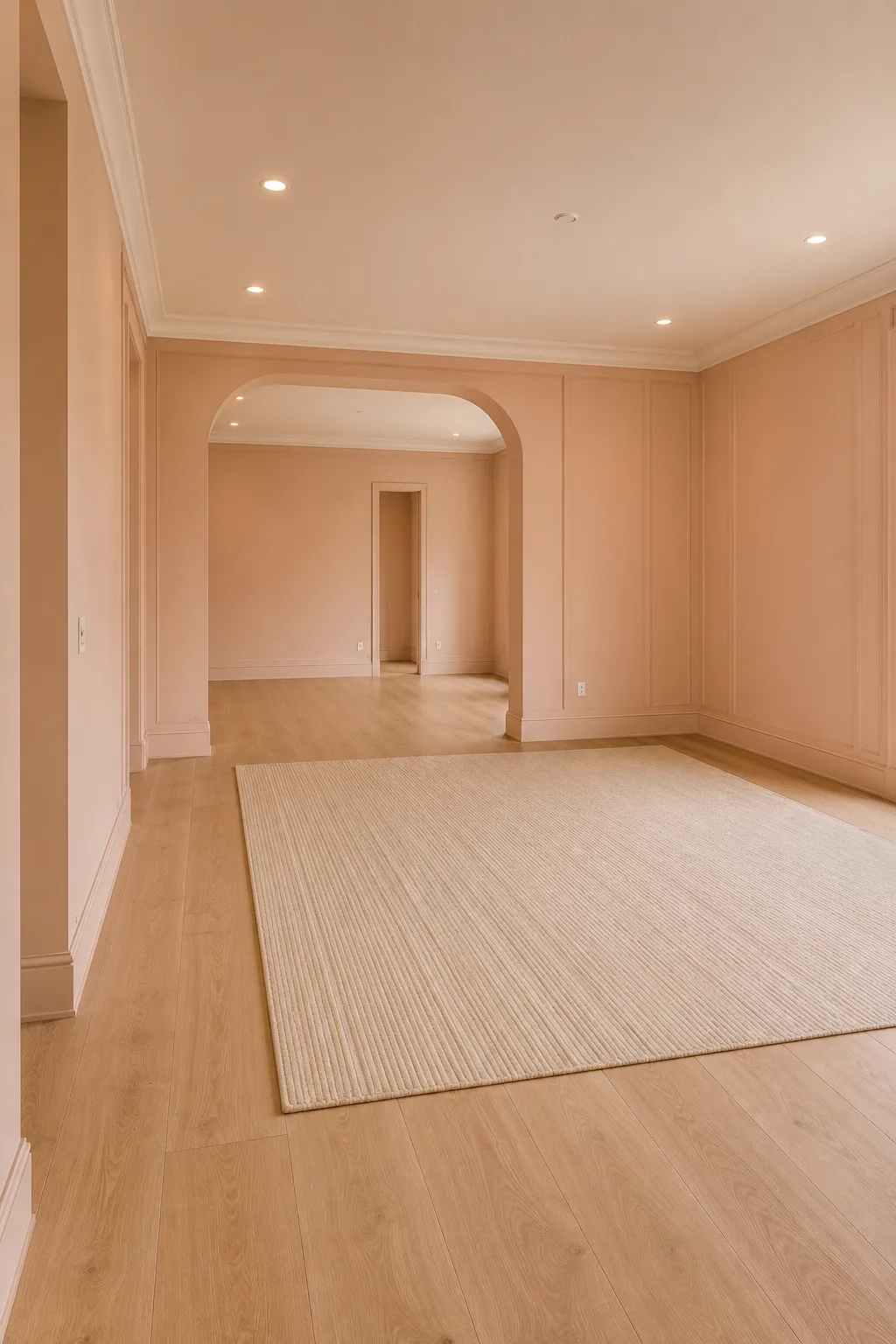
Sun faded peach brings gentle warmth to living room walls with its soft mix of peach, beige, and muted pink undertones. The shade adds color without feeling overly bright or sweet, making it easy to use across large wall surfaces. Pale wood flooring and cream rugs enhance its light, welcoming character.
This color works especially well in modern, transitional, and softly traditional living rooms. Wall molding adds subtle depth, while curved openings complement the shade’s relaxed appearance. Warm white ceilings and simple neutral finishes help the peach tones feel refined rather than overly colorful.
Pro Tip: Pair sun faded peach walls with pale oak flooring, creamy rugs, and warm white trim for a soft and cohesive living room palette.
11. Honey Amber
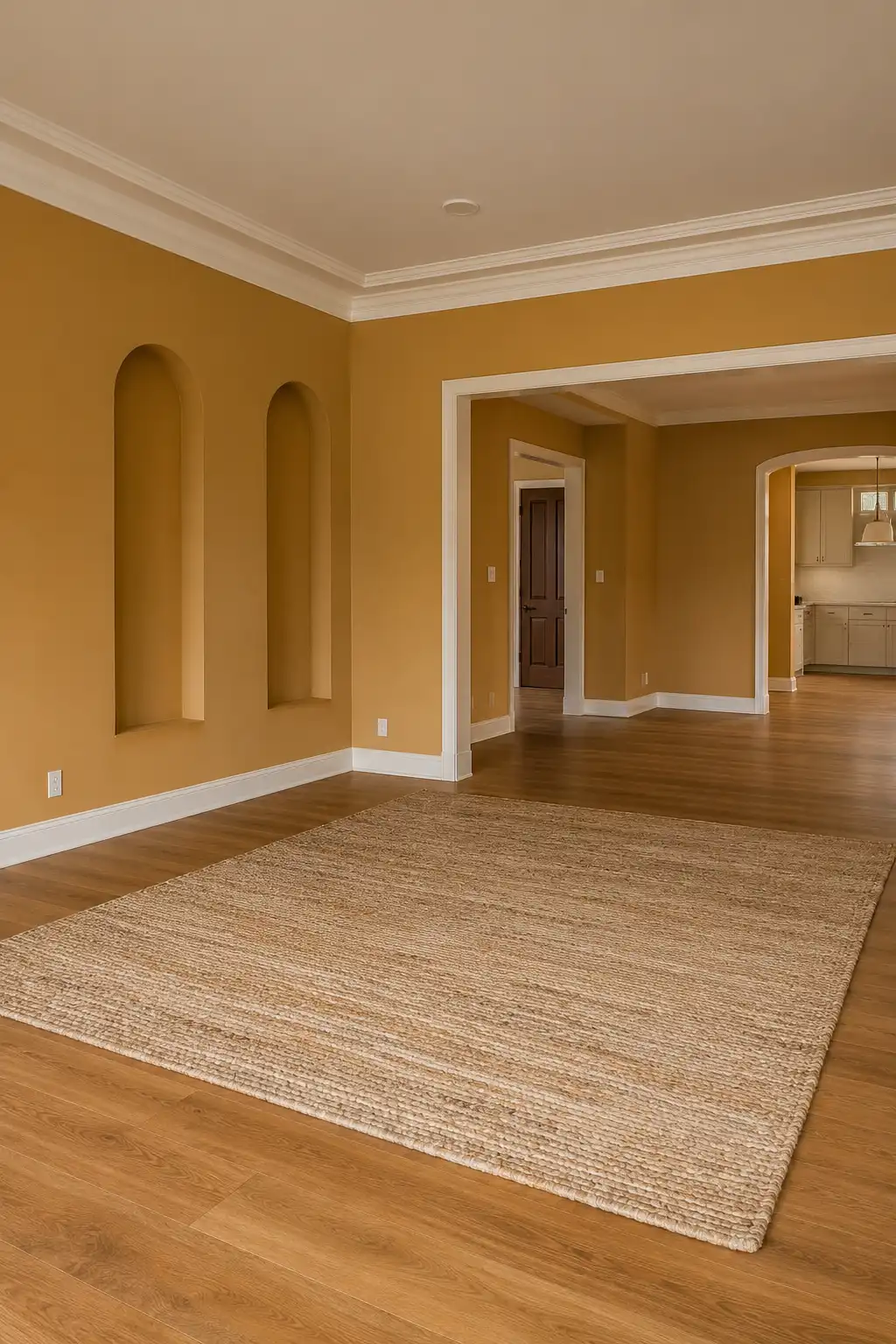
Honey amber brings a warm golden glow to living room walls with its rich blend of ochre, caramel, and earthy yellow undertones. The color adds personality without feeling overly bright, especially when paired with warm wood flooring. Natural woven rugs help soften the stronger wall color and create a grounded look.
This shade works beautifully in Mediterranean, rustic, traditional, and eclectic living rooms. Architectural niches and wide openings become more noticeable against the golden walls, adding depth and character to the space. Creamy white trim creates a clean contrast while keeping the overall palette warm and connected.
Pro Tip: Pair honey amber walls with creamy white trim, medium oak flooring, and natural woven textures to create a warm and balanced living room.
12. Forest Green
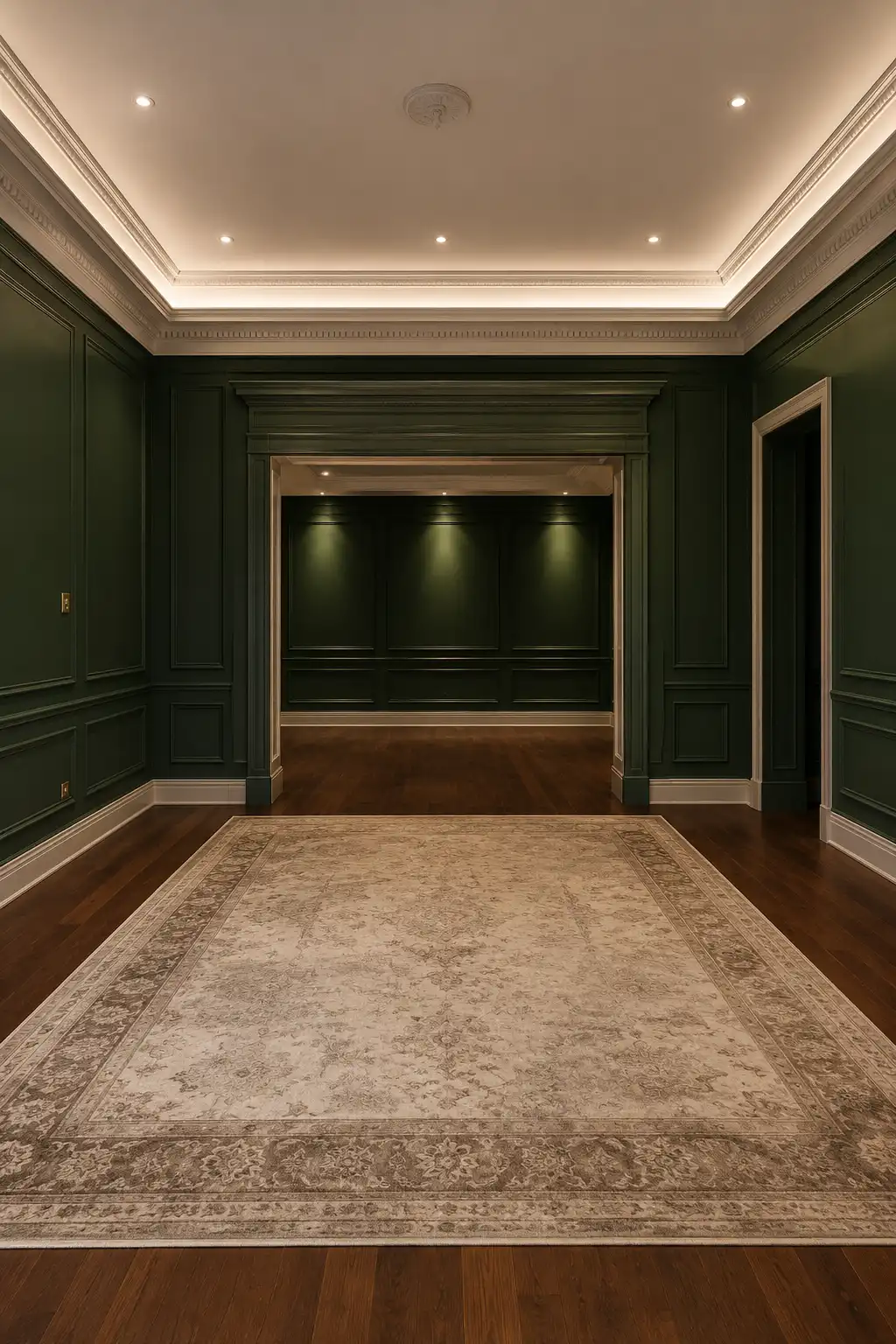
Forest green creates a bold and sophisticated atmosphere with its deep botanical tones and subtle earthy undertones. The rich color gives traditional wall paneling greater depth while making architectural details feel more prominent. Dark wood flooring adds warmth, while a lighter patterned rug creates contrast against the dramatic walls.
This shade works especially well in classic, transitional, and luxury living rooms where a stronger color statement is desired. Warm ceiling lighting helps reveal the green undertones and prevents the room from feeling too dark. Cream trim and lighter neutral accents can further soften the overall palette.
Pro Tip: Pair forest green walls with dark wood flooring, warm cream trim, and a light neutral rug to create an elegant contrast without losing the room’s cozy character.
13. Dusty Blush Pink
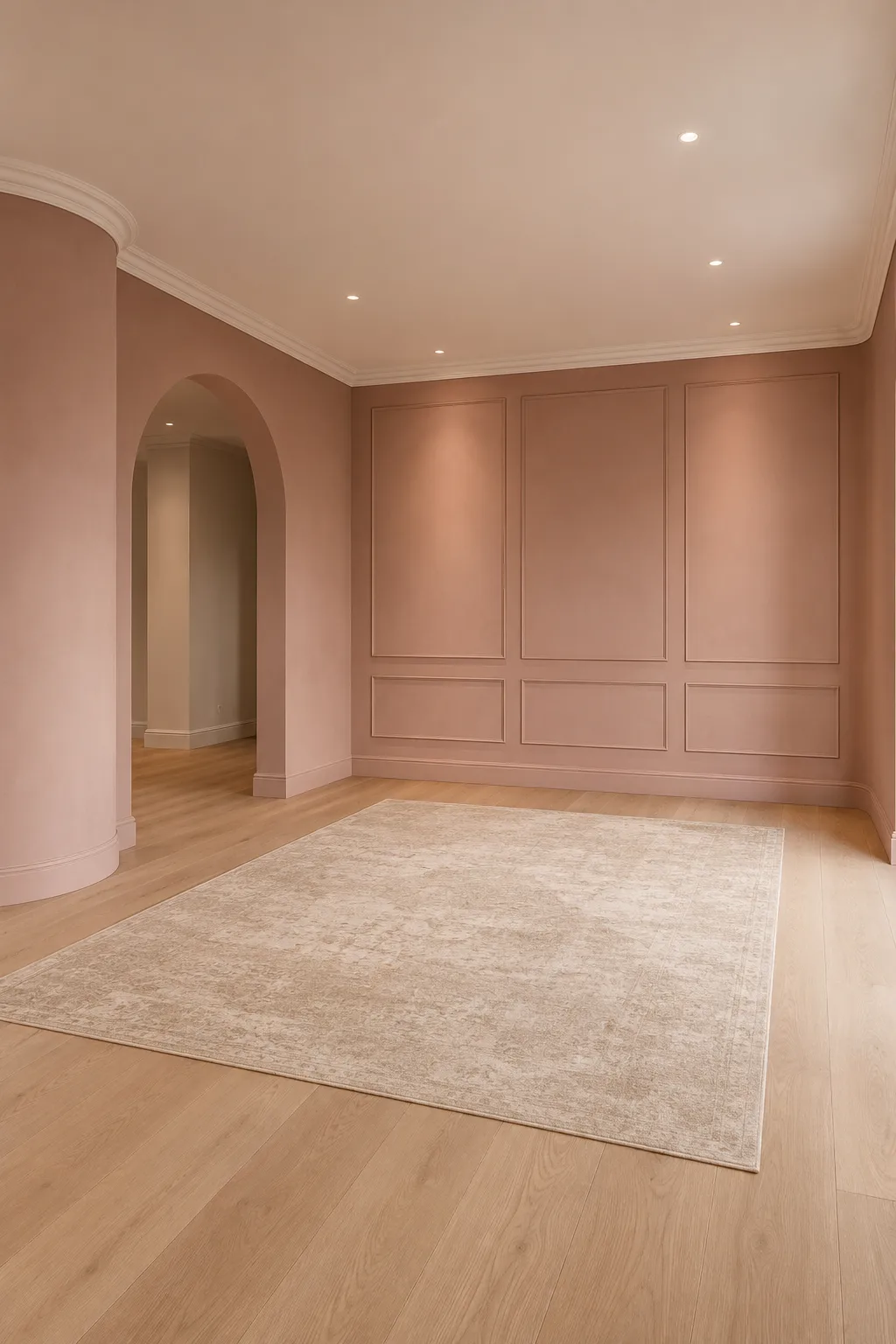
Dusty blush pink gives living room walls a soft, sophisticated warmth with subtle clay and beige undertones. Unlike brighter pinks, this muted shade feels calm and architectural, especially when used across wall molding and curved details. Pale wood flooring and a light neutral rug keep the overall palette airy and balanced.
This shade works beautifully in contemporary, transitional, organic modern, and softly elegant interiors. Warm lighting enhances its earthy character, while creamy white ceilings create gentle contrast. The result is a welcoming living room that feels colorful and refined without becoming overly sweet.
Pro Tip: Pair dusty blush pink walls with pale oak flooring, warm cream textiles, and soft white trim for a polished and balanced interior.
Final Thoughts
Choosing a living room paint color is about more than following a trend. The best shade should work with the room’s flooring, trim, lighting, and architectural details. Warm neutrals such as mushroom beige and chalky ecru offer flexibility, while forest green, plum brown, and deep chocolate brown create a stronger and more dramatic atmosphere.
For a softer touch of color, aquamarine blue, dusty apricot, mineral blue, and dusty blush pink can refresh the room without overwhelming it. Before painting the entire space, test your preferred shade on more than one wall and view it under your usual daytime and evening lighting. This simple step can help you choose a color that looks beautiful throughout the day.
