
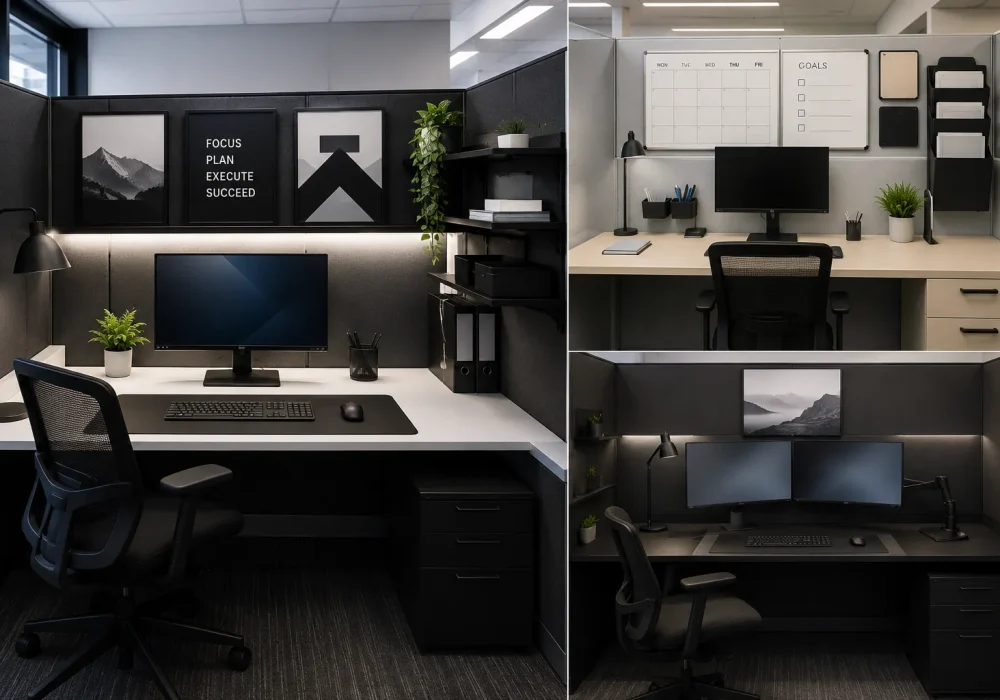
A cubicle doesn’t have to feel like a dull corner of the office. With the right decor, even a compact workspace can feel polished, organized, and genuinely motivating. The goal is to create an environment that helps you settle in and get things done.
Modern cubicle decor works best when style and function go hand in hand. A clean desk, thoughtful wall arrangement, useful storage, and a few carefully chosen accents can make the space feel more intentional without making it busy.
Whether you spend a few hours or your entire workday at your desk, small changes can make a noticeable difference. These ideas focus on creating a workspace that feels professional, comfortable, and easier to concentrate in.
Smart Cubicle Decor Ideas for a More Productive Workspace
These 14 ideas take different approaches to modern cubicle design, from motivational feature walls and organized planning zones to sleek technology setups and refined executive-inspired details. Each one is designed to add personality while keeping the workspace neat, functional, and focused.
Also Read: 13 Modern Small Office Ideas With a Distinctive Design Edge
Also Read: 14 Beautiful Office Interior Design Ideas for Any Space
1. Create a Minimalist Motivation Wall That Keeps You Focused
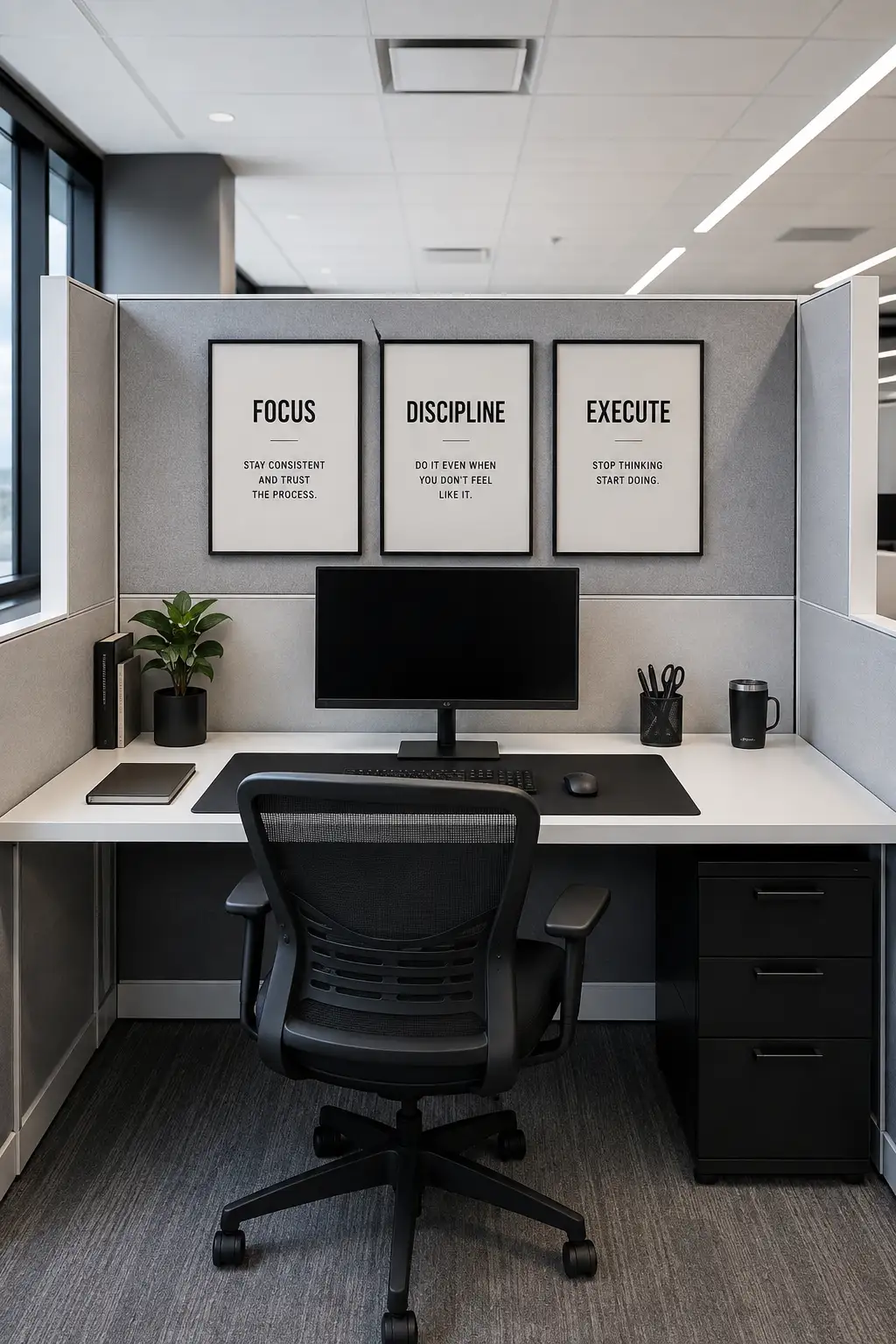
A motivational wall can give your cubicle a stronger sense of purpose without making it feel overly decorated. Choose two or three framed prints with simple typography, meaningful phrases, or words connected to your work goals. Keep the designs consistent so the wall looks intentional rather than crowded.
For a modern look, stick with a restrained palette such as black, white, charcoal, or deep navy. Position the frames at eye level where you can naturally see them while working. The artwork should complement the cubicle instead of competing with your monitor or other workspace essentials.
The key is to make the display personal enough to keep you motivated while still maintaining a professional appearance. A few carefully selected pieces will have much more impact than covering every available panel with quotes, photographs, and decorations.
Pro Tip: Choose one short phrase that genuinely motivates you and make it the visual focal point instead of using several unrelated quotes.
2. Turn One Cubicle Wall Into a Practical Productivity Command Center
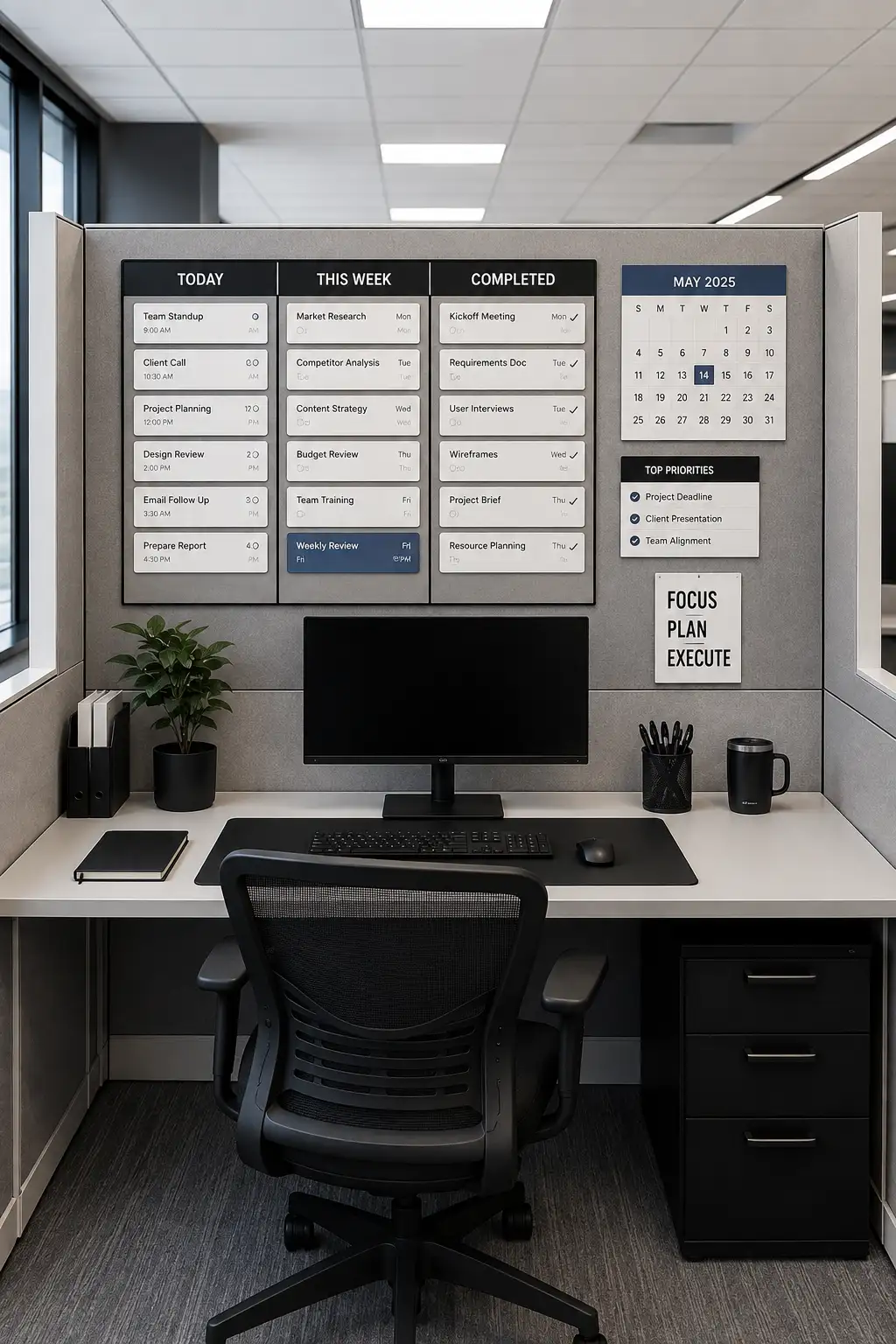
A productivity command center makes your cubicle work harder without taking up valuable desk space. Dedicate one wall to your daily tasks, weekly priorities, completed work, and important deadlines. A simple three-section layout keeps everything visible and easy to update throughout the day.
Add a compact calendar and a small priorities board beside the main task area to keep upcoming commitments within sight. Use matching cards, consistent labels, and a limited color palette so the entire system looks polished rather than cluttered. The goal is to make organization feel like part of the decor.
This setup can also help you separate urgent tasks from longer-term projects. Seeing completed work alongside your current priorities gives the wall a sense of progress, while keeping your desk clear and your attention on the task in front of you.
Pro Tip: Keep only current and actionable tasks on the board. Remove finished or outdated items regularly so your productivity wall stays useful instead of becoming another source of visual clutter.
3. Build a Goal Tracking Wall That Makes Progress Visible
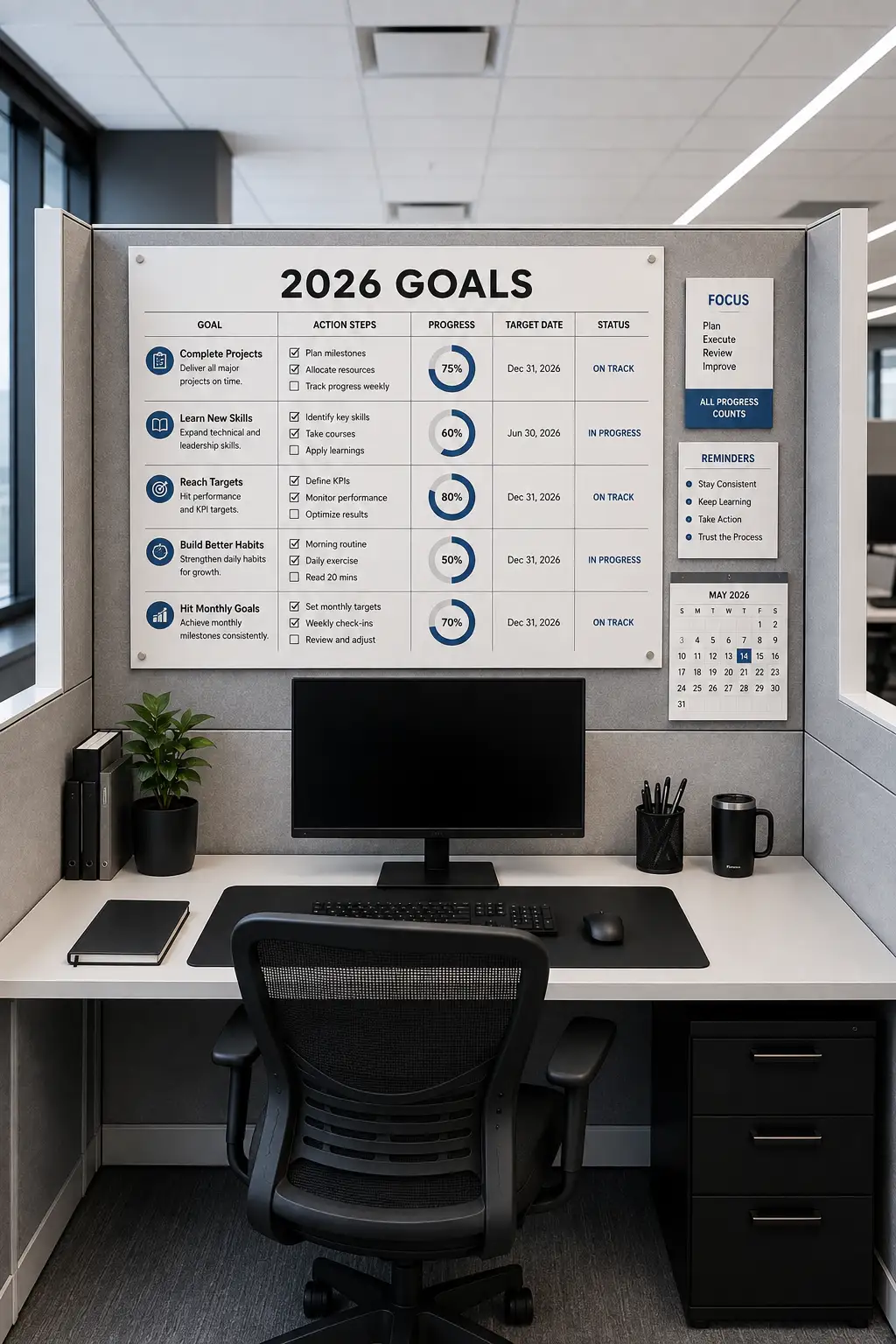
A goal tracking wall turns your cubicle into a visual reminder of what you’re working toward. Instead of relying on vague motivational quotes, use a structured display for major goals, action steps, progress levels, deadlines, and current status. This makes the wall both decorative and genuinely useful.
Keep the design clean with clearly separated sections and a consistent visual system. Progress circles, checkboxes, status labels, and target dates can make larger goals feel easier to manage. Pair the main board with a small calendar or reminder panel to keep important milestones within easy view.
The best part of this setup is that it can change as your goals change. Update the progress regularly, mark completed milestones, and adjust deadlines when necessary. Over time, the wall becomes a visual record of your effort rather than another piece of office decoration.
Pro Tip: Break large goals into smaller measurable milestones. Seeing several small progress points move forward can be far more motivating than looking at one huge goal with no clear next step.
4. Make One Bold Focus Statement the Visual Centerpiece
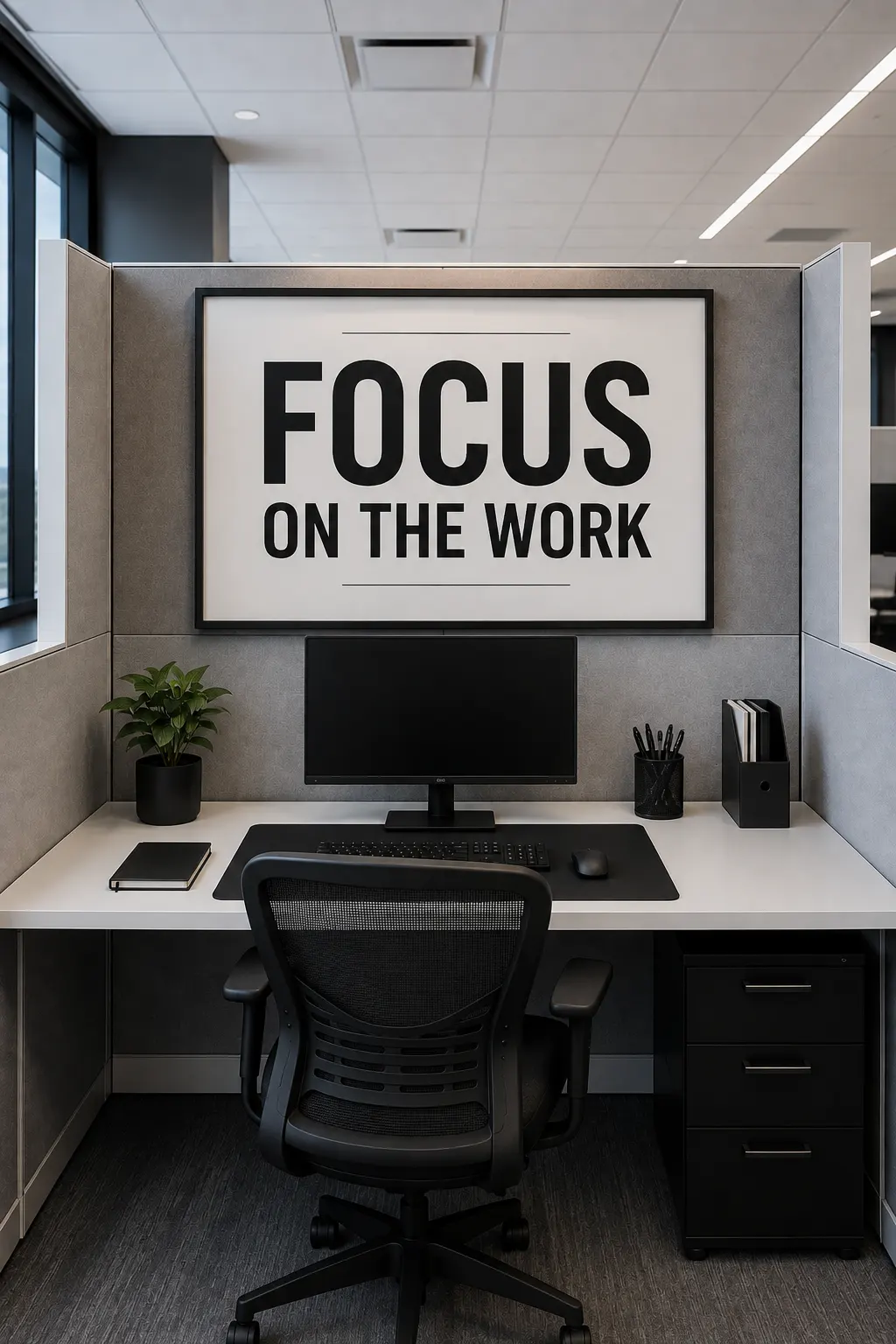
A single oversized statement can have more impact than a wall filled with small decorations. Choose a phrase that reflects the way you want to approach your work, such as “Focus on the Work,” and display it in a large, professionally framed print directly behind your monitor.
Keep the design simple with bold typography, a restrained color palette, and plenty of visual clarity. Black, charcoal, white, or deep navy work especially well in a modern cubicle because they create contrast without making the space feel busy. The frame should also complement the clean lines of the desk and surrounding panels.
This approach works particularly well when your cubicle is already organized and you don’t want to add lots of decorative pieces. The statement becomes the focal point while the rest of the workspace stays intentionally minimal, giving the entire setup a sharper and more professional appearance.
Pro Tip: Choose a statement that’s short enough to understand in a glance. The simpler the message, the stronger its visual impact will be.
5. Introduce a Refined Blue Accent to Energize the Workspace
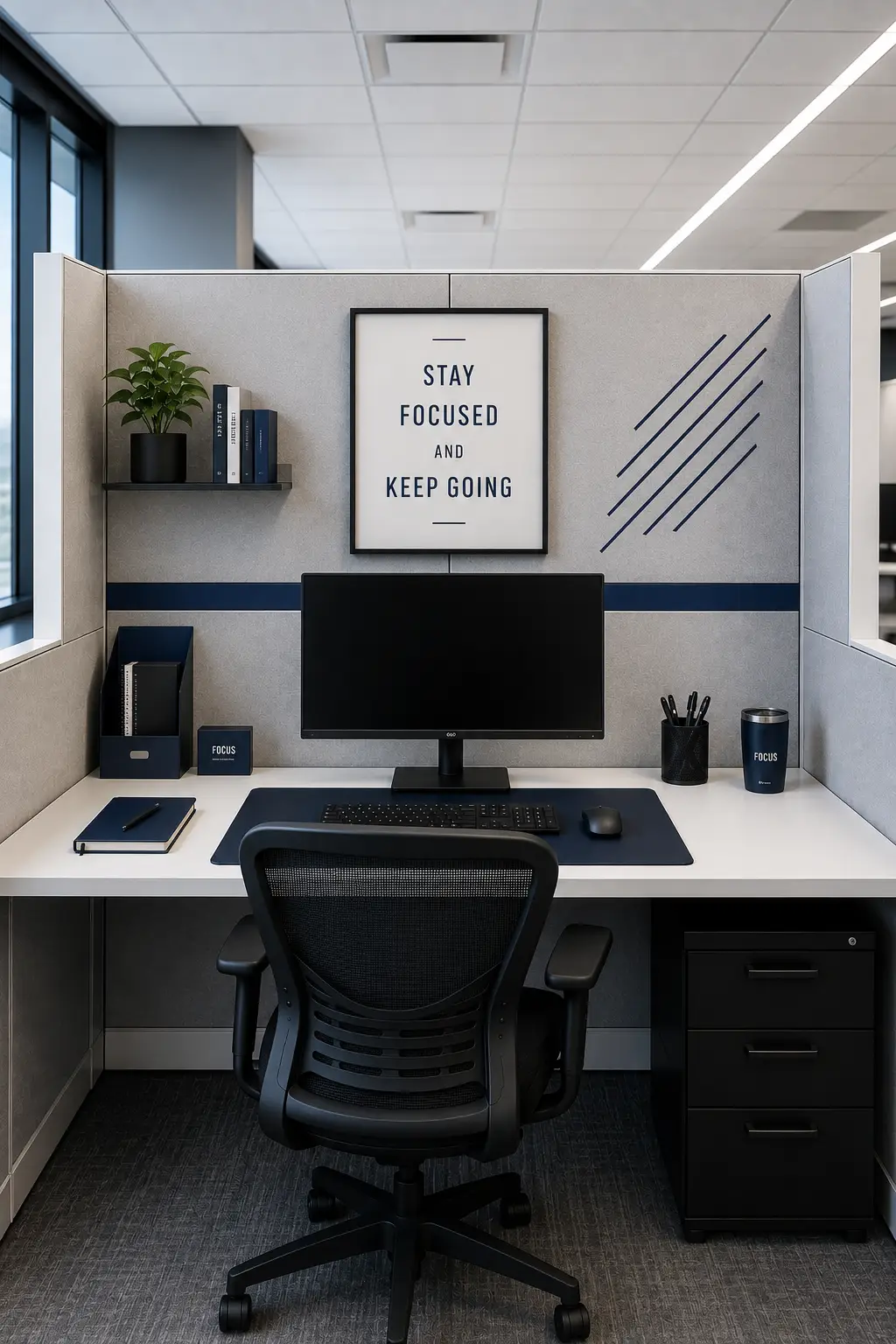
A controlled blue accent can give a modern cubicle more personality without making it feel distracting. Use deep navy or muted blue across a few coordinated details, such as a desk mat, framed artwork, storage boxes, notebook, or a slim wall accent. Keeping the color consistent creates a polished visual connection throughout the workspace.
Pair the blue with neutral shades like white, soft gray, charcoal, and black. This keeps the overall design professional while giving the cubicle a little more energy. A small plant or simple decorative shelf can soften the look without taking attention away from the main workspace.
The trick is to use blue as an accent rather than the dominant color. When repeated in just a handful of places, it can make a basic office cubicle feel intentionally designed and more visually engaging while still supporting a clean, focused atmosphere.
Pro Tip: Choose one specific shade of blue and repeat it across three or four small elements. Matching accents will look far more polished than mixing several different shades.
Also Read: 12 Smart Home Office Nook Ideas for Small Space Living
Also Read: 17 Cubicle Decor Ideas to Inspire Your Best Workspace
6. Build a Motivational Photo Gallery With a Professional Edge
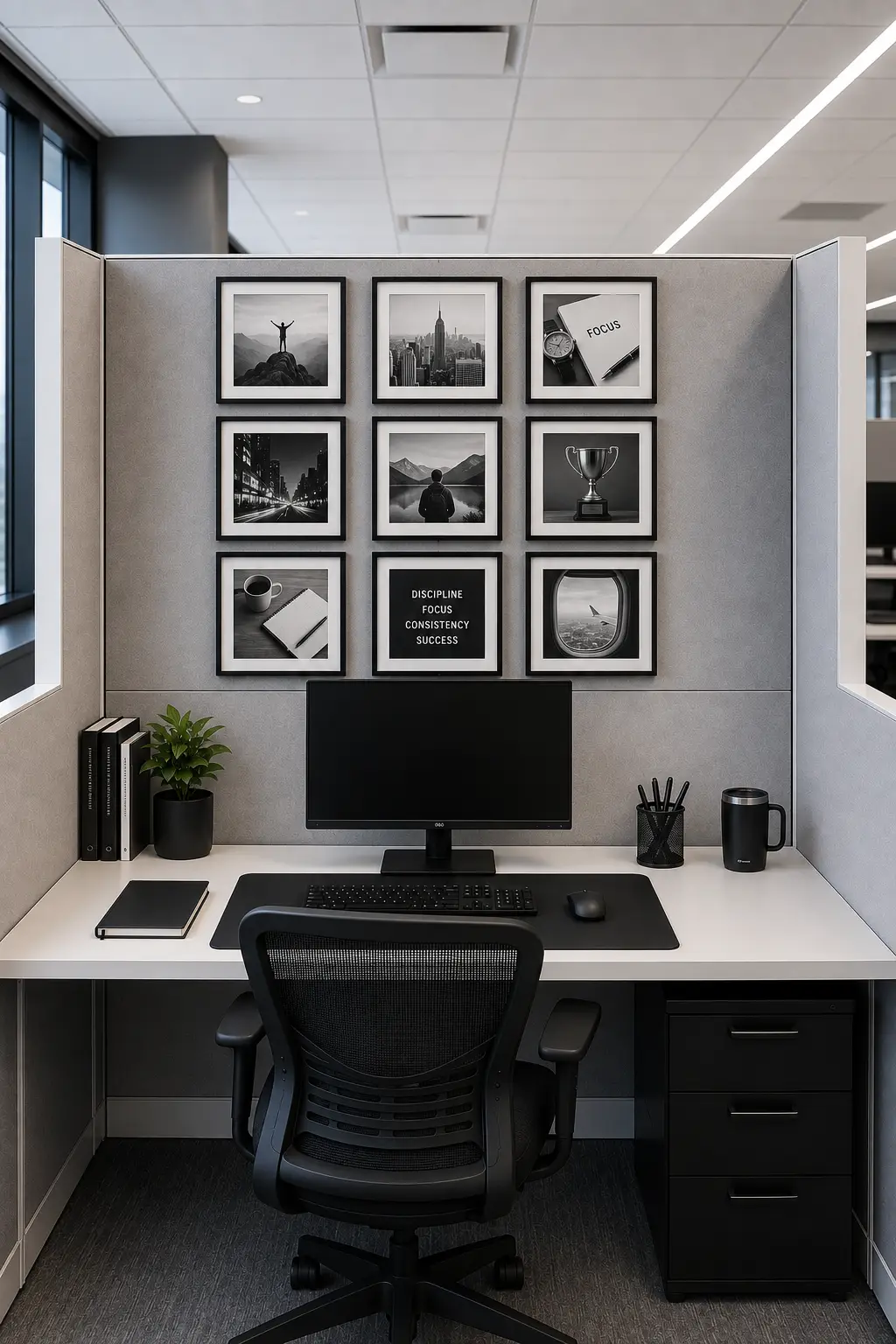
A carefully arranged photo gallery can give your cubicle personality while keeping the overall look polished. Instead of mixing random pictures, choose a consistent collection of black-and-white photographs featuring city views, inspiring landscapes, personal achievements, or subtle productivity themes.
Arrange the frames in a precise grid with equal spacing so the display feels intentional. Matching black frames and white mats create a clean visual rhythm, while the monochrome palette keeps the wall from becoming too colorful or distracting. You can also include one typography print among the photographs for a stronger motivational touch.
This approach works especially well when you want your workspace to feel personal without sacrificing its professional character. The gallery adds visual interest to an otherwise plain cubicle panel while giving you small reminders of places, goals, or achievements that matter to you.
Pro Tip: Use the same frame style throughout the gallery and limit the collection to one consistent visual theme. A cohesive nine-piece arrangement will look much more sophisticated than a mix of unrelated frames.
7. Turn the Cubicle Wall Into a Vertical Organization System
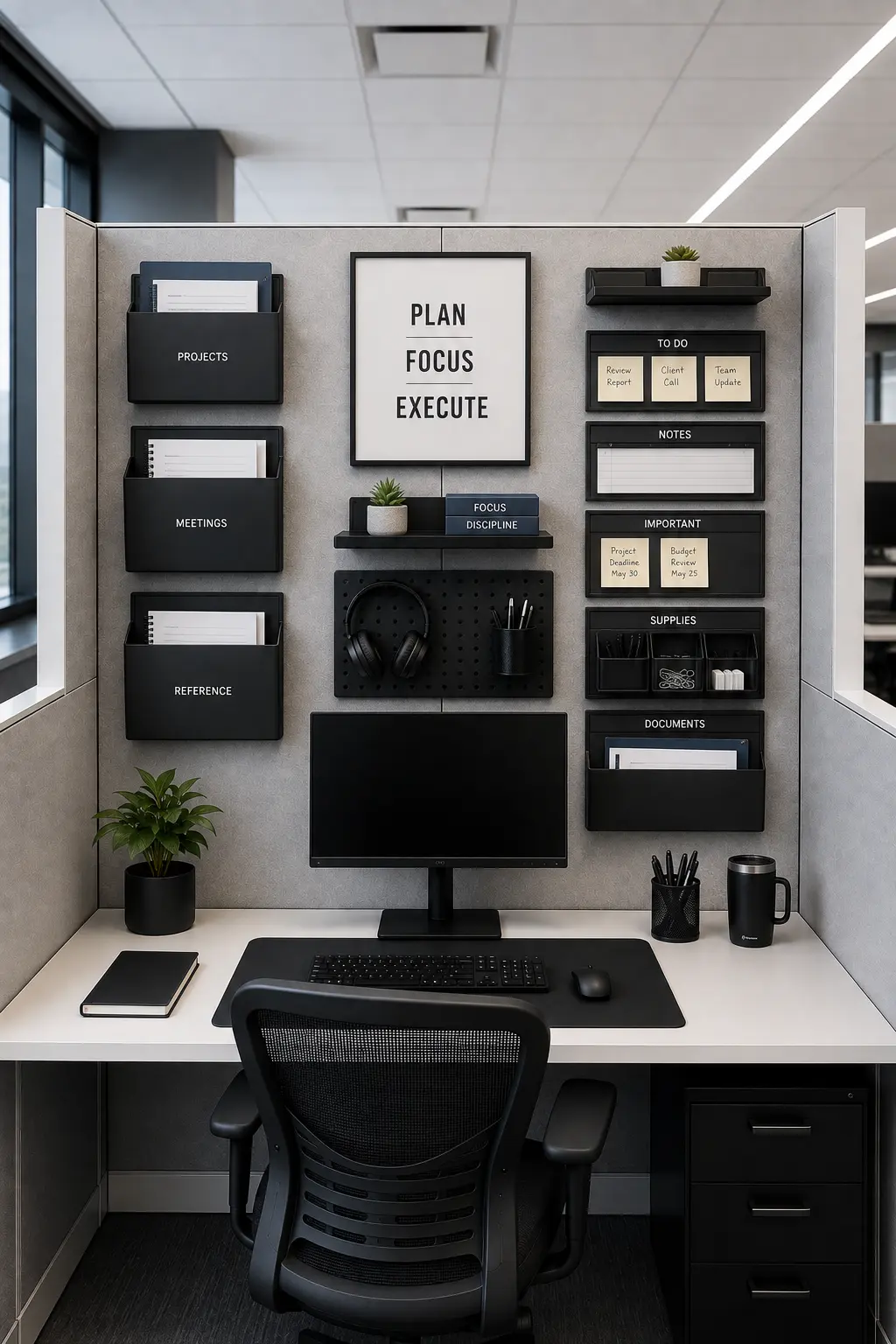
A vertical organization wall is a smart way to use the space above your desk without sacrificing valuable workspace. Add labeled document pockets, small shelves, note boards, supply holders, and a compact pegboard to keep everyday essentials neatly arranged. This approach makes the wall functional while giving the cubicle a polished, structured appearance.
Keep the organization system visually consistent by using matching black, charcoal, or neutral storage pieces. Group similar items together, such as documents on one side and daily supplies on the other. A small shelf can hold a plant or a few useful accessories, while a central motivational print keeps the arrangement from feeling purely utilitarian.
The biggest advantage is that everything has a designated place. Instead of allowing paperwork, headphones, pens, and small office supplies to spread across your desk, you can move them upward and create a much clearer working surface. It’s a practical upgrade that also makes the entire cubicle feel more intentional.
Pro Tip: Label storage according to how you actually use it, such as “Projects,” “Meetings,” and “Reference.” Clear labels make it much easier to put things away instead of letting clutter creep back onto your desk.
8. Create a Sophisticated Three-Print Wall That Sets the Tone
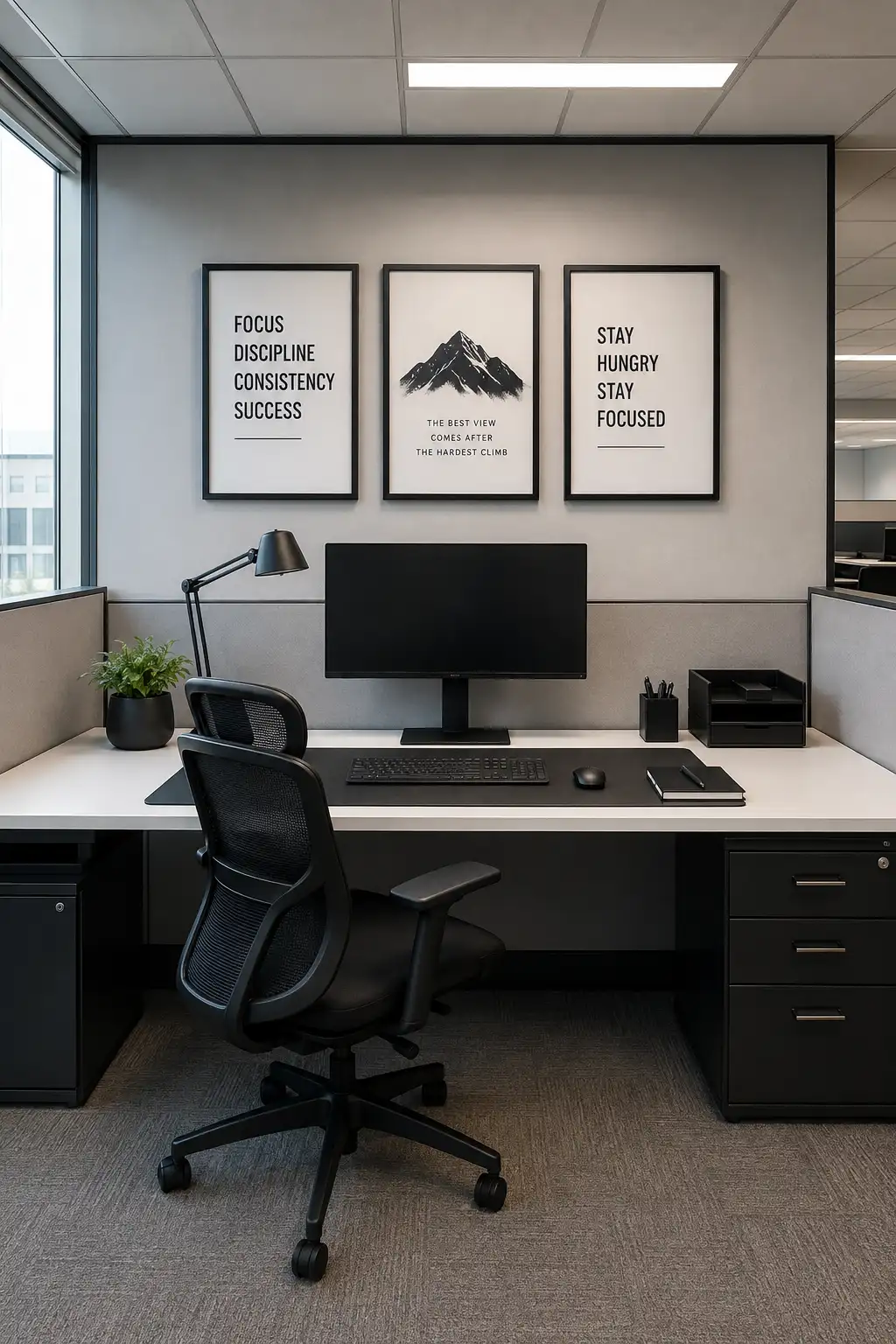
A three-print arrangement can instantly make a cubicle feel more polished without overwhelming the limited wall space. Choose three complementary pieces, such as a short productivity statement, a simple landscape, and another focused message. Together, they create a balanced display with enough variety to keep the wall visually interesting.
For a professional look, use matching frames and keep the artwork aligned at the same height. Neutral backgrounds with black typography work particularly well, while a subtle landscape or architectural image can add visual contrast. Leave consistent spacing between each frame so the arrangement feels deliberate rather than randomly placed.
This setup is especially effective when the rest of your cubicle is kept simple. The artwork becomes the main decorative feature while your desk remains available for practical items. It gives the workspace a finished appearance without requiring shelves, large accessories, or excessive decoration.
Pro Tip: Choose artwork with a shared color palette rather than matching every image exactly. A little visual variation makes the arrangement feel more sophisticated while the matching frames keep everything connected.
9. Use a Refined Green Accent to Bring Fresh Energy to the Cubicle
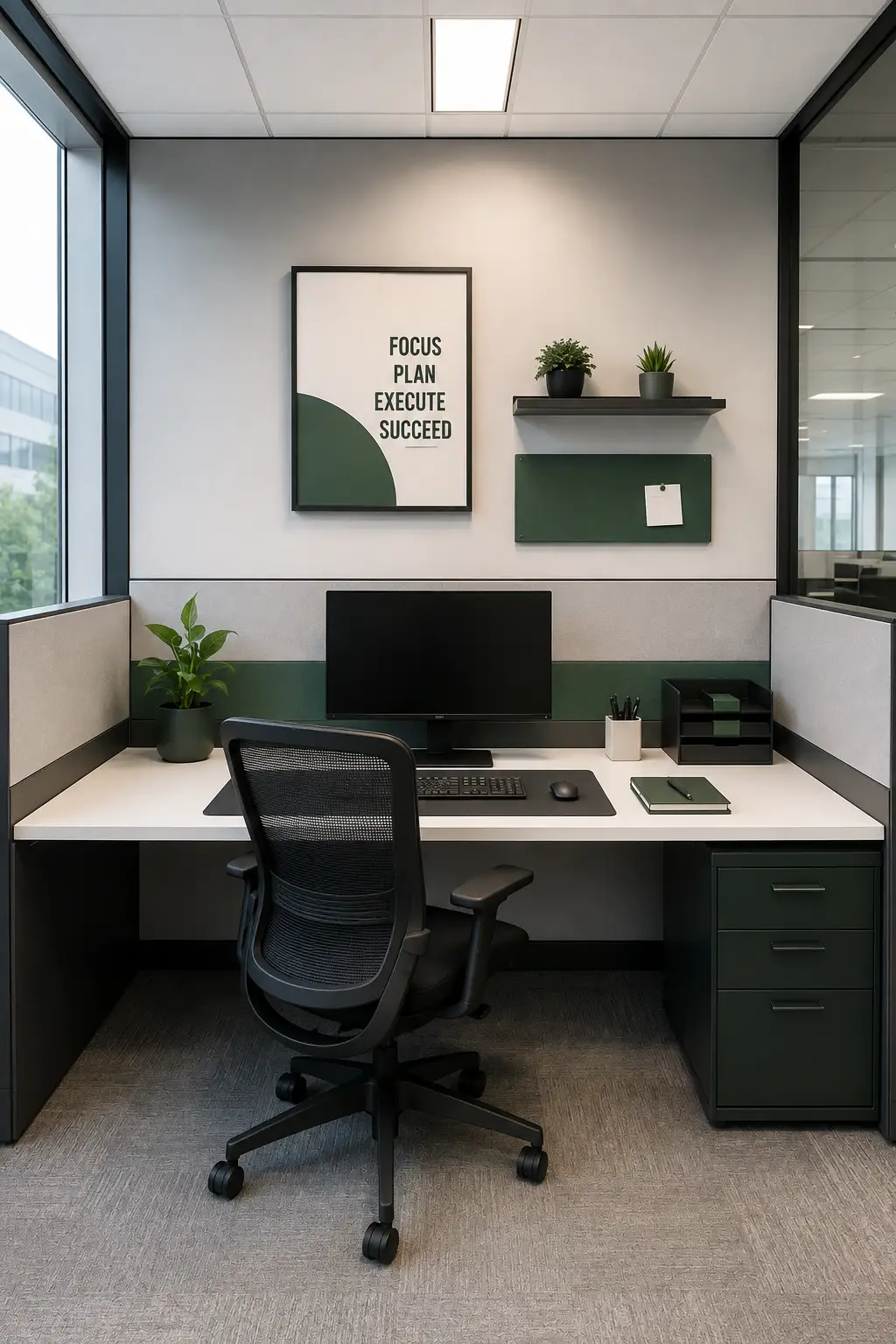
A muted green accent can make a cubicle feel fresher without turning it into an overly decorated space. Choose a sophisticated shade such as deep sage, forest green, or muted olive and repeat it across a few carefully selected elements. A wall accent, framed artwork, notebook, or storage piece can introduce the color without overwhelming the workspace.
Balance the green with clean neutrals such as white, charcoal, soft gray, and black. This keeps the cubicle looking professional while adding a subtle connection to nature. A small plant can reinforce the color scheme, but keep the greenery controlled so the workspace still feels structured and uncluttered.
This approach works particularly well in an office where the standard cubicle panels feel plain or repetitive. A restrained green accent can give the space more character while creating a calmer visual environment. When paired with simple furniture and organized accessories, it feels contemporary rather than decorative for decoration’s sake.
Pro Tip: Choose a muted green instead of a bright shade for a more sophisticated result. Repeat the same tone in two or three places so the accent feels intentional and cohesive.
10. Add a Sleek Task Lamp to Create a Dedicated Focus Zone
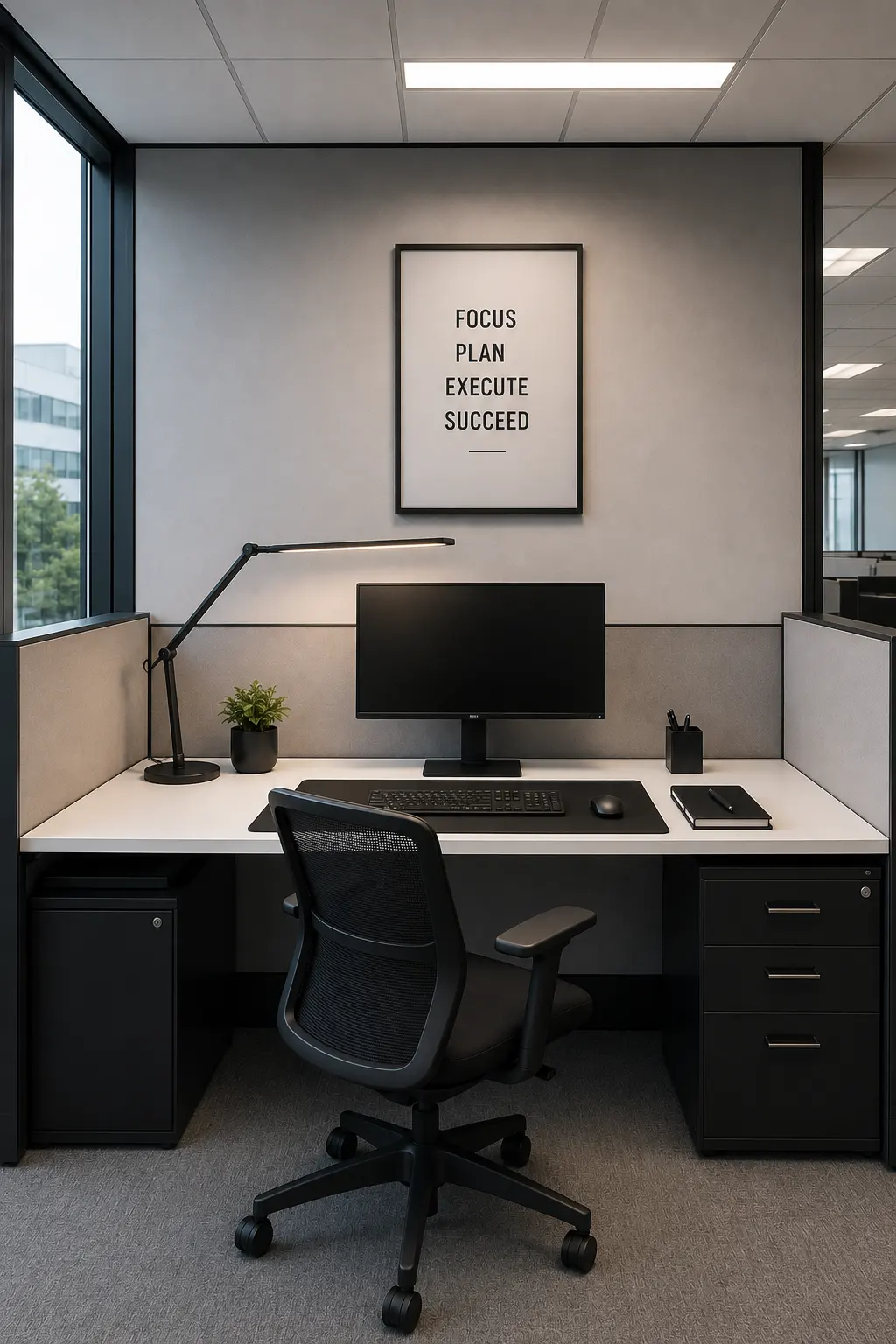
A modern task lamp can completely change the feel of a cubicle while serving a practical purpose. Choose a slim, adjustable design with a clean black or dark metal finish and position it beside your monitor. Its focused light creates a defined work area without adding unnecessary visual clutter.
Keep the rest of the desk simple so the lamp has room to stand out. A large desk mat, streamlined monitor, small plant, notebook, and minimal pen holder are enough to complete the setup. Pairing the lamp with neutral colors also gives the cubicle a polished appearance that feels more like a carefully designed workspace than a standard office station.
A dedicated light source can also make your desk feel more intentional during long work sessions. Rather than relying entirely on overhead office lighting, you can use the lamp to create a softer layer of illumination around the area where you actually work.
Pro Tip: Choose a lamp with an adjustable arm and head so you can direct the light exactly where you need it without creating glare on your monitor.
11. Keep Your Week Visible With a Clean Planning Wall
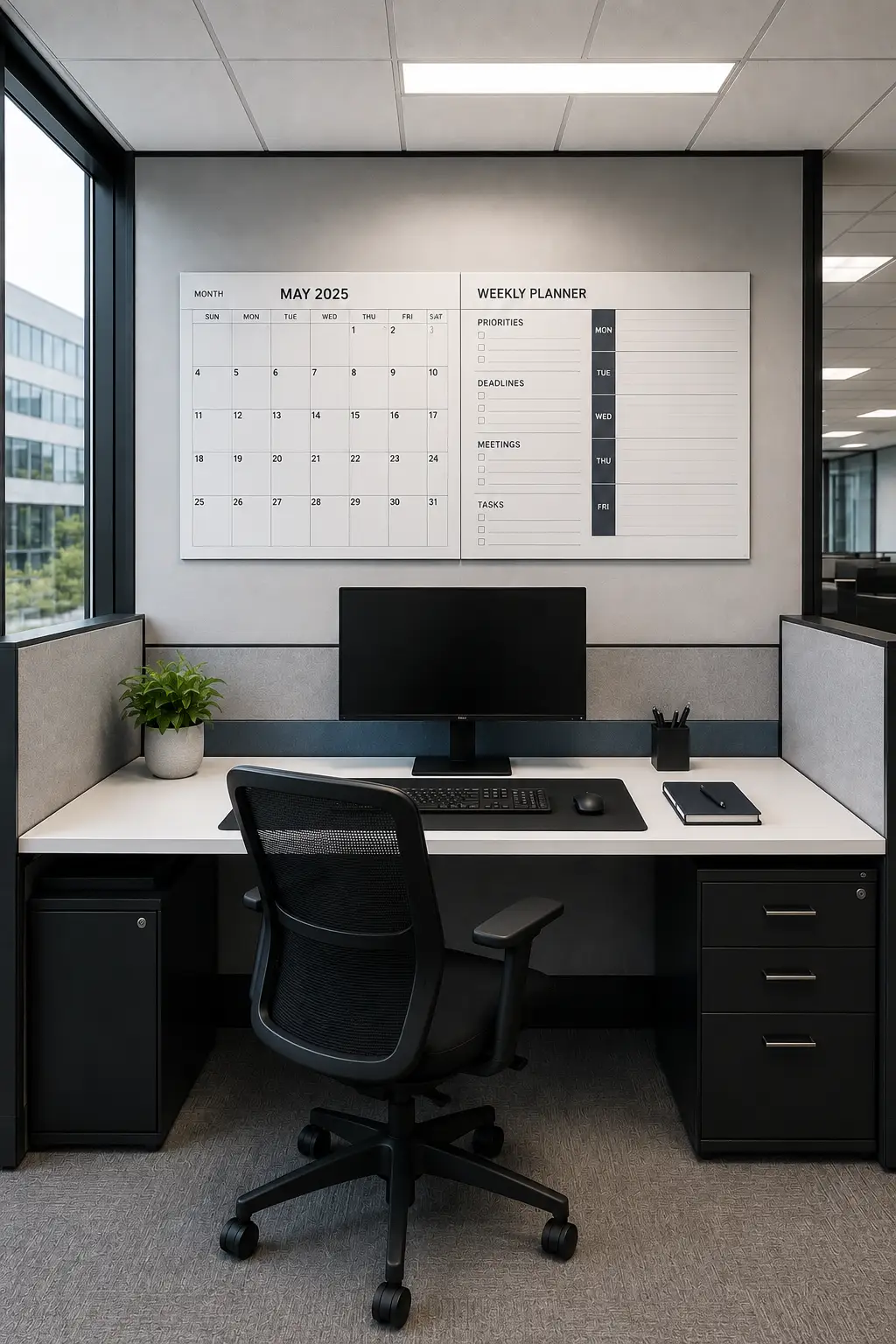
A dedicated calendar and weekly planner can make a cubicle feel more organized without adding unnecessary decoration. Place a large monthly calendar beside a structured weekly planner so important dates, meetings, deadlines, and daily priorities are always easy to see.
Choose a simple layout with clear sections and plenty of writing space. White, gray, black, and one restrained accent color can keep the planning wall consistent with a modern office. A matching frame or clean border can also make the planner feel like part of the decor rather than a temporary piece of paper.
This setup is particularly useful when your work involves changing deadlines or several projects at once. Instead of keeping reminders scattered across sticky notes and notebooks, you can bring the most important information into one organized area that stays visible throughout the workday.
Pro Tip: Review the planner at the start and end of each workday. Move unfinished tasks forward and remove outdated notes so the wall always reflects what actually needs your attention.
12. Display Your Achievements in a Gallery That Builds Momentum
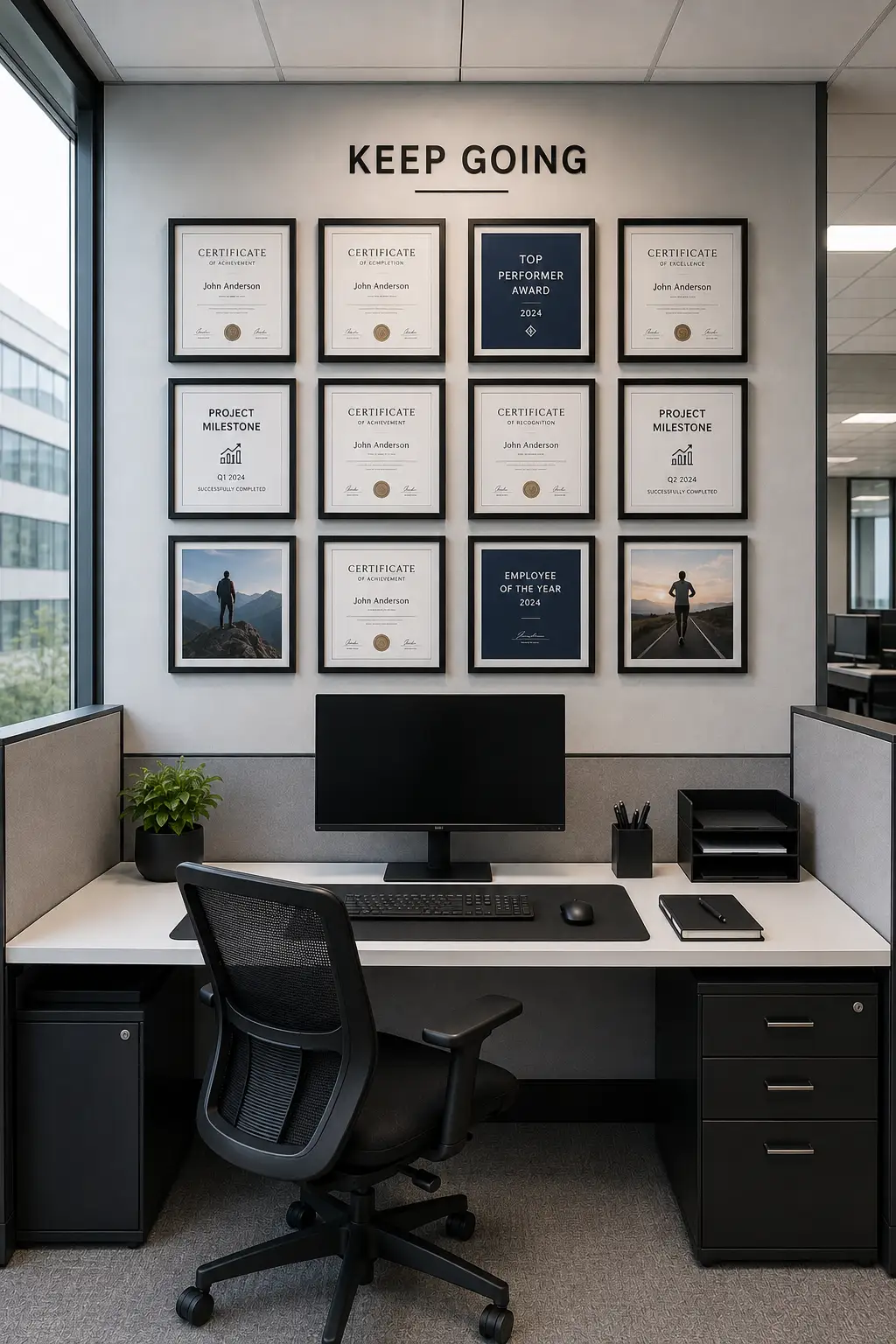
An achievement gallery can make your cubicle feel more personal while giving you a daily reminder of how far you’ve come. Use certificates, awards, completed project milestones, professional accomplishments, or meaningful photographs to create a display that reflects your progress rather than relying on generic office decor.
For a polished appearance, use matching frames and arrange everything in a clean grid with consistent spacing. You can mix certificates with a few achievement-focused prints or personal images, but keep the overall color palette controlled. A simple phrase such as “Keep Going” can sit above the collection and tie the entire wall together.
This idea works especially well when you want your workspace to feel motivating without becoming overly decorative. Every piece has a story behind it, so the wall becomes more than an attractive display. It can remind you of completed goals and encourage you to keep working toward the next one.
Pro Tip: Don’t wait until you have a major award to update your gallery. Include smaller milestones, completed certifications, successful projects, or other accomplishments that genuinely represent progress.
13. Build an Ultra-Clean Dual-Monitor Setup for Better Focus
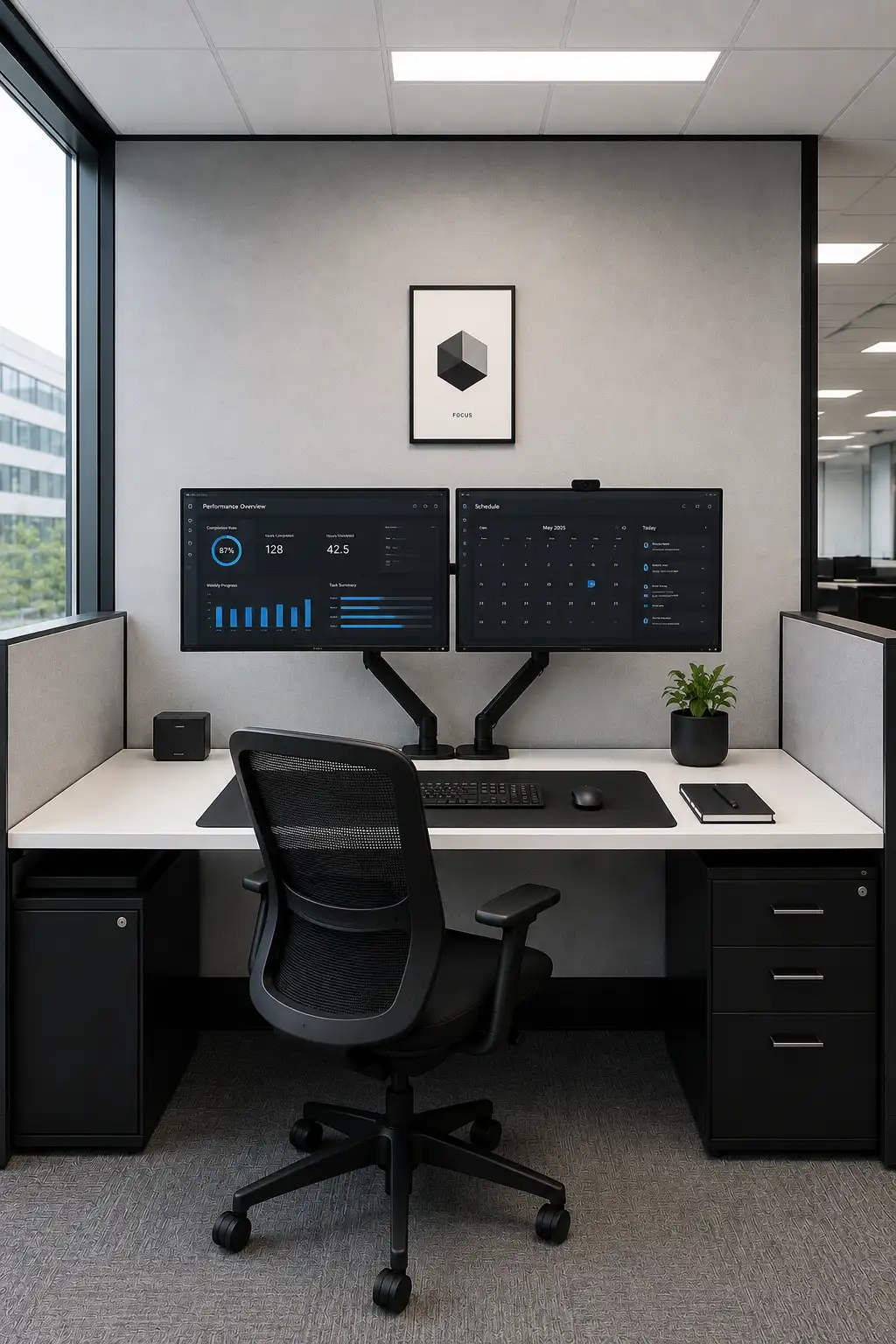
A dual-monitor setup can make a cubicle feel like a high-performance workstation while keeping the desk surprisingly clean. Mounting two monitors on adjustable arms helps free up valuable desk space and creates a more streamlined appearance. Keep the screens aligned at a comfortable height so the setup feels intentional rather than crowded.
Use a large desk mat underneath the keyboard and mouse, then keep the remaining surface almost completely open. A small plant, simple notebook, and one compact organizer are enough to add personality without distracting from the technology. Hidden cables are especially important here because visible wires can quickly undermine the clean look.
The real advantage of this approach is that the workspace becomes designed around productivity rather than decoration. One screen can handle your primary project while the other holds reference material, communication tools, calendars, or supporting information. The result is a focused setup that feels efficient from the moment you sit down.
Pro Tip: Position the primary monitor directly in front of your chair and place the secondary screen slightly to the side. This keeps your main line of sight comfortable while still giving you quick access to supporting information.
14. Combine Executive Details With a High-Performance Workspace
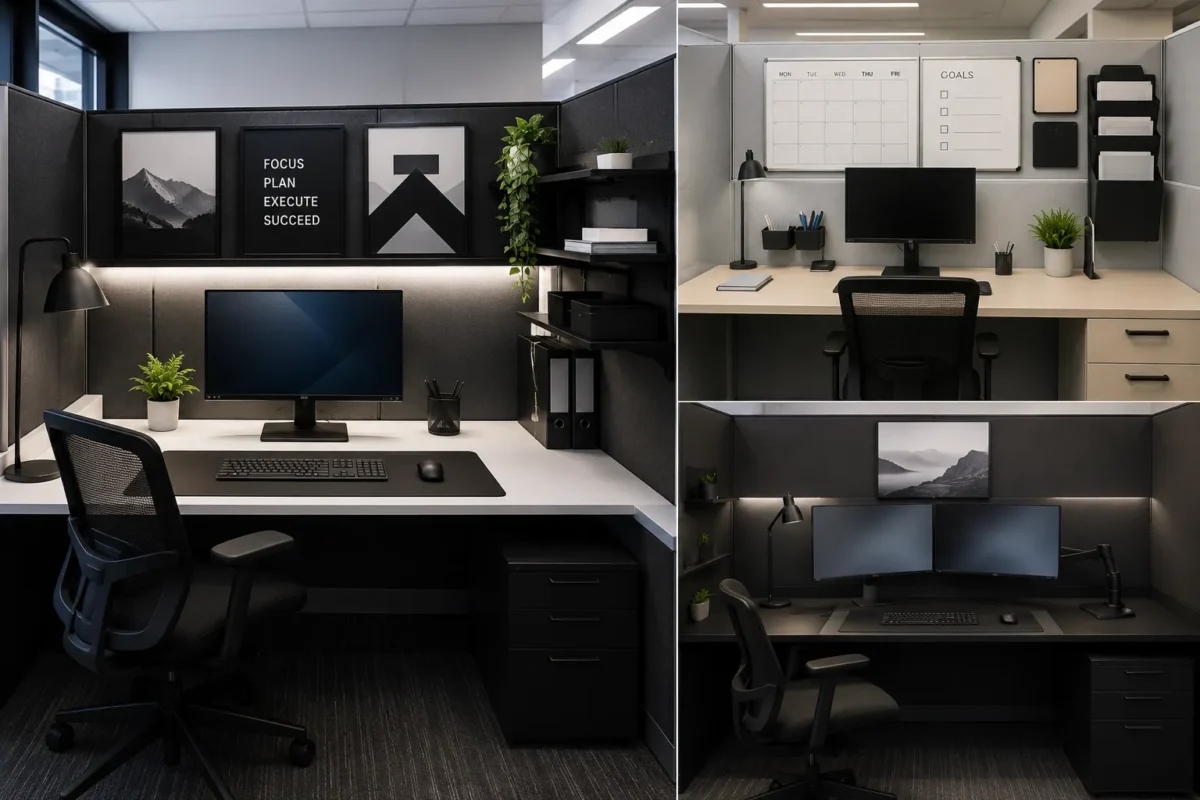
An executive-inspired cubicle can feel elevated without becoming overly formal or luxurious. Start with a restrained combination of charcoal, black, white, and warm wood, then add a few refined details such as framed typography, a sleek desk lamp, and streamlined storage. The result should feel intentional and confident rather than flashy.
A large central artwork can establish the visual direction of the workspace, while smaller matching prints create balance on either side. Warm accent lighting can add depth to the wall, and a subtle wood detail can soften the darker elements. Keep the desk itself clean with only the essentials, allowing the design to feel spacious and controlled.
This style works particularly well if you want your cubicle to feel more like a serious personal workstation than a standard office desk. The combination of strong contrast, refined materials, and purposeful accessories creates an environment that feels professional and motivating without sacrificing practicality.
Pro Tip: Choose one premium-looking material, such as warm wood or brushed metal, and use it sparingly. One refined accent usually looks more sophisticated than several competing finishes.
Final Thoughts
A well-designed cubicle doesn’t need to be packed with decorations to feel inspiring. The strongest setups combine a clear visual direction with practical organization, comfortable lighting, motivating details, and enough open space to keep the workspace feeling calm. Whether you prefer a goal-focused wall, a sleek technology setup, or a more polished executive look, the right details can make your daily environment feel much more intentional.
Most importantly, choose decor that supports the way you actually work. A beautiful setup is great, but it becomes even better when every element has a purpose. Keep the colors coordinated, control the clutter, and give your favorite ideas room to stand out. With a few thoughtful changes, even an ordinary cubicle can become a clean, professional workspace that makes focusing on the work a little easier.
