

A home without plants can feel flat, no matter how beautiful the furniture is. The right indoor plant decor ideas can change that in a single afternoon, adding color, texture and a sense of calm to every room. Plants soften hard edges, fill empty corners and make a space feel lived in and loved. You do not need a big budget or a green thumb to get started, just a few well chosen plants and a plan for where they will live.
These 30 indoor plant decor ideas cover every room and every skill level, from a statement fiddle leaf fig in the living room to tiny succulents on a coffee table and humidity loving plants in the bathroom. Some ideas cost nothing more than a pot you already own. Others are small weekend projects, like building a plant ladder shelf or a kitchen herb garden. You can follow one idea at a time or mix several together for a home that feels fresh, green and completely your own.
Before you buy a single plant, take a good look at your home. Note which windows get bright light, which corners stay dim and how much time you can give to watering each week. A little planning now saves you from sad, drooping leaves later and helps every plant thrive in the spot you choose for it.
How to Choose Indoor Plant Decor Ideas That Thrive in Your Home
Choosing the right indoor plant decor ideas starts with light, not with a shopping list. Walk through your home at midday and note where the sun falls. South facing windows suit sun lovers like succulents and olive trees, while north facing rooms suit forgiving plants like snake plants and pothos. Match the plant to the light you actually have, and the plant will reward you with steady growth instead of a slow decline.
Next, think about scale and style. A tall plant in a large pot anchors a room, while a cluster of small plants adds charm to a shelf or a side table. Keep your pots in one or two finishes, like matte ceramic and woven baskets, so the display feels calm instead of cluttered. If your living room leans relaxed and earthy, our guide to boho living room decor ideas will help you pair plants with the right textures, and The Spruce lists 38 low maintenance plants that are perfect for beginners in their guide to low maintenance indoor plants.
Finally, be honest about care. Some plants need weekly watering and regular misting, while others forgive a forgotten week. Start with easy plants, learn their rhythm, and add fussier varieties later. A plant that survives is always better decor than a rare plant that struggles, so choose plants you can care for happily for years.
1. Statement Fiddle Leaf Fig in the Living Room
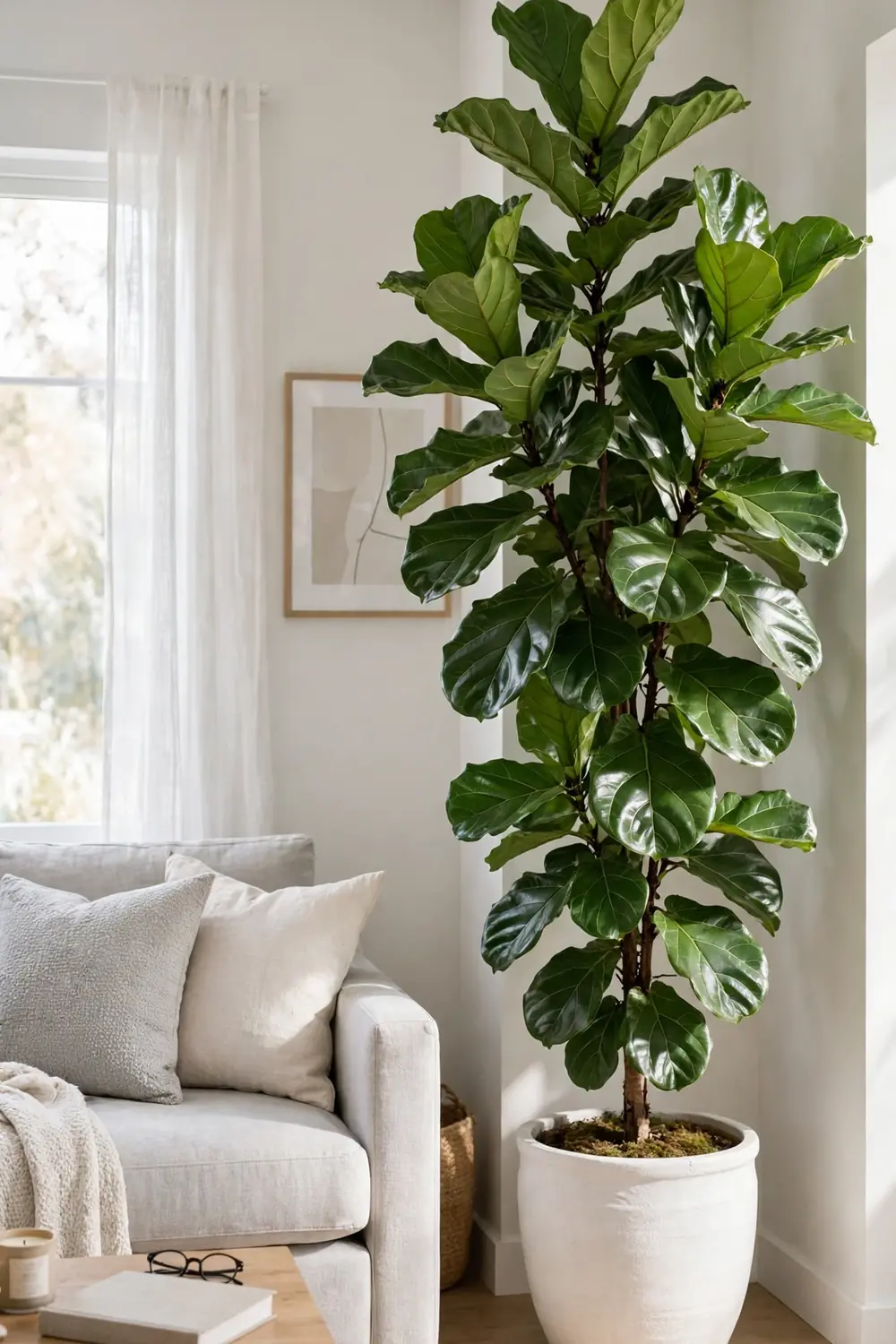
A tall fiddle leaf fig is the classic starting point for indoor plant decor ideas, and it earns its fame honestly. Its large, glossy leaves and upright shape give a living room instant height and drama, filling a bare corner better than any piece of furniture. Choose a plant that is already four to five feet tall so it makes an impact on day one, and place it in a large ceramic pot or a woven basket that suits your room.
Fiddle leaf figs love bright, indirect light, so keep yours near a large window but out of harsh direct sun. Water only when the top two inches of soil feel dry, and rotate the pot a quarter turn every two weeks so the plant grows straight instead of leaning toward the light. Wipe the leaves with a damp cloth once a month to keep them glossy and dust free.
Styling tips
- Place the fig in the corner beside the sofa, not behind it, so the leaves stay visible.
- Use a pot with drainage holes and a saucer to protect your floors.
- Skip the fiddle leaf fig if your room gets very little natural light, and choose a snake plant instead.
2. Trailing Pothos on a High Shelf
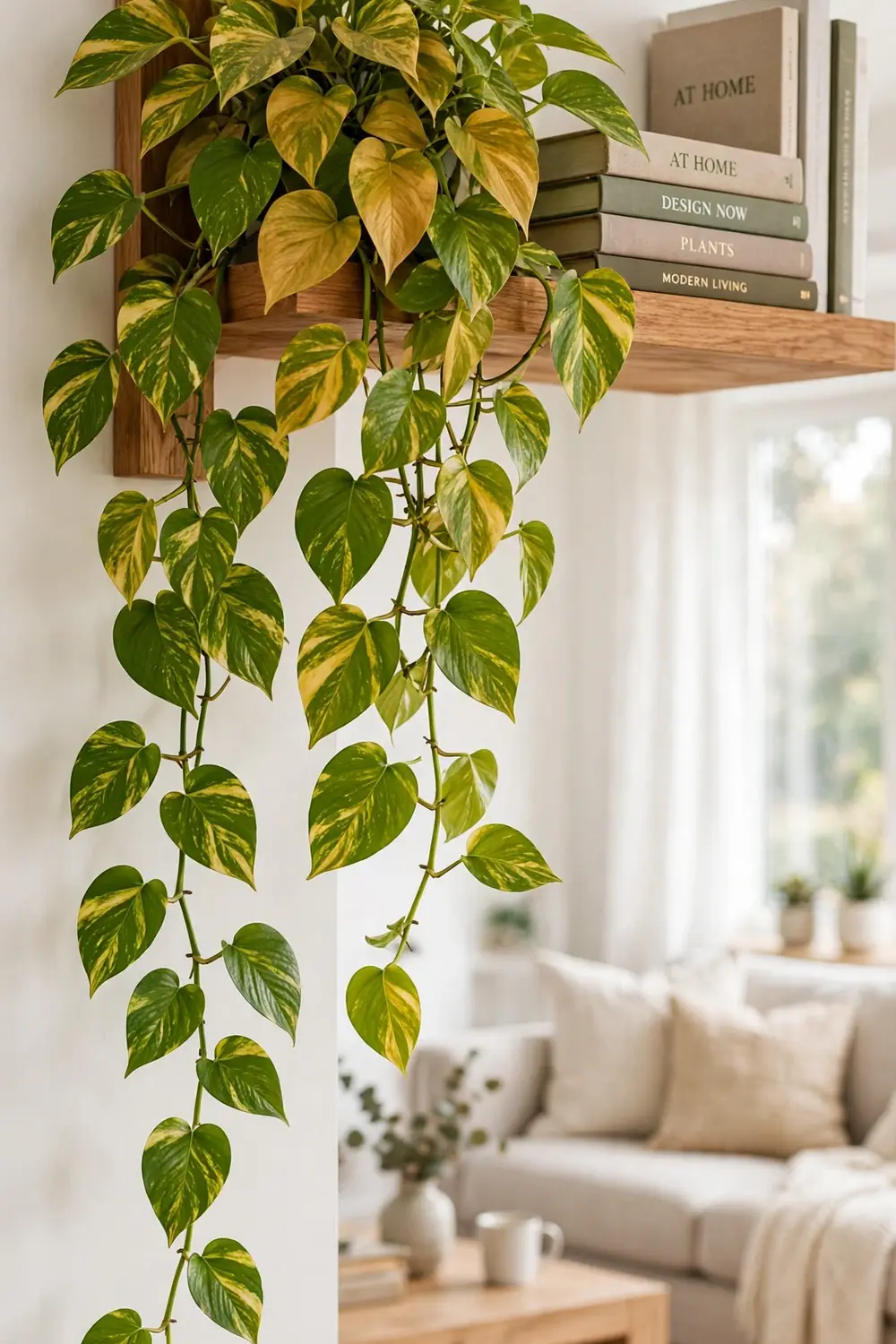
Pothos is the easiest trailing plant you can own, and it looks wonderful spilling over the edge of a high shelf. The heart shaped leaves come in green, golden and marbled varieties, so you can match the plant to your room with ease. A single pothos on top of a bookshelf or a kitchen cabinet adds softness to hard lines and draws the eye upward, which makes a room feel taller.
Pothos tolerates low light and forgiving watering, which makes it perfect for beginners and busy homes. Water when the top inch of soil feels dry, and trim the vines when they grow too long. The cuttings root easily in water, so one plant can soon become several, and you can share them with friends or fill more shelves around your home.
Styling tips
- Let the vines trail at least two feet before trimming for a lush, full look.
- Train a vine along a shelf edge with small clear hooks for a neat, intentional line.
- Mix golden and green pothos in one pot for a richer mix of color.
3. Snake Plant in a Bedroom Corner
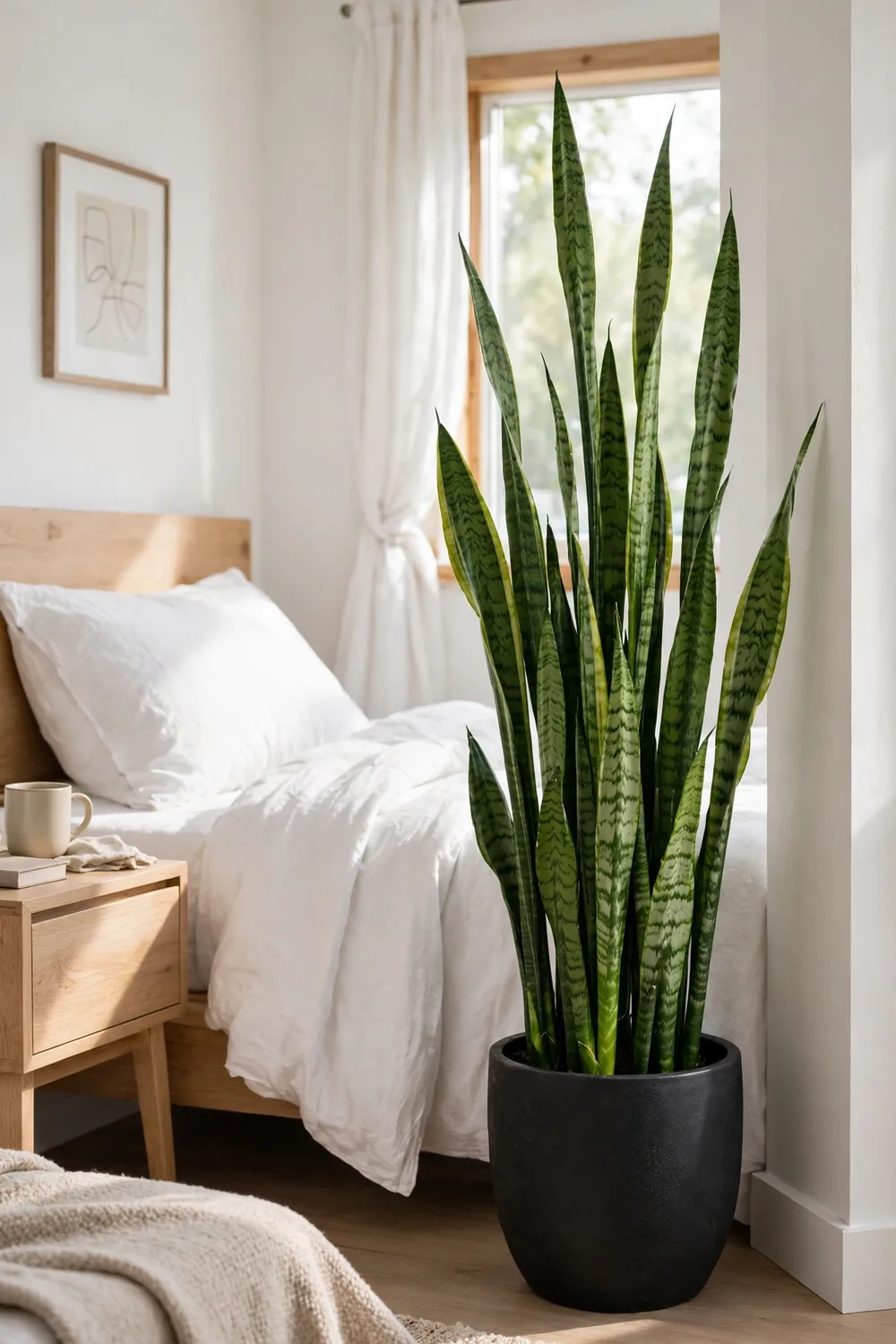
Snake plants are the quiet heroes of the plant world. Their tall, sword like leaves add structure to a bedroom corner without taking up much floor space, and they tolerate low light and irregular watering better than almost any other houseplant. A snake plant in a simple white or black pot looks clean and modern, and it suits bedrooms, hallways and offices equally well.
Snake plants store water in their thick leaves, so they need watering only every two to three weeks. Let the soil dry out fully between waterings, and avoid pouring water into the center of the leaves, which can cause rot. They also release oxygen at night, which makes them a popular choice for bedrooms, where clean air helps you sleep well.
Styling tips
- Choose a tall, narrow pot that matches the upright shape of the leaves.
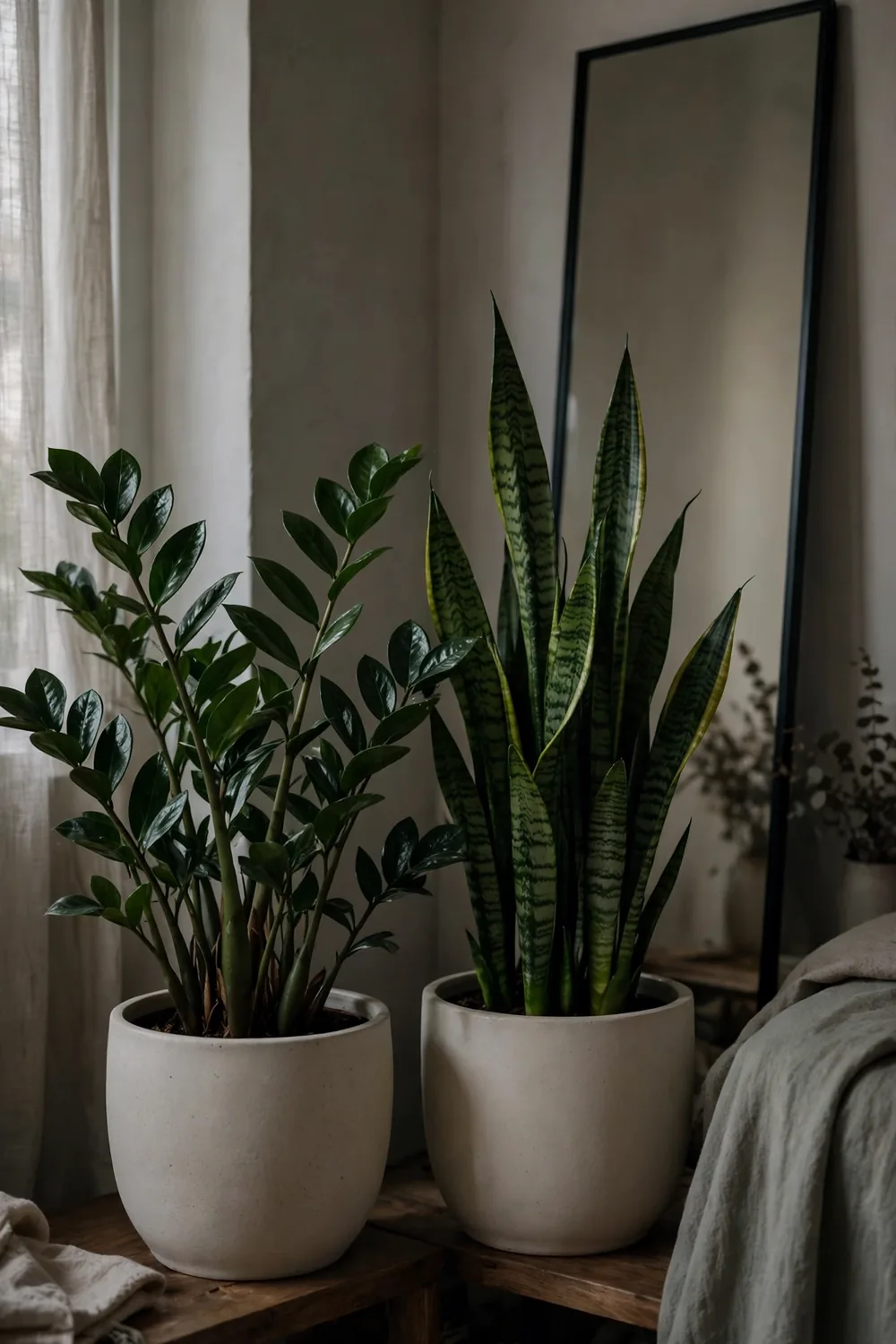
- Place the plant where it gets some indirect light, even if the corner is mostly shaded.
- Repot only every two to three years, since snake plants like snug pots.
4. Monstera as a Living Room Focal Point
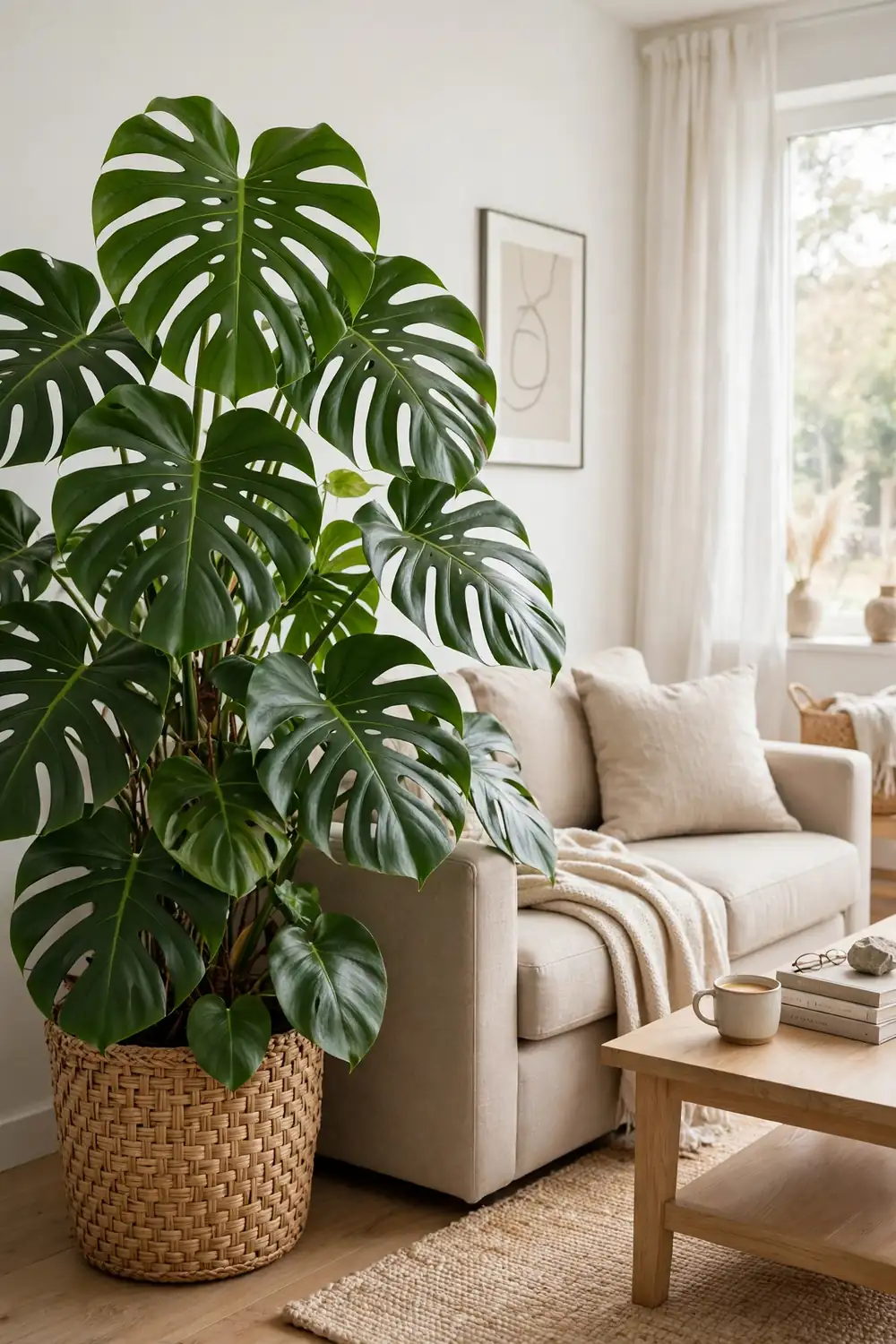
Few plants make a statement like a monstera. Its large, split leaves are instantly recognizable, and a healthy monstera can grow into a living sculpture that anchors a whole living room. Place it beside a sofa or an armchair, where the dramatic leaves can be admired from across the room, and give it room to spread, since a happy monstera grows fast.
Monsteras love bright, indirect light and a moss pole to climb. Water when the top two inches of soil are dry, and mist the leaves in dry weather to keep them glossy. If your living room is on the small side, our guide to small living room decor ideas shows how to fit a big plant into a compact space without making the room feel crowded.
Styling tips
- Give a monstera a moss pole early so it climbs upward instead of sprawling outward.
- Wipe the split leaves gently to keep dust from dulling their shine.
- Rotate the pot monthly so the plant grows evenly on all sides.
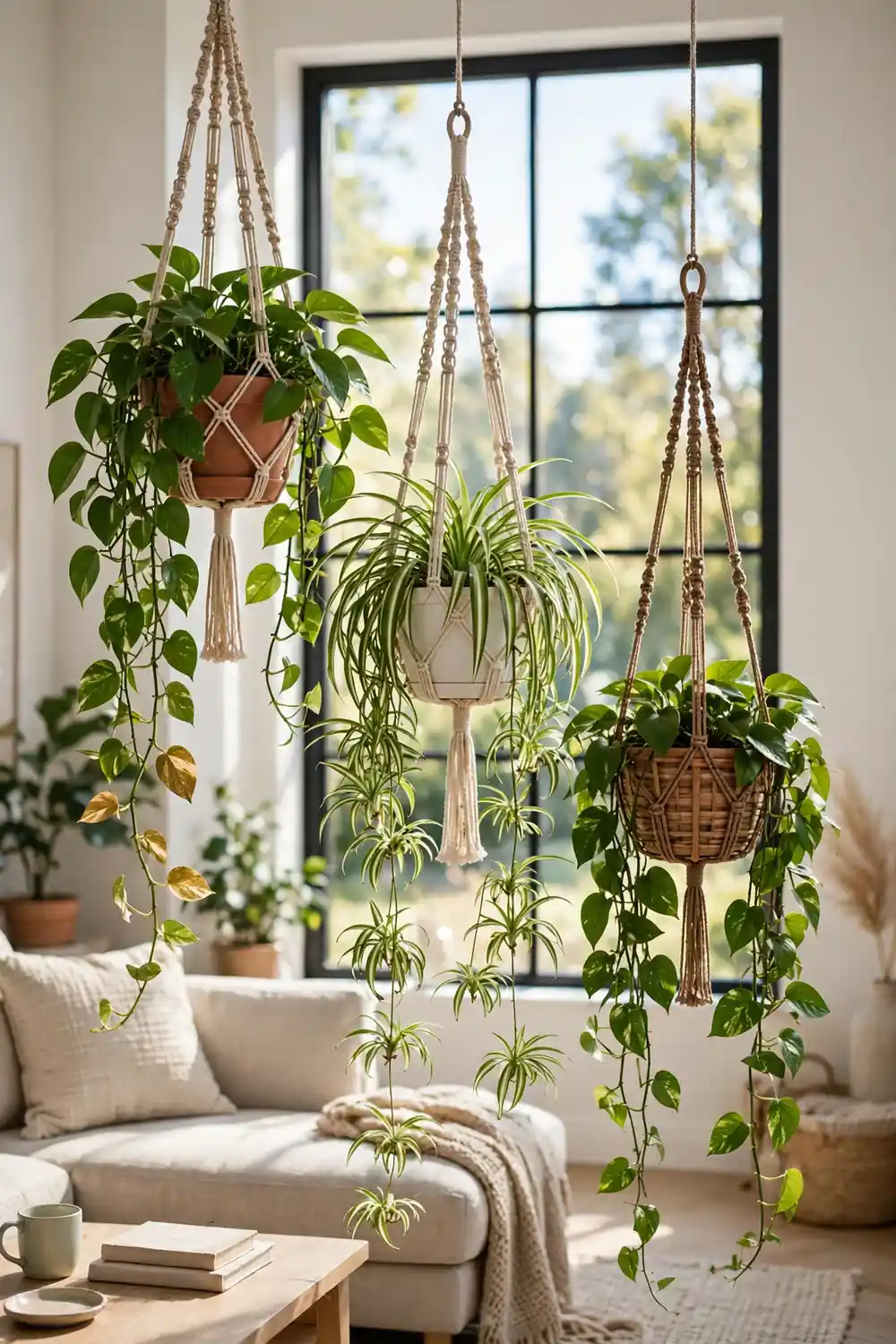
5. Hanging Planters by the Window
Hanging planters are one of the most charming indoor plant decor ideas for a bright window. They lift greenery to eye level, free up floor and shelf space, and turn an ordinary window into a living frame of leaves. Trailing plants like pothos, spider plants and string of pearls look best in hangers, since their vines spill over the edge and soften the whole display.
Hang planters at different heights for a layered look, with the longest vines nearest the window and shorter plants toward the room. Use ceiling hooks rated for the weight of a watered plant, and choose pots with drainage trays so drips never reach your floor. Better Homes and Gardens shares 16 vining plants that bring a natural, lush look indoors in their guide to vining indoor plants, which is a great place to pick your next trailing plant.
Styling tips
- Hang planters where they get bright, indirect light, not harsh midday sun.
- Use lightweight pots for hanging displays to keep the hooks safe.
- Water hanging plants over a sink or a tray to catch every drip.
6. Kitchen Windowsill Herb Garden
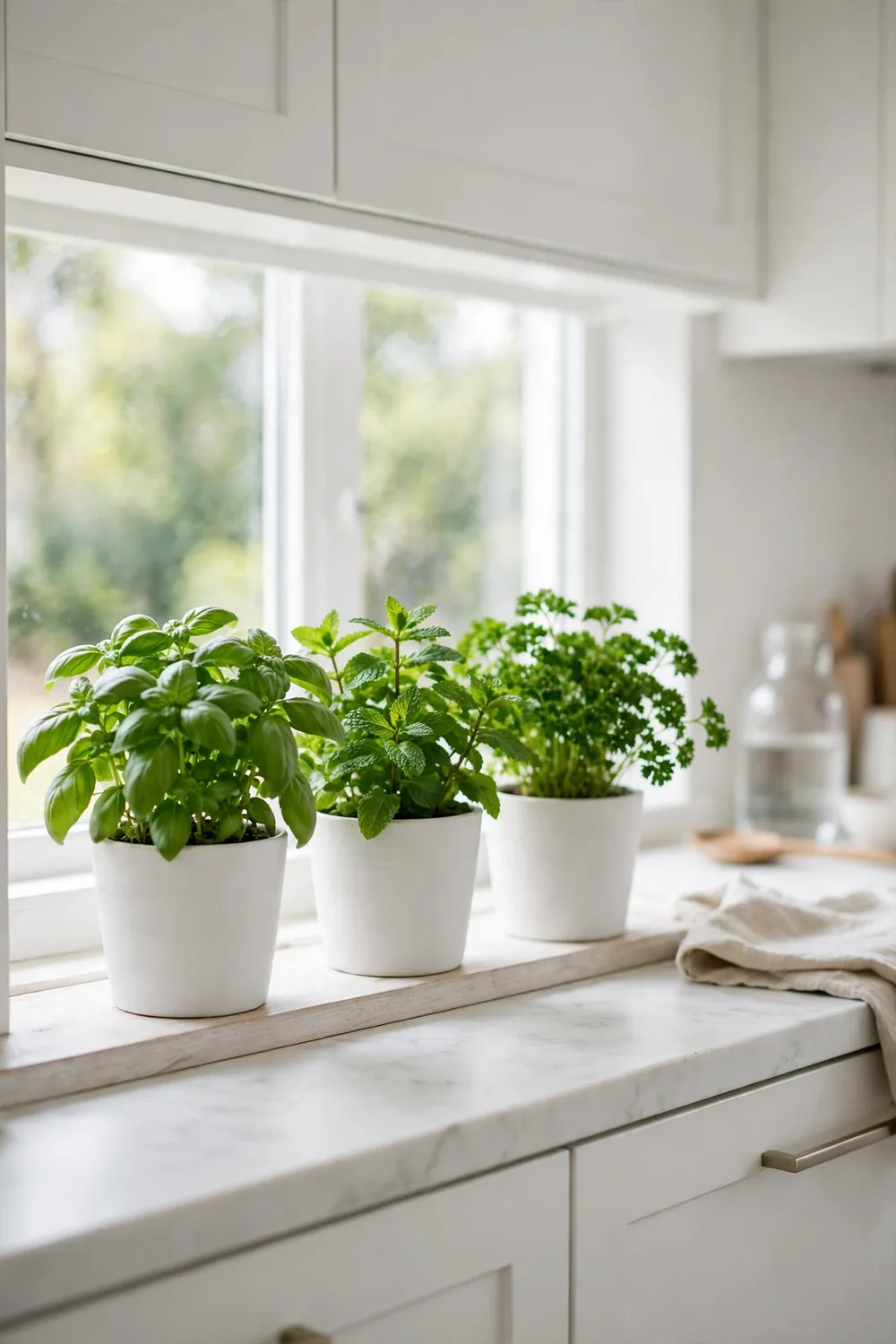
A herb garden on the kitchen windowsill is pretty and practical at the same time. Basil, mint, parsley and chives grow happily in small pots, and they sit within easy reach when you are cooking. The fresh green leaves brighten the kitchen, and the scent of basil or mint makes the whole room feel alive.
Give herbs as much light as your brightest window allows, and water them when the top inch of soil feels dry. Harvest often, since regular cutting encourages bushy growth and keeps the plants from growing leggy. Label each pot with a small wooden marker, or use matching pots in one color for a tidy, pulled together windowsill.
Styling tips
- Start with three herbs you actually cook with, not ten you will never use.
- Turn the pots every few days so the herbs grow straight and full.
- Snip herbs in the morning, when their flavor is at its best.
7. Small Succulents on the Coffee Table
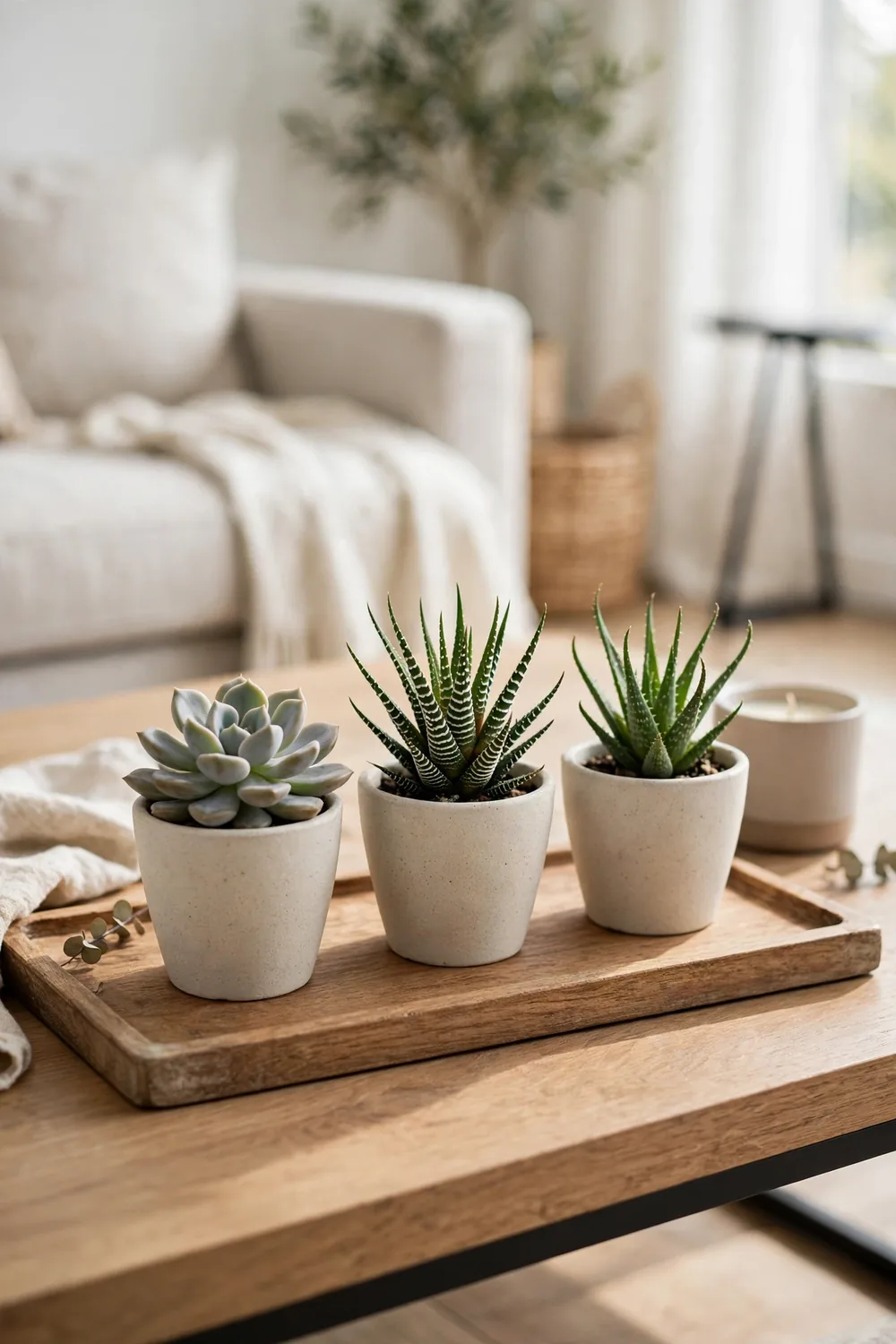
Small succulents are perfect for a coffee table, where a large plant would block conversation and clutter the surface. A trio of tiny succulents in matching ceramic pots adds life to the center of the room without taking over the table. Choose different shapes, like a rosette echeveria, a spiky haworthia and a trailing sedum, for a display that stays interesting up close.
Succulents need very little water and plenty of bright light, so they are ideal for sunny living rooms. Water only when the soil is fully dry, and use a pot with a drainage hole so the roots never sit in water. A shallow tray underneath keeps the table dry, and a few small pebbles around the base add a finished, garden like touch.
Styling tips
- Group succulents in odd numbers, like three or five, for a natural look.
- Keep the pots low so they never block the view across the table.
- Move the tray to a sunny windowsill once a week if your table sits far from light.
8. Floating Shelf Plant Wall
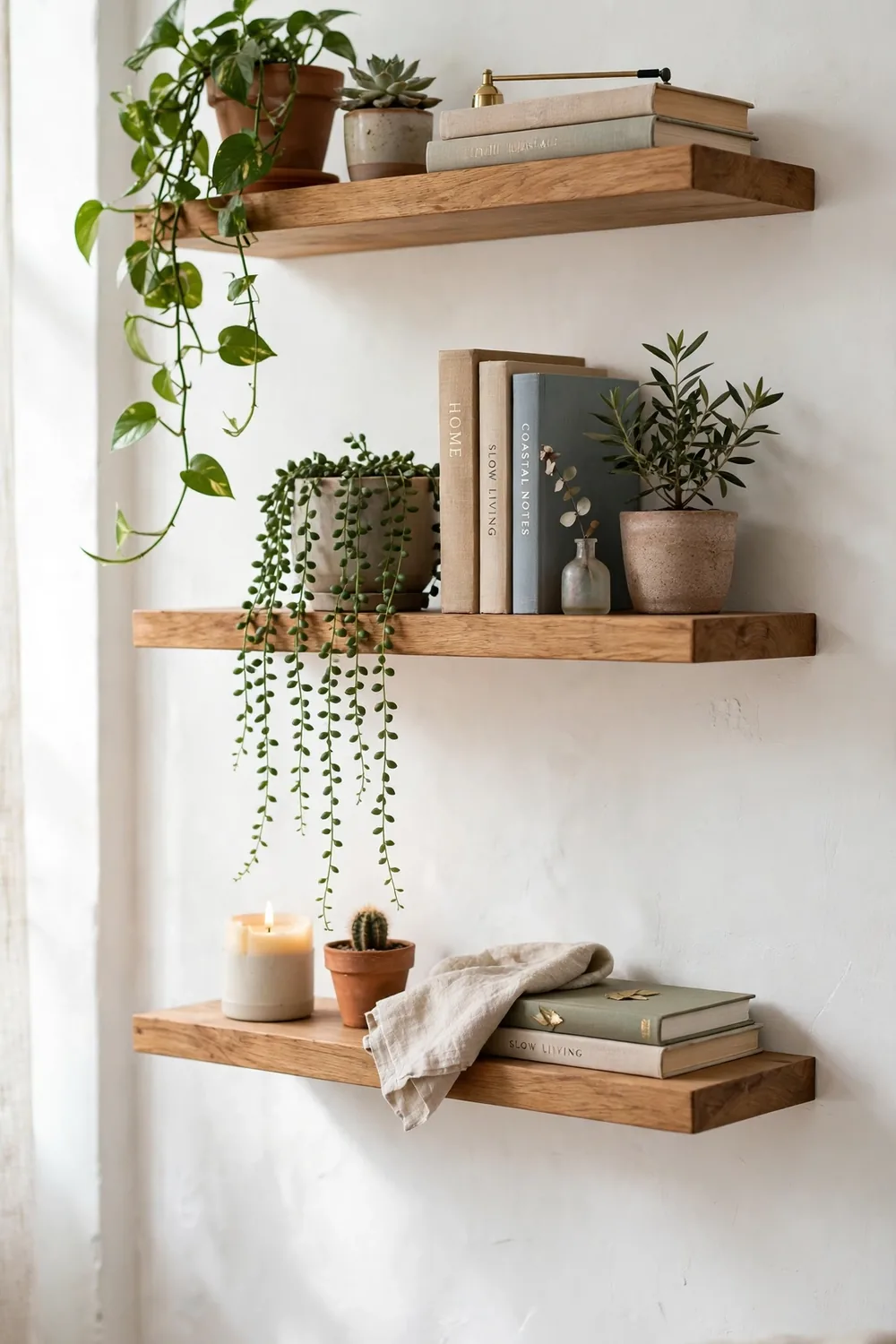
A wall of floating shelves turns a blank wall into a green gallery. Small potted plants, trailing vines and a few books or candles share the shelves, and the mix of heights and leaf shapes keeps the display lively. This idea works in living rooms, bedrooms and hallways, and it uses vertical space that would otherwise go to waste.
Start with two or three shelves in a staggered layout, then fill them with plants of different sizes. Keep the largest plant on the lowest shelf and the trailing plants on the highest shelf, so the vines can spill downward. If your room leans simple and calm, our guide to minimalist living room decor ideas shows how to style shelves with restraint, so the wall feels airy instead of crowded.
Styling tips
- Leave empty space on every shelf so the plants can breathe and the wall stays calm.
- Mix plant pots with one or two books or small objects for balance.
- Fix shelves into wall studs so they hold the weight of watered plants safely.
9. Large Palm in an Empty Corner
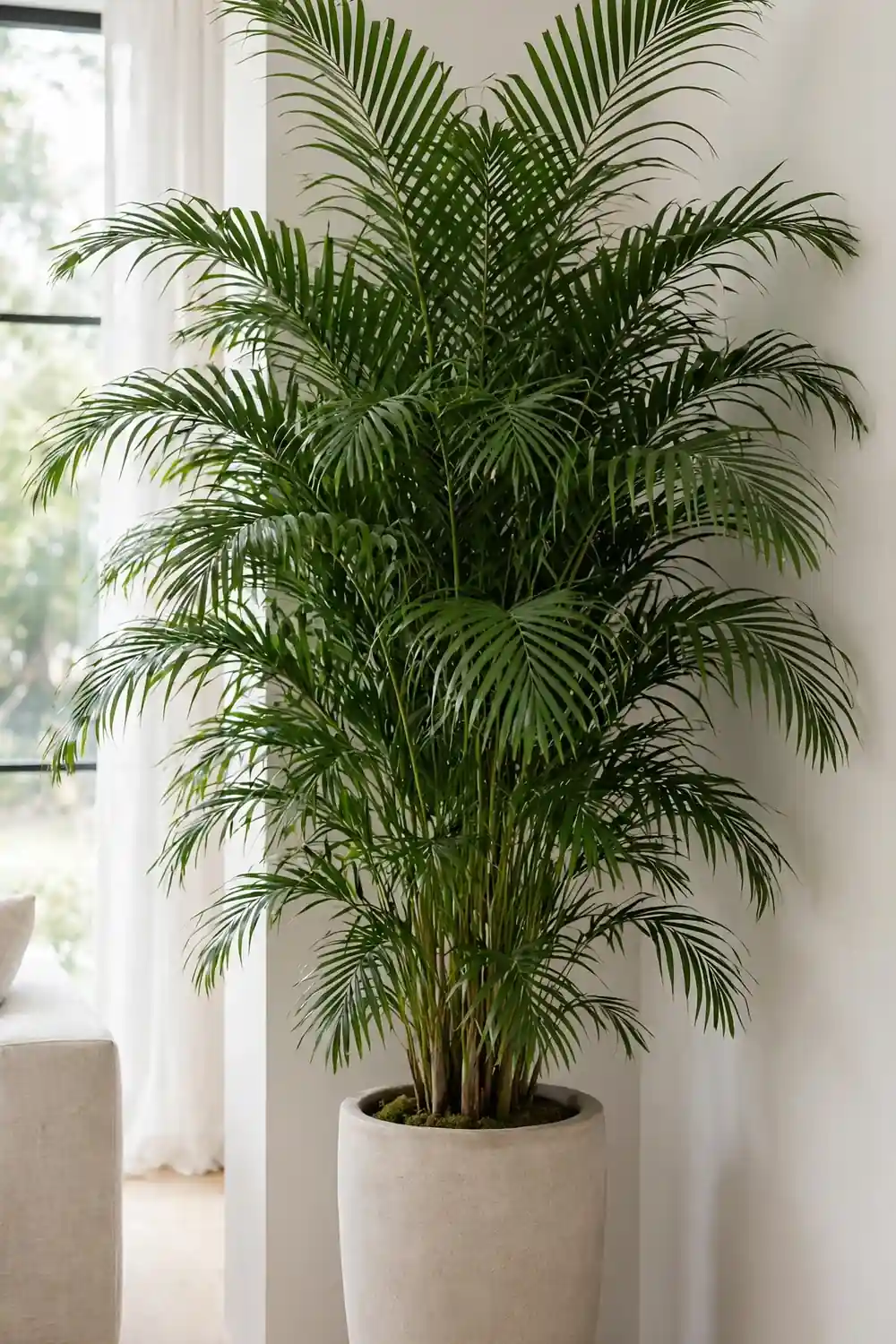
Every home has an empty corner that feels awkward, and a large palm is the easiest way to fix it. Areca palms and kentia palms grow tall and full, filling the corner with soft, feathery fronds that make the room feel complete. A palm brings a relaxed, resort like feeling to a living room or a bedroom, and it needs far less attention than it looks.
Palms love bright, indirect light and regular watering, but they forgive a missed week now and then. Water when the top inch of soil feels dry, and mist the fronds in dry months to keep the tips from turning brown. Choose a tall, simple pot in a neutral color, so the palm itself stays the star of the corner.
Styling tips
- Pick a palm that fits your ceiling height, with room for a year of growth.
- Turn the pot a quarter turn each month for even, balanced fronds.
- Wipe the fronds with a damp cloth to keep them green and dust free.
10. Bathroom Plants That Love Humidity
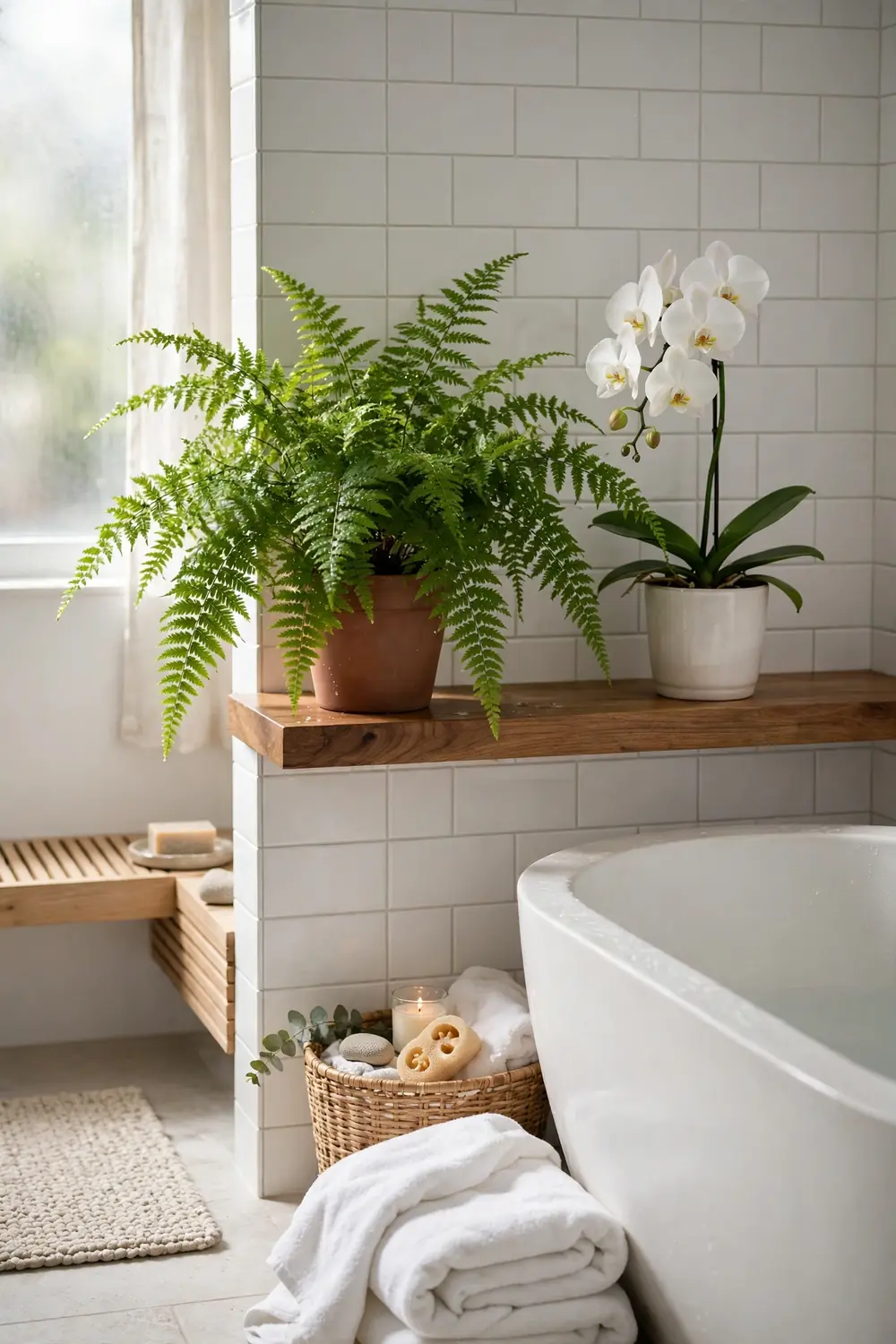
Bathrooms are the best room in the house for humidity loving plants. Ferns, pothos, peace lilies and orchids thrive in the warm, steamy air after a shower, and they turn a plain bathroom into a small spa. A plant on the vanity, a trailing vine on a shelf or a fern beside the tub adds color and calm to a room that is usually all tile and white.
Choose plants that enjoy moisture and indirect light, since most bathrooms have small windows. Water less often than you would in a dry room, because the steam keeps the soil damp for longer. Our guide to bathroom plant decor ideas lists the best plants for every bathroom size, from a tiny powder room to a large master bath, so you can pick plants that will truly thrive.
Styling tips
- Hang a trailing plant near the shower where it can enjoy the steam.
- Use a small pot on the vanity, and keep it away from splashes of water.
- Open the bathroom door after showers so fresh air reaches the leaves.
11. Plant Stand Trio at Different Heights
A trio of plant stands at different heights creates a display that feels designed, not random. The tallest stand holds a large leafy plant, the middle stand holds a medium plant, and the shortest stand holds a small trailing plant, so the eye travels naturally from one level to the next. This arrangement works beside a sofa, in a hallway or in an empty corner that needs life.
Choose stands in one material, like light wood or matte black metal, so the trio feels like a set even if the pots differ. Place the tallest plant at the back and the shortest at the front, and leave a little space between the stands so each plant has room to grow. A trio is easy to rearrange, so you can refresh the whole corner in five minutes whenever you feel like a change.
Styling tips
- Use three different plant shapes, like upright, bushy and trailing, for contrast.
- Keep the tallest stand under three feet so the display stays balanced.
- Match the stand finish to your furniture legs for a pulled together room.

12. Macrame Hangers for a Boho Feel
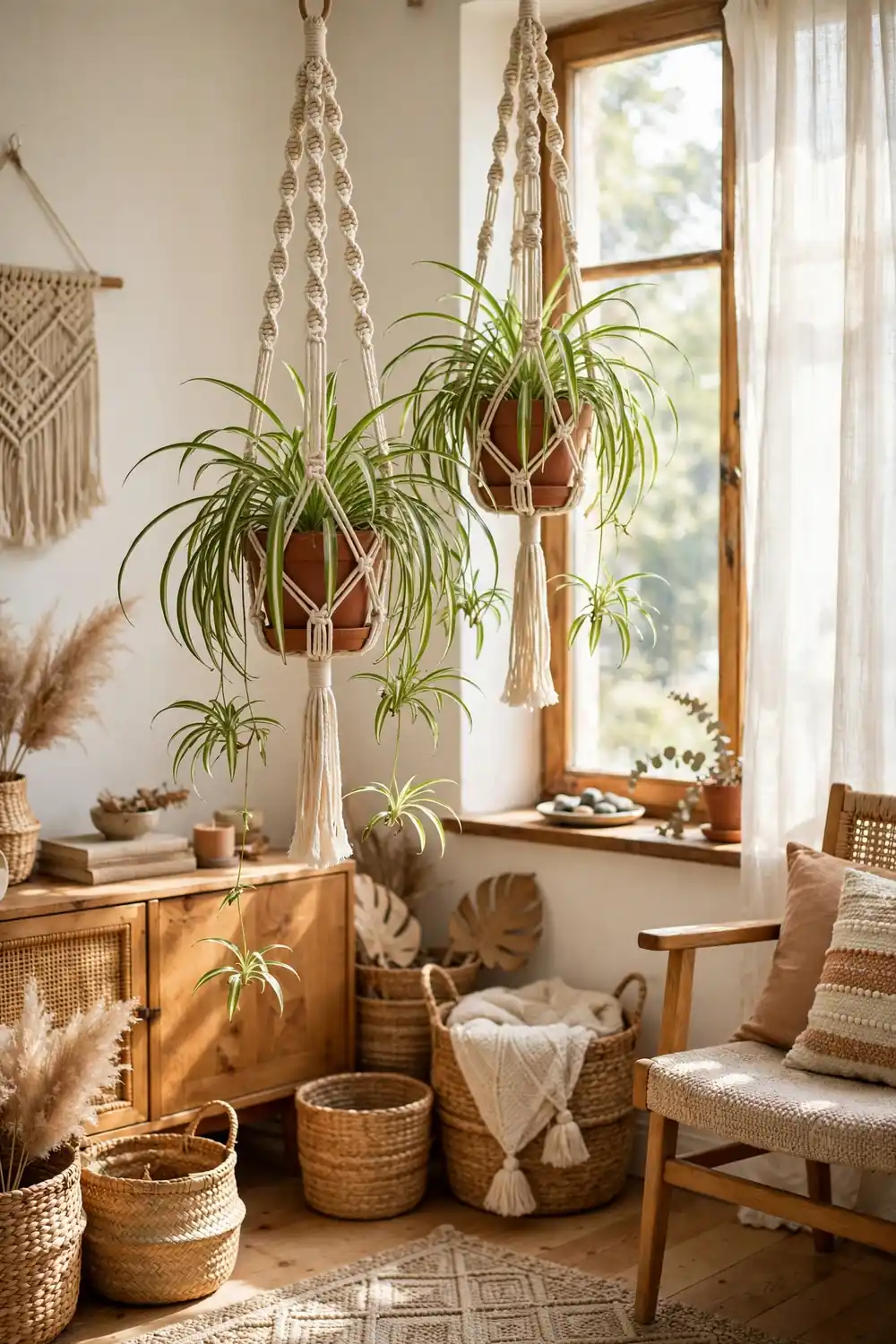
Macrame hangers are one of the prettiest indoor plant decor ideas for a relaxed, boho home. The knotted cotton cords add soft texture to a room, and a trailing plant spilling from a macrame hanger feels handmade and warm. Hang one by a sunny window, or group two or three at different lengths in a corner for a full, layered display.
Macrame suits spider plants, pothos and string of hearts, all of which trail gracefully over the edge of the pot. Choose natural cotton in cream or beige, which blends with almost any wall color, and hang the plant where it gets bright, indirect light. The hanger itself becomes part of the decor, so pick a knot pattern you love and let it show.
Styling tips
- Hang macrame planters at eye level or higher, so the trailing vines can be admired.
- Use a lightweight pot inside the hanger to keep the cords from stretching.
- Pair macrame with woven baskets and wooden furniture for a complete boho look.
13. Terrarium on a Side Table
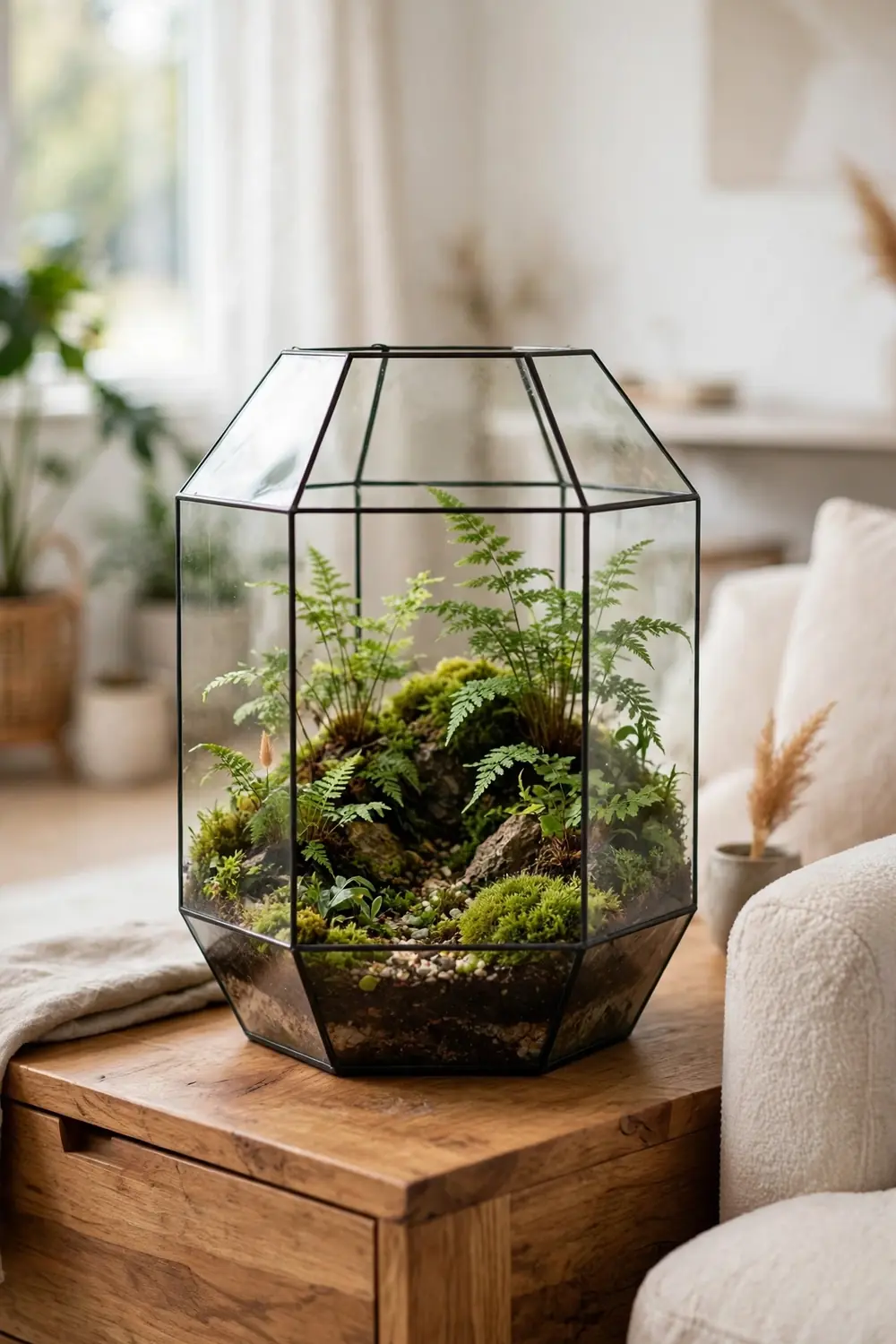
A glass terrarium is a tiny garden you can admire up close. Small ferns, mosses and air plants grow inside a glass vessel, creating a miniature landscape that looks beautiful on a side table, a desk or a bookshelf. Terrariums suit homes with little floor space, since they bring greenery to a surface that would otherwise hold only a lamp or a book.
Closed terrariums need very little watering, since the glass holds moisture inside, while open terrariums suit succulents and cacti that prefer dry air. Place a terrarium in bright, indirect light and open the lid now and then to let fresh air in. A layer of pebbles at the bottom, then charcoal, then soil, keeps the tiny garden healthy and looking neat.
Styling tips
- Choose slow growing plants so the terrarium stays tidy for months.
- Add a small stone or a tiny figurine for a personal, playful touch.
- Wipe the glass inside and out to keep the view crystal clear.
14. Plant Ladder Shelf Display
A leaning ladder shelf is a charming way to display a whole collection of plants in a small footprint. Each rung holds one or two pots, so the plants climb the wall like steps, and the open frame keeps the display light and airy. Ladder shelves suit living rooms, bedrooms and balconies, and they are easy to move when you want to refresh a room.
Place the largest plants on the bottom rungs and the smallest on the top, so the display stays stable and balanced. Mix trailing plants on the upper rungs with upright plants below, and leave one rung partly empty for a book or a candle. A wooden ladder shelf adds warmth to a room, while a black metal one feels modern and clean.
Styling tips
- Anchor a tall ladder shelf to the wall if you have children or pets.
- Water plants on the ladder over a tray to protect the floor below.
- Rotate the plants between rungs every month so each one gets its share of light.

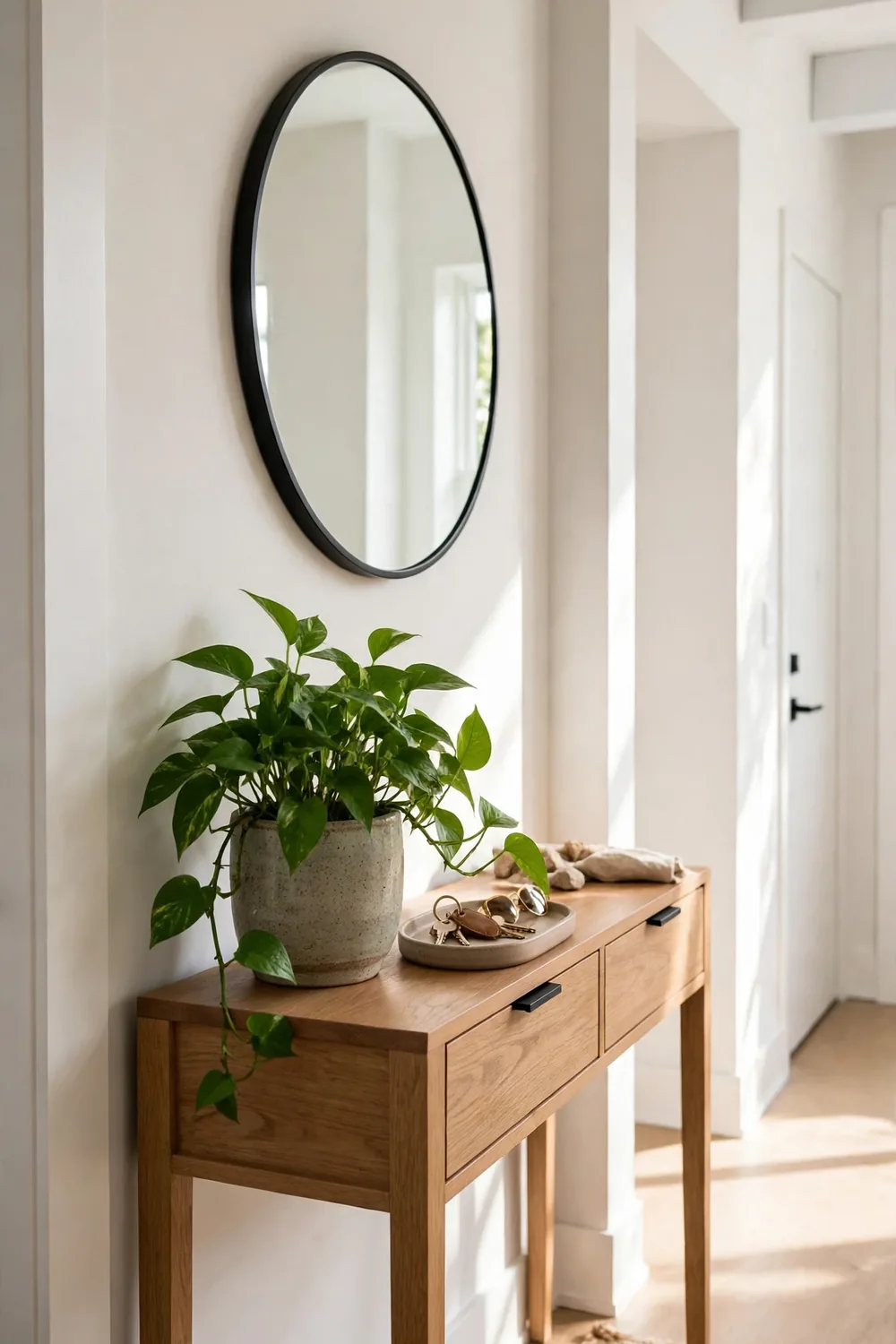
15. Entryway Console with Greenery
The entryway is the first thing guests see, and a plant on the console table sets a welcoming tone at once. A medium sized plant in a stylish pot, paired with a mirror and a small tray for keys, turns a plain console into a thoughtful welcome. The greenery softens the hard lines of the table and makes the whole entrance feel alive.
Choose a plant that tolerates the light your entryway actually gets, since many entryways have only a small window or none at all. Snake plants, ZZ plants and pothos all cope well with lower light, and they need little care between waterings. Keep the console tidy, with one plant and two or three small objects, so the entrance feels calm instead of cluttered.
Styling tips
- Pick a pot that matches the console finish for a polished first impression.
- Add a trailing plant on the lower shelf for a layered, full look.
- Keep a small watering can nearby so the entryway plant never gets forgotten.
16. Desk Plants for a Home Office
A plant on your desk makes work feel calmer and more pleasant. Greenery is often linked with better focus and lower stress, and even a small plant can change how a workspace feels. A tiny succulent, a small pothos or a peace lily beside your laptop adds a touch of nature to long work days, and it gives your eyes a soft, green resting place.
Choose a compact plant that will not crowd your keyboard or block your screen. A small pot on the corner of the desk works best, and a trailing plant on a shelf above the desk adds greenery without using any desk space at all. Water desk plants on a Friday, so they stay fresh through the weekend and greet you green and healthy on Monday morning.
Styling tips
- Keep the plant pot small, under six inches wide, so the desk stays usable.
- Pick a low care plant if your work weeks are busy and watering is easy to forget.
- Place the plant where it gets natural light, not under a harsh desk lamp.

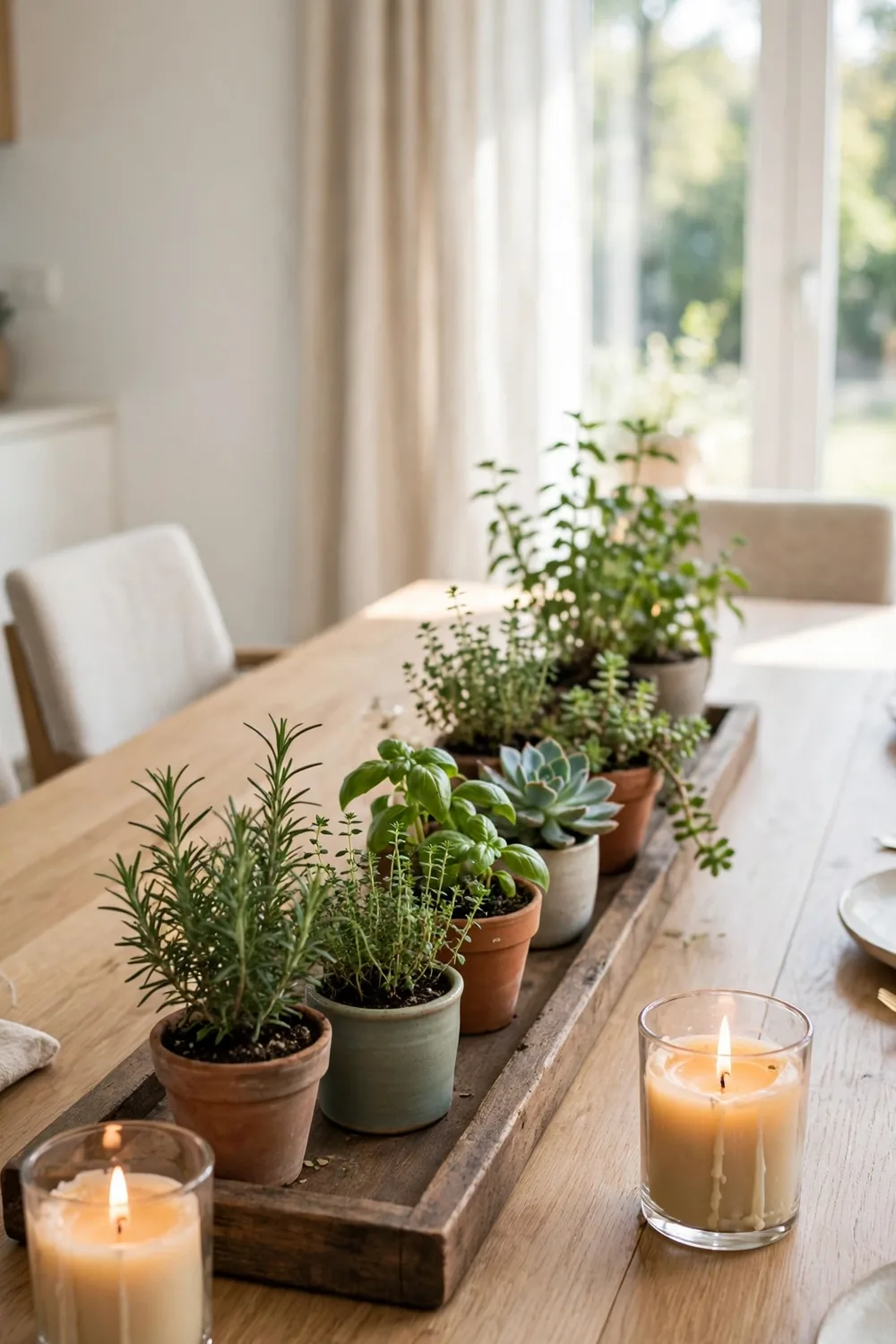
17. Dining Table Plant Centerpiece
A plant centerpiece makes a dining table feel special every day, not only on holidays. A low, wide arrangement of small potted herbs, succulents or a trailing plant in a long planter sits neatly down the center of the table, leaving room for plates and conversation. The greenery adds color to meals and makes the dining room feel cared for and welcoming.
Keep the centerpiece low, under twelve inches tall, so guests can see each other across the table. A wooden tray underneath holds the pots together and protects the table from water marks, and it lets you lift the whole display away in one move when you need the full table for a big dinner. Swap the plants with the seasons for a table that always feels fresh.
Styling tips
- Use three small pots in a row for a simple, balanced centerpiece.
- Choose plants that cope with indoor light, since dining rooms are often dimmer.
- Add a few candles beside the plants for warm, evening dinners.
18. Plant and Book Styling on Shelves
Books and plants belong together on a shelf. The green leaves soften the straight lines of book spines, and the books give trailing plants a place to rest and spill. This pairing is one of the easiest indoor plant decor ideas to try, since most homes already have books and a shelf, and one small plant is all it takes to change the whole look.
Style a shelf with a stack of books laid flat, a small plant on top, and a row of upright books beside them. Let a trailing pothos spill over the shelf edge, and leave some empty space so the shelf feels calm and uncluttered. Choose books with covers in colors that suit your room, or turn the spines inward for a soft, neutral look that lets the plant shine.
Styling tips
- Place the plant where it gets enough light, even if that means the sunniest shelf.
- Use a saucer under every shelf plant to protect books from water.
- Change the books with the seasons for a shelf that always feels new.

19. Floor Plant in a Woven Basket
A woven basket turns an ordinary floor plant into a piece of decor. The natural texture of seagrass or rattan warms up a room, hides a plain plastic nursery pot, and suits almost every style, from boho to modern farmhouse. A large plant in a basket beside the sofa or in a hallway makes a soft, inviting statement without any effort at all.
Choose a basket slightly wider than the pot, and place a plastic saucer inside to catch water before it reaches the floor. Baskets are light and easy to move, so you can shift the plant toward the light in winter and back into place for summer. A basket also makes repotting simple, since you only lift the nursery pot out and drop a new one in.
Styling tips
- Pick a basket with sturdy handles so the plant is easy to move.
- Line the basket with a plastic bag if the saucer does not fit neatly.
- Match the basket tone to other natural textures in the room, like a jute rug.

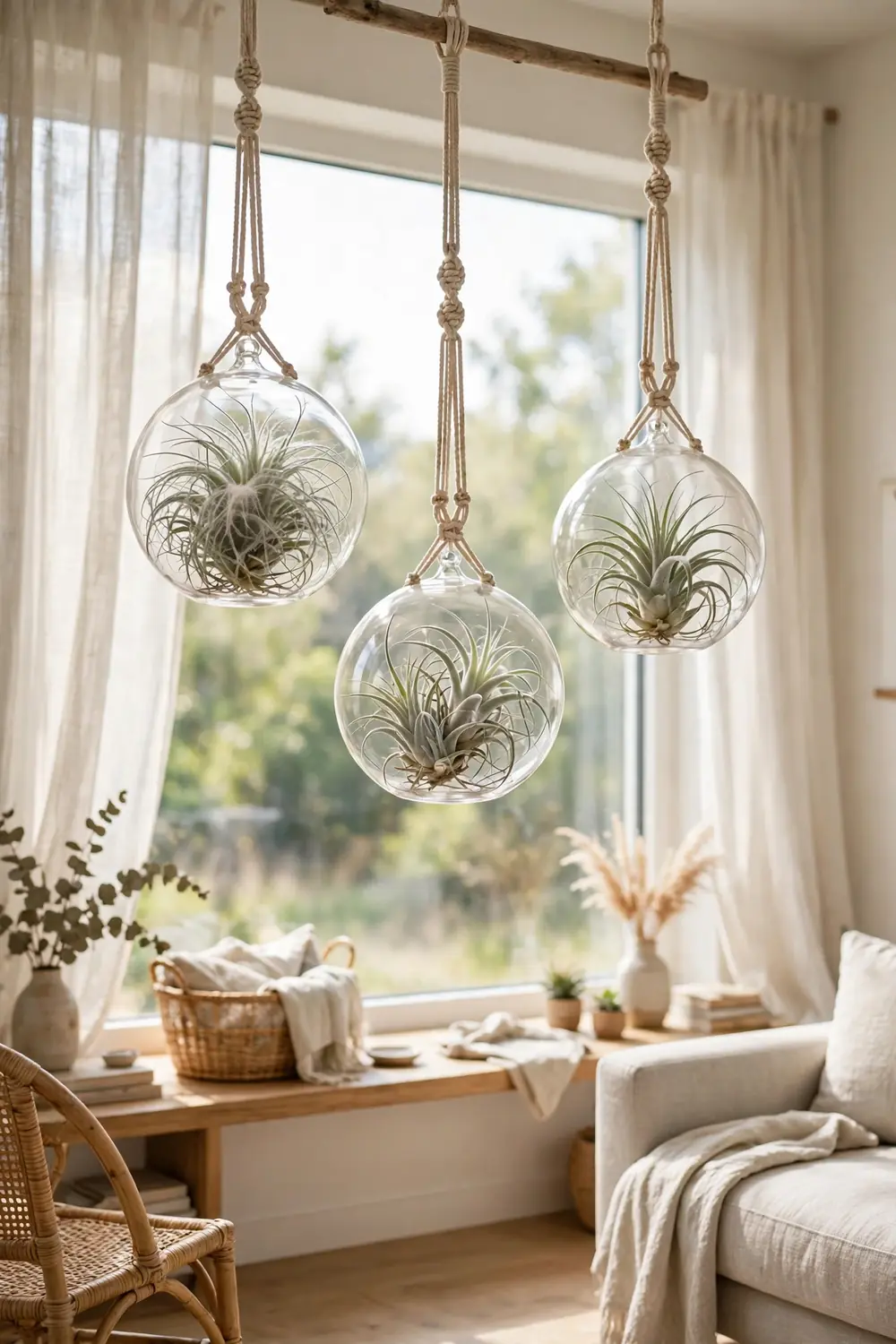
20. Air Plants in Glass Globes
Air plants are the most fuss free plants you can own, since they need no soil at all. They grow happily in glass globes, on pieces of driftwood or in small hanging terrariums, and their silvery green leaves look modern and sculptural. A cluster of glass globes on a shelf or a windowsill adds a light, airy touch to a room, and each globe becomes a tiny work of art.
Air plants absorb water through their leaves, so mist them two or three times a week, or soak them in water for twenty minutes once a week. Let them dry fully upside down before returning them to their globes, since water trapped at the base can cause rot. They love bright, indirect light and good air flow, so keep the globes open at the top.
Styling tips
- Hang glass globes at different heights for a floating garden effect.
- Add a small pebble or a shell inside each globe for a finished look.
- Soak air plants in rainwater or filtered water when you can, since they dislike hard tap water.
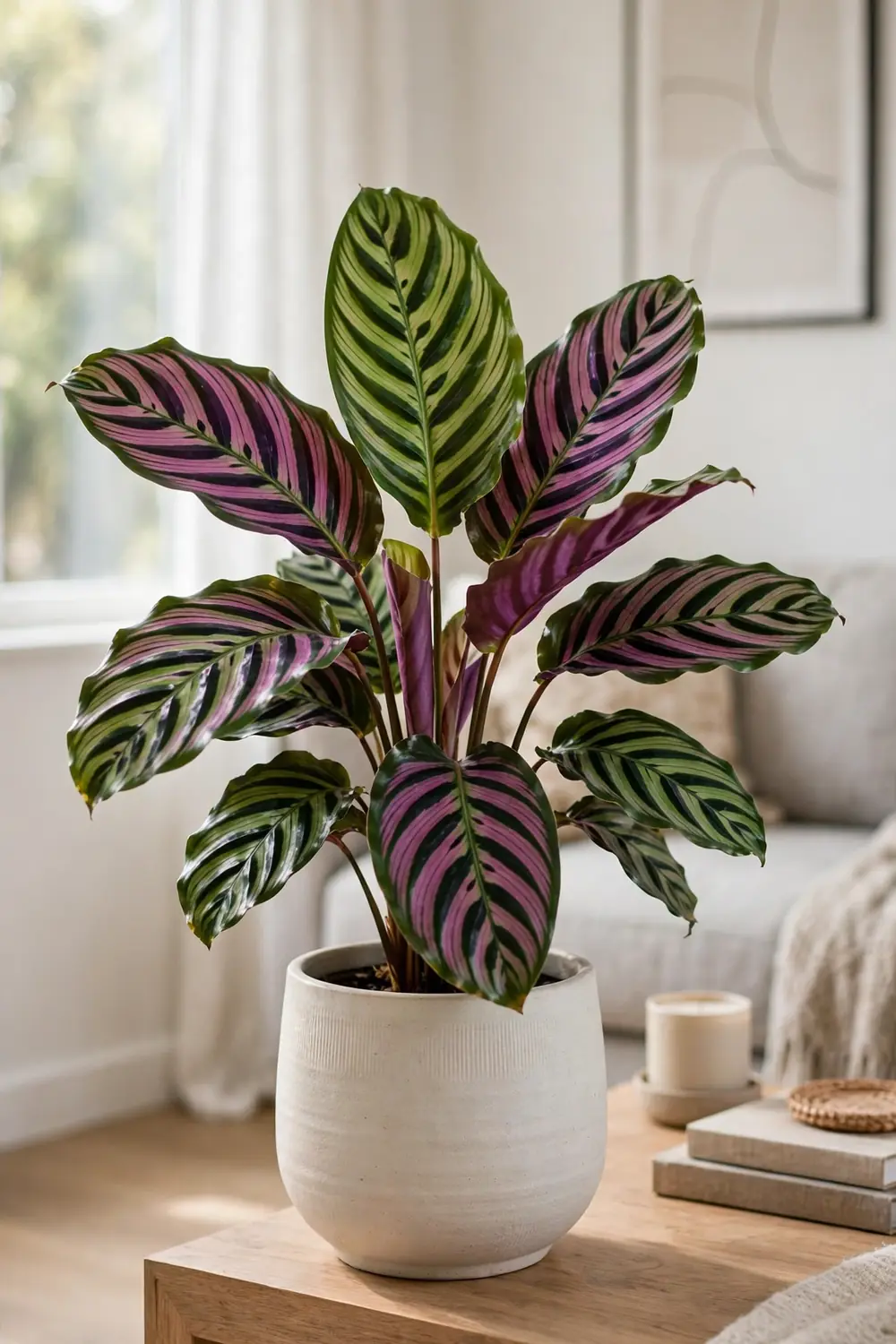
21. Calathea for Colorful Leaves
Calatheas are grown for their leaves, not their flowers, and their leaves are spectacular. Bold stripes, deep purple undersides and painterly patterns make a calathea look like a piece of art, and one plant can add more color to a room than a whole shelf of green plants. They suit living rooms and bedrooms where their patterns can be admired up close.
Calatheas prefer indirect light and regular moisture, and they dislike tap water, so use filtered or rainwater when you can. Mist the leaves often, or group the plant with others to raise the humidity around it. The leaves fold upward at night and open again in the morning, a gentle movement that makes the plant feel truly alive.
Styling tips
- Keep calatheas away from cold drafts and heating vents.
- Water with room temperature water to avoid shocking the roots.
- Group calatheas with ferns to create a humid, happy corner.
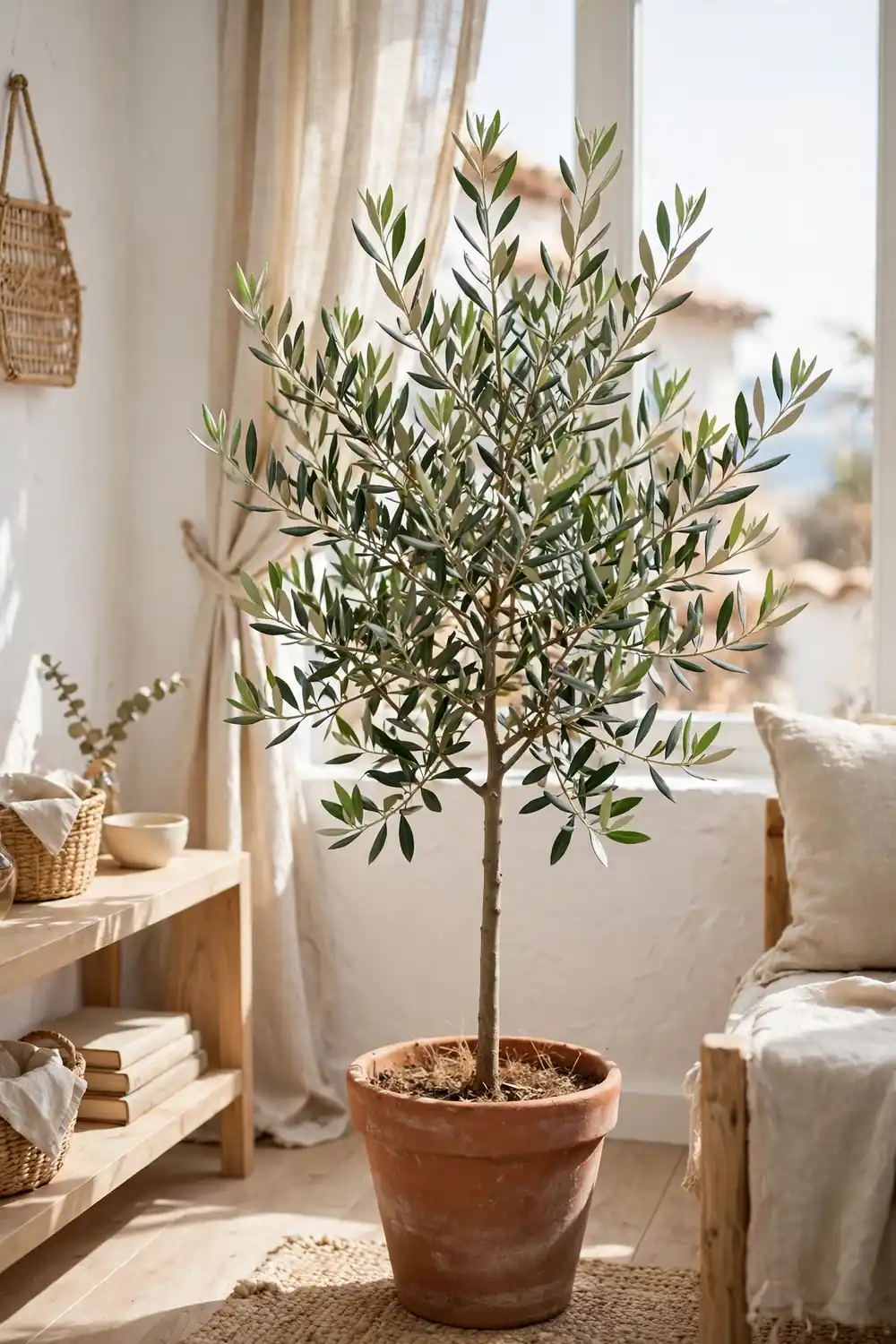
22. Olive Tree for a Mediterranean Look
An olive tree brings a calm, Mediterranean feeling to a home. Its silvery green leaves and slender branches look elegant in a living room or a sunroom, and the tree adds a touch of the outdoors without the wild look of a tropical plant. A young olive tree in a terracotta pot feels sunny and timeless, and it suits rooms with plenty of natural light.
Olive trees need the brightest spot you can offer, ideally six hours of direct sun a day from a south facing window. Water only when the soil is dry, and prune lightly in spring to keep the shape neat. In warm months, move the tree onto a balcony or a patio for a few hours a day, and bring it back inside before cold nights arrive.
Styling tips
- Choose a terracotta pot, which suits the Mediterranean look and helps the soil dry.
- Rotate the tree weekly so it grows straight toward the light.
- Keep the tree away from radiators, which dry the leaves quickly.
23. Plant Cluster by the Window
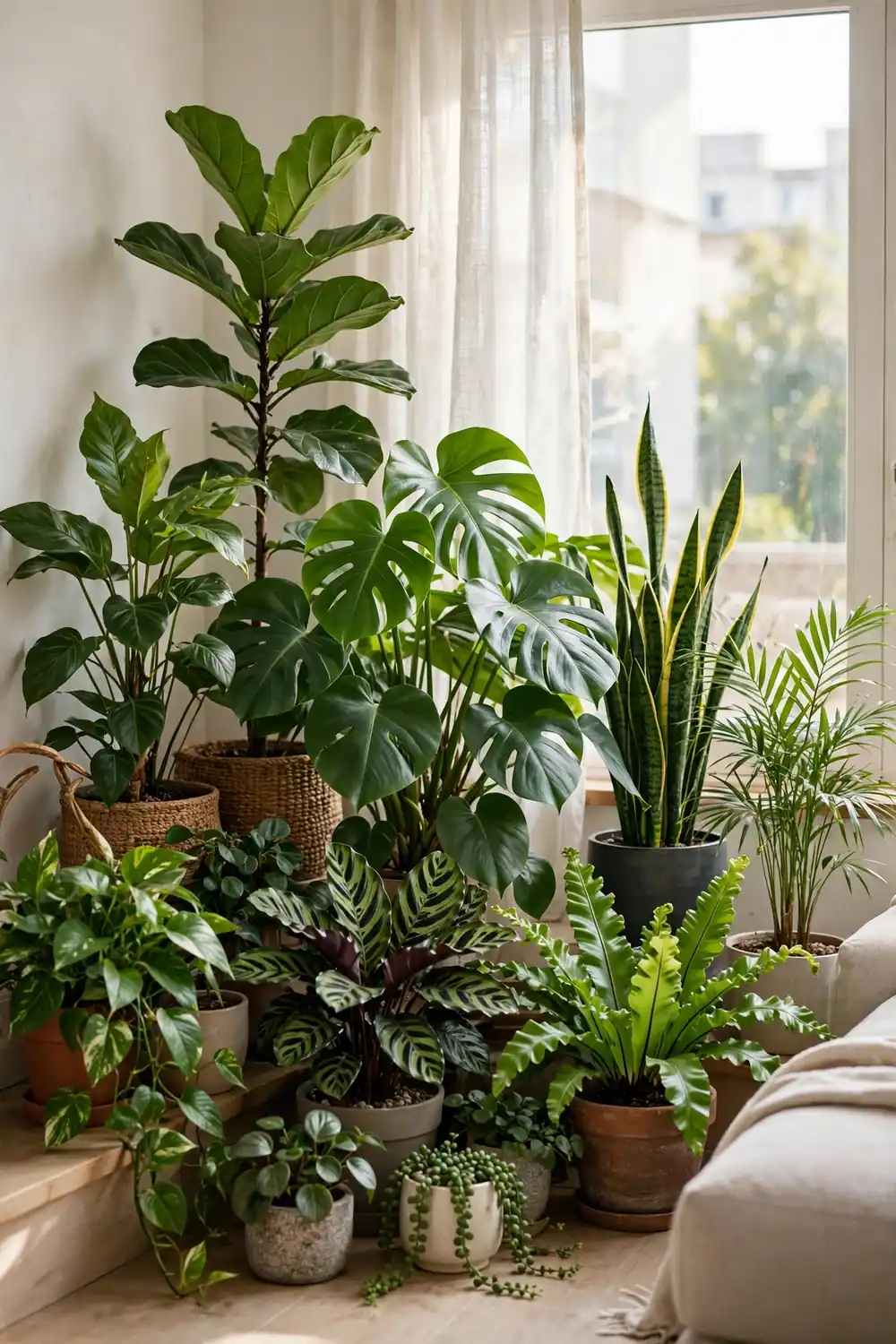
A cluster of plants by the window is one of the most joyful indoor plant decor ideas of all. Five or six plants of different heights and leaf shapes, grouped tightly together, create a small indoor jungle that feels lush and alive. The group raises the humidity around the leaves, so the plants help each other thrive, and the window light makes every leaf glow.
Build the cluster with a tall plant at the back, medium plants in the middle and small plants at the front, so every plant can be seen. Use pots in one or two colors to keep the group calm, and vary the leaf shapes for contrast, mixing broad leaves with fine, feathery ones. Water the cluster on the same day each week, checking each pot in turn so none is forgotten.
Styling tips
- Start with three plants and add one at a time as you learn their care.
- Place a small stool or a plant stand in the cluster for extra height.
- Leave a gap between the pots and the glass in cold weather to protect the leaves.
24. Wall Mounted Planters
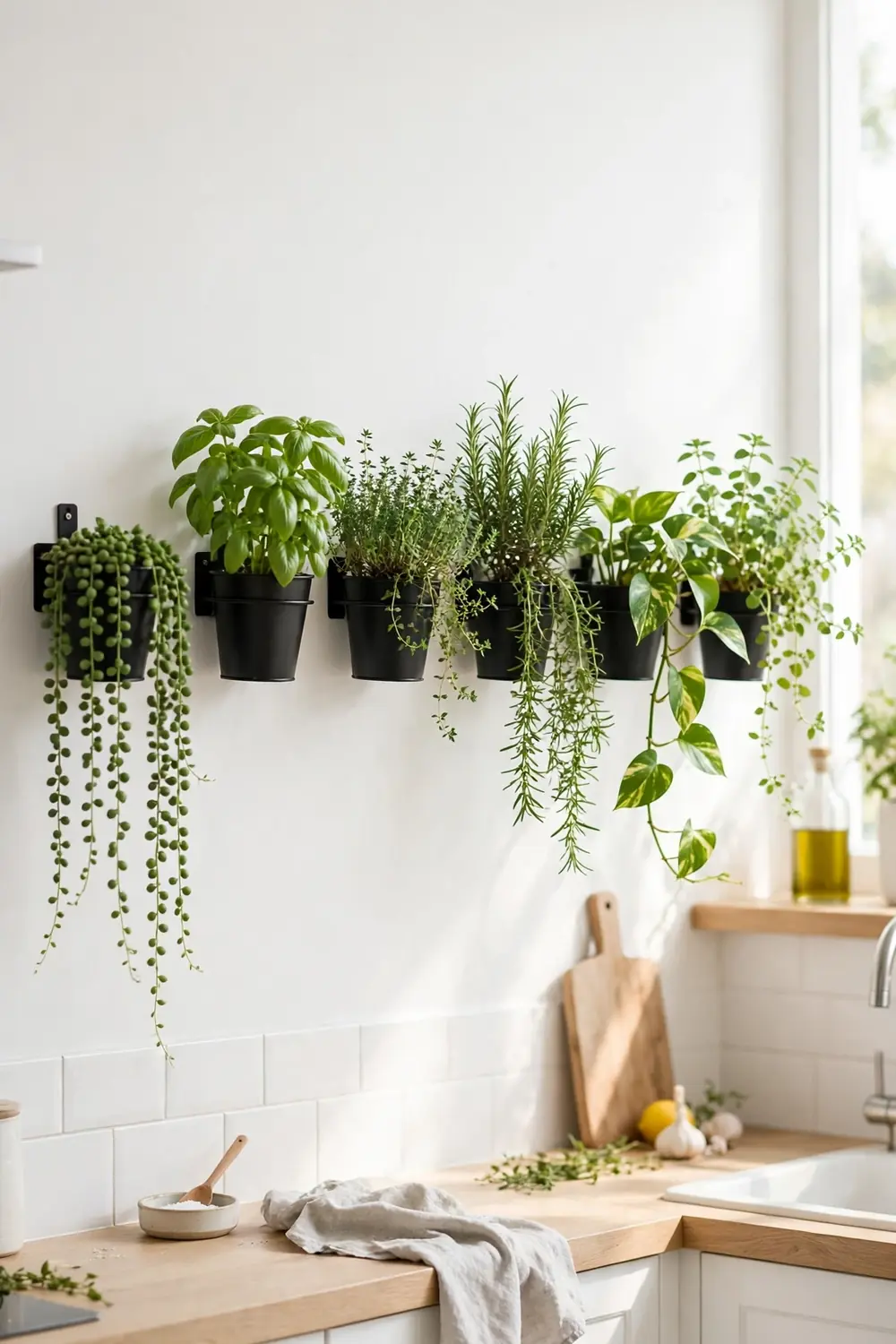
Wall mounted planters turn a plain wall into a living work of art. Small pots fixed to the wall in a row or a grid hold herbs, succulents or trailing plants, and they free up every inch of floor and shelf space. This idea suits kitchens, hallways and small apartments, where every surface counts and a green wall feels like a luxury.
Choose a wall that gets good light, and fix the planters firmly into studs or with strong wall anchors. Start with three planters in a row, then add more as you gain confidence. If you enjoy making things yourself, our guide to DIY wall decor ideas has simple projects that pair beautifully with wall mounted planters, from handmade frames to woven wall hangings.
Styling tips
- Water wall planters carefully, with a small jug, to avoid drips on the wall.
- Use lightweight pots so the fixings stay secure over time.
- Mix herbs and trailing plants for a wall that is both pretty and useful.
25. Plant Stand by the Sofa
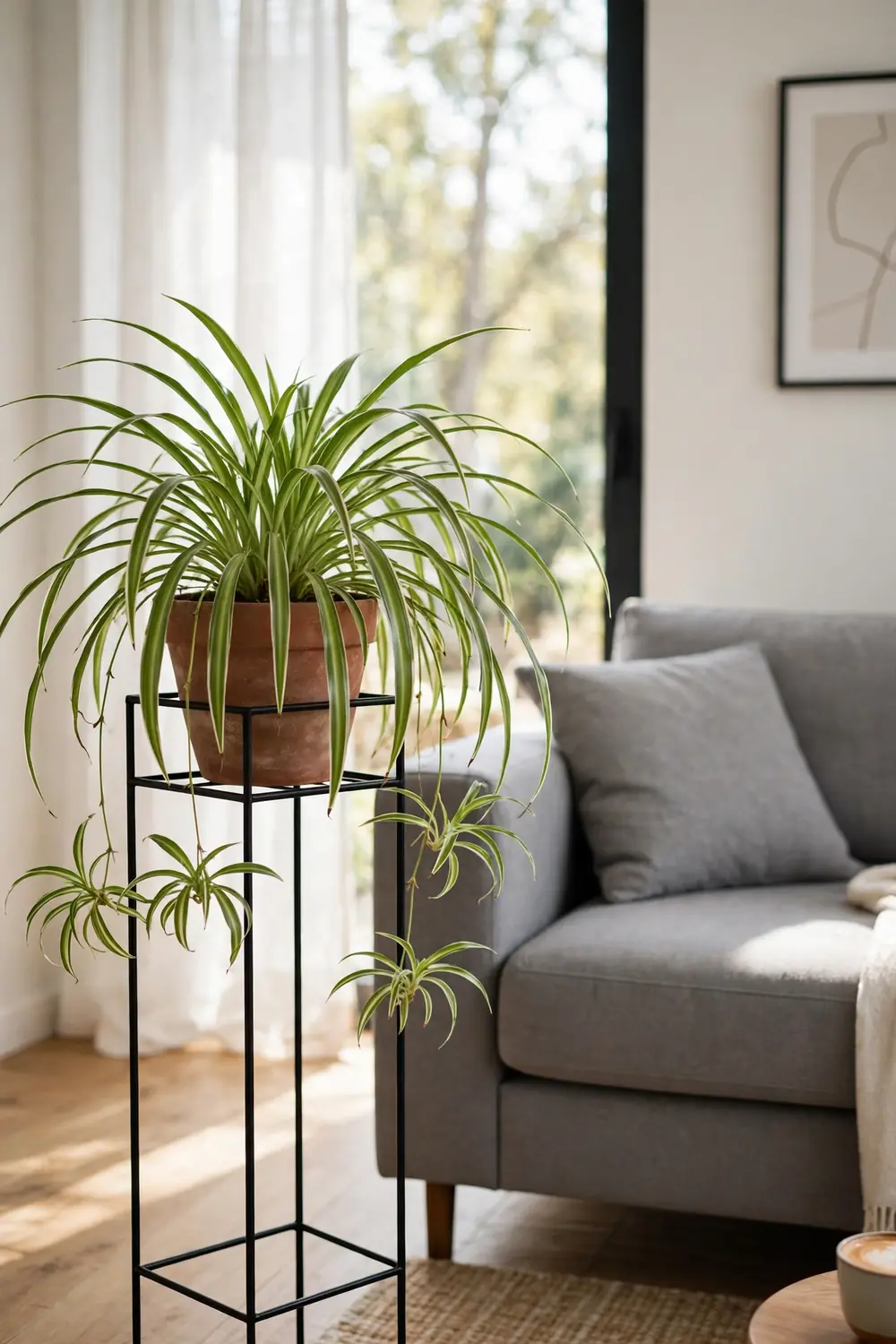
A plant on a stand beside the sofa fills a gap that often goes unnoticed. The space between the sofa and the wall is usually empty, and a medium sized plant on a slim stand turns it into a thoughtful detail. The leaves soften the hard edge of the sofa, and the stand lifts the plant to a height where it can be enjoyed from your seat.
Choose a stand that matches the height of your sofa arm, so the plant sits just above it and the leaves spill gently toward you. A slim metal stand suits modern rooms, while a wooden stand suits warmer, cozier spaces. Pick a plant that tolerates the light beside your sofa, and water it on the same day you water your other living room plants.
Styling tips
- Pick a plant with leaves that arch outward, like a spider plant or a fern.
- Keep the stand slim so it never blocks the walkway beside the sofa.
- Add a small book or a candle on the lower shelf of the stand if it has one.
26. Low Light Plants for Dark Corners
Dark corners are the hardest spots to decorate, and low light plants are the answer. ZZ plants, snake plants, pothos and cast iron plants all grow happily with very little direct light, and they turn a dim hallway or a north facing corner into a green, welcoming space. A plant in a dark corner proves that every part of a home can feel alive.
Low light does not mean no light, so place these plants where they still get some daylight, even if it is soft and indirect. Water less often in dark corners, since the soil dries slowly without sun, and wipe the leaves regularly, since dust blocks the little light the plant receives. Rotate the plant toward the nearest window every few weeks to keep its growth even.
Styling tips
- Start with a ZZ plant, which is one of the toughest low light plants you can buy.
- Use a light colored pot to brighten a dark corner.
- Add a small mirror nearby to bounce extra light onto the leaves.
27. Rotating Plant Display
A rotating plant display keeps your home feeling fresh without buying a single new plant. Move a plant from the living room to the bedroom for a month, then swap it with a plant from the kitchen, and each room gains a new look. The change of light and air often perks the plants up too, so the rotation is good for the plants as well as the decor.
Keep a simple note of where each plant lives and when it last moved, so no plant stays in a dark spot for too long. Rotate plants in spring and autumn, when the light changes, and use the move as a chance to clean the leaves and check the soil. A plant that has spent a month in a bright window will look fuller and greener when it returns to its usual spot.
Styling tips
- Move only one or two plants at a time, so the rooms never feel bare.
- Give each plant a week to settle before judging its new spot.
- Use rotation to rest a plant that looks tired, by giving it a month in your brightest window.
28. Plant Care and Potting Station
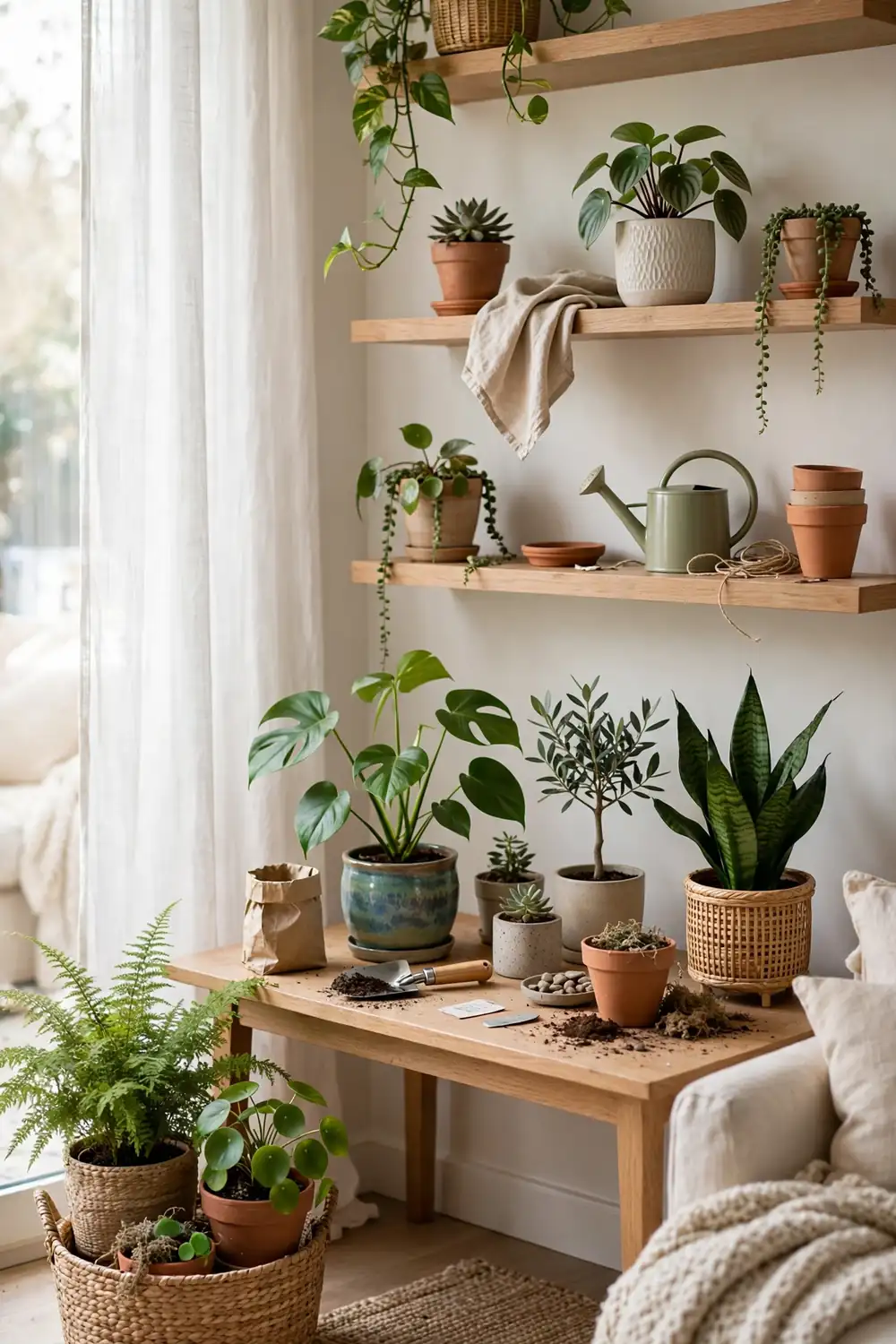
A small potting station turns plant care from a chore into a pleasure. A corner of a laundry room, a balcony or a garage shelf can hold pots, soil, a watering can and pruning shears, all within reach when you need them. When care tools are tidy and ready, you water and repot on time, and your plants show the difference.
Set up the station with a waterproof tray, a bag of potting mix, a few empty pots in different sizes and a small hand trowel. A pegboard on the wall holds shears, twine and plant labels, and a small shelf keeps fertilizer and spray bottles tidy. Add a plant or two to the station itself, so the corner feels like part of your home and not just a storage spot.
Styling tips
- Keep a watering can filled and ready, so watering takes seconds.
- Store soil in a sealed tub to keep it dry and pest free.
- Label every repotted plant with the date, so you know when it last moved.

29. Bedroom Nightstand Plant
A small plant on the nightstand is a gentle way to wake up. The green leaves soften the bedside, and a plant beside your book and your lamp makes the bedroom feel calm and cared for. Peace lilies, small ferns and tiny succulents all suit a nightstand, since they stay compact and need little care.
Choose a plant that copes with bedroom light, which is often soft and indirect, and pick a pot that matches your bedding or your lamp. Water the plant once a week, and keep it small by pruning or repotting only when it outgrows its pot. A nightstand plant is also a lovely gift idea, since a small potted plant suits almost any bedroom.
Styling tips
- Keep the pot small, under five inches wide, so the nightstand stays usable.
- Choose a plant with soft leaves, not spiky ones, for a calm bedside.
- Move the plant to a sunny window once a week for a light boost.

30. Reading Nook Plant Styling
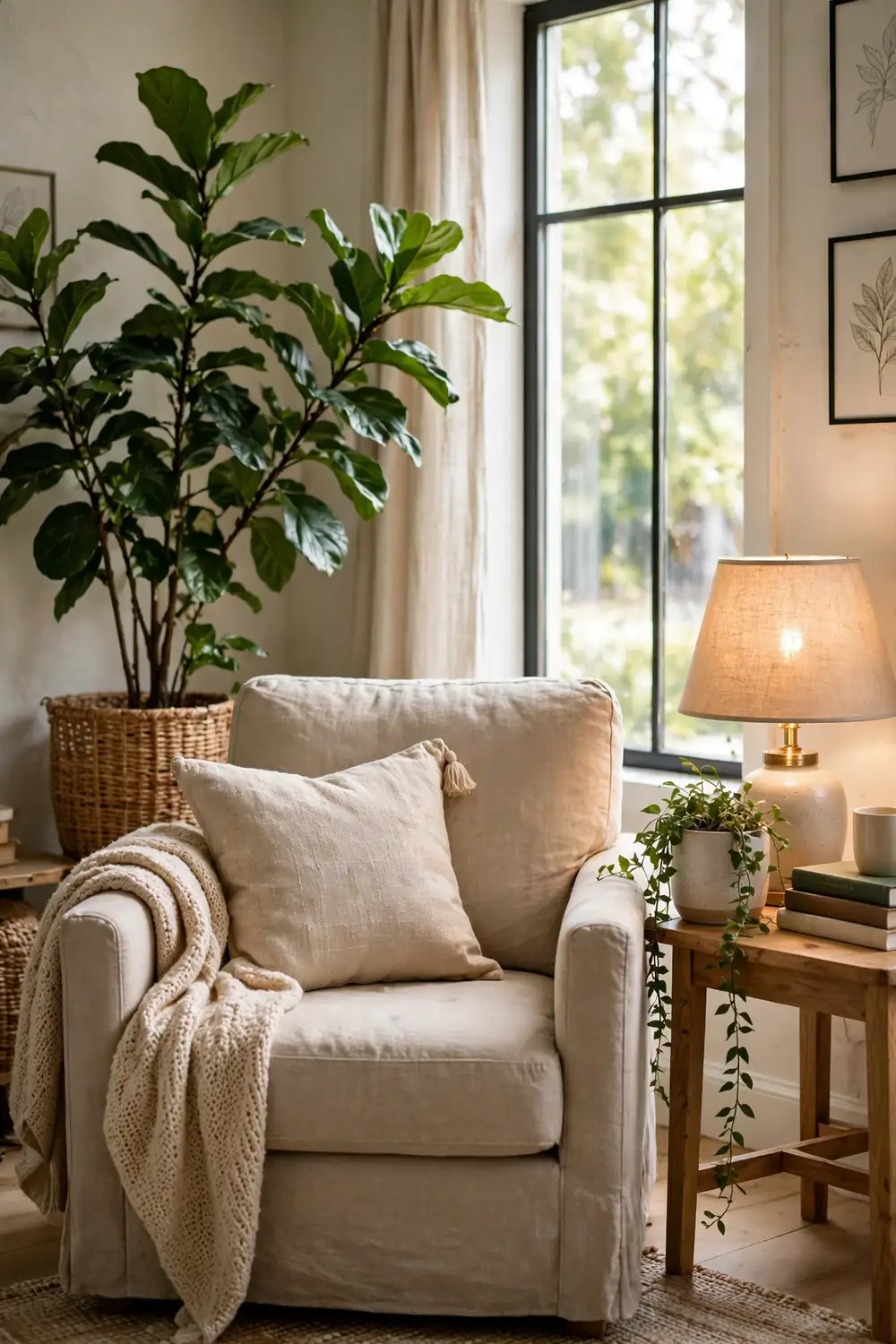
A reading nook deserves a plant or two. A tall plant behind the armchair and a small trailing plant on the side table frame the chair like a green cocoon, making the nook feel private and peaceful. The leaves soften the light, quiet the room and invite you to sit down with a book for a while.
Choose plants that suit the light in your nook, and keep them within easy reach for watering, since a nook plant is easy to forget. A floor plant in a basket beside the chair and a small plant on the windowsill is all it takes, and a soft throw and a warm lamp complete the scene. Your nook will soon become the favorite corner of your home.
Styling tips
- Place a tall plant behind the chair, not beside it, so it never blocks the light.
- Use a trailing plant on a high shelf above the nook for a cozy canopy.
- Keep a small watering can in the nook so the plants never go thirsty.
Your home is ready to grow. Whether you start with one hardy snake plant or a full cluster of indoor plant decor ideas by the window, the best displays are the ones that fit your light, your routine and your style. Start with the plants you love, give them the light and water they need, and let the greenery grow with you. Then step back, breathe in the fresh air and enjoy a home that feels truly alive.
