
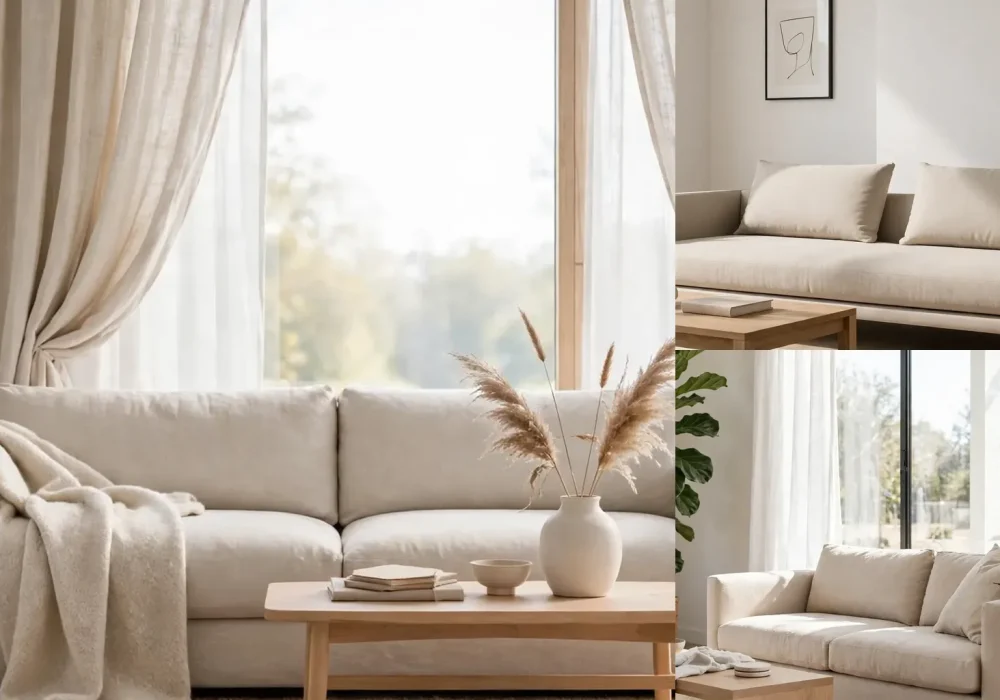
A calm living room does not happen by accident. It happens when every piece earns its place, when colors stay quiet, and when the room has space to breathe. Minimalist living room decor ideas are not about empty rooms or strict rules. They are about choosing less, choosing well, and letting light, texture, and a few beautiful pieces do the work.
The payoff is real. A clutter free living room feels larger, is easier to clean, and helps you relax at the end of a long day. You stop noticing piles of stuff and start noticing the sunlight, the soft sofa, and the one piece of art you truly love. Minimalism also saves money over time, because you buy fewer things and you buy them with care.
This guide shares 13 minimalist living room decor ideas that work in small apartments and large family homes alike. Each idea is simple to apply, and you can start with just one or two. Together, they create a living room that feels calm, warm, and lived in, never cold or bare.
How to Plan a Minimalist Living Room That Still Feels Warm
Start by editing before you buy anything. Walk through your living room and remove anything you do not use, love, or need in that space. Put the extras in a box for two weeks. If you do not miss them, donate or store them. This one step often transforms a room more than any new purchase, and it shows you what you actually need.
Next, pick a quiet palette and repeat it. Two or three neutrals, like warm white, soft gray, and light wood, plus one muted accent, are enough for the whole room. The same palette thinking helps in a small living room, where a limited color range makes the space feel bigger and calmer. Keep patterns small and simple, and let texture, like linen, wool, and wood, add interest instead of busy prints.
Finally, plan for storage before you plan for decoration. Every item needs a home, or clutter will creep back within a week. Closed storage, baskets, and furniture with hidden space keep everyday things out of sight while the room still looks inviting. For practical inspiration, see these budget decor ideas and DIY wall decor ideas that prove simple, affordable changes can look polished. The Spruce also offers thoughtful guidance on calm, edited interiors at The Spruce.
1. Light Neutral Palette With Natural Textures
A light neutral palette is the foundation of minimalist living room decor ideas. Warm white walls, a soft beige sofa, and light wood floors reflect light and make the room feel open. Natural textures, like linen curtains, a wool throw, and a jute rug, keep the palette from feeling flat or sterile.
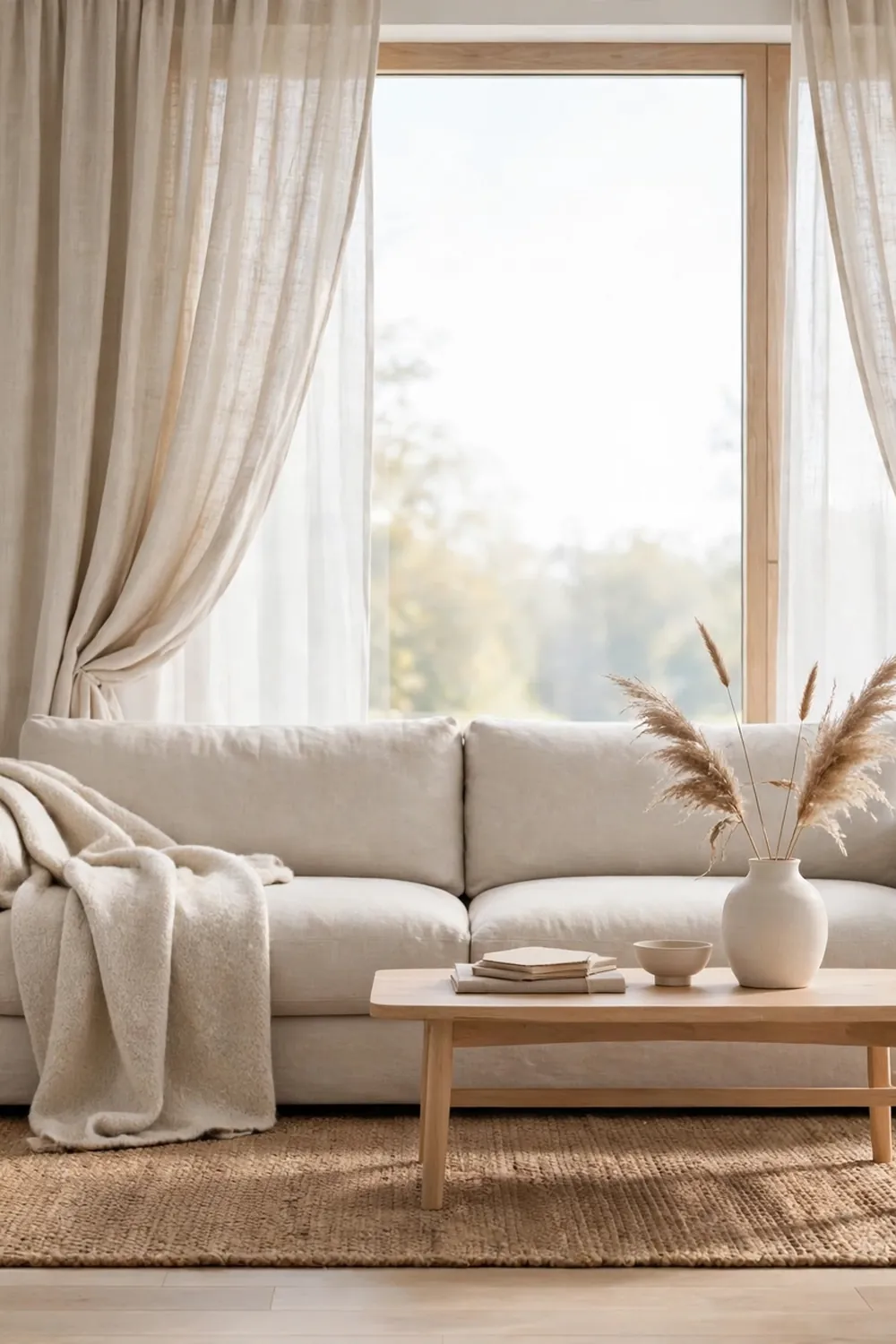
Choose warm neutrals rather than stark, cool whites if you want the room to feel welcoming. Warm white paint, cream cushions, and pale oak all work together without shouting for attention. Add depth slowly, one texture at a time, and step back to check the room still feels calm.
Styling tips:
- Stick to three neutrals plus one soft accent color.
- Mix linen, wool, cotton, and wood for warmth.
- Test paint colors in daylight before committing.
2. Low Profile Sofa With Clean Lines
A low profile sofa with straight lines and slim arms instantly sets a minimalist tone. It keeps sight lines open across the room, so the space feels wider and less crowded. Simple shapes also age well, which matters when the sofa is the biggest piece in the room.
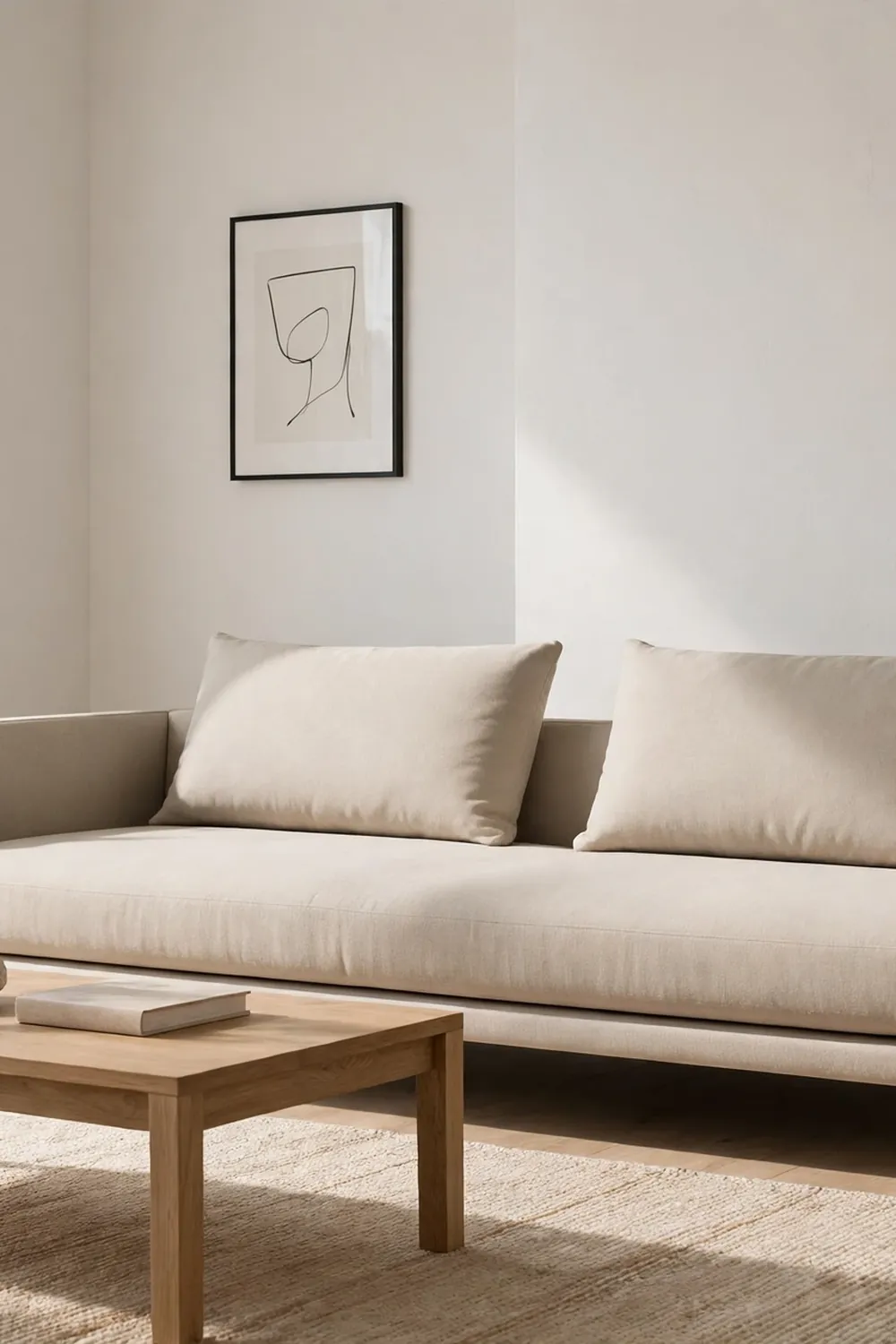
Pick a solid, durable fabric in a neutral tone, and skip heavy patterns or oversized cushions. Two or three cushions are enough. If your sofa is already bulky, lighten its look with a simple throw and fewer cushions rather than replacing it right away.
Styling tips:
- Choose slim arms and short legs for a lighter look.
- Keep cushions to two or three in matching tones.
- Leave space around the sofa so it can breathe.
3. Uncluttered Coffee Table Styling
A minimalist coffee table holds only three or four things: a book or two, a small plant, and one beautiful object. The empty space around them is part of the design. It gives the eye somewhere to rest and makes the room feel ordered without effort.
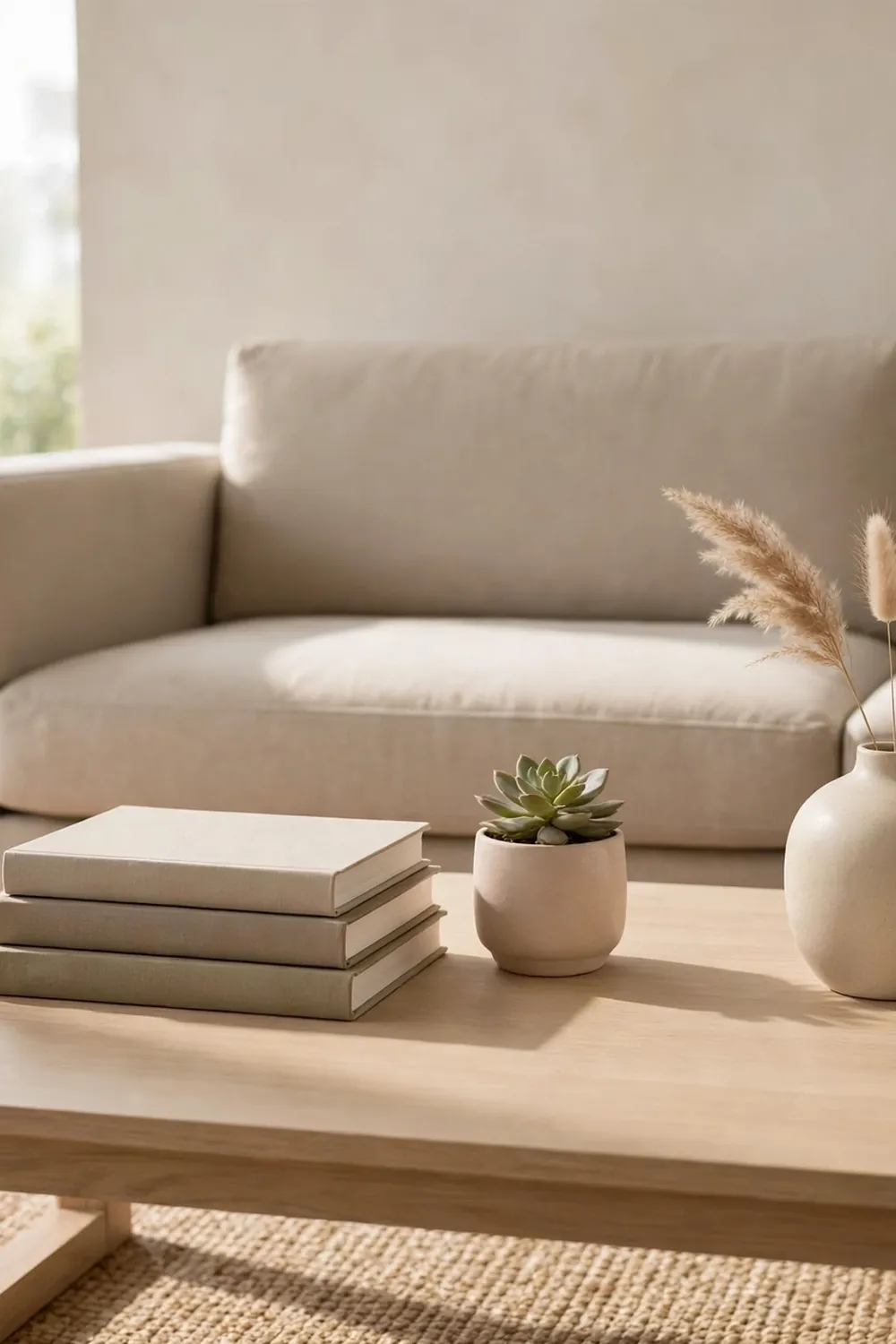
Use a tray to group small items so they read as one intentional arrangement. Remotes, coasters, and chargers can live in a drawer or a basket nearby, not on the table surface. If the table starts to collect clutter, clear it back to the original three items each evening.
Styling tips:
- Use the rule of three for tabletop objects.
- Group small items on a simple tray.
- Clear the table daily to keep the habit easy.
4. One Statement Artwork Instead of Many Small Pieces
One large piece of art makes a stronger statement than a wall full of small, unrelated frames. It becomes the focal point of the room and lets everything else stay quiet. A single abstract print, landscape photo, or textile piece can carry a whole wall.
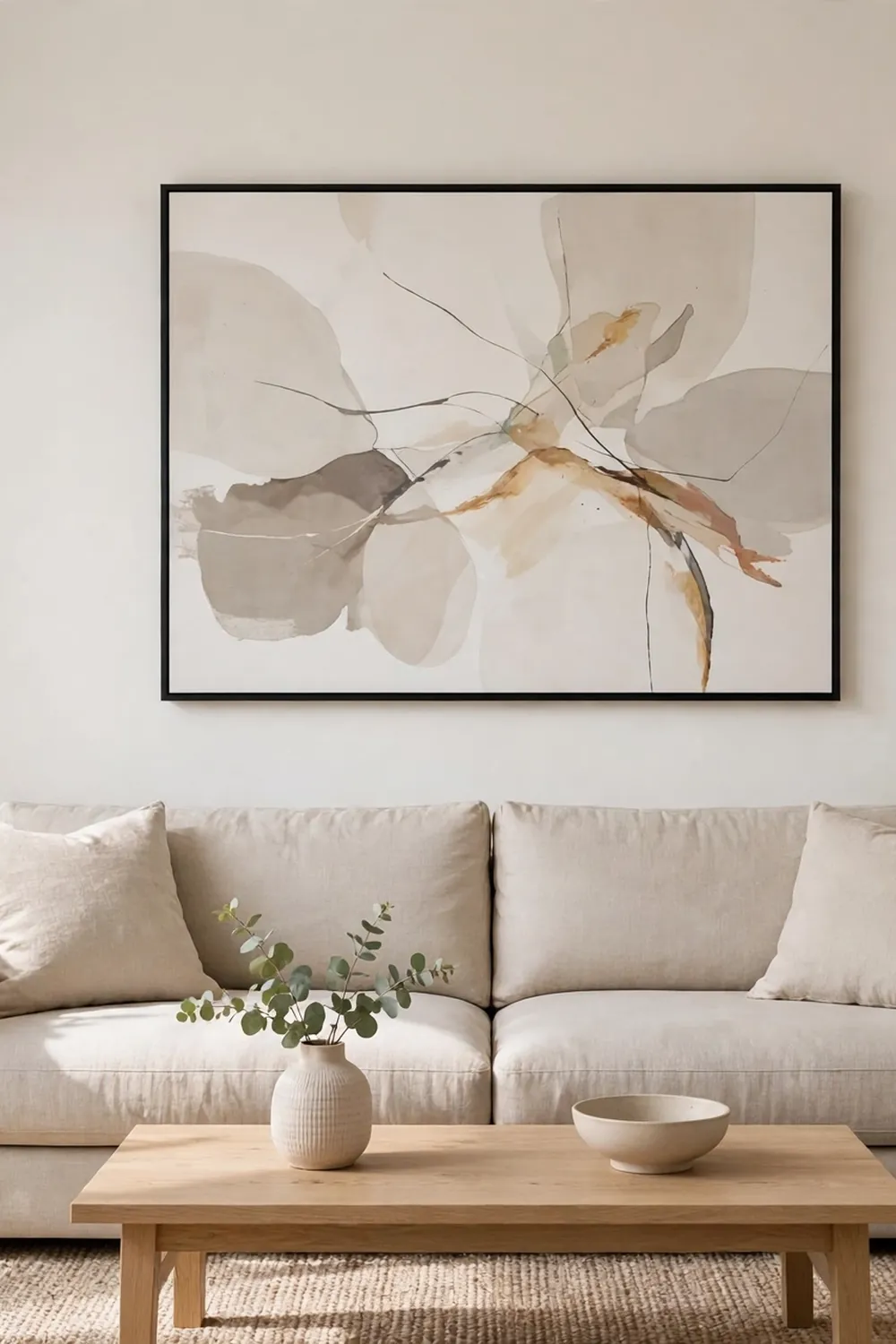
Hang the artwork at eye level, centered over the sofa or on the largest empty wall. Keep the frame simple, in black, wood, or white, so the art itself stands out. If you love a gallery wall, limit it to one wall and keep frames matching, as shown in these DIY wall decor ideas.
Styling tips:
- Choose art at least two thirds the width of the sofa.
- Hang it at eye level, not too high.
- Use a simple frame that does not compete with the art.
5. Layered Soft Lighting
Minimalist rooms need good lighting, because there is less decoration to hide behind. Layer three types of light: a soft ceiling light, a floor or table lamp for reading, and a warm accent like a candle or small lamp. Together, they make the room feel cozy after dark.
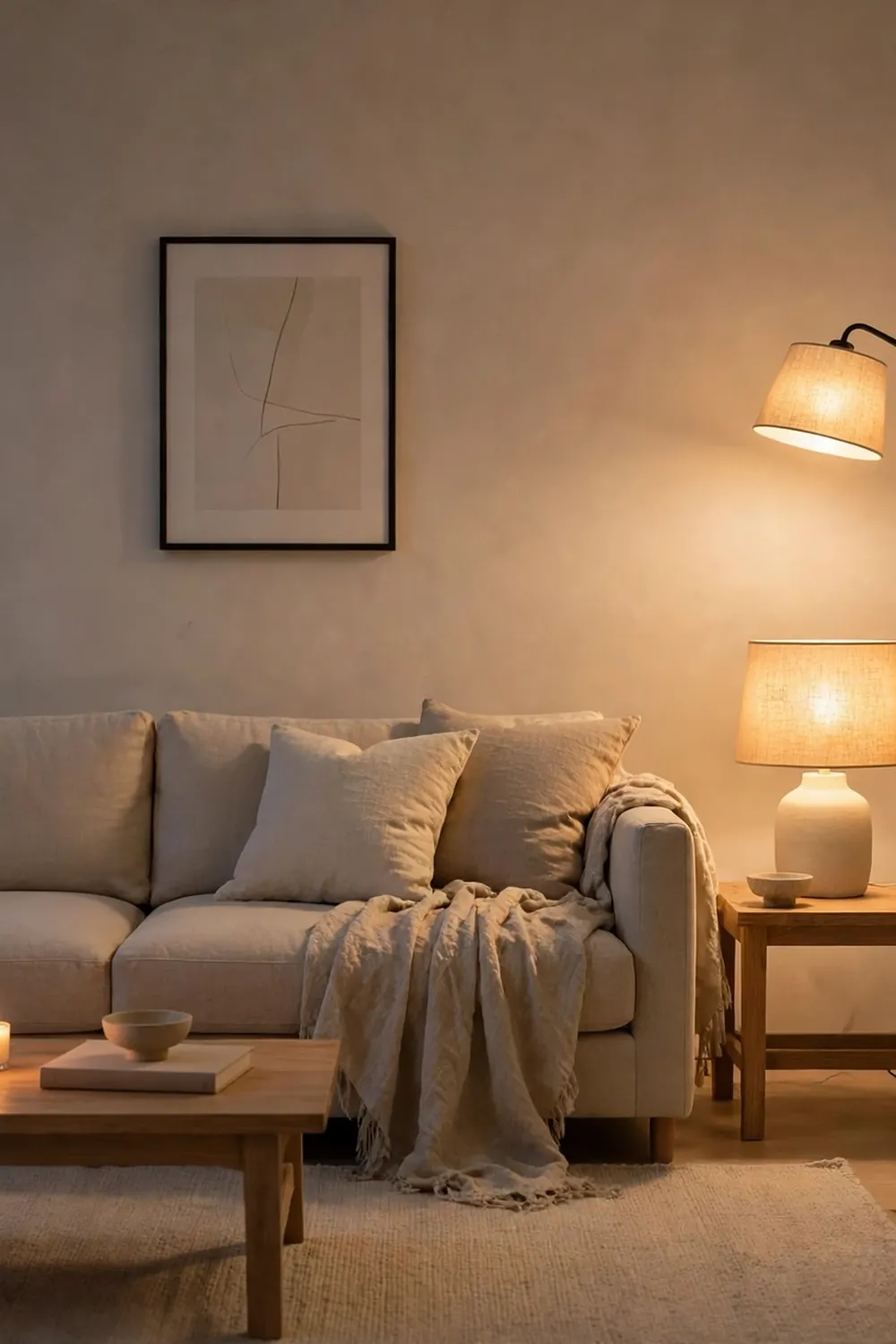
Use warm white bulbs, not harsh daylight bulbs, and add a dimmer if you can. Place lamps at different heights so light pools gently around the seating area instead of blasting from one overhead source. This soft glow is what turns a simple room into a welcoming one.
Styling tips:
- Use warm white bulbs throughout the room.
- Place light at three different heights.
- Add dimmers for evening relaxation.
6. Hidden Storage That Keeps Clutter Out of Sight
Clutter is the enemy of minimalism, and hidden storage is the solution. A media console with doors, a storage ottoman, and closed baskets hide chargers, games, and blankets. When everyday items disappear, the room instantly looks calmer.
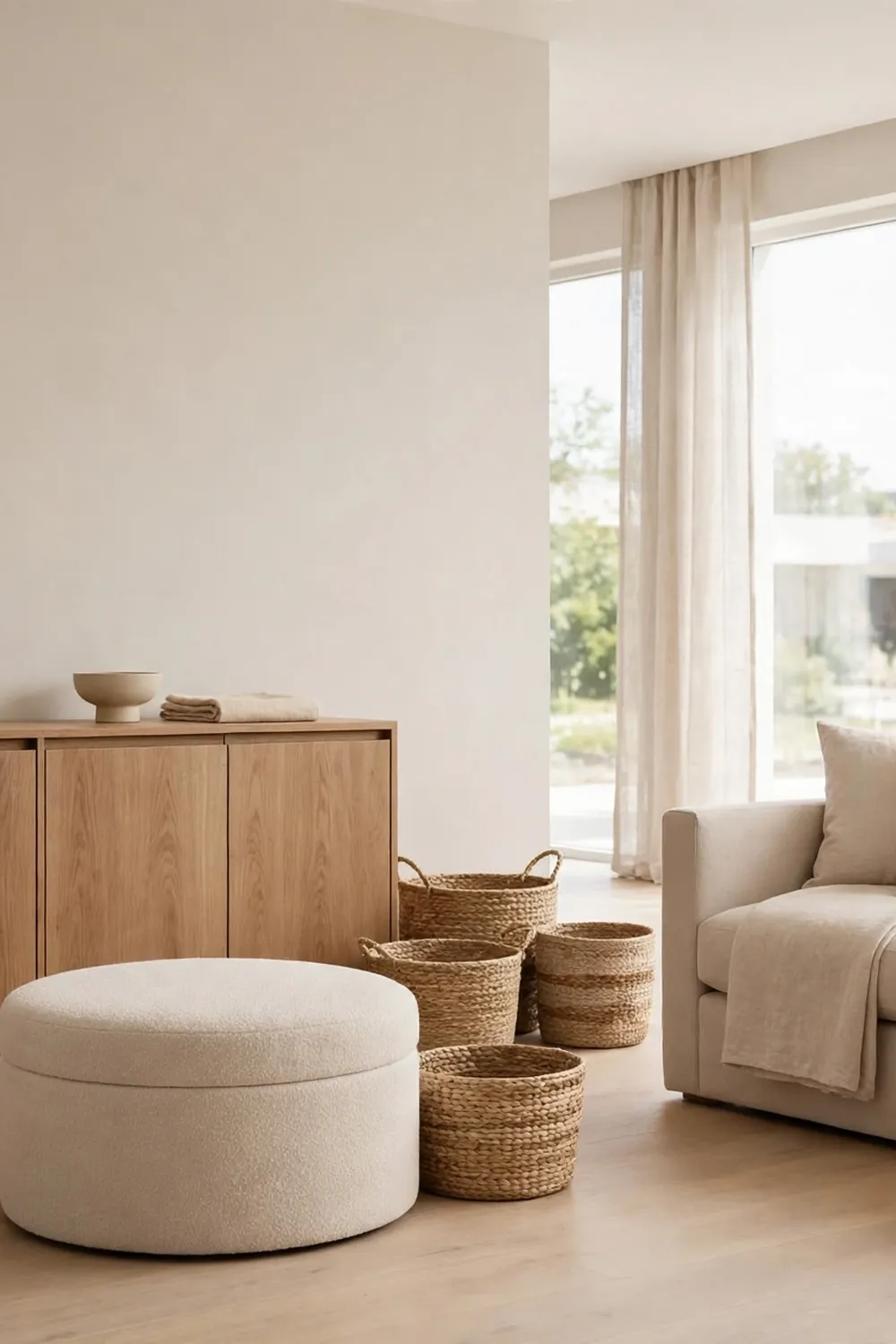
Audit what actually lives in your living room, then assign each category a closed home. Books can go on one shelf, games in a console drawer, and throws in an ottoman. Label baskets inside closed storage so family members can find things without leaving them out.
Styling tips:
- Prefer closed storage over open shelves for everyday items.
- Give every category one clear home.
- Keep one basket for items that need to leave the room.
7. Textured Throws and Cushions in One Tone Family
Softness matters in a minimalist room, and the easiest way to add it is through textiles in one tone family. Cream, beige, and soft gray cushions and throws layered together feel rich without adding visual noise. The variety comes from texture, not color.
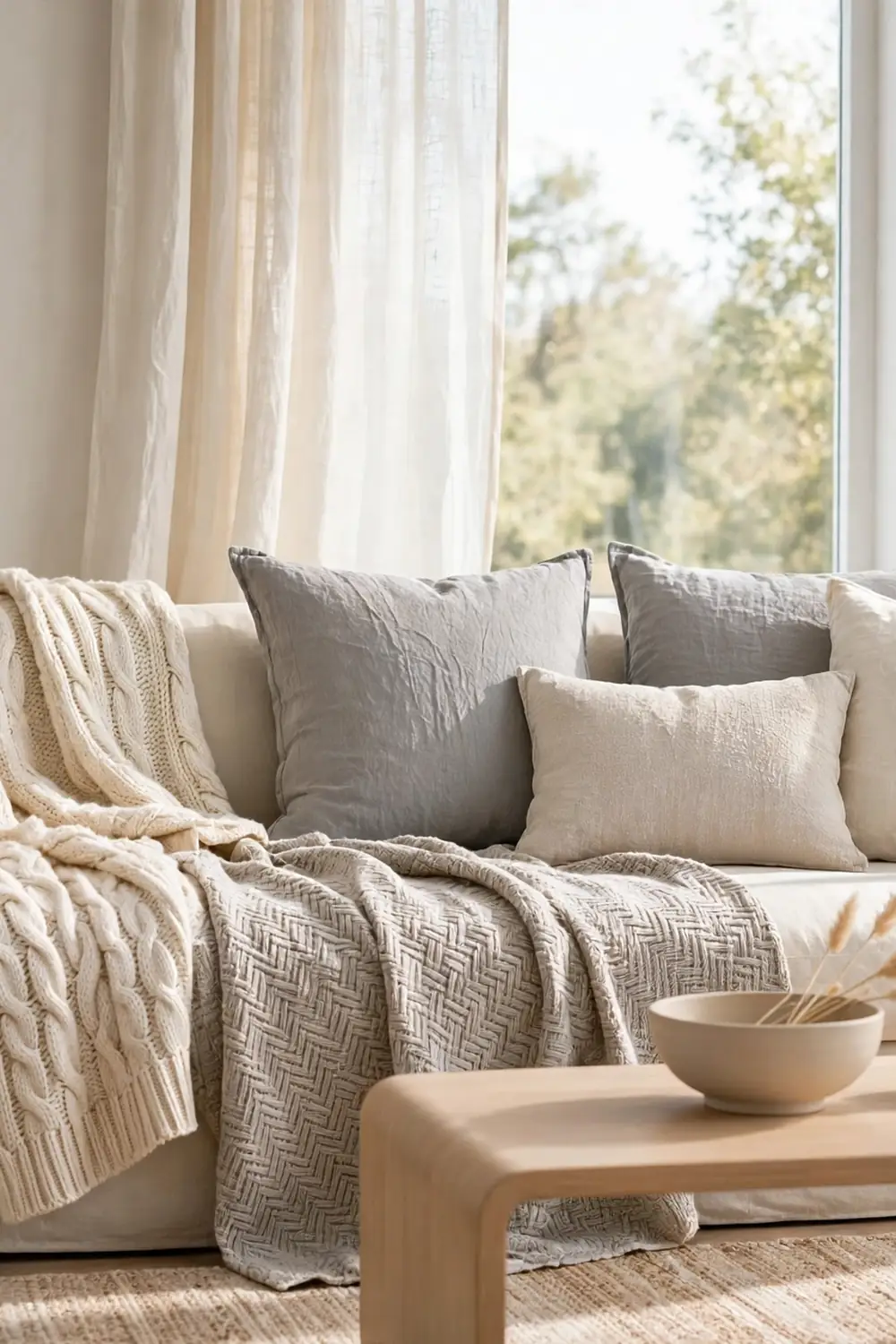
Mix a chunky knit throw with smooth linen cushions and a woven cotton blanket. Keep the tones close enough that they blend, and avoid introducing a loud accent color unless it appears in one other place, like the artwork. Fold throws neatly instead of draping them in a tangle.
Styling tips:
- Stay within one tone family for all soft furnishings.
- Mix knit, linen, and woven textures.
- Fold throws neatly on an arm or basket.
8. Natural Wood Accents for Warmth
Wood is the secret ingredient that keeps minimalist rooms from feeling cold. A light oak coffee table, a walnut shelf, or wooden picture frames add warmth and a natural feel. Wood also ages gracefully, which suits the buy less, buy well mindset.
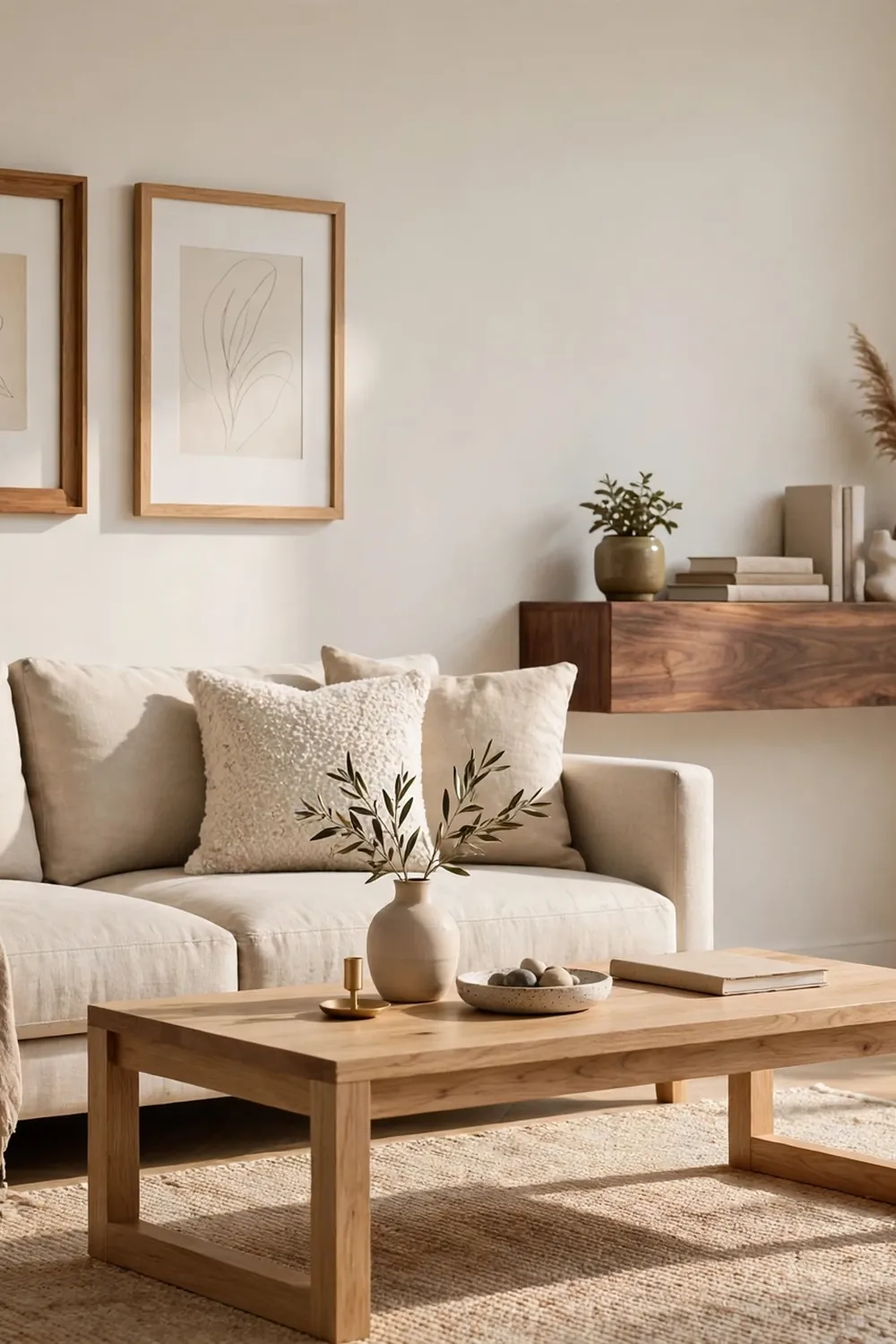
Repeat the same wood tone in two or three places, like the coffee table, a side table, and a frame, so the room feels connected. Avoid mixing too many wood finishes, which can look busy. If your floors are wood, choose furniture in a slightly different tone for gentle contrast.
Styling tips:
- Repeat one wood tone in two or three spots.
- Pair light wood with warm neutrals.
- Keep wood surfaces mostly clear.
9. Open Floor Space and Breathing Room
Minimalism is as much about empty space as it is about furniture. Leaving clear floor space around seating, and a clear path through the room, makes even a small living room feel generous. Resist filling every corner, and let one or two areas stay empty on purpose.
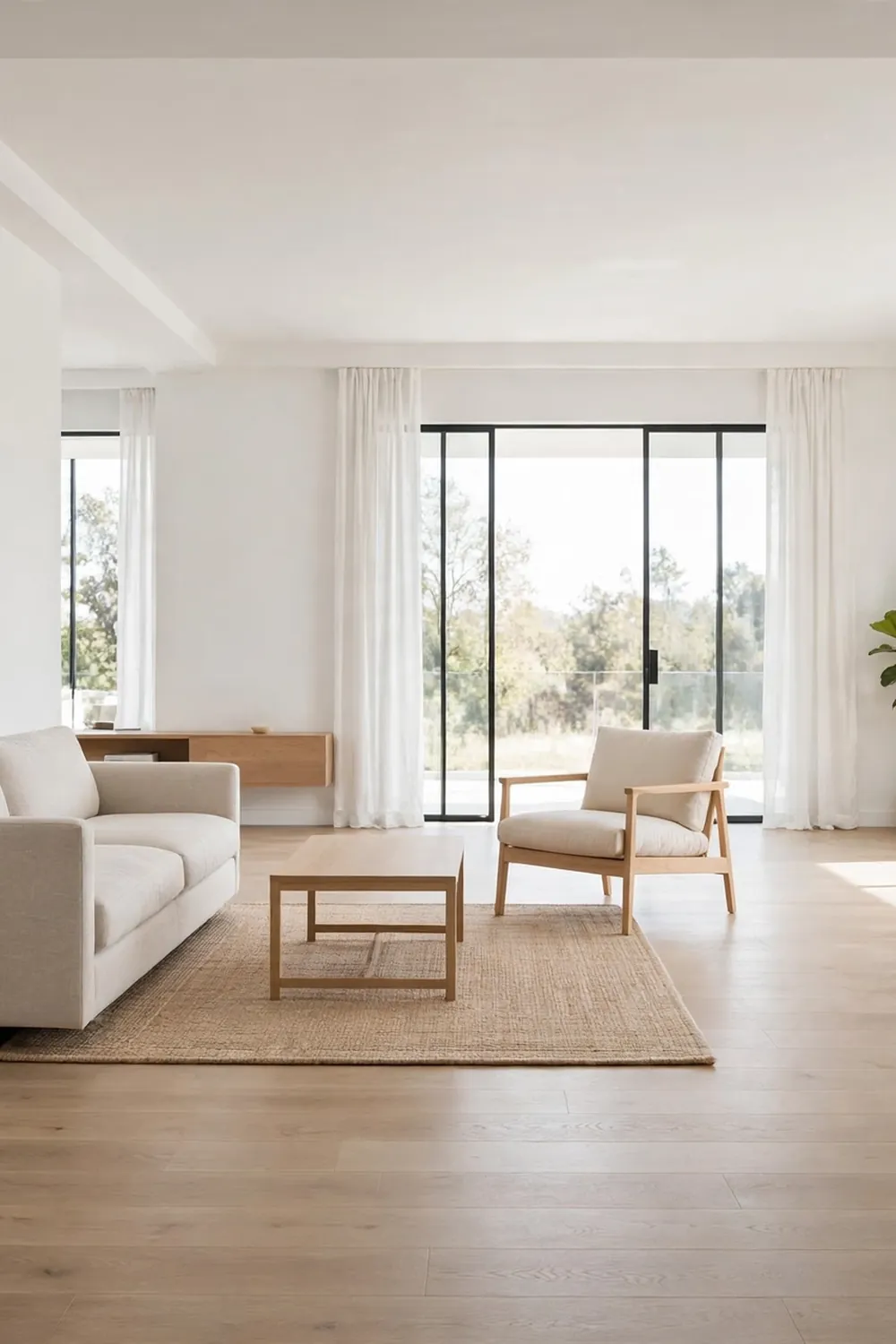
Pull furniture slightly away from walls where possible, and avoid placing a piece in every corner. If a corner feels bare, a single plant or floor lamp is enough. The goal is a room you can move through easily, not a showroom packed with furniture.
Styling tips:
- Keep walkways at least three feet wide.
- Leave at least one corner intentionally empty.
- Float seating slightly off the walls when space allows.
10. Indoor Plants as Living Sculpture
One or two well chosen plants add life, color, and softness to a minimalist living room. A tall fiddle leaf fig, a sculptural olive tree, or a trailing plant on a shelf brings a natural shape that no object can copy. Plants also make a plain corner feel finished.
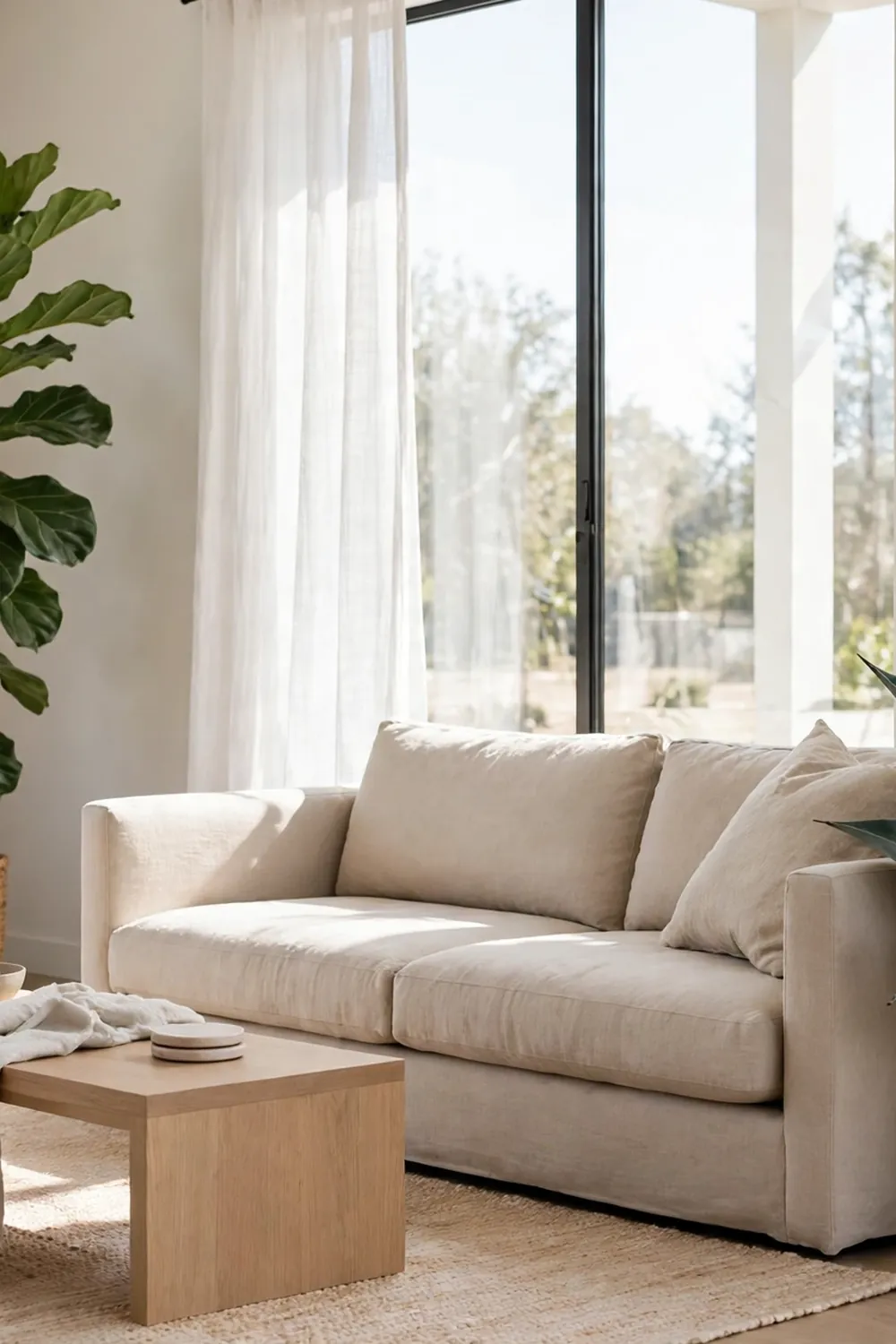
Choose plants that suit your light and your routine, and pot them in simple ceramic or terracotta pots. One large plant often looks better than many small ones scattered around. Place it where it gets light and where you can enjoy it from your usual seat.
Styling tips:
- Choose one large plant over many small ones.
- Use simple pots in neutral colors.
- Match the plant to your natural light levels.
11. Sheer Curtains and Natural Light
Natural light is a minimalist living room’s best decoration, and sheer curtains let it in while keeping privacy. White or cream sheer panels soften harsh sunlight, blur the view just enough, and make the room glow during the day.
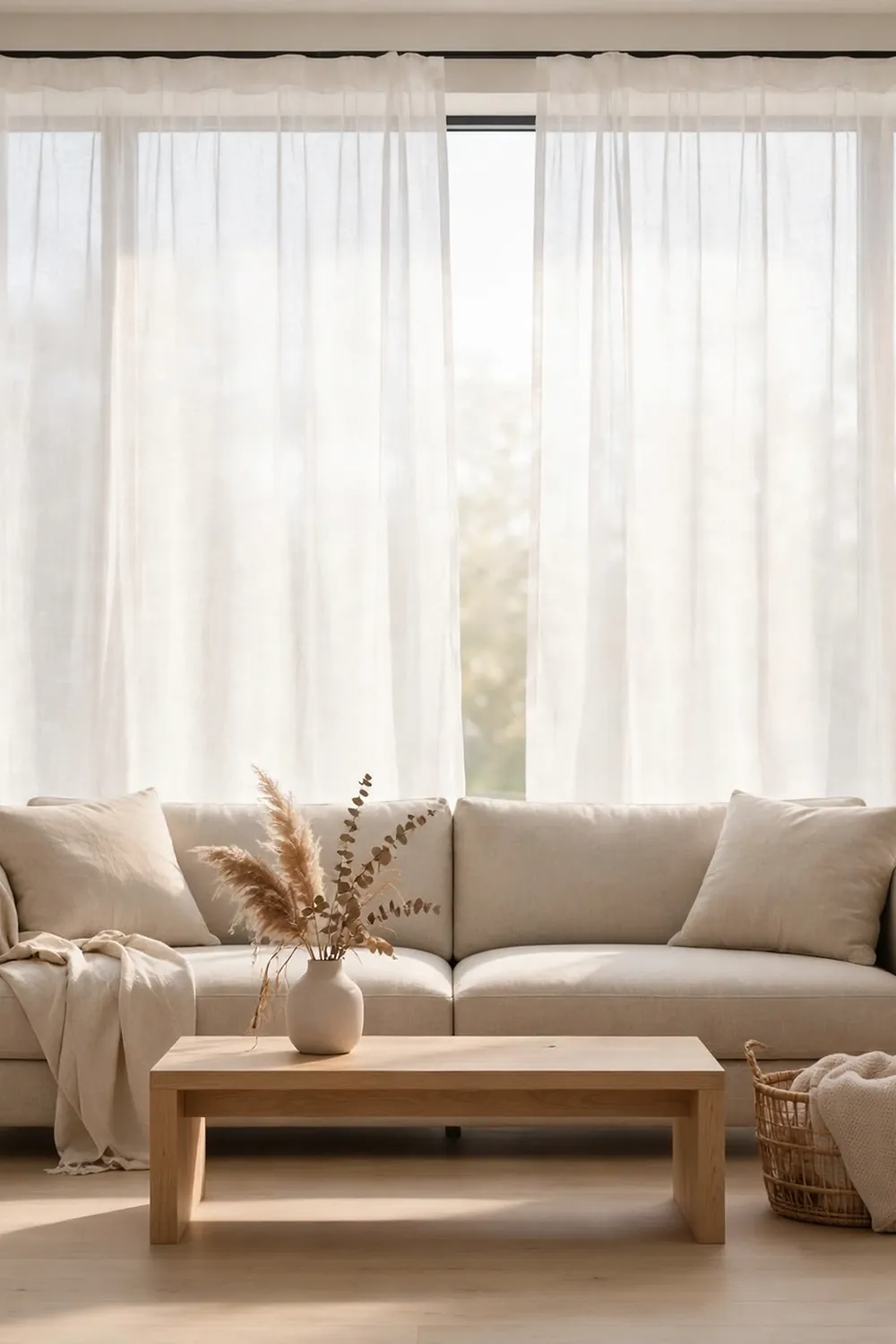
Hang curtains high and wide, so the window looks larger and the panels frame the view rather than covering it. Layer sheers with a simple blind or heavier curtain only if you need darkness at night. Keep the fabric plain, without heavy patterns or tassels.
Styling tips:
- Hang the rod close to the ceiling and wider than the window.
- Choose plain white or cream sheer fabric.
- Let curtains fall straight to the floor.
12. Multifunctional Furniture That Earns Its Place
In a minimalist home, every piece should work hard. A storage ottoman doubles as a seat and a coffee table. A sofa bed welcomes guests without a spare room. A console with drawers hides clutter and displays one or two favorite objects on top.
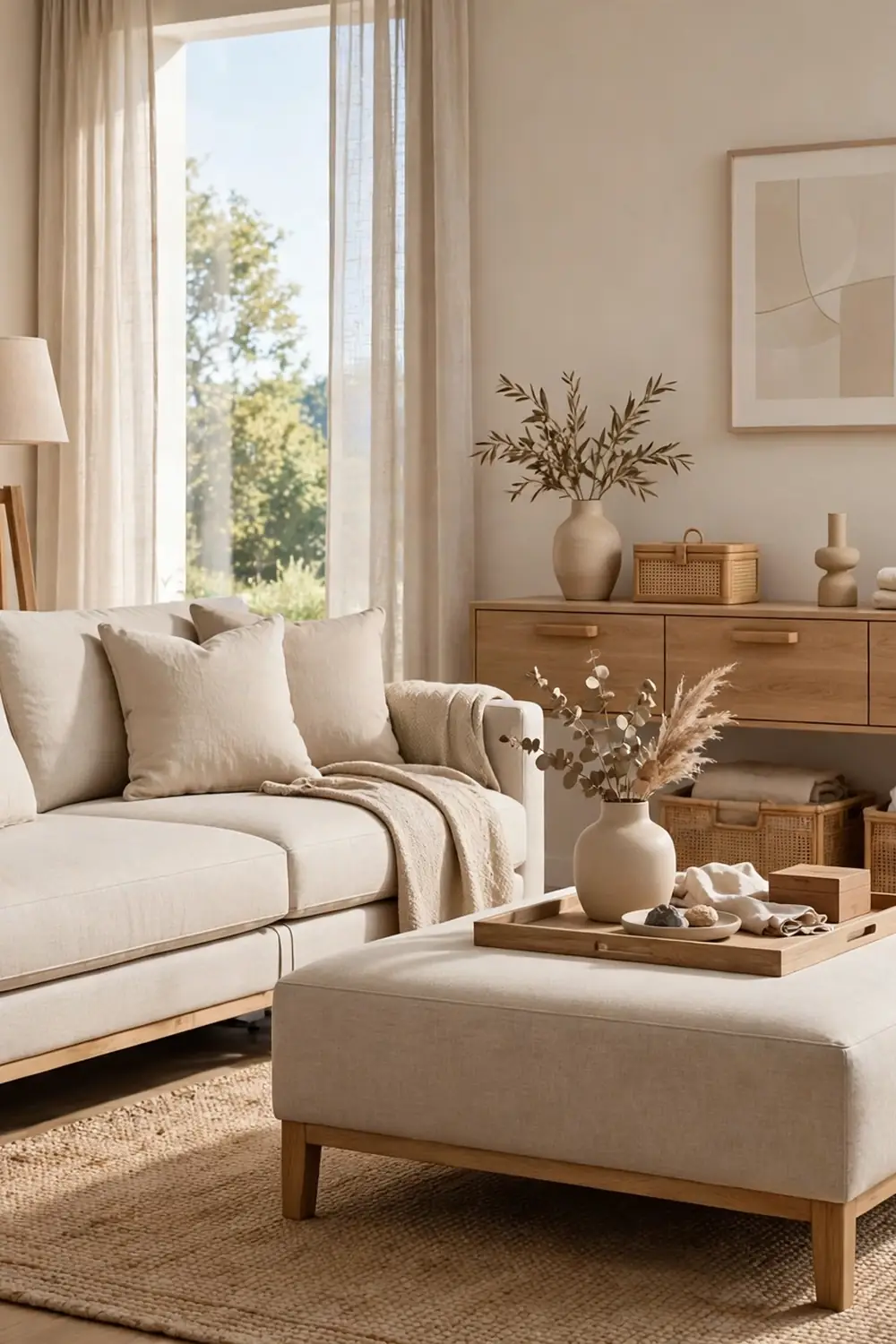
Before buying, ask what two jobs a piece can do. If it only serves one purpose and takes up a lot of space, look for a smarter option. This thinking is especially useful in a small living room, where every square foot counts, and it pairs well with a calm corner like a cozy reading nook.
Styling tips:
- Choose pieces with at least two uses.
- Prefer storage seating over plain seating.
- Measure doorways and walkways before buying.
13. Edited Personal Touches, Not a Collection of Everything
Minimalism does not mean removing personality. It means editing it. Choose three to five personal items you truly love, like travel photos, a handmade vase, or a favorite book collection, and display them with space around them. Each one gets noticed instead of getting lost in a crowd.
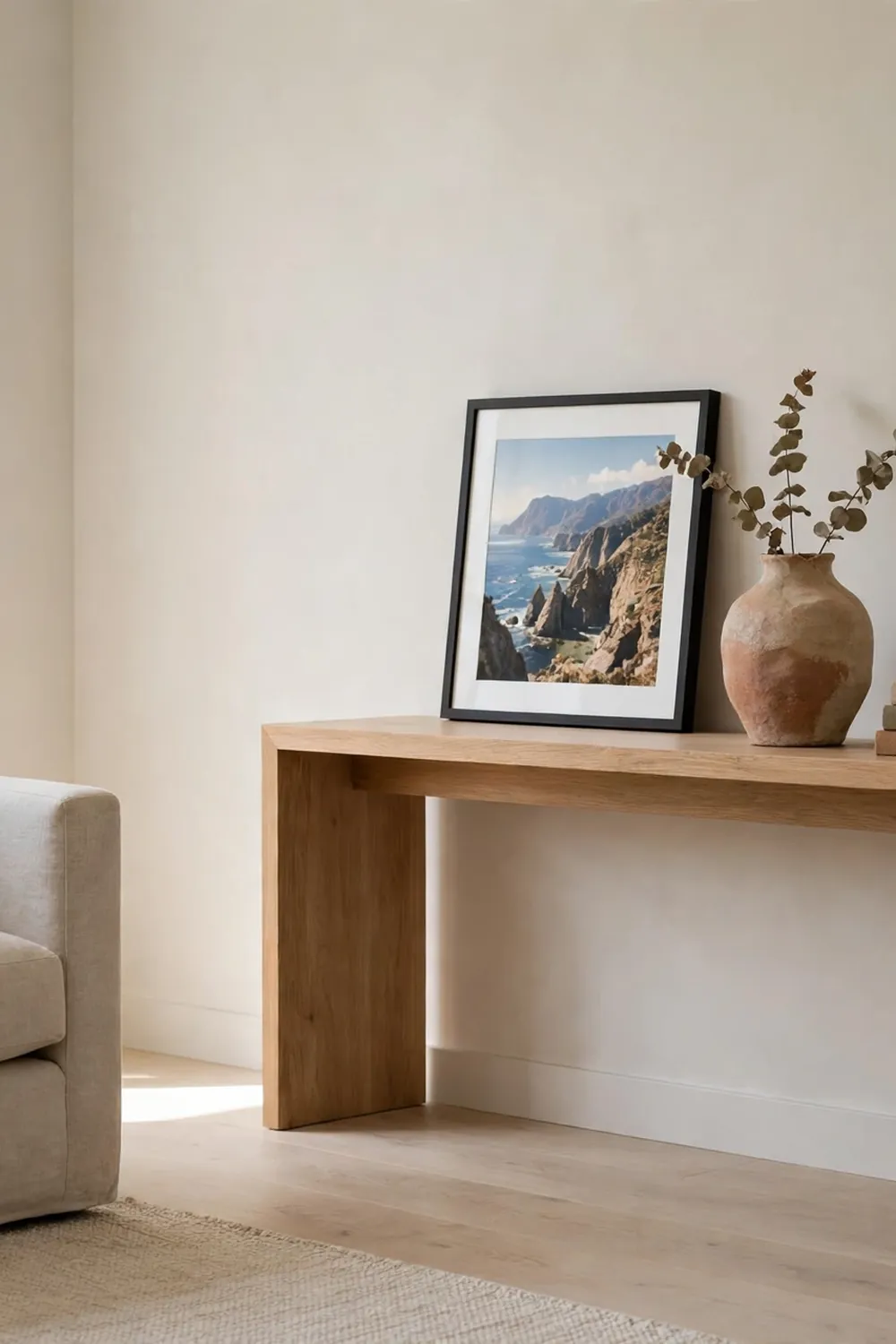
Rotate seasonal or sentimental pieces instead of displaying everything at once. Store the rest safely, and swap items when you want a refresh. This keeps the room feeling personal and fresh, without the slow build up of clutter that so often follows a move or a holiday.
Styling tips:
- Display three to five favorites, no more.
- Rotate pieces seasonally for a fresh look.
- Give each displayed item space around it.
A minimalist living room is not finished in a weekend, and it does not need to be. Start with the palette, clear the clutter, and add one idea at a time. Soon the room will feel lighter, calmer, and easier to live in. That quiet feeling is the real point of minimalist living room decor ideas, a home that supports your life instead of competing with it. Apartment Therapy offers more calm home inspiration at Apartment Therapy.
