
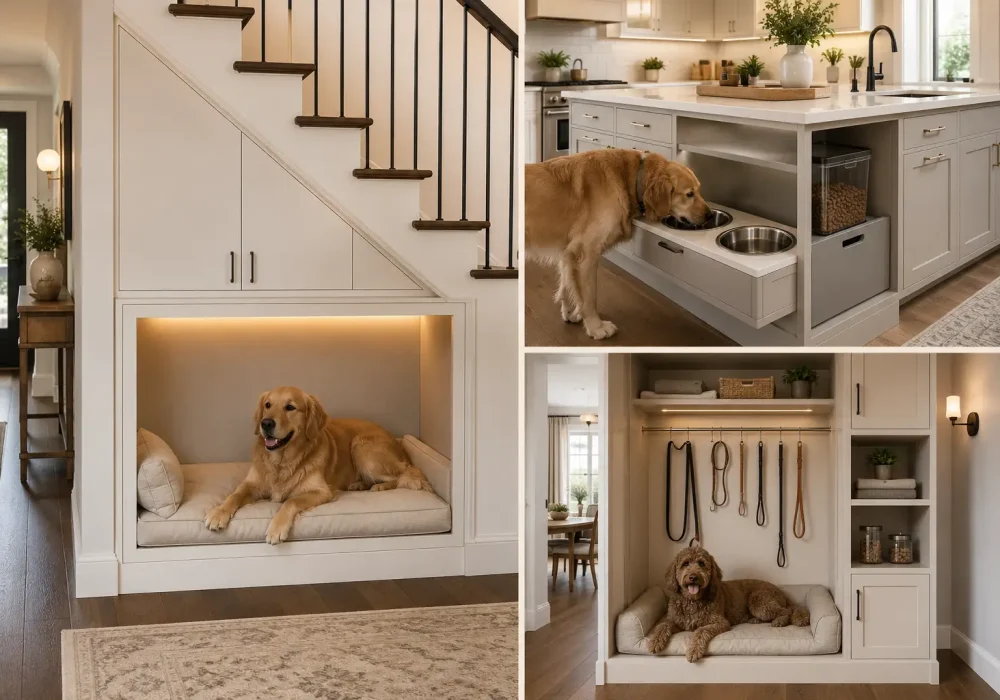
A dog deserves a comfortable spot of their own, but that doesn’t mean you need a spare room to create one. In a smaller home, the trick is to work with the space you already have and make every corner count.
Modern dog spaces can be both practical and beautiful. A built in nook beneath the stairs, a discreet bed beside the sofa, or a feeding station tucked into the kitchen can give your pet a dedicated place without making the home feel cluttered.
The best part is that these ideas don’t have to look like traditional pet furniture. With thoughtful layouts, clean lines, smart storage, and easy care materials, your dog’s corner can feel like a natural part of your interior.
Smart Dog Corner Ideas That Make Every Inch Count
These ideas show how unused areas, built in furniture, and compact layouts can become comfortable spaces for your dog while keeping the rest of the home organized. From hidden sleeping nooks to integrated feeding stations, each approach combines everyday pet needs with a polished modern look.
Also Read: 12 Corner Wall Gallery Ideas for a More Artful Home Style
Also Read: 13 Modern Breakfast Nook Ideas for a Cozy Dining Corner
1. Turn an Unused Kitchen Island Section Into a Built In Feeding Station
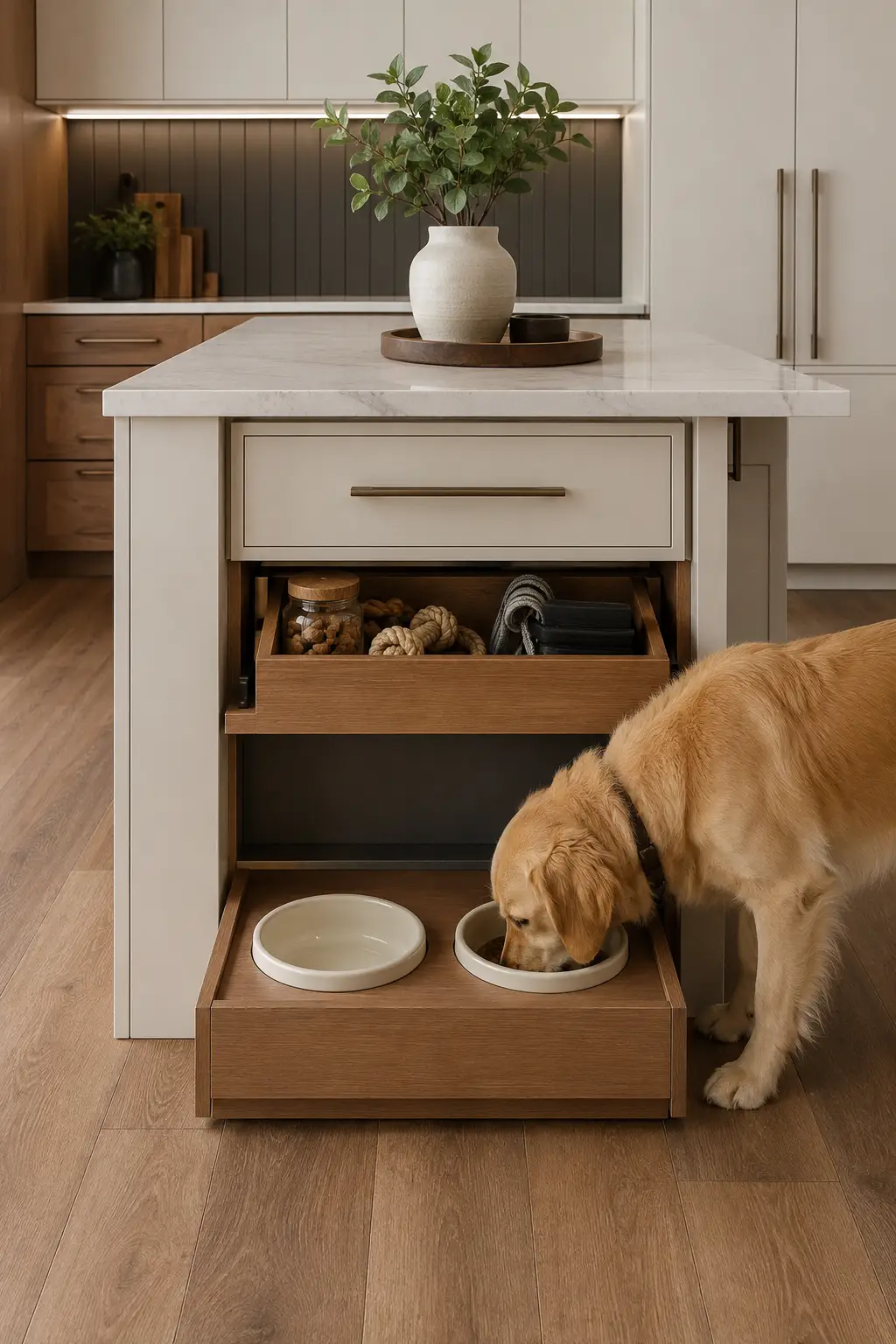
A kitchen island can do much more than provide extra counter space. By using the lower section for your dog’s bowls, you can create a dedicated feeding area that feels like part of the kitchen. A pull out drawer keeps the bowls neatly positioned when needed and tucked away when the area isn’t being used.
This setup can also make feeding supplies much easier to organize. Use the drawer above the bowls for treats, food containers, leashes, and small pet accessories, while keeping the bowls at a comfortable height for your dog. Matching the cabinetry to the rest of the kitchen helps the entire station look intentional rather than added on later.
For smaller homes, this is a particularly useful way to combine everyday functions without taking up extra floor space. The feeding station stays close to where you prepare meals, while the rest of the kitchen remains uncluttered. Choose durable finishes and easy to clean surfaces so the area can handle spills, crumbs, and regular use.
Pro Tip: Use removable stainless steel or ceramic bowls that fit securely inside the drawer so you can lift them out quickly for cleaning.
2. Hide a Dog Crate Inside a Sleek Custom Cabinet Wall
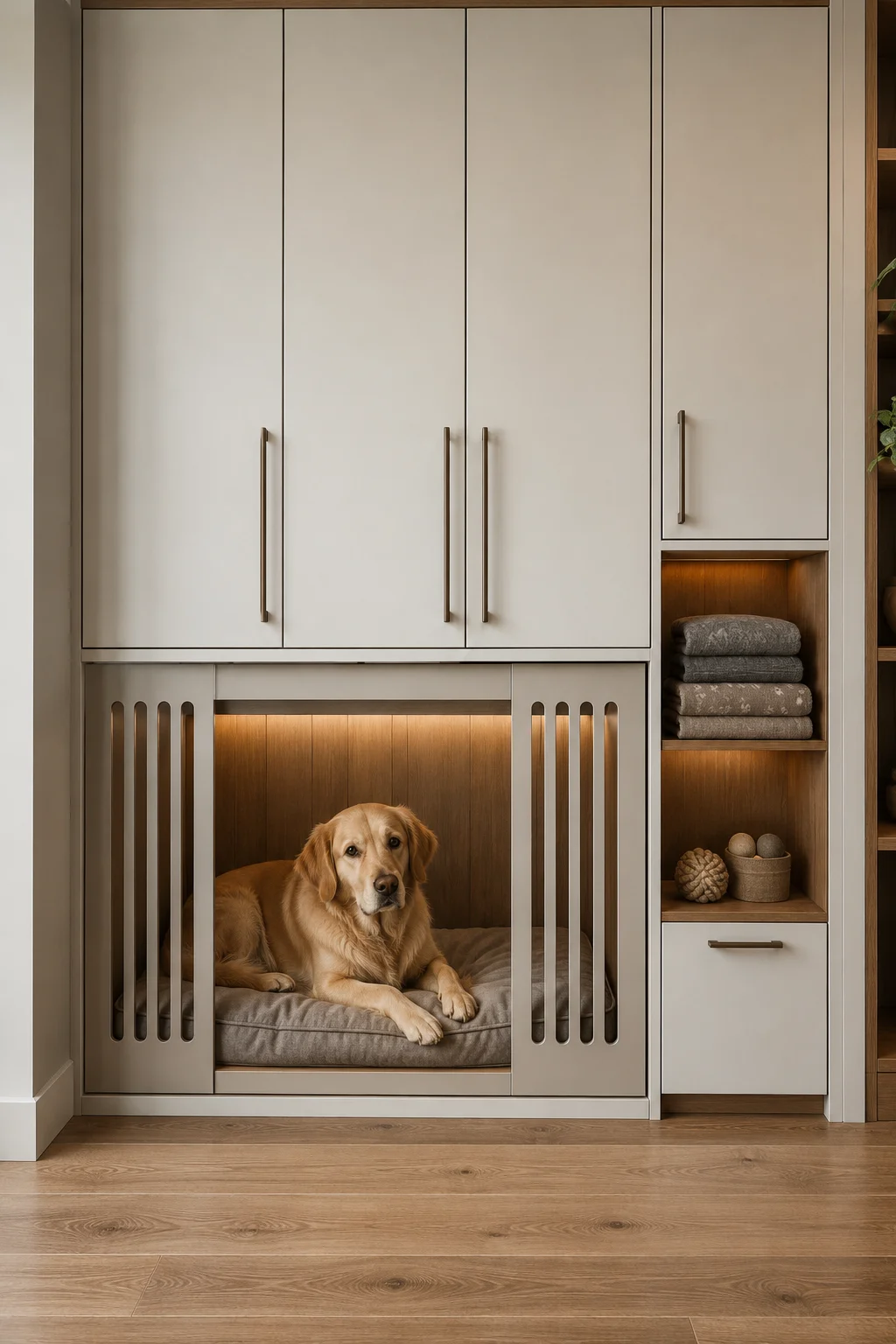
A dog crate doesn’t have to stand out as a separate piece of pet furniture. Integrating it into a custom cabinet wall creates a dedicated retreat while keeping the surrounding space clean and polished. A recessed opening with comfortable bedding gives your dog a secure place to relax without disrupting the modern look of the room.
For a more refined finish, continue the same cabinetry around the crate so the entire wall reads as one cohesive furniture piece. Ventilated panels can provide airflow while adding an architectural detail to the design. Nearby shelves or closed cabinets can then hold blankets, toys, grooming supplies, and other everyday pet essentials.
This idea works particularly well in smaller homes because it combines your dog’s resting area with storage instead of using separate furniture. The built in design also keeps the floor around the pet zone open and easier to maintain. Choose finishes that match your existing interior so the crate feels like a natural part of the home’s architecture.
Pro Tip: Make sure the built in enclosure has generous ventilation and enough interior space for your dog to stand, turn around, and lie down comfortably.
3. Transform a Deep Storage Drawer Into a Comfortable Dog Bed
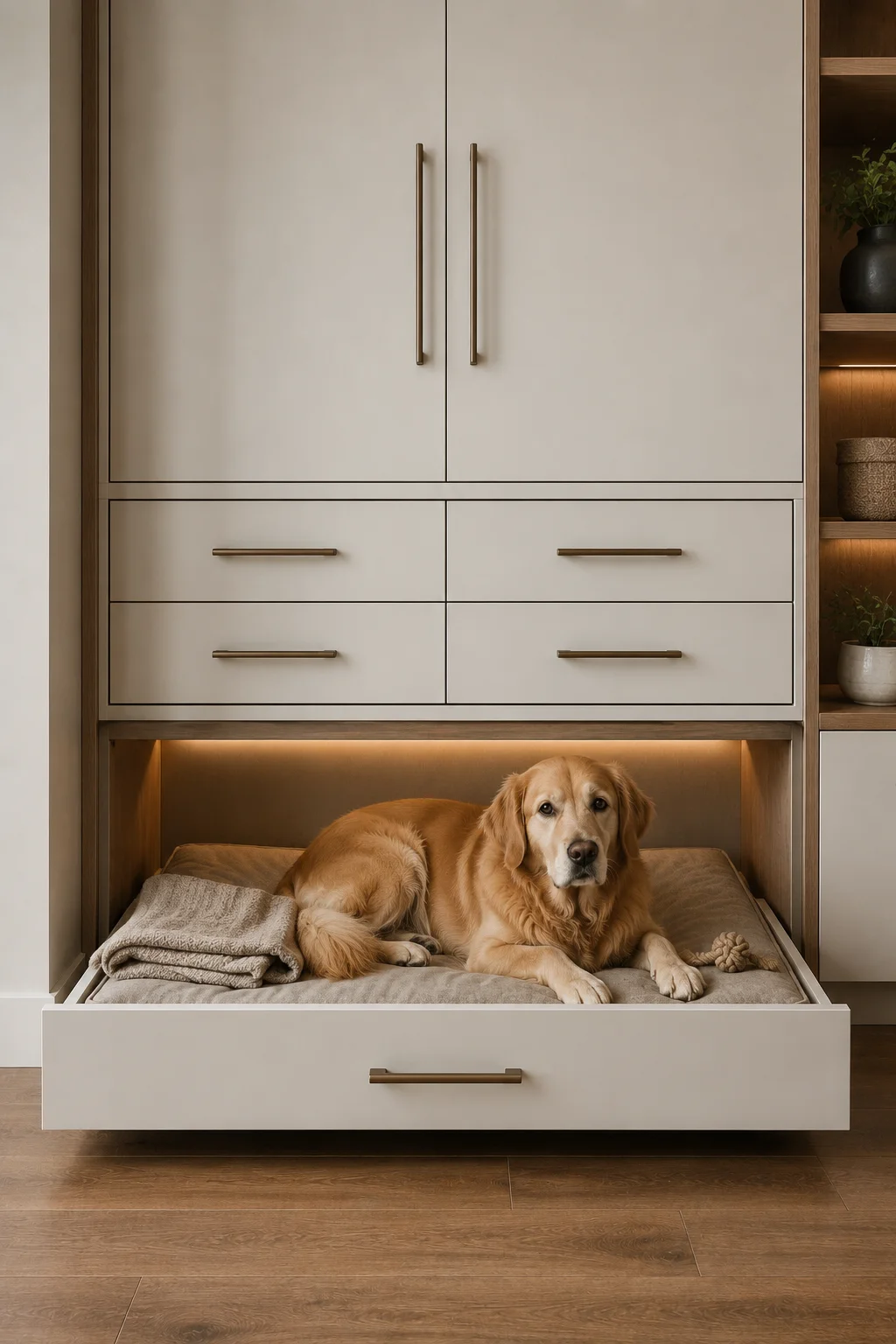
A large lower drawer can become a clever sleeping space when floor area is limited. Instead of adding another piece of furniture, use the bottom section of a built in cabinet to create a pull out dog bed. When extended, it gives your pet a comfortable place to settle while keeping the overall furniture footprint small.
The surrounding cabinetry can provide plenty of hidden storage for blankets, toys, grooming supplies, and other essentials. A soft washable mattress makes the drawer comfortable, while a recessed design keeps the bed visually connected to the rest of the furniture. Warm integrated lighting can also make the nook feel more inviting without adding bulky accessories.
This idea is especially useful in bedrooms, living areas, or compact apartments where every inch matters. When the bed is designed as part of the cabinetry, it can look like a regular storage unit when closed. That makes it easier to maintain a clean, organized interior while still giving your dog a dedicated place to rest.
Pro Tip: Use heavy duty drawer hardware designed to support the combined weight of the mattress and your dog, and leave enough clearance for comfortable movement.
4. Create a Mudroom Dog Station With Storage and a Resting Nook
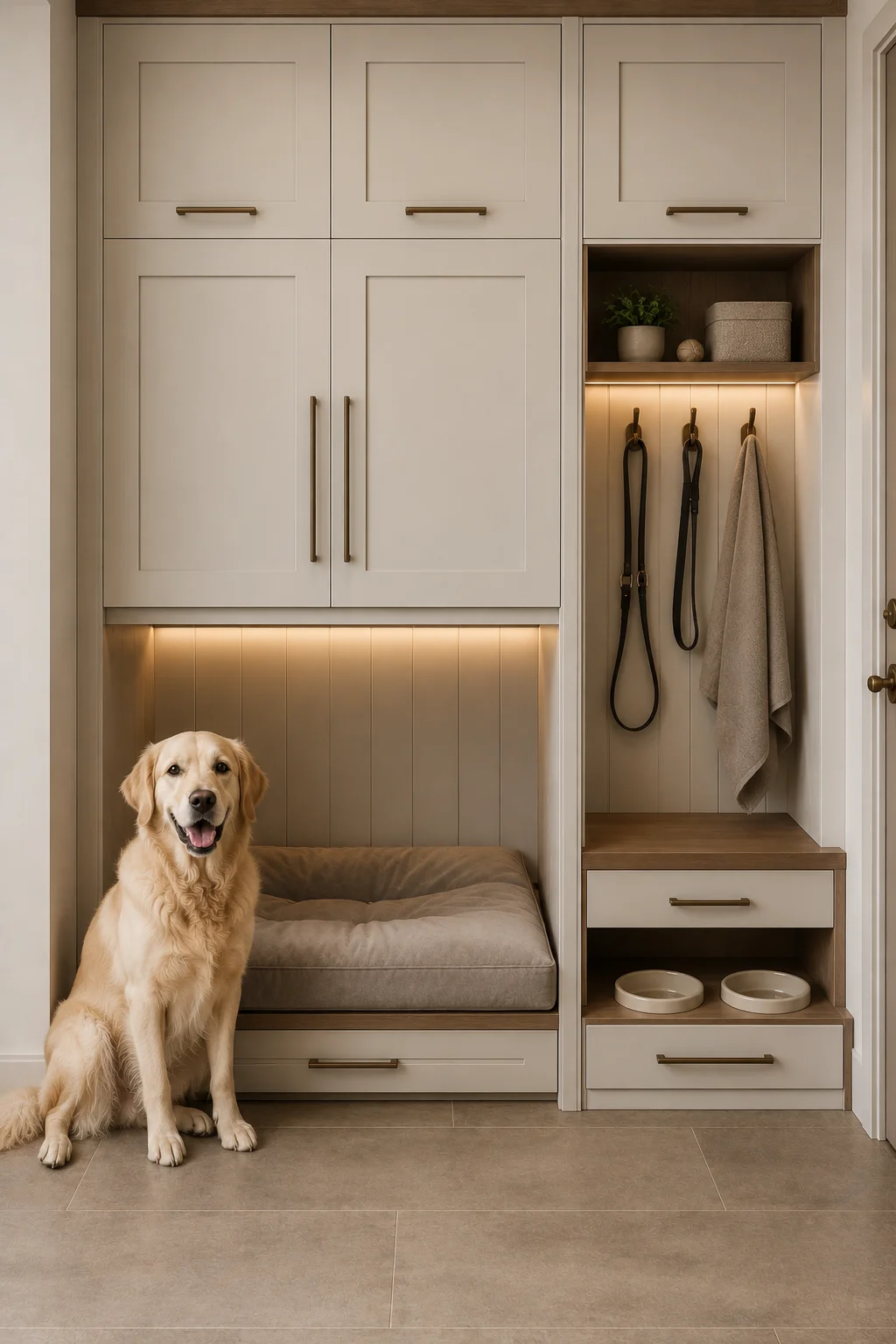
A mudroom is one of the most practical places to give your dog a dedicated corner. Instead of scattering leashes, towels, bowls, and toys around the entryway, combine them into one organized built in station. A comfortable bed at the bottom creates an inviting resting spot while keeping everything your dog needs close at hand.
Use the surrounding cabinetry for closed storage and reserve a small open section for frequently used accessories. Hooks can hold leashes and collars, while a lower drawer keeps grooming supplies and toys out of sight. Adding the feeding bowls nearby makes the station even more useful for everyday routines.
This setup works particularly well in a small home because one compact area can handle several pet-related tasks. Durable flooring and easy to clean cabinetry also make the space practical after walks or rainy days. Keep the finishes consistent with the rest of the entryway so the dog station feels built into the home’s design rather than added as an afterthought.
Pro Tip: Choose moisture resistant flooring around the station and keep a washable towel within easy reach for muddy paws.
5. Build a Dedicated Dog Wash Area Into the Utility Room
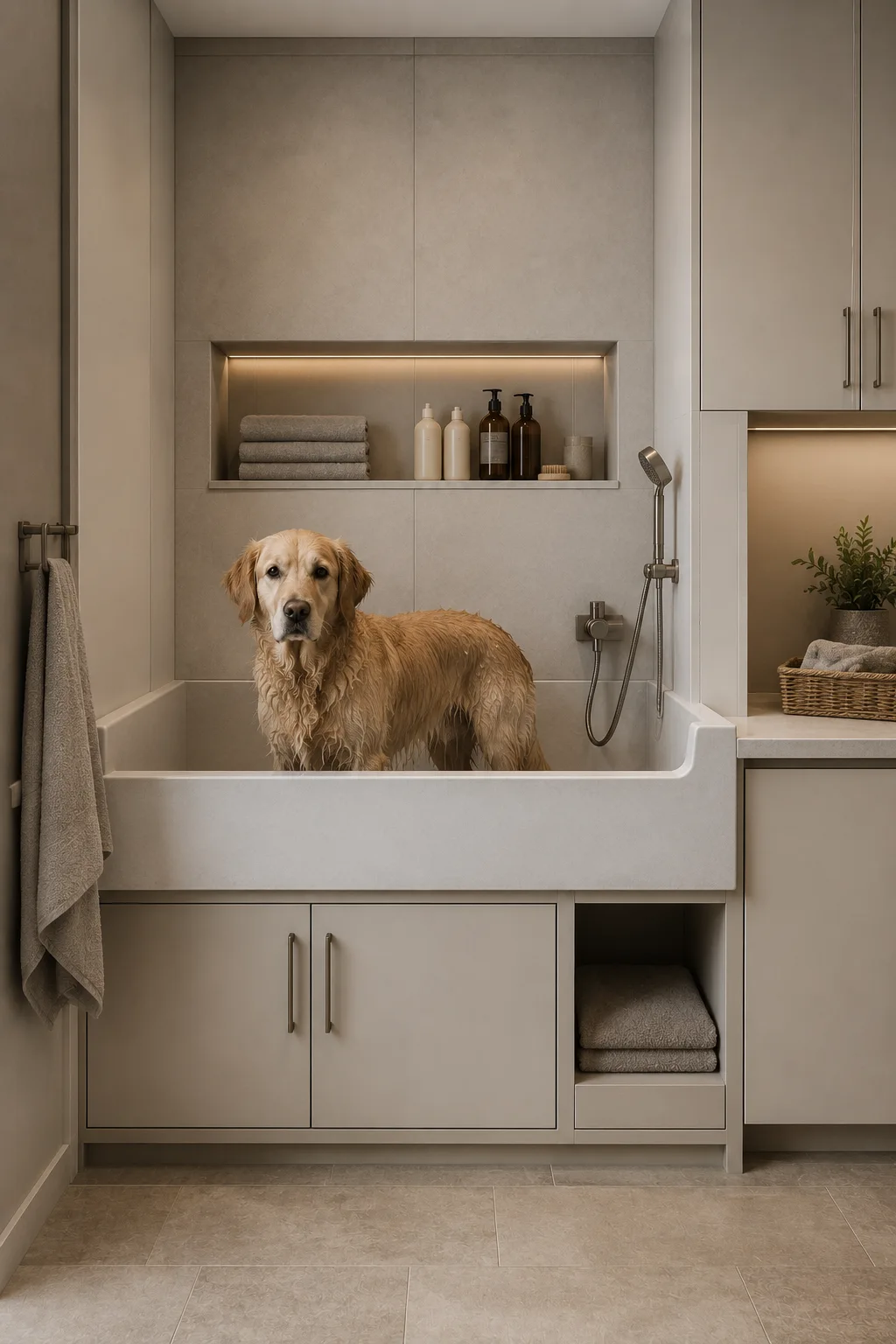
A compact utility or laundry room can be the perfect place for a dedicated dog wash station. Instead of carrying a muddy dog through the house, a built in washing area keeps cleanup contained and gives your pet a practical space for baths. A raised basin also makes the process easier on your back.
Keep the design simple with durable wall surfaces, a handheld shower, and a recessed niche for towels and grooming products. Closed cabinets underneath can store shampoos, brushes, towels, and other supplies without leaving the area cluttered. Neutral finishes and clean cabinetry help the station blend naturally into a modern home.
This setup is especially useful for homes with dogs that spend a lot of time outdoors. Easy to clean surfaces make everyday maintenance much simpler, while the nearby storage keeps everything within reach when bath time arrives. With thoughtful planning, even a small utility area can handle the entire routine without feeling like a commercial wash station.
Pro Tip: Add a textured, slip resistant surface inside the wash basin to give your dog more secure footing during bath time.
6. Integrate a Dog Nook Into the Bottom of a Media Wall
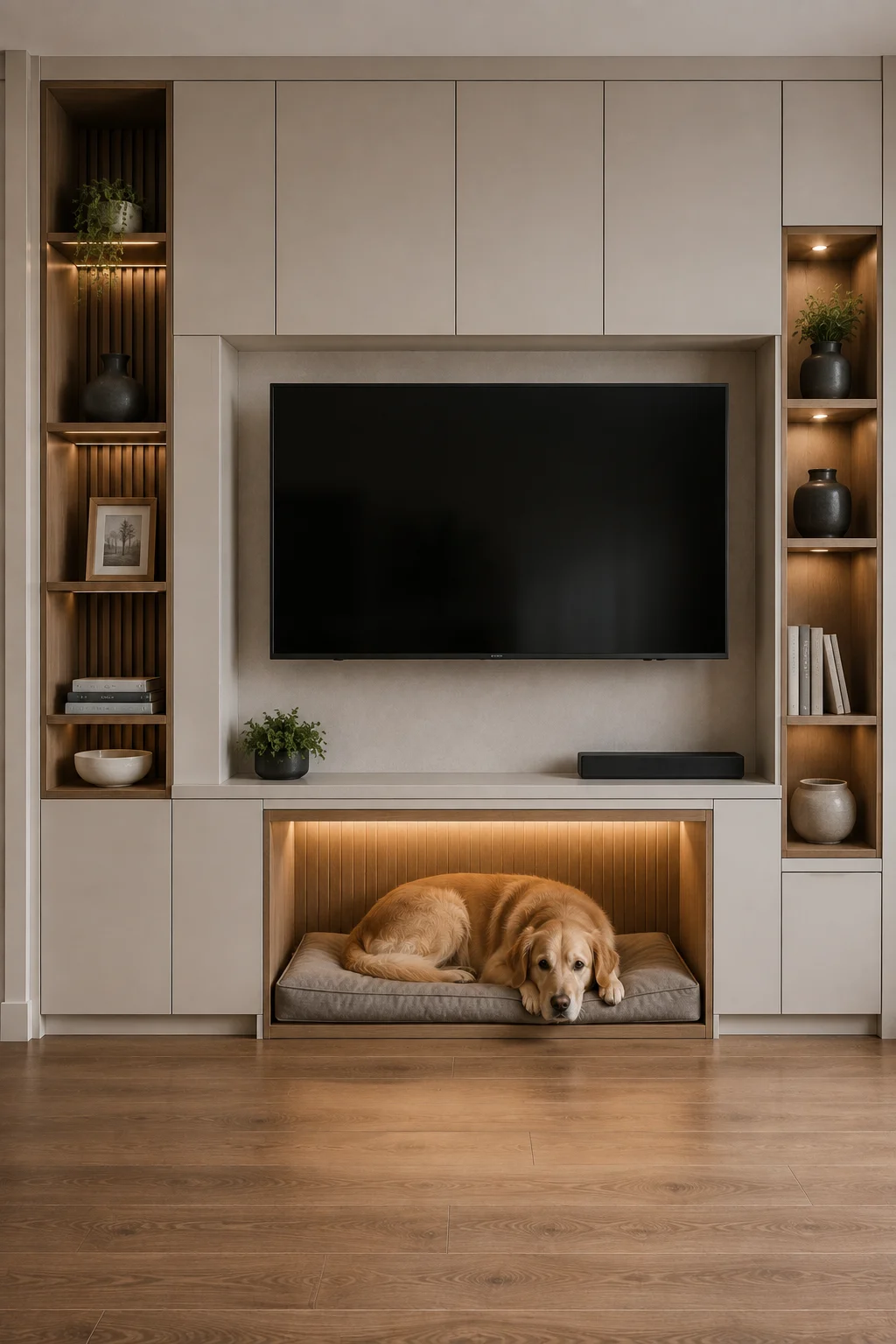
A media wall can become much more useful when the lower section doubles as a dedicated resting space for your dog. Instead of placing a separate bed in front of the television, reserve a recessed opening beneath the screen and design it as a comfortable built in nook. This keeps the floor clear while giving your pet a spot close to the family.
Continue the same cabinetry and finishes around the nook so it feels like part of the overall furniture design. A soft washable cushion, warm wood backing, and subtle integrated lighting can make the space feel cozy without making it visually busy. Closed cabinets on either side can also hide toys, blankets, and other pet supplies.
This idea works especially well in smaller living rooms where furniture needs to serve more than one purpose. The media wall handles entertainment, storage, and your dog’s sleeping area within one footprint. It also keeps the pet bed away from walkways, making the room feel more organized and easier to move through.
Pro Tip: Keep the dog nook away from direct heat sources and allow enough ventilation around the opening so the space stays comfortable during long periods of rest.
Also Read: 10 Cozy Corner Ideas That Transform Any Unused Space
Also Read: 15 Coffee Bar Ideas to Create a Stylish Kitchen Corner
7. Turn an Oversized Console Into a Dedicated Dog Retreat
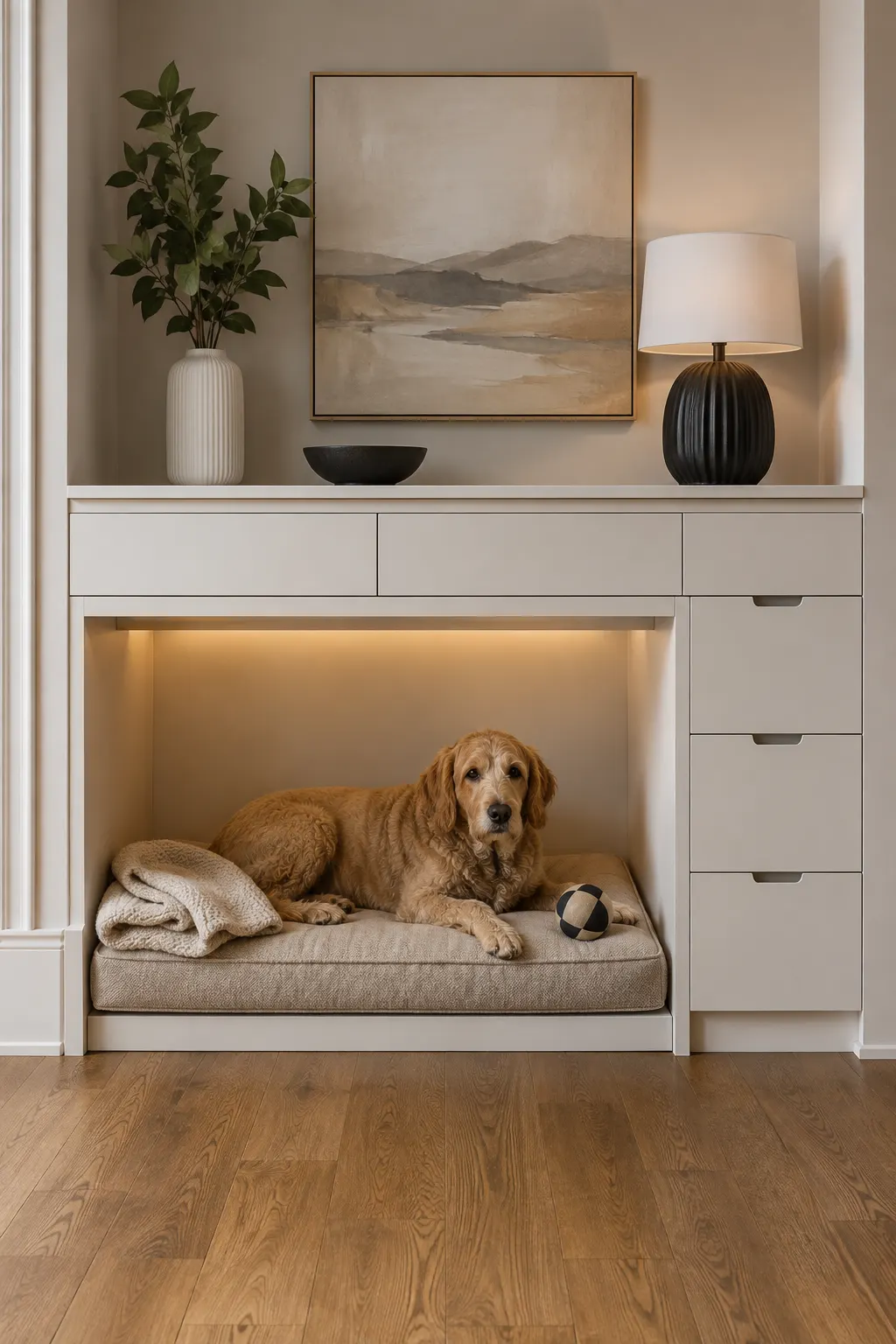
An oversized console can do double duty when its lower section is designed around your dog’s needs. Instead of filling the entire base with closed storage, leave a wide recessed opening for a comfortable bed. This creates a dedicated retreat while keeping the furniture useful for the rest of the home.
Choose cabinetry that matches the surrounding interior and keep the dog nook simple. A thick washable cushion, soft blanket, and subtle integrated lighting can make the space feel comfortable without making it look overly decorated. The countertop can still be used for artwork, lighting, or everyday decor, allowing the furniture to serve both practical and decorative purposes.
This idea is especially helpful in smaller homes because it combines pet furniture with an existing storage solution. The recessed design also keeps the dog bed from extending into walkways, which helps the room feel more open. With the right proportions, the nook can look like a deliberate architectural feature rather than an adapted piece of furniture.
Pro Tip: Leave enough clearance above the cushion for your dog to sit and stand comfortably, especially if the nook is designed for a larger breed.
8. Make the Empty Space Beneath the Stairs Work for Your Dog
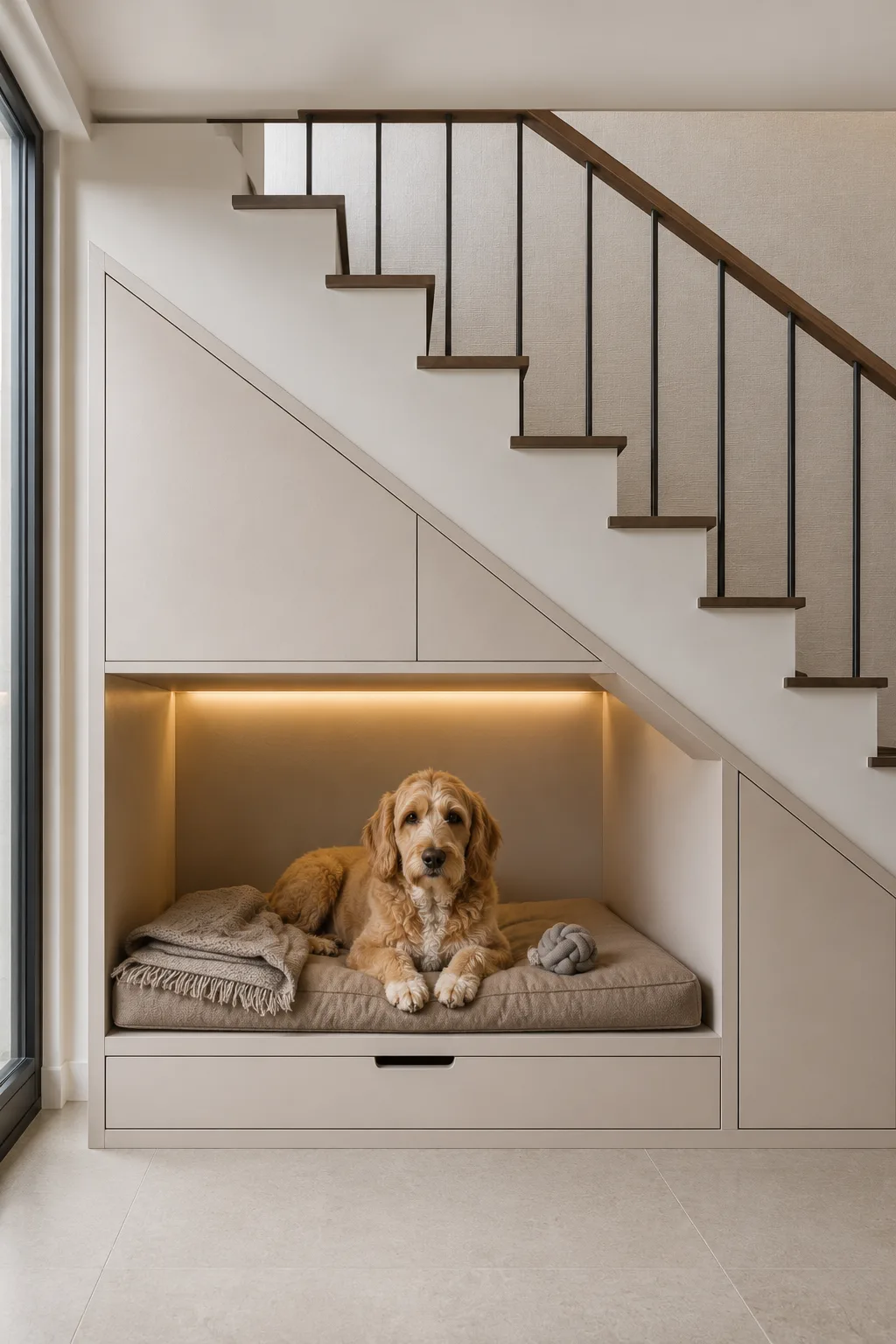
The space beneath a staircase is often difficult to furnish, but it can become a surprisingly comfortable dog retreat. A custom built in nook can follow the shape of the stairs while creating a dedicated sleeping area underneath. This makes use of an awkward architectural space without taking additional room from the living area.
Keep the design clean with a simple upholstered cushion, smooth cabinetry, and subtle warm lighting inside the nook. The lower section can also include a drawer for blankets, toys, or grooming supplies, giving the space more practical value. Matching the surrounding staircase finishes helps the dog corner feel like an intentional part of the home’s architecture.
This setup is particularly effective in compact homes because it turns otherwise unusable floor space into something functional. The recessed position also gives your dog a quieter place to relax while keeping the main walking path open. With thoughtful proportions, the nook can look polished enough to feel like a custom interior feature.
Pro Tip: Before building the nook, measure your dog while standing and lying down so the finished space provides comfortable clearance as they grow or change position.
9. Use the Space Beside Your Sofa for a Dedicated Dog Bed
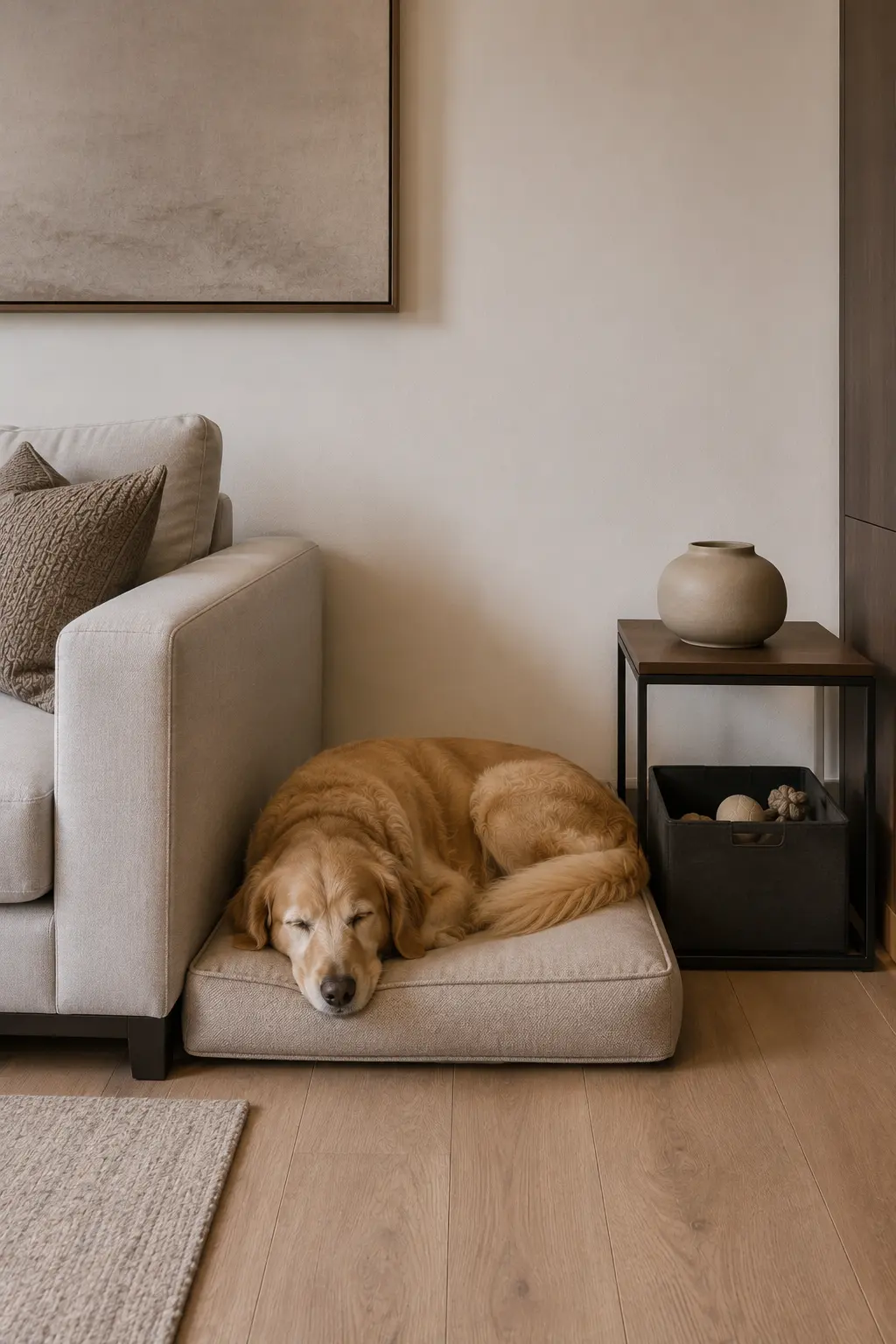
The narrow space beside a sofa can become a comfortable dog corner without making the living room feel crowded. A low profile bed tucked neatly against the sofa gives your dog a place to rest while keeping them close to the family. This works especially well when there isn’t enough room for a larger standalone pet station.
Choose a rectangular cushion with a washable cover and a fabric that complements the sofa. A small side table beside the bed can provide a little storage underneath for toys, while keeping the upper surface available for everyday decor. Matching the colors and textures to the existing furniture makes the dog corner feel intentional rather than separate.
This arrangement is a simple choice for apartments and compact living rooms because it uses a small piece of otherwise overlooked floor space. Keeping the bed close to the sofa also lets your dog stay near you without taking over the seating area. A well sized cushion can make the corner feel comfortable while still maintaining a clean, modern appearance.
Pro Tip: Leave enough space between the dog bed and nearby furniture for your dog to enter and leave easily without bumping into tables or chair legs.
10. Design a Compact Feeding Wall That Keeps Pet Supplies Organized
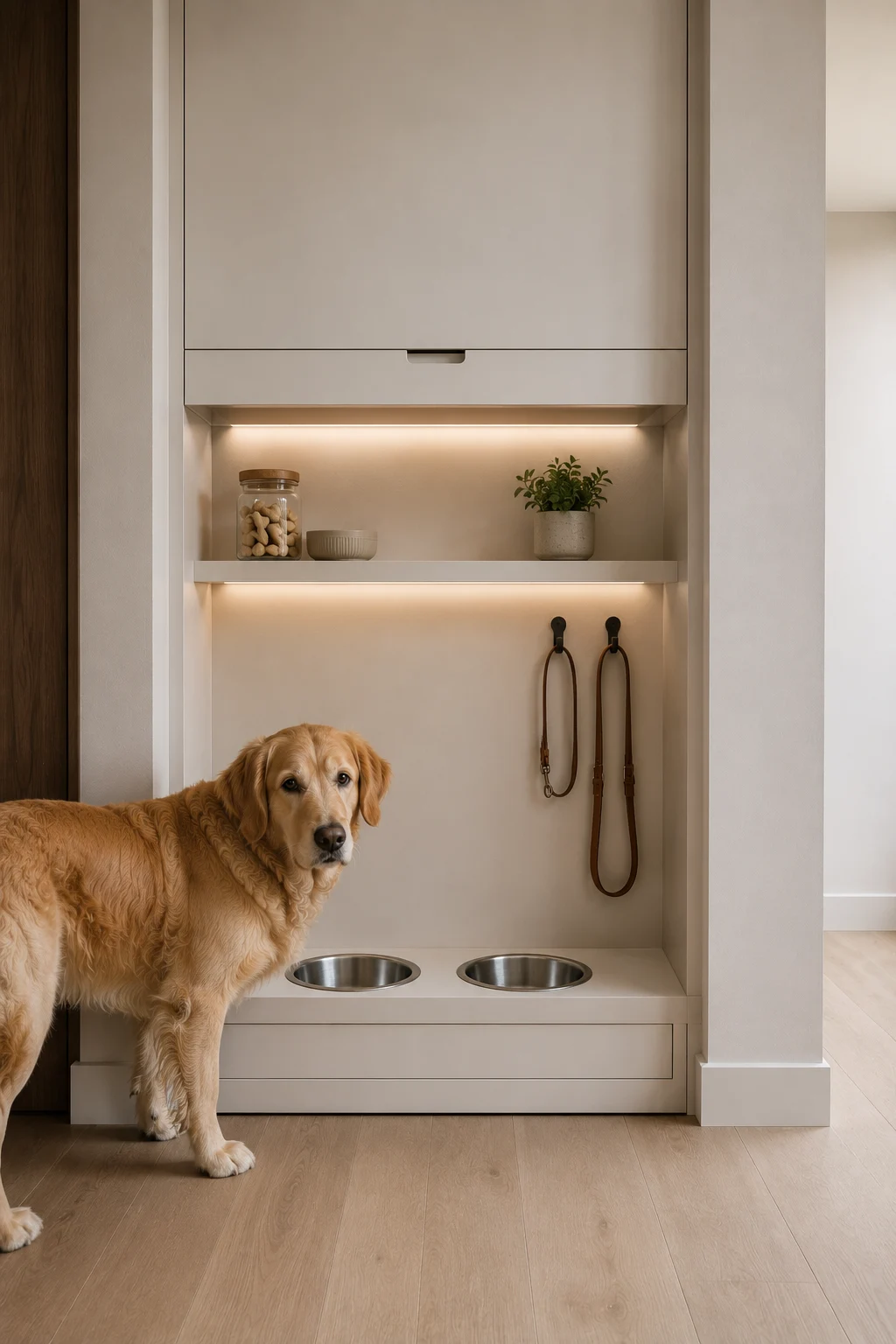
A narrow wall can become a highly functional feeding station without taking up valuable floor space. Built in bowls can sit at the bottom while the upper sections provide room for treats, food containers, and everyday accessories. This creates a dedicated area for your dog while keeping loose supplies from spreading throughout the home.
Use a recessed niche with clean cabinetry and a small shelf for items you reach for regularly. Hooks can hold leashes and collars, while closed storage above keeps larger supplies hidden from view. Stainless steel bowls work particularly well in this type of setup because they are durable, easy to remove, and simple to keep clean.
This approach is a smart choice for smaller homes because everything stays concentrated in one compact footprint. It can fit naturally into an entryway, kitchen, hallway, or mudroom without competing with the surrounding decor. Matching the cabinetry to the room also helps the station look more like custom furniture than a traditional pet setup.
Pro Tip: Place a washable tray or removable liner beneath the bowls to protect the cabinetry from water spills and food crumbs.
11. Build a Vertical Pet Station to Keep Small Spaces Organized
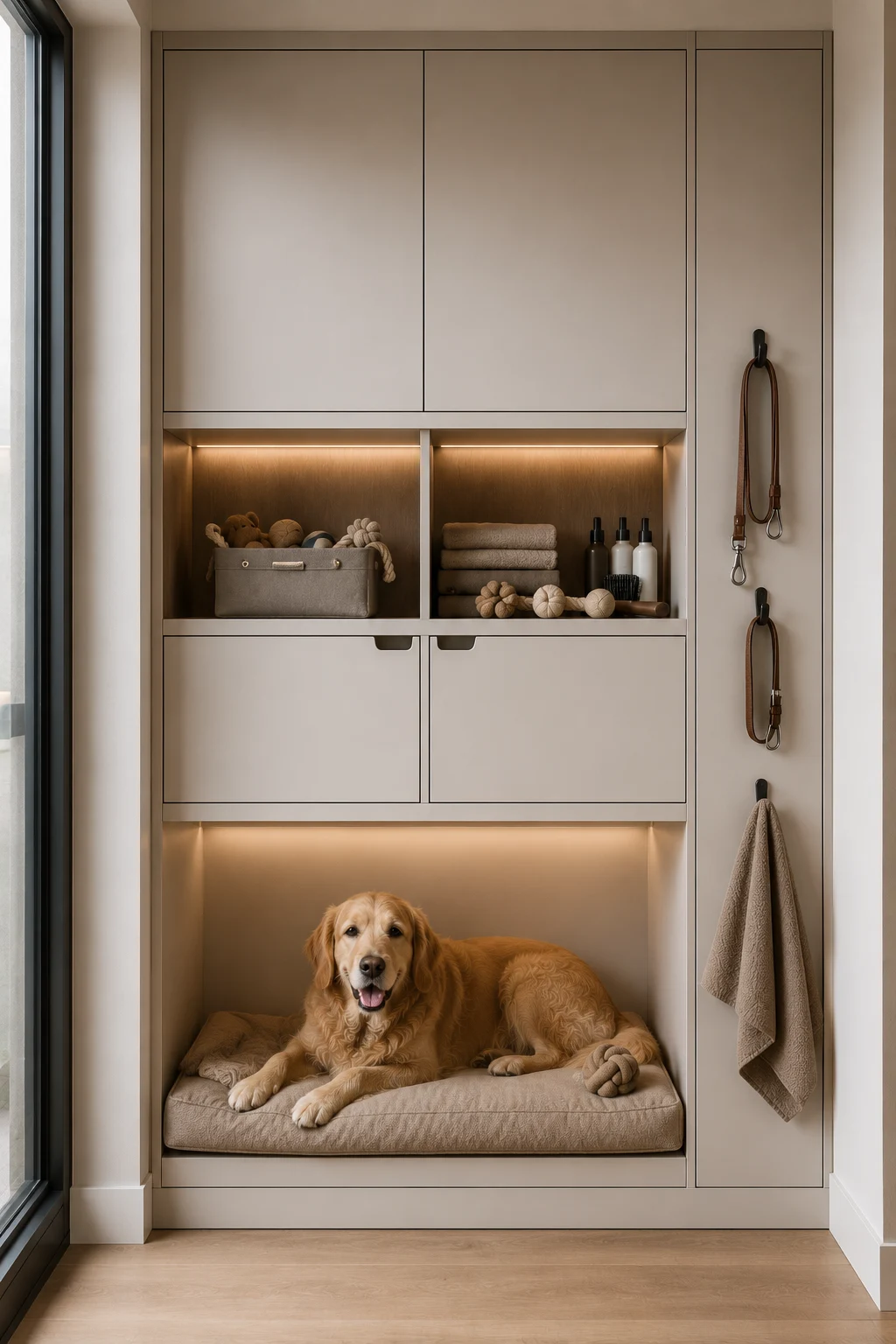
When floor space is limited, look upward and turn an unused wall into a complete dog station. A tall built in unit can combine a comfortable sleeping nook with storage for toys, blankets, grooming supplies, and everyday accessories. This keeps pet essentials contained while making the most of a narrow footprint.
Use closed cabinets for items you don’t want on display and open shelves for things you reach for regularly. Hooks along the side can hold leashes, collars, and towels, while warm integrated lighting gives the station a more finished appearance. Keep the dog bed at the bottom so your pet has an easy, comfortable place to settle without climbing.
This layout is especially useful in entryways, hallways, mudrooms, or small apartments where every inch needs to work harder. Because the storage rises vertically, you can create plenty of organization without pushing furniture farther into the room. Matching the cabinetry to your home’s existing finishes makes the entire station feel intentional and built in.
Pro Tip: Store frequently used items between waist and shoulder height so leashes, towels, and grooming supplies are easy to grab when you’re heading out with your dog.
12. Raise the Dog Bed to Create Hidden Storage Below
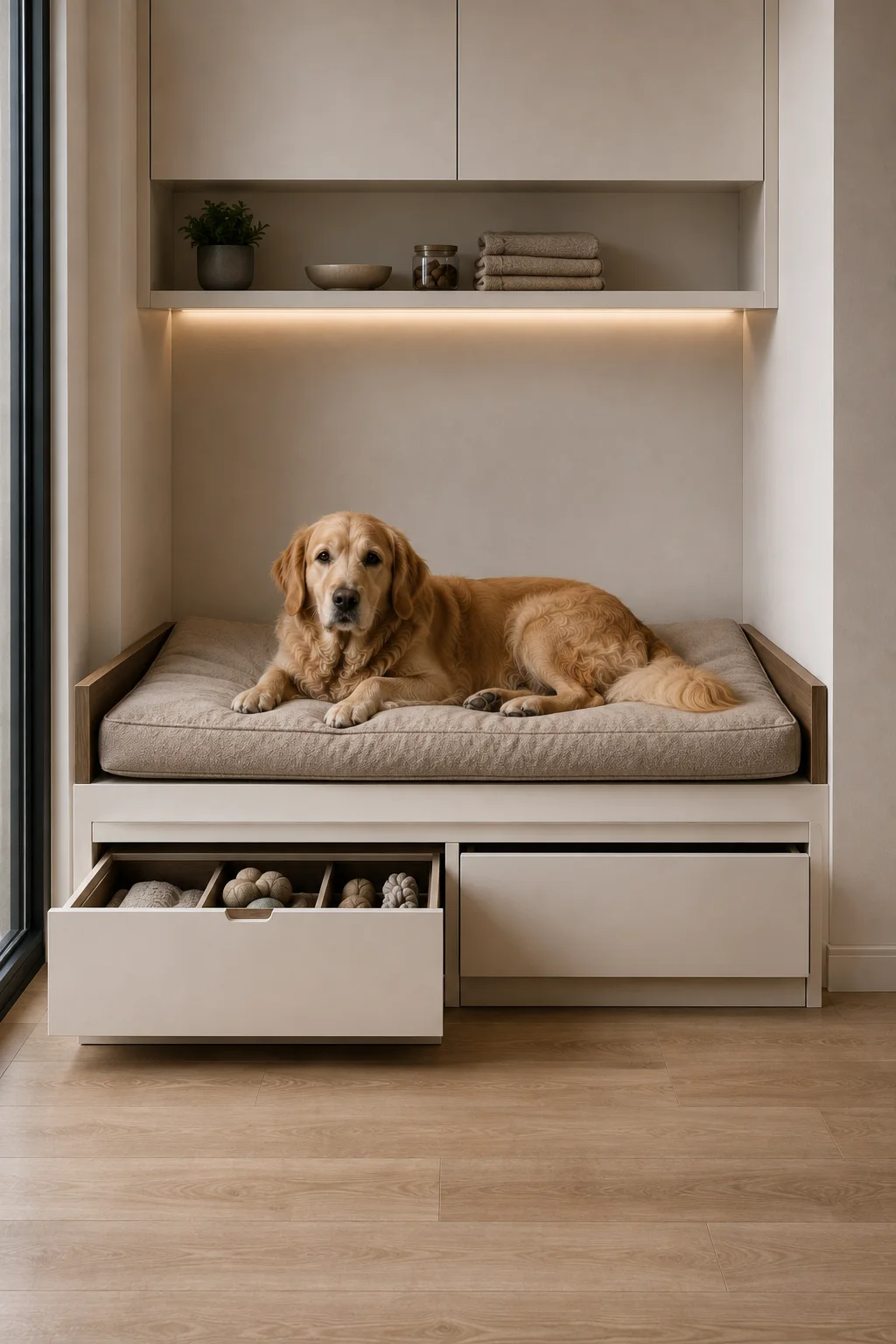
An elevated dog bed can make a small pet corner much more practical by combining sleeping space with useful storage. Instead of allowing the bed to occupy floor space on its own, build it into a low platform with drawers underneath. The raised design keeps the sleeping area defined while giving you room to organize everyday pet supplies.
Use deep drawers for blankets, toys, grooming products, and spare bedding, and consider adding internal dividers to keep smaller items organized. A thick washable cushion can make the elevated platform comfortable, while a small shelf above can hold treats or frequently used accessories. Keeping the cabinetry in the same finish as the surrounding furniture creates a clean, built in appearance.
This idea is particularly effective in small bedrooms, hallways, or living areas where storage is always at a premium. Everything your dog needs can stay close to their sleeping space without creating piles of pet supplies around the room. The result is a compact setup that feels more like custom furniture than conventional pet equipment.
Pro Tip: Choose smooth, easy glide drawers with sturdy hardware so you can access heavier bags of treats, blankets, and other supplies without struggling.
13. Create a Refined Dog Lounge Within a Custom Built In Wall
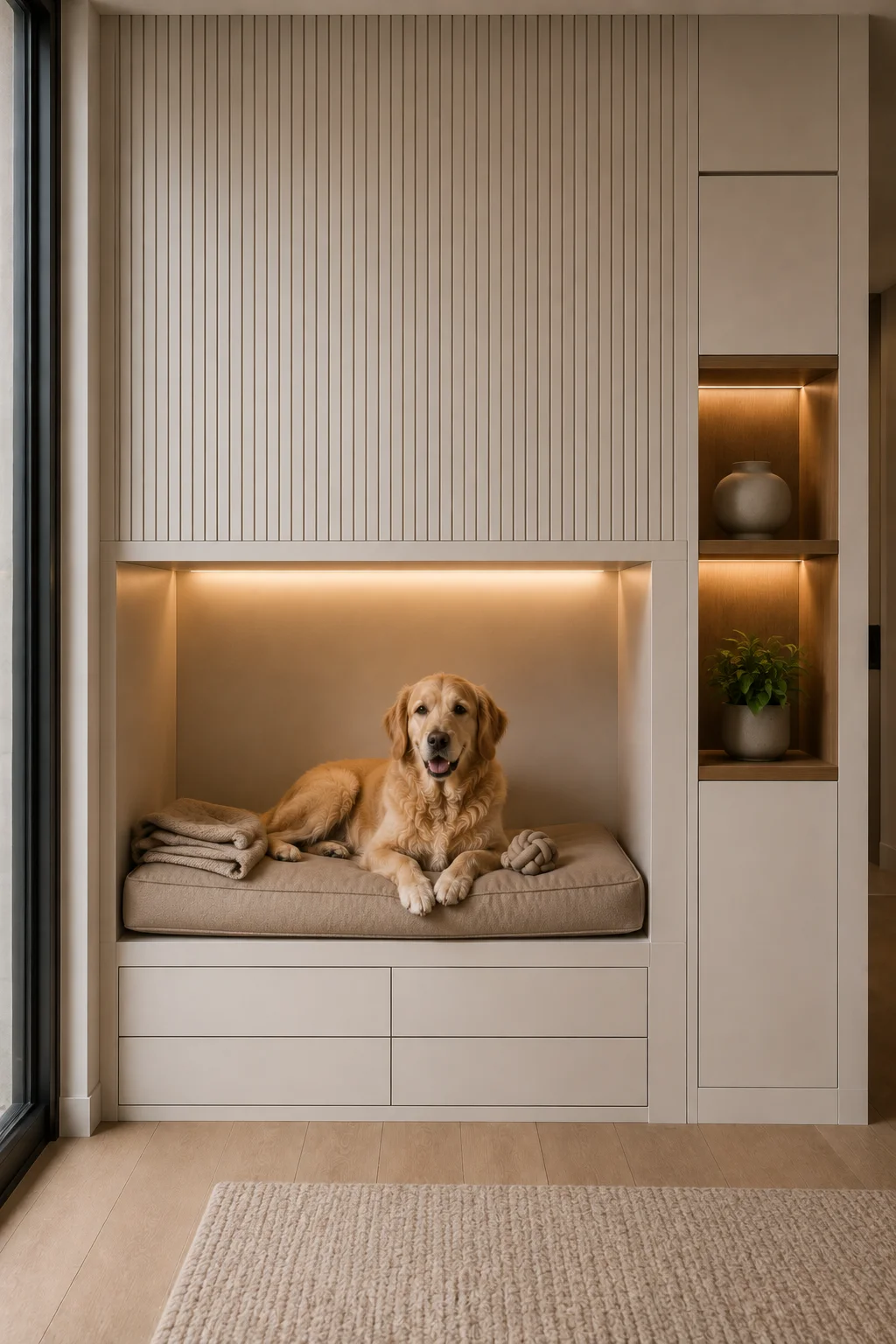
A dedicated dog lounge can turn an ordinary section of built in cabinetry into a comfortable retreat that feels fully connected to the home. Instead of using a separate pet bed, create a recessed sleeping area with a generous cushion and enough room for your dog to stretch out. Clean architectural lines keep the corner looking polished and contemporary.
Use the surrounding wall for practical storage while keeping the sleeping area visually calm. Closed drawers underneath can hold toys and blankets, while open shelving nearby can display carefully chosen decor. Soft integrated lighting inside the nook adds warmth and makes the space feel inviting without relying on excessive accessories.
This type of built in lounge is a great option when you want your dog’s space to feel intentional rather than temporary. It can work in a living room, hallway, bedroom, or entryway while taking up very little additional floor space. Matching the cabinetry, flooring, and surrounding finishes creates a cohesive look that feels like part of the original interior design.
Pro Tip: Choose a durable upholstery fabric with a removable washable cover so the lounge can stay comfortable and easy to maintain over time.
Bringing Style and Function Together
Creating a dog corner in a small home doesn’t mean sacrificing style or valuable floor space. The strongest ideas use areas that already exist, such as cabinet bases, staircase voids, media walls, kitchen islands, and narrow entryway sections. With thoughtful planning, these overlooked spots can become comfortable, practical spaces that work naturally with your interior.
Whether you prefer a hidden sleeping nook, an organized feeding station, or a complete built in pet wall, the key is to design around your dog’s daily needs while keeping the surrounding home uncluttered. Choose durable materials, washable fabrics, smart storage, and proportions that suit your dog, and the result can feel less like pet furniture and more like a polished part of the home.
