
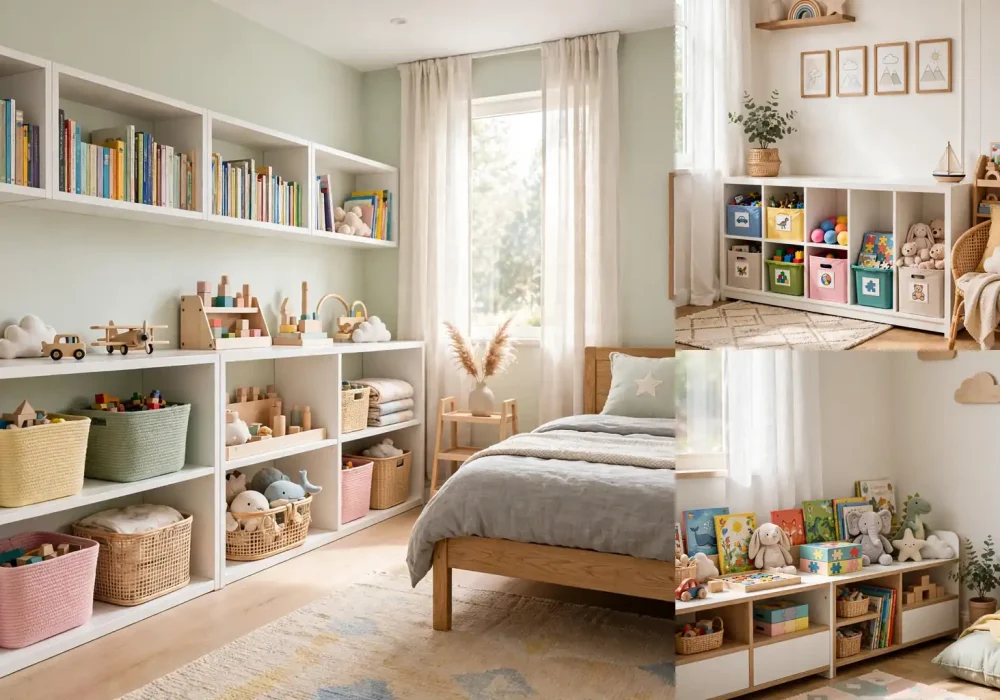
A kids room can go from tidy to total chaos in about ten minutes. One minute the blocks are in a neat pile, the next minute they are under the bed, behind the curtain, and mixed in with the socks. The good news is that a messy room is rarely a storage problem alone. It is usually a system problem, and the right kids room organization ideas can fix it without a full makeover or a big budget.
The best kids room organization ideas work with the way children actually play, dress, and learn. Storage needs to sit low enough for small hands to reach, labels need to make sense at a glance, and every toy, book, and outfit needs one clear home. When cleanup takes two minutes instead of twenty, children are far more likely to help, and parents are far less likely to dread the end of playtime.
In this guide you will find 11 kids room organization ideas that cover toys, books, clothes, art supplies, and homework, all in one tidy, playful space. Each idea comes with practical styling tips you can use this weekend, so pick a few favorites, start with the messiest corner, and build a room your child can enjoy and actually keep tidy.
How to Plan Kids Room Organization Ideas That Actually Stay Tidy
Before you buy a single bin, watch how your child uses the room for a few days. Notice where toys pile up, which books get read again and again, and where clothes land at bedtime. The busiest spots tell you exactly where storage belongs. A bin placed beside the play rug will get used far more often than a beautiful basket tucked across the room, and a low shelf near the bed will hold more books than a tall bookcase your child cannot reach.
Next, sort before you store. Pull everything out, keep what your child truly loves and uses, and pass along the broken, outgrown, and forgotten pieces. Kids room organization ideas work best when there is less to organize, because every item left behind earns a real home instead of being squeezed into an already full box. Aim for one clear category per container, so cleanup feels like matching, not sorting. For small rooms, the same zone thinking in our small bedroom organization ideas will help you fit sleep, play, and study into one calm layout.
Finally, build the system around your child, not around a perfect photo. Use picture labels for younger children and simple word labels for readers, keep daily items low and seasonal items high, and leave a little empty space in every bin so putting things away never feels like a puzzle. Experts at Homes and Gardens recommend the same budget friendly approach, start by decluttering, repurpose what you already own, and add inexpensive helpers like drawer dividers and under bed boxes only where they solve a real problem.
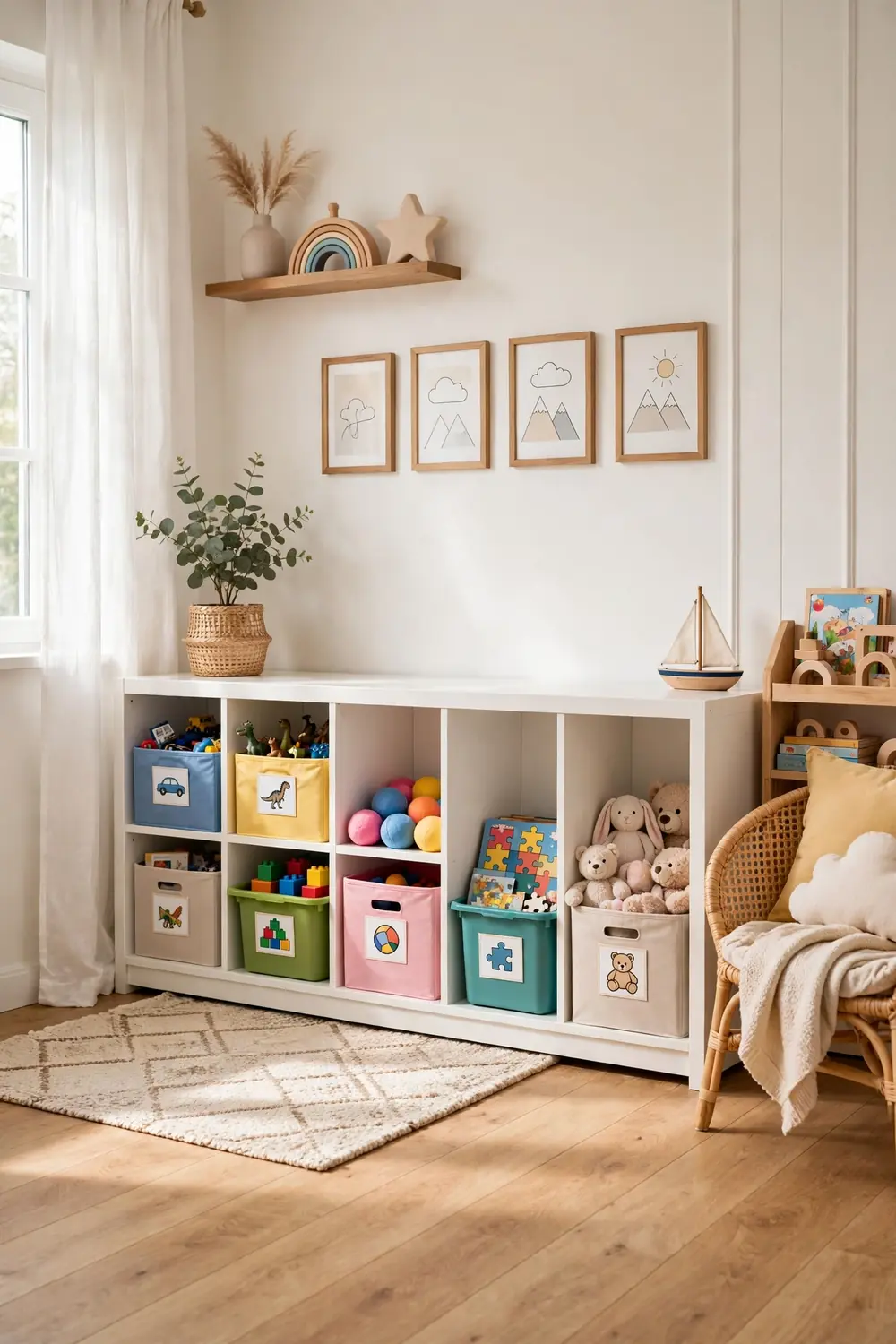
1. Labeled Toy Bins Your Kids Can Actually Use
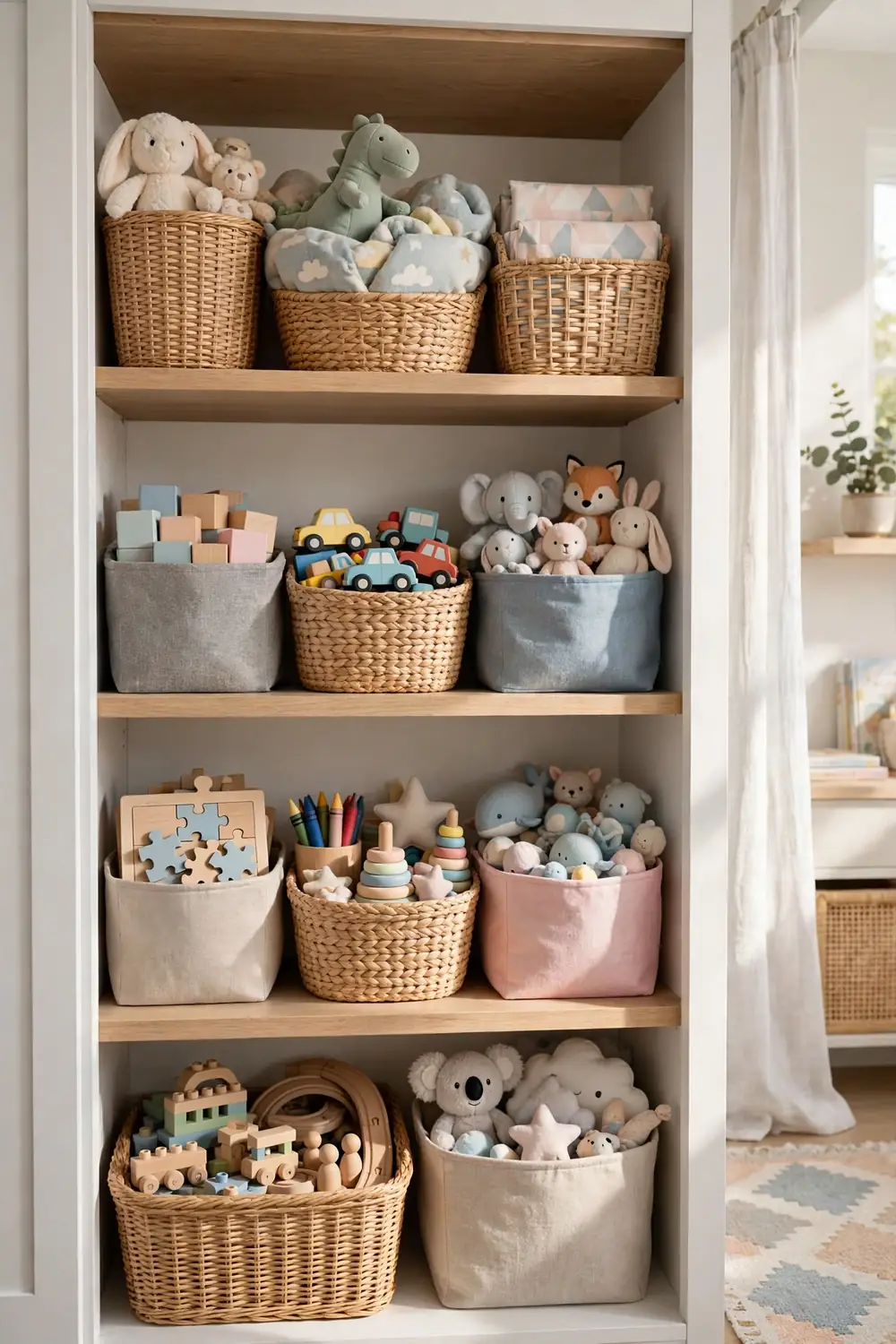
Labeled toy bins are the foundation of almost every tidy kids room, because they turn cleanup into a simple matching game. Give each category its own bin, blocks in one, cars in another, dolls and soft toys in a third, and let your child help choose the labels. Picture labels work beautifully for toddlers and preschoolers, while older children love bold word labels they can read themselves.
Choose bins that are light enough for small hands to pull out and carry, with open tops or easy lift lids so nothing slows cleanup down. Stackable bins work well on a shelf, while larger floor bins suit bulky toys that never seem to fit anywhere else. Keep the number of bins small at first, five or six clear categories beat twelve tiny boxes that overflow by Tuesday.
Place the bins where play actually happens, beside the rug or under a low shelf, and keep one empty bin ready for toys that are still looking for a home. When a bin is full, it is time to rotate or pass something along, which keeps the whole system honest without a big decluttering session.
Styling Tips
- Use one color per category so children can spot the right bin from across the room.
- Add a photo label plus a word label so pre readers and readers can both tidy up alone.
- Leave a little empty space in each bin so toys slide in easily at cleanup time.
2. Low Open Shelving Kids Can Reach
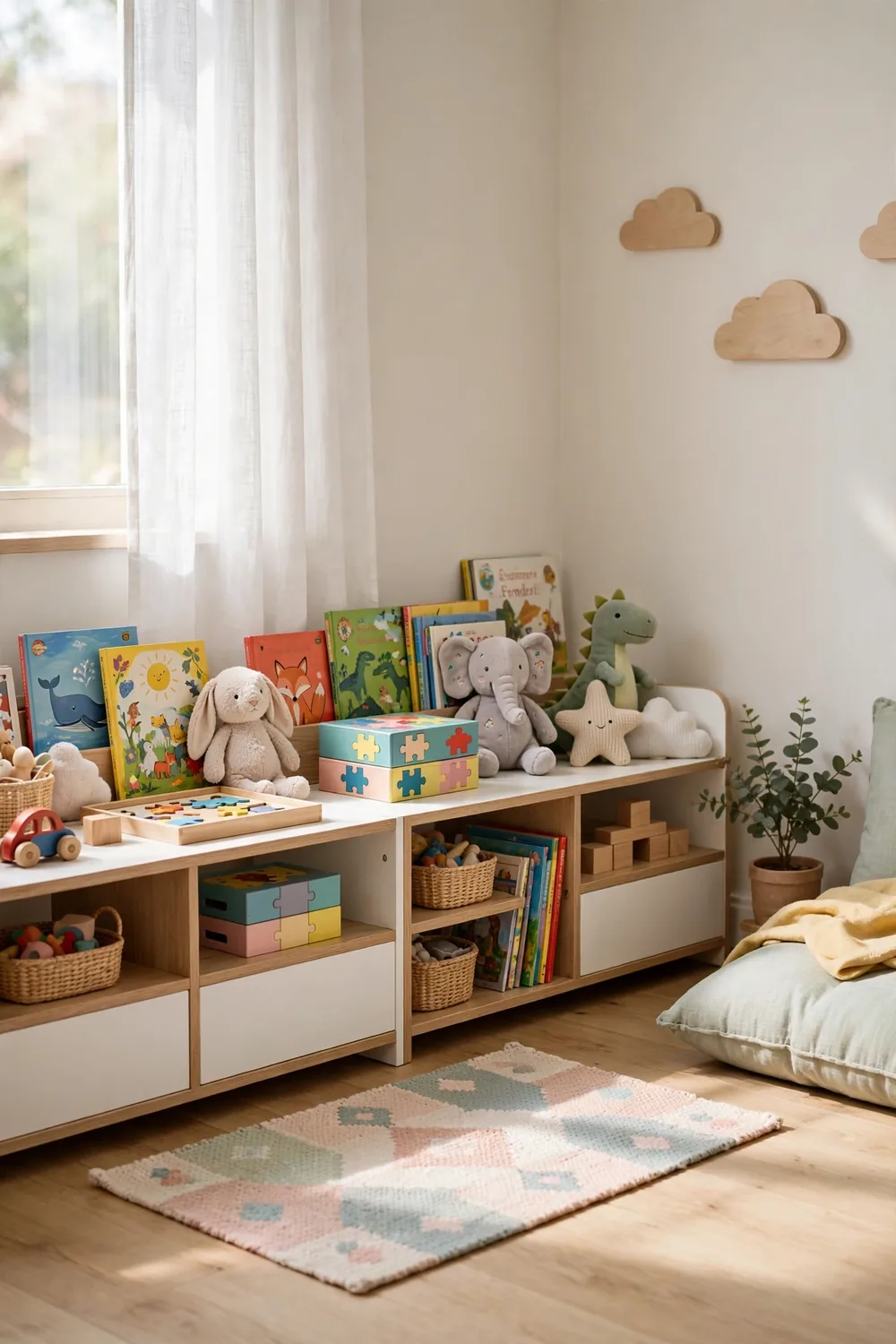
Low open shelving puts your child in charge of their own room, which is exactly the point of good kids room organization ideas. When shelves sit at child height, books, puzzles, and favorite toys stay visible and easy to grab, and just as easy to put back. There is no climbing, no asking for help, and no excuse for a pile on the floor.
Keep the shelves shallow enough that nothing hides behind a front row, and limit each shelf to one or two categories so the display stays calm. A row of books with their covers facing out looks inviting, a small basket on the shelf holds tiny pieces, and one special toy on display gives the shelf a finished, personal feel. Rotate the display every few weeks to keep it fresh without buying anything new.
Anchor every shelf firmly to the wall, and choose rounded edges and sturdy wood or metal that can handle daily use. Open shelving works best when it is part of a daily routine, so pair it with a quick five minute tidy before dinner and let your child take pride in a shelf they arranged themselves.
Styling Tips
- Keep the most loved books and toys on the lowest shelf, and prettier display pieces higher up.
- Use small baskets on the shelf to corral tiny toys, game pieces, and craft bits.
- Rotate shelf items every few weeks so the room feels new without new purchases.
3. Under Bed Rolling Storage for Hidden Toys
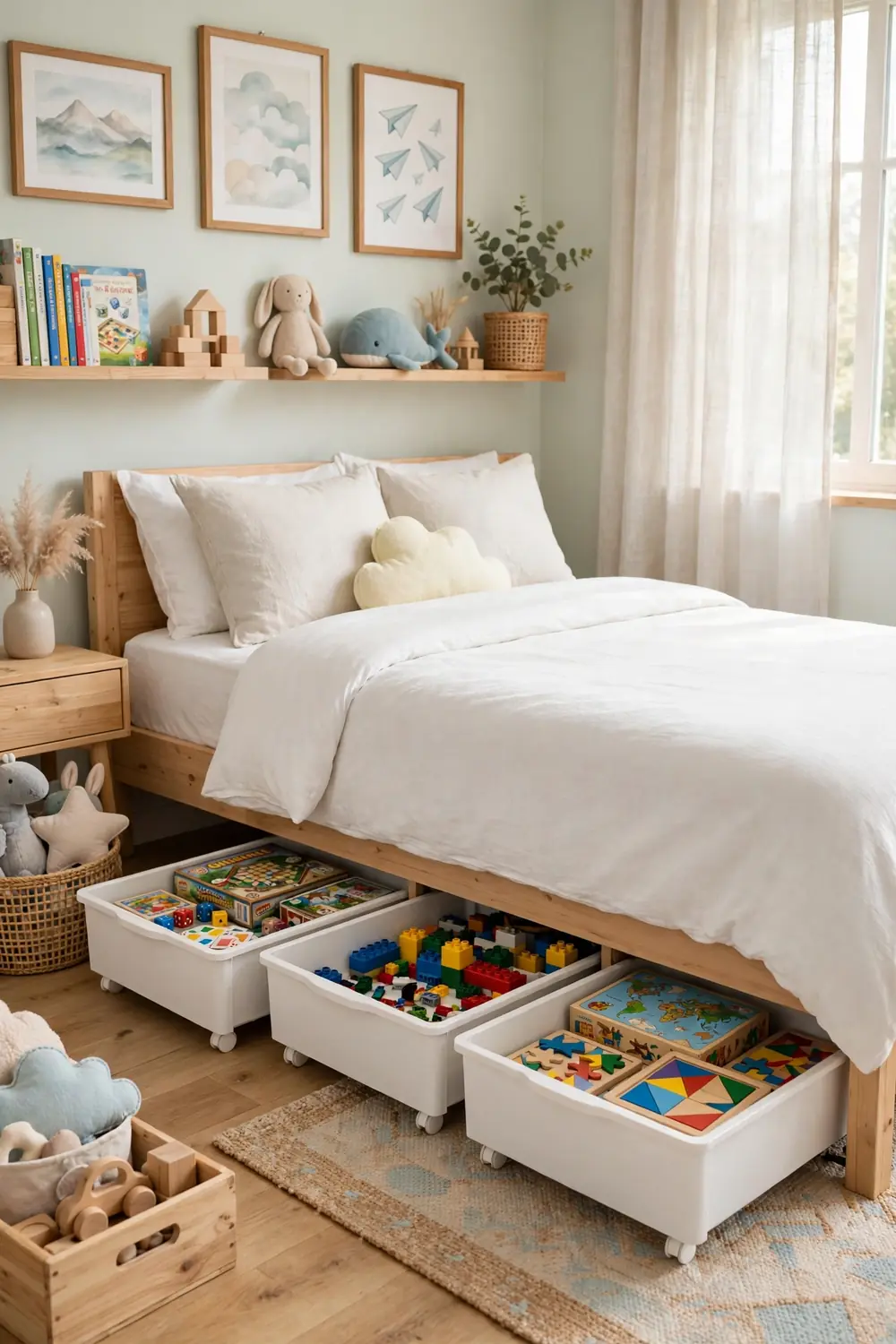
Under bed rolling storage is one of the smartest ways to hide clutter in plain sight, and it is a favorite in kids room organization ideas for small rooms. Low drawers or boxes on wheels slide neatly under the bed, holding board games, dress up clothes, building sets, and out of season toys that do not need to be out every day.
Choose clear or labeled boxes so your child can find what they want without pulling out every drawer, and pick low profile designs that roll smoothly on carpet or hard floors. A divided tray inside the box keeps small pieces from turning into a jumble, while a lid keeps dust out and makes stacking simple when the boxes come out for a play session.
Reserve this hidden spot for items used a few times a week, not every day, so the bed area stays calm and the drawers do not become a daily obstacle. A quick label on the front, plus a rule that one box comes out at a time, keeps the hidden storage working instead of turning into a forgotten drawer of doom.
Styling Tips
- Label the front of each rolling box so children can pull out the right one first time.
- Store board games flat and building sets in divided trays to stop pieces mixing together.
- Keep one box free for toy rotation, and swap its contents every month.
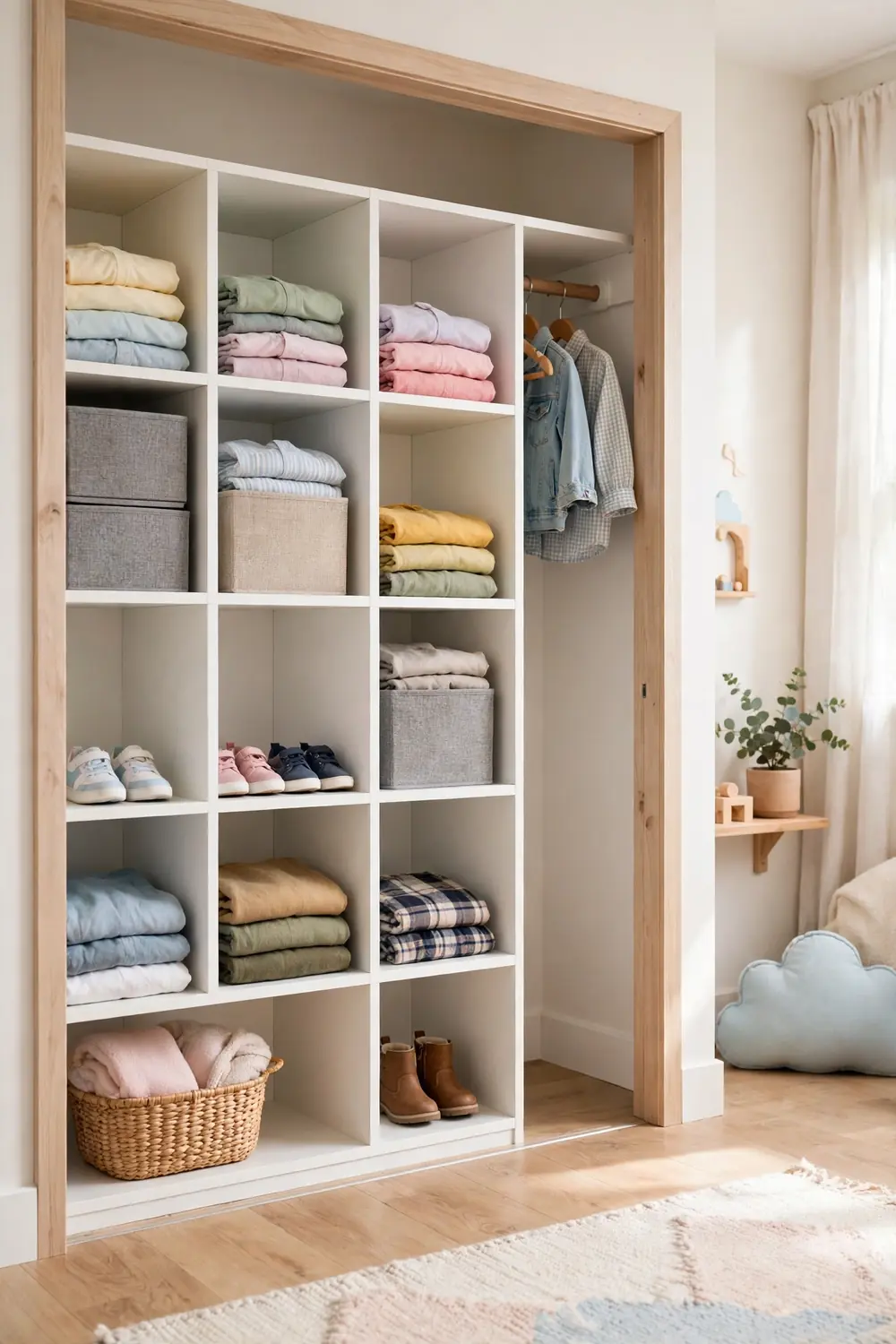
4. Closet Cubby System for Clothes and Toys
A closet cubby system turns a dark, jumbled closet into a set of clear little homes for clothes, shoes, and toys. Cube shelves fit neatly inside most closets, and each cube can hold a folded stack of clothes, a pair of shoes, or a fabric bin of toys. The open front means your child can see everything at once, which makes choosing an outfit and tidying up both much easier.
Put daily clothes at child height and seasonal or spare items on the top cubes, then add a low hanging rod for dresses, shirts, and outfits your child picks themselves. Fabric bins slide into the cubes for socks, underwear, and small accessories, and a picture label on each bin removes the guesswork on busy school mornings. If your closet feels cramped, our small closet organization ideas show how the same cubby thinking works in even the tightest spaces.
Keep the system flexible as your child grows. Cubes can move from toys to school supplies to sports gear without any new furniture, and a simple curtain in place of a door makes the closet feel friendly instead of dark. The goal is a closet your child can open, use, and close up alone, every single day.
Styling Tips
- Give each cube one job, clothes, shoes, or toys, and label it with a picture or a word.
- Hang everyday outfits low so children can dress themselves in the morning.
- Use matching fabric bins for a calm look that hides small clutter beautifully.
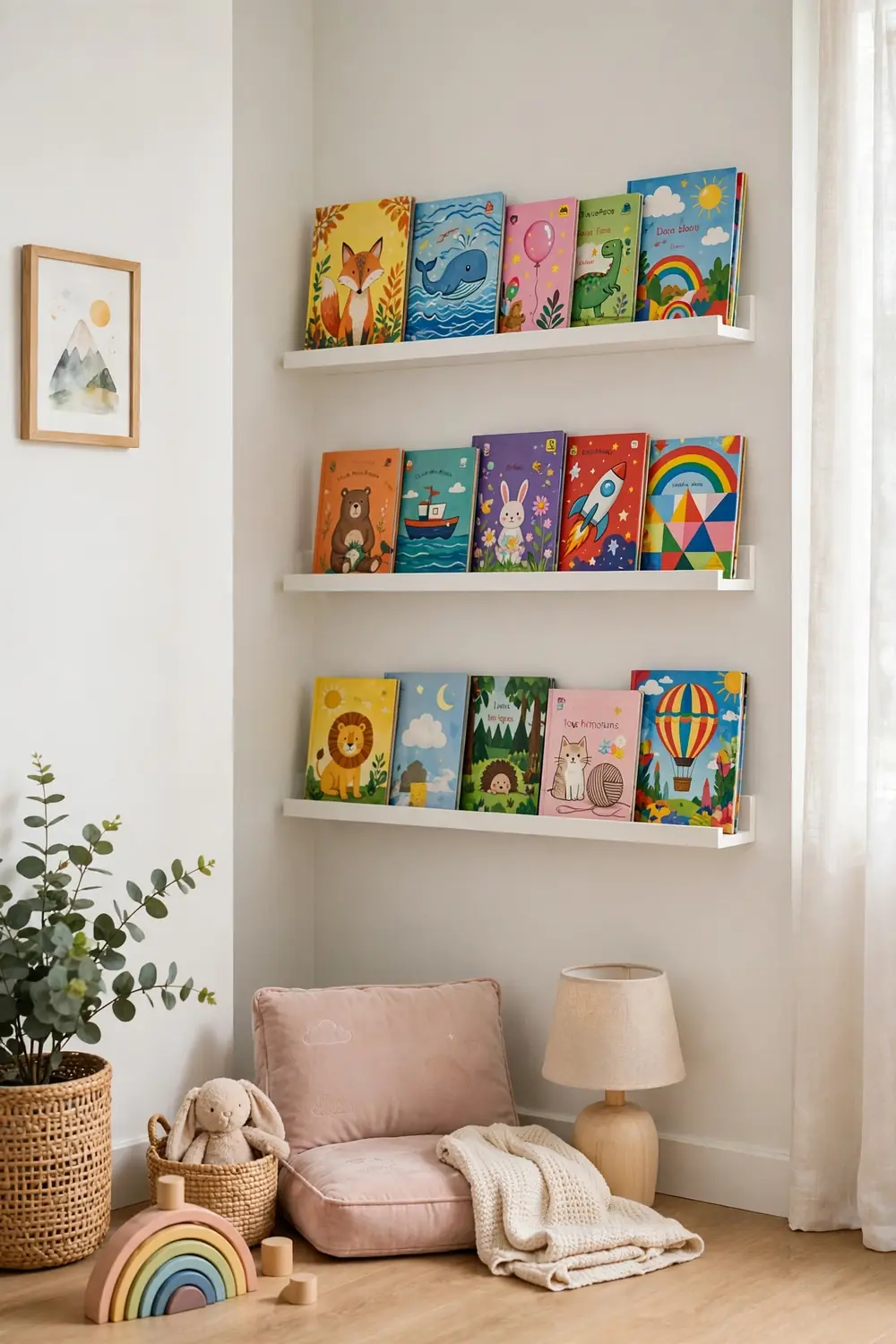
5. Book Forward Facing Ledge for a Mini Library
A forward facing book ledge turns a plain wall into a mini library your child will actually use, and it is one of the prettiest kids room organization ideas you can try. Books face outward with their covers showing, so your child chooses by the picture they love instead of pulling every spine off a crowded shelf. Reading becomes an invitation, not a chore.
Install two or three slim ledges at child height, close to the bed or a reading corner, and keep the selection small, eight to twelve books at a time is plenty. Rotate the books weekly from a larger stash kept in a basket or a closet, and let your child pick the new front row. A small cushion, a soft light, and a basket for finished books complete the cozy reading nook.
This idea works in the tiniest rooms because the ledges use wall space instead of floor space, and they grow with your child from picture books to chapter books. Keep the ledges shallow, secure them firmly, and leave a little breathing room between books so each cover gets its moment.
Styling Tips
- Show eight to twelve books at a time and rotate them weekly to keep reading exciting.
- Place the ledges near the bed or a reading cushion so books are part of the bedtime routine.
- Let your child choose the front row, ownership makes them far more likely to read.
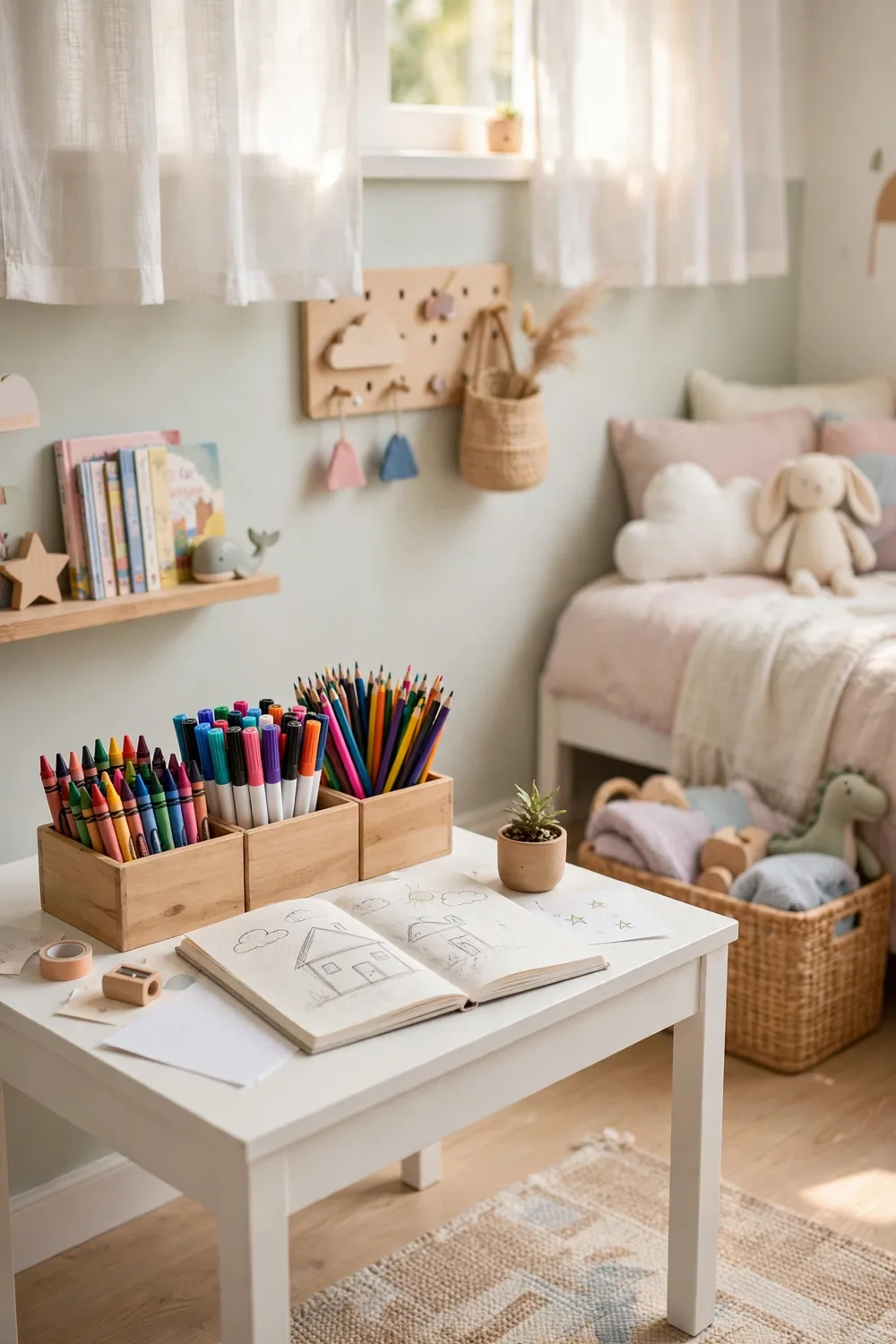
6. Art Supply Caddy for Creative Time
An art supply caddy keeps crayons, markers, paper, and paint in one portable home, so creative time never ends with supplies scattered across the whole house. A divided caddy, a small rolling cart, or a handled tote all work well, as long as every supply has its own compartment and the caddy can travel from the desk to the kitchen table and back again.
Sort supplies by type, not by color alone, so your child can grab the markers without digging through the glitter. Keep paper and coloring books beside the caddy, add a small cup for brushes and scissors, and set a simple rule that the caddy returns to its shelf when art time ends. A wipe clean tray underneath protects the desk and makes cleanup a quick job.
For younger artists, keep only washable supplies in the caddy and store paint and glue up high for supervised use. For older children, add a sketchbook, a pencil sharpener, and a small folder for finished artwork, so the caddy grows into a real creative station instead of a jumble of broken crayons.
Styling Tips
- Give every supply its own compartment so children can see what is missing at a glance.
- Keep washable supplies in the caddy and store paint and glue up high for supervised art.
- Add a small folder for finished artwork so masterpieces have a home, not a pile.
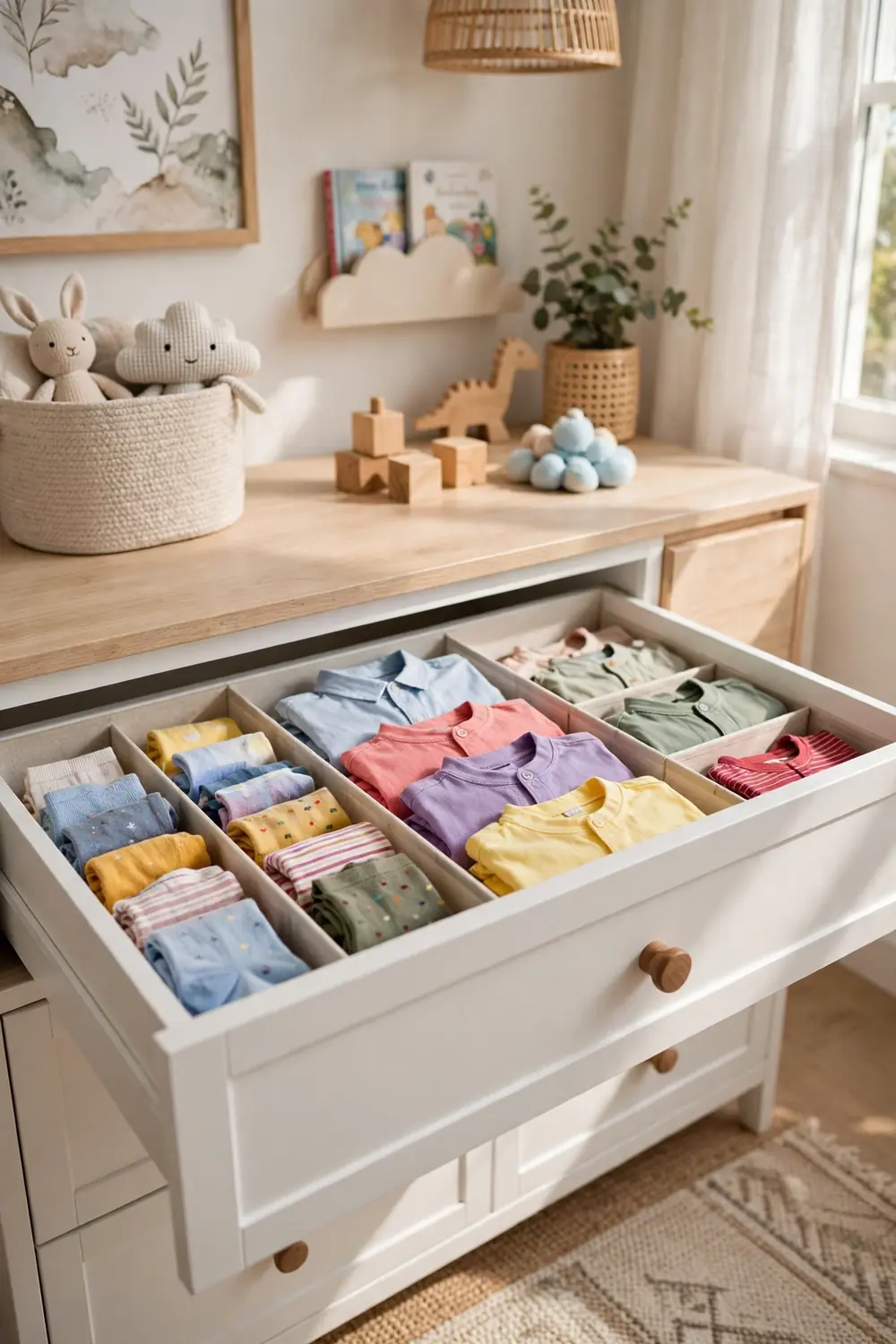
7. Clothing Drawer Dividers for Easy Mornings
Clothing drawer dividers turn a messy drawer into a neat row of little compartments, and they make mornings noticeably calmer. Instead of digging through a pile of mixed shirts and socks, your child opens the drawer and sees one category per section, shirts here, shorts there, socks and underwear in their own small boxes. Getting dressed becomes a quick choice instead of a daily search.
Use adjustable dividers or small fabric boxes that fit the drawer exactly, and fold clothes upright, file style, so every item is visible from above. Label the front of each divider with a picture for younger children, and keep the system simple, three to five sections per drawer is plenty. A weekly outfit plan, with five outfits hung or stacked together, makes school mornings even smoother.
This small change also teaches your child to care for their own clothes. When every item has a place, putting clean laundry away takes minutes, and a drawer that stays tidy gives your child a real sense of pride. Pair the dividers with a weekly laundry routine, and the whole clothing system starts to run itself.
Styling Tips
- Fold clothes upright, file style, so every item is visible the moment the drawer opens.
- Use three to five sections per drawer, too many sections make tidying up confusing.
- Plan five outfits on Sunday night and stack each one together for easy school mornings.
8. Toy Rotation Baskets to Keep Play Fresh
Toy rotation baskets keep playtime fresh without buying a single new toy, and they are one of the simplest kids room organization ideas for overwhelmed rooms. Instead of every toy being out at once, keep a small, exciting set in the room and store the rest in labeled rotation baskets in a closet or on a high shelf. Every week or two, swap a basket and watch forgotten toys feel brand new again.
Choose sturdy baskets with lids or fabric covers, and group toys by theme, building toys in one, pretend play in another, puzzles and games in a third. Let your child help choose which basket comes out next, so rotation feels like a treat rather than a rule. When a toy comes back after a break, children play with it longer and more creatively than they did before.
This system also makes cleanup realistic. With fewer toys out, tidying takes minutes, the floor stays clear for real play, and you can spot quickly which toys your child has truly outgrown. For more playroom inspiration, our playroom ideas that kids will actually love pair beautifully with a rotation routine.
Styling Tips
- Keep only a small, exciting set of toys out and store the rest in labeled rotation baskets.
- Group each basket by theme so one swap brings a whole new kind of play.
- Let your child choose the next basket, choice makes rotation feel like a treat.
9. Wall Hooks at Kid Height for Coats and Bags
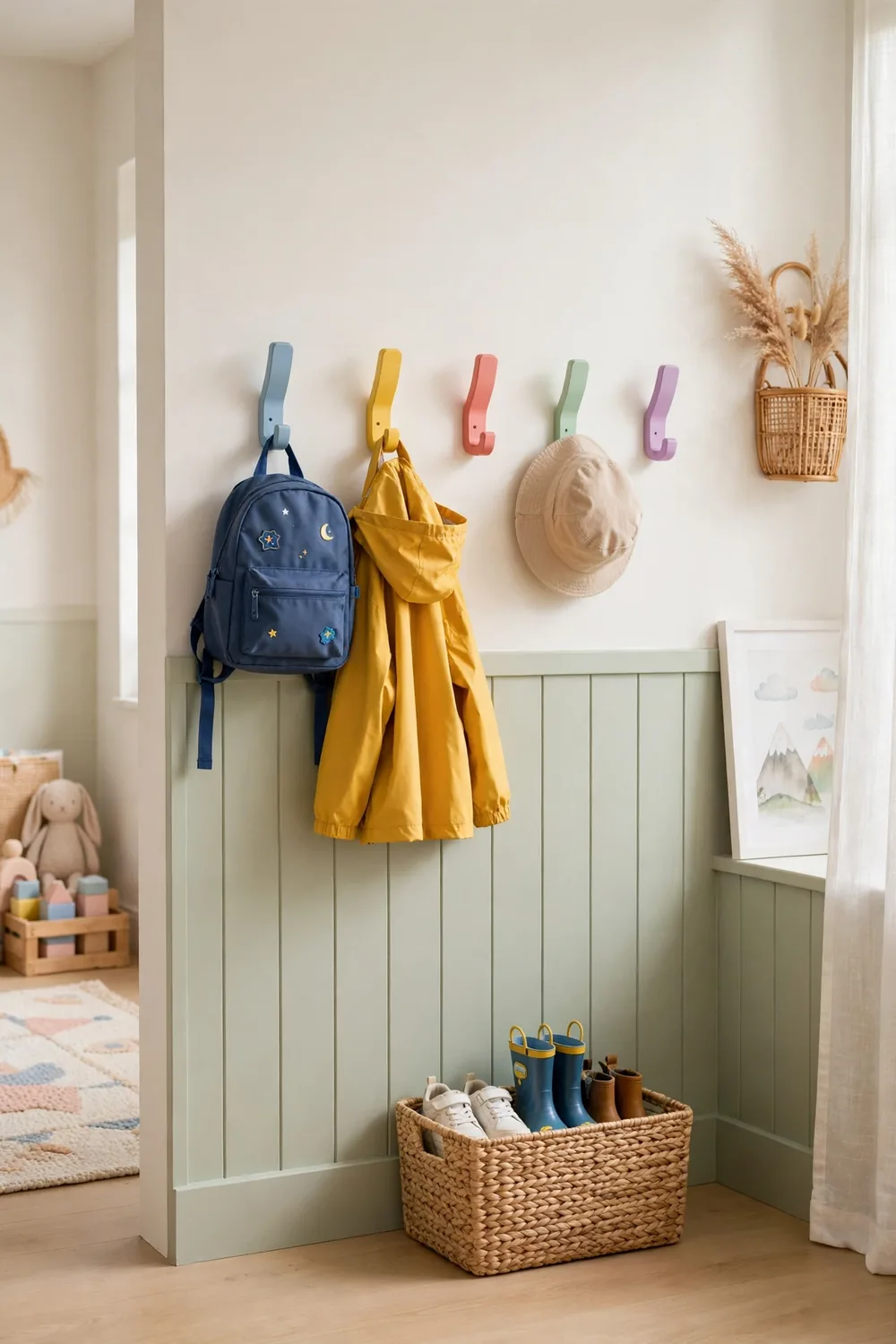
Wall hooks at kid height solve the daily pile of coats, bags, hats, and dress up clothes in one simple move. When hooks sit low enough for your child to reach, hanging up a jacket takes two seconds, and there is no excuse for it to land on the floor. A row of hooks by the door or beside the closet becomes the room’s natural drop zone.
Choose sturdy hooks with rounded ends, spaced far enough apart that coats do not crowd each other, and give each child their own hook or color if siblings share a room. Add a small basket underneath for shoes and a hook for the school bag, so the whole going out routine happens in one spot. Fun shaped hooks, like animals or stars, make the row feel playful instead of plain.
This idea also works beautifully for dress up clothes, art smocks, and favorite hats, all of which stay visible and ready for play instead of tangled in a drawer. The team at HGTV highlights the same trick in their kids room storage guide, simple wall hooks at a child’s level turn a daily chore into a habit children can manage alone.
Styling Tips
- Install hooks at your child’s shoulder height so hanging up a coat takes two seconds.
- Give each child their own hook or color so there is never an argument about whose is whose.
- Place a shoe basket below the hooks so the whole going out routine lives in one spot.
10. Desk Homework Station with Storage
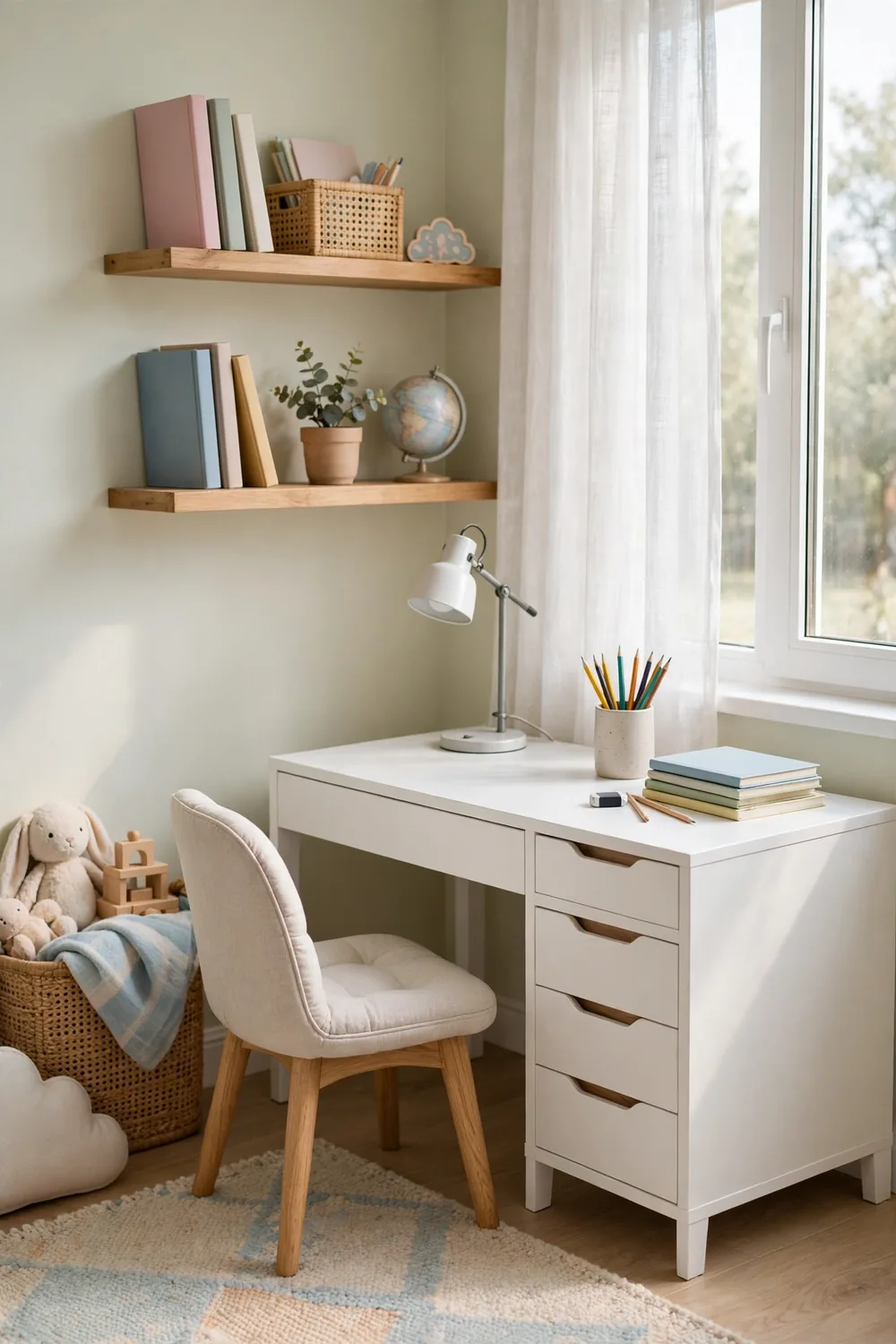
A desk homework station with storage gives schoolwork a real home, so pencils, notebooks, and library books stop wandering around the room. A small desk with drawers, a shelf above, and a caddy for supplies creates a clear work zone that tells your child it is time to focus, then lets them pack everything away when homework is done.
Keep the desktop clear except for the work in progress, and store everything else in its place, pencils in a cup, notebooks upright in a file holder, and completed work in a tray or folder. A pinboard or a small shelf above the desk holds the timetable, a clock, and a few favorite photos, while a comfortable chair at the right height keeps good posture easy. Good lighting matters too, so place the desk near a window or add a small lamp.
Make the station part of a simple after school routine, snack first, homework next, then free play, and let your child personalize the space with their own name label or a small plant. A tidy desk teaches focus, and a desk that is easy to clear teaches responsibility without a daily battle.
Styling Tips
- Keep only the current work on the desktop and store the rest in drawers, trays, and file holders.
- Place the desk near a window or add a small lamp so homework time is bright and comfortable.
- Let your child personalize the station with a name label, a photo, or a small plant.
11. Soft Hamper and Simple Laundry Routine
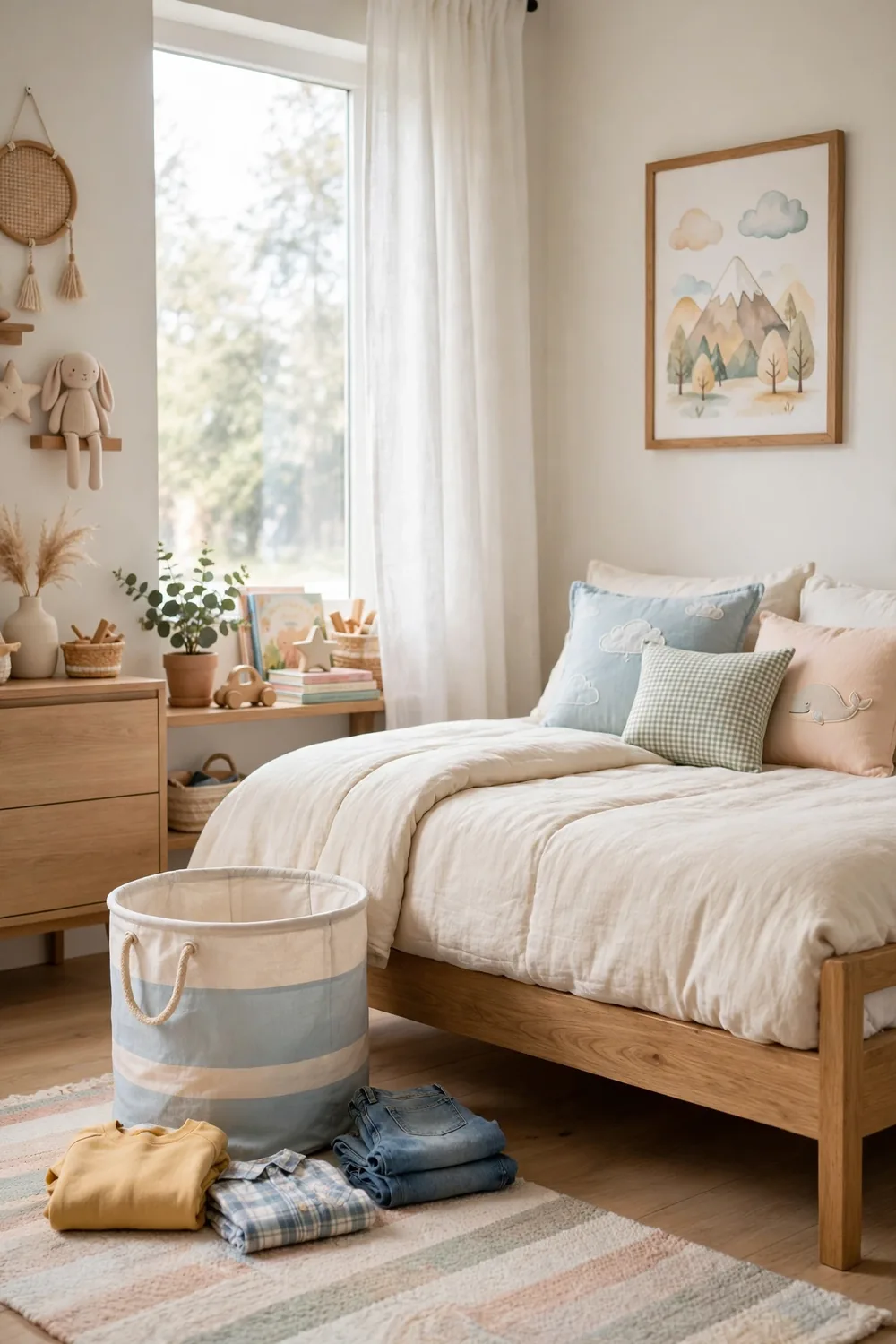
A soft hamper and a simple laundry routine keep dirty clothes off the floor and make laundry day a job your child can actually help with. Choose a lightweight, soft sided hamper your child can carry, place it where clothes come off at bedtime, and make it fun, a basketball style toss or a friendly monster hamper turns a chore into a game.
Teach one clear rule, dirty clothes go in the hamper, clean clothes go in the drawer, and practice it together for a week until it sticks. A small sorting basket for whites and colors helps older children, while a weekly laundry day on the family calendar keeps the hamper from overflowing. When the hamper is full, it is time for a wash, no guessing needed.
This last idea ties the whole room together, because a floor free of laundry makes every other system work better. For more calm, clutter free storage thinking, our stylish storage ideas show how soft baskets and hampers can look beautiful in any room, not just a kids room.
Styling Tips
- Place the hamper where clothes come off, usually beside the bed or the closet.
- Make laundry fun with a toss in game or a friendly animal hamper children love to feed.
- Set one weekly laundry day so the hamper never overflows and the routine stays simple.
Your kids room does not need to be perfect, it needs to work for the child who lives in it. Pick two or three of these kids room organization ideas, start with the messiest corner, and let your child help build the system. A tidy, playful space grows one small habit at a time, and a room your child can tidy alone is a room the whole family will love.
