
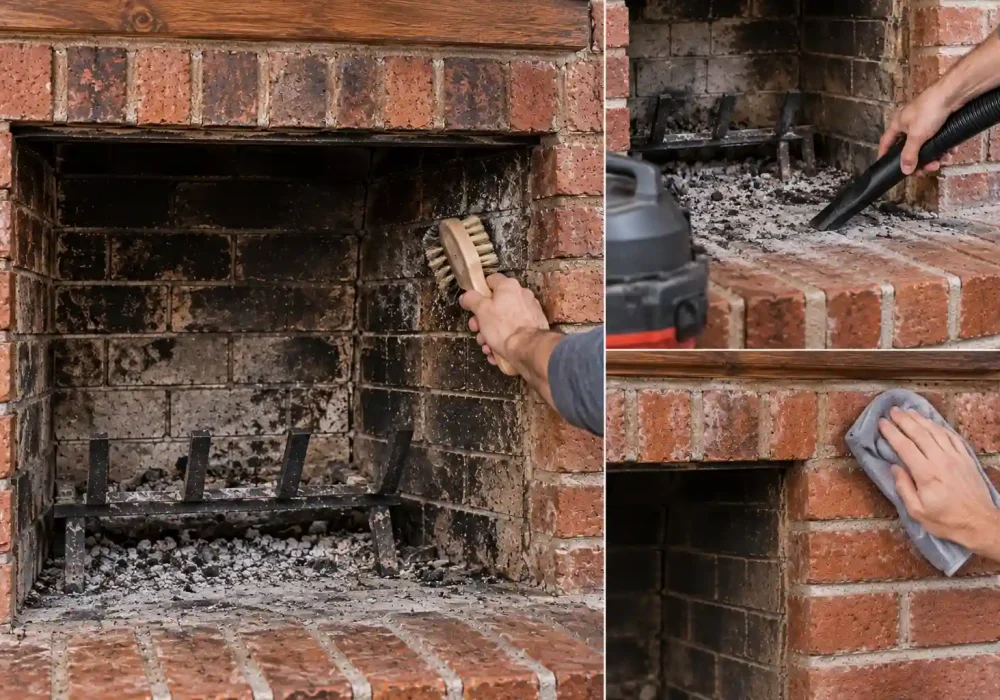
Brick is porous, which means soot and ash don’t just sit on the surface the way they would on tile or stone, they work their way slightly into the texture of the brick itself over time. That is exactly why cleaning a brick fireplace properly takes a specific order of steps rather than just wiping it down with a wet cloth.
Below is a full breakdown of how to clean a brick fireplace from start to finish, along with why each step matters and a bonus tip for keeping it easier to clean going forward.
Why Brick Fireplaces Need a Different Cleaning Approach
Because brick is porous, any wet cleaner applied before loose soot and ash are removed tends to push that dirt deeper into the surface rather than lifting it out. That is why the process below starts dry before it ever goes wet, and why scrubbing technique matters just as much as the cleaning solution used.
The other thing that makes brick different from most surfaces is how unevenly soot builds up. Areas closest to the firebox opening usually need a stronger approach than brick higher up or further to the sides, which is why this guide includes both gentle DIY options and a stronger store-bought cleaner for genuinely stubborn, years-old staining.
Read More Ideas:
- 20 Electric Fireplace Ideas with TV Above for a Modern Look
- 12 Fireplace Mantel Ideas That Turn the Wall Into a Feature
- 12 Modern Fireplace Ideas to Upgrade Your Living Room
1. Dry Brush First
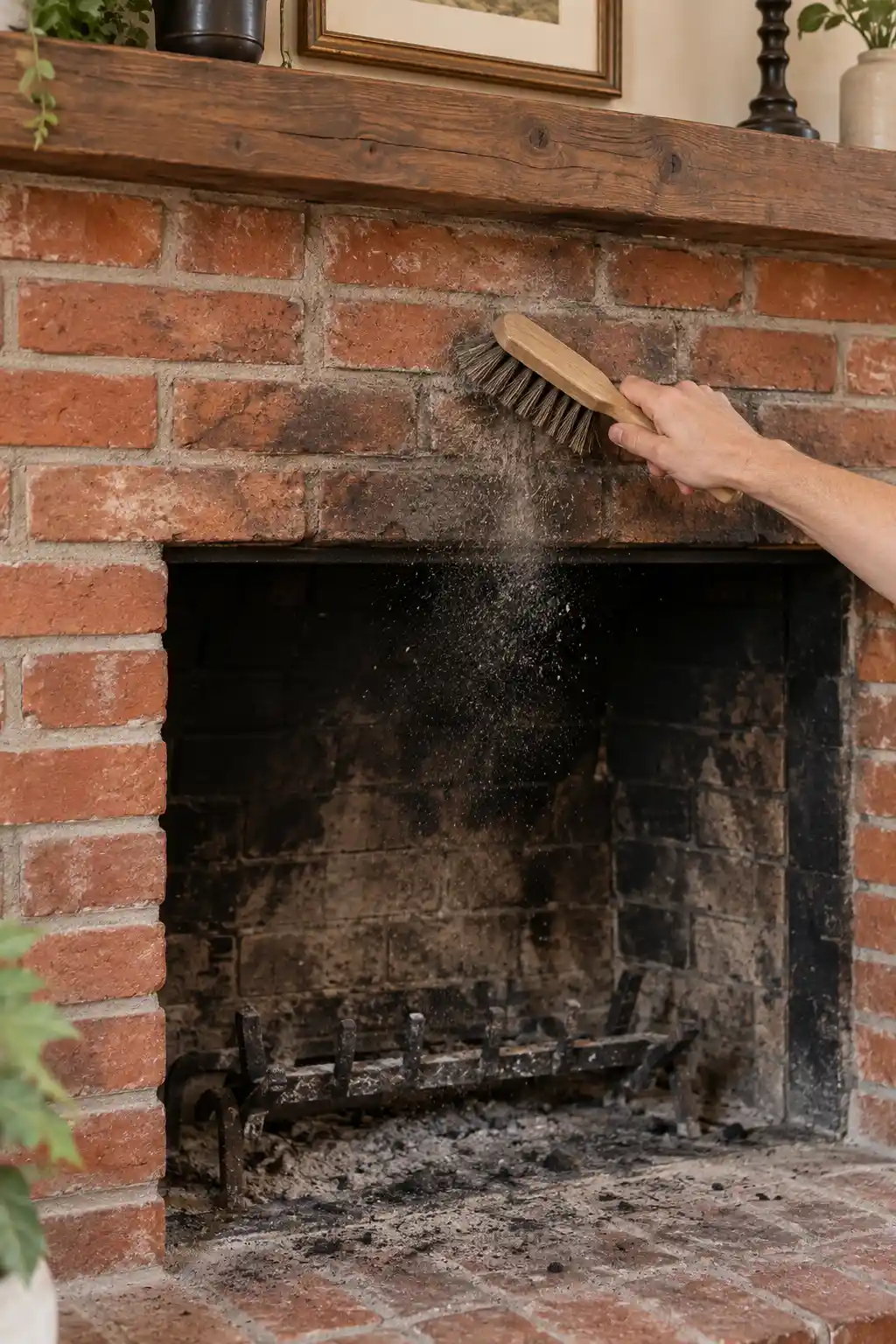
Before any liquid touches the brick, scrubbing it with a stiff-bristle brush removes loose soot, ash, and dust sitting on the surface. Skipping this step is the most common reason wet cleaning methods end up smearing dirt deeper into the brick instead of lifting it out.
- A stiff-bristle brush, ideally one dedicated to masonry
- A drop cloth or old towel to catch falling debris
- A dust mask, since dry soot can become airborne while brushing
How To Do It: Lay a drop cloth in front of the fireplace to catch falling debris, then scrub the brick firmly in short strokes with the stiff-bristle brush, working from the top of the fireplace down so loosened soot falls onto the cloth rather than back onto already-cleaned brick.
2. Vacuum the Loose Debris
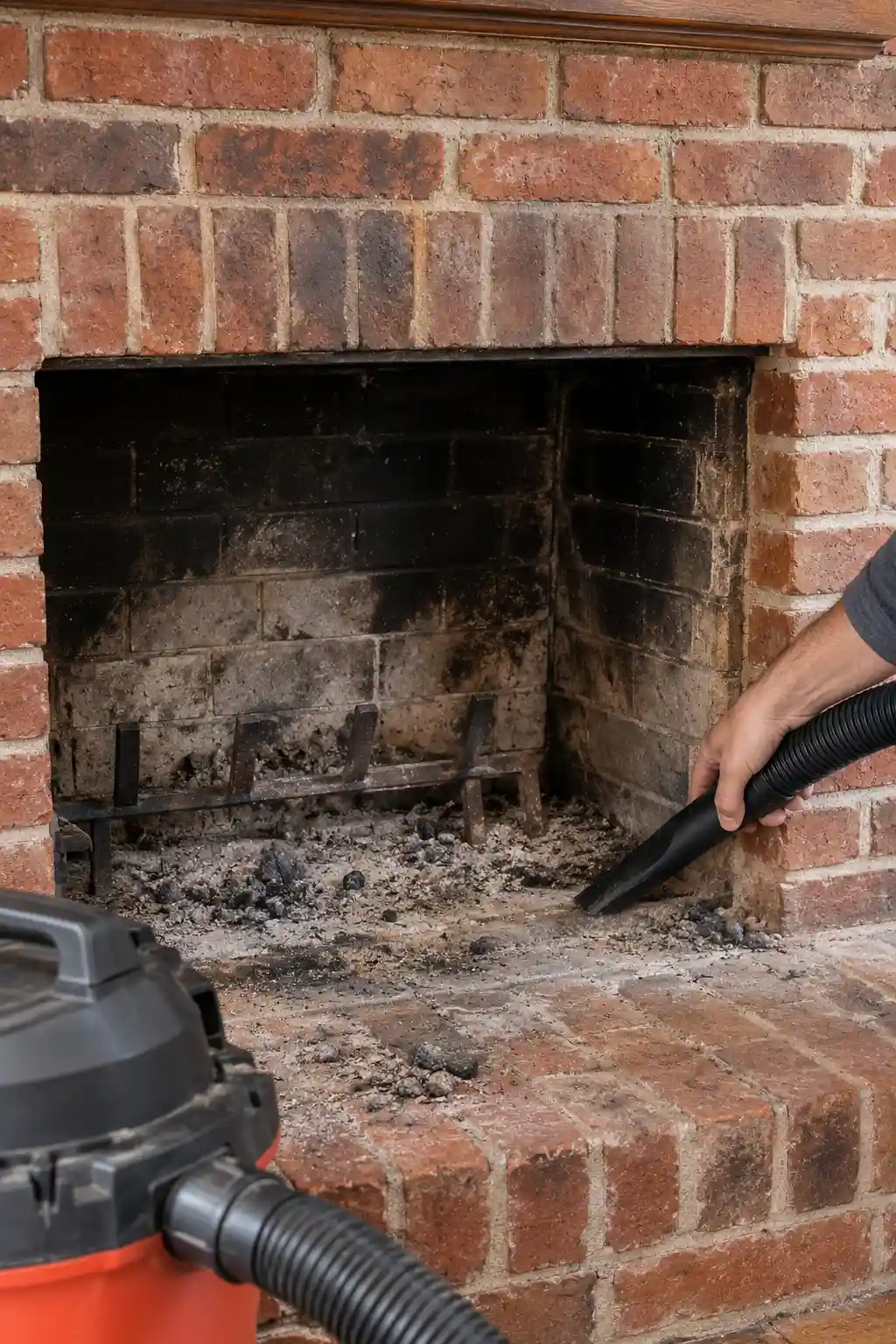
A shop vac or a brush attachment on a regular vacuum pulls ash and dust out of mortar joints and crevices that a hand brush alone can’t fully reach. This step catches everything the dry brushing loosened but didn’t fully remove.
- A shop vac or vacuum with a brush attachment
- Access to an outlet near the fireplace
- Good lighting to spot remaining debris in the joints
How To Do It: Run the brush attachment slowly along every mortar joint and crevice across the brick, paying extra attention to the areas directly around the firebox opening where ash tends to collect most heavily, and vacuum the hearth floor last to catch anything that fell during the process.
3. Make a Baking Soda Paste
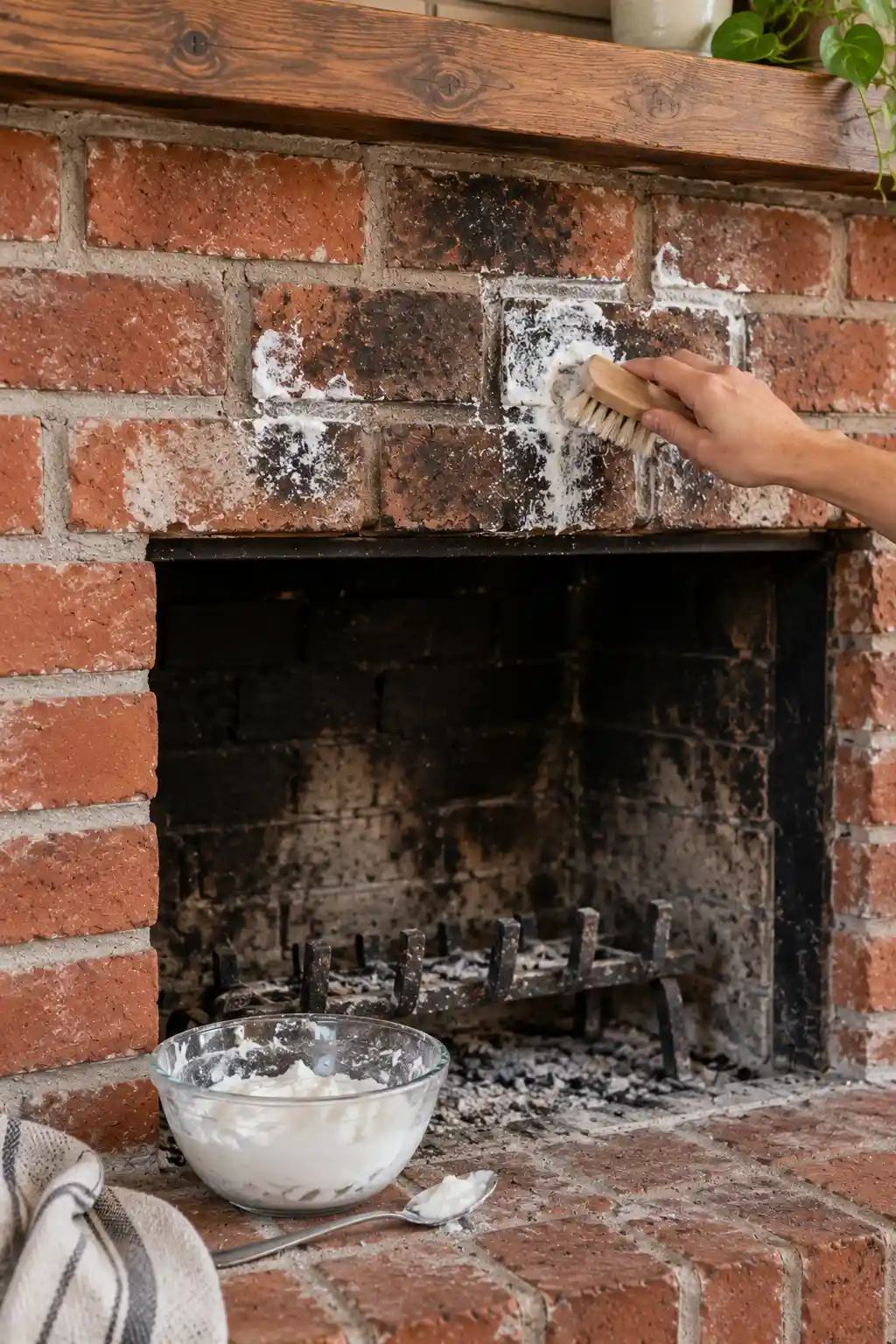
For light-to-moderate soot stains, a thick paste of baking soda and water offers a gentle, non-toxic way to lift dirt out of the brick’s texture without needing anything stronger. This step works especially well as a first attempt before reaching for a store-bought cleaner.
- Baking soda
- Water
- A mixing bowl and spoon
- A scrub brush for application
How To Do It: Mix baking soda with just enough water to form a thick, spreadable paste, apply it directly onto the sooty spots with a brush or spoon, let it sit for 10 to 15 minutes so it has time to loosen the stain, then scrub it off with the brush in circular motions.
4. Try a Vinegar-Water Solution
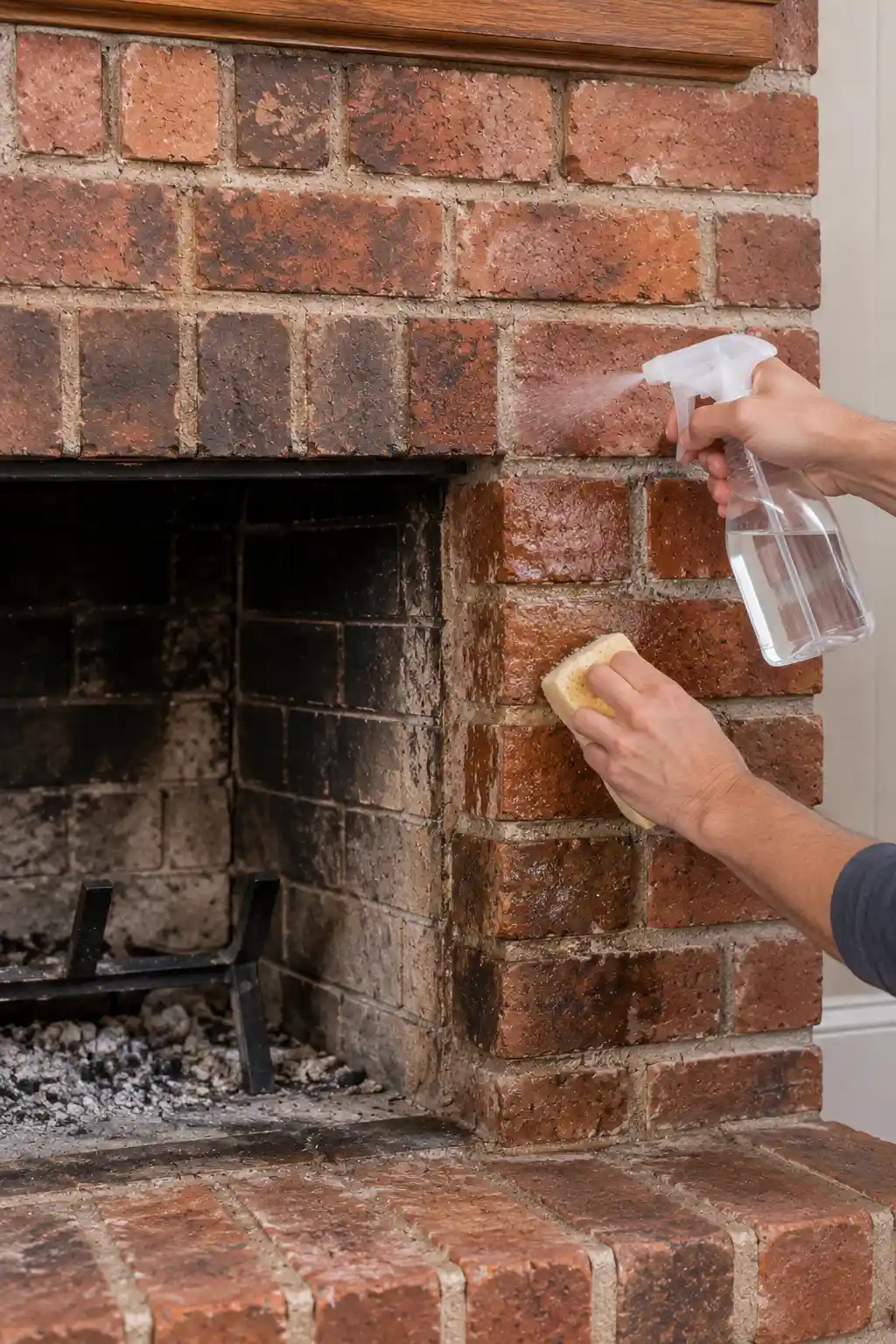
For grease or grime rather than pure soot, an equal-parts vinegar and water solution cuts through oily residue in a way baking soda alone often cannot. It works particularly well on brick near a kitchen fireplace or areas that have picked up cooking-related grime over time.
- White vinegar
- Water
- A spray bottle
- A sponge or scrub brush
How To Do It: Mix equal parts white vinegar and water in a spray bottle, spritz it directly onto the greasy or grimy areas of the brick, let it sit for a minute or two, and scrub with a sponge or brush until the residue lifts.
5. Use a Dedicated Brick and Masonry Cleaner
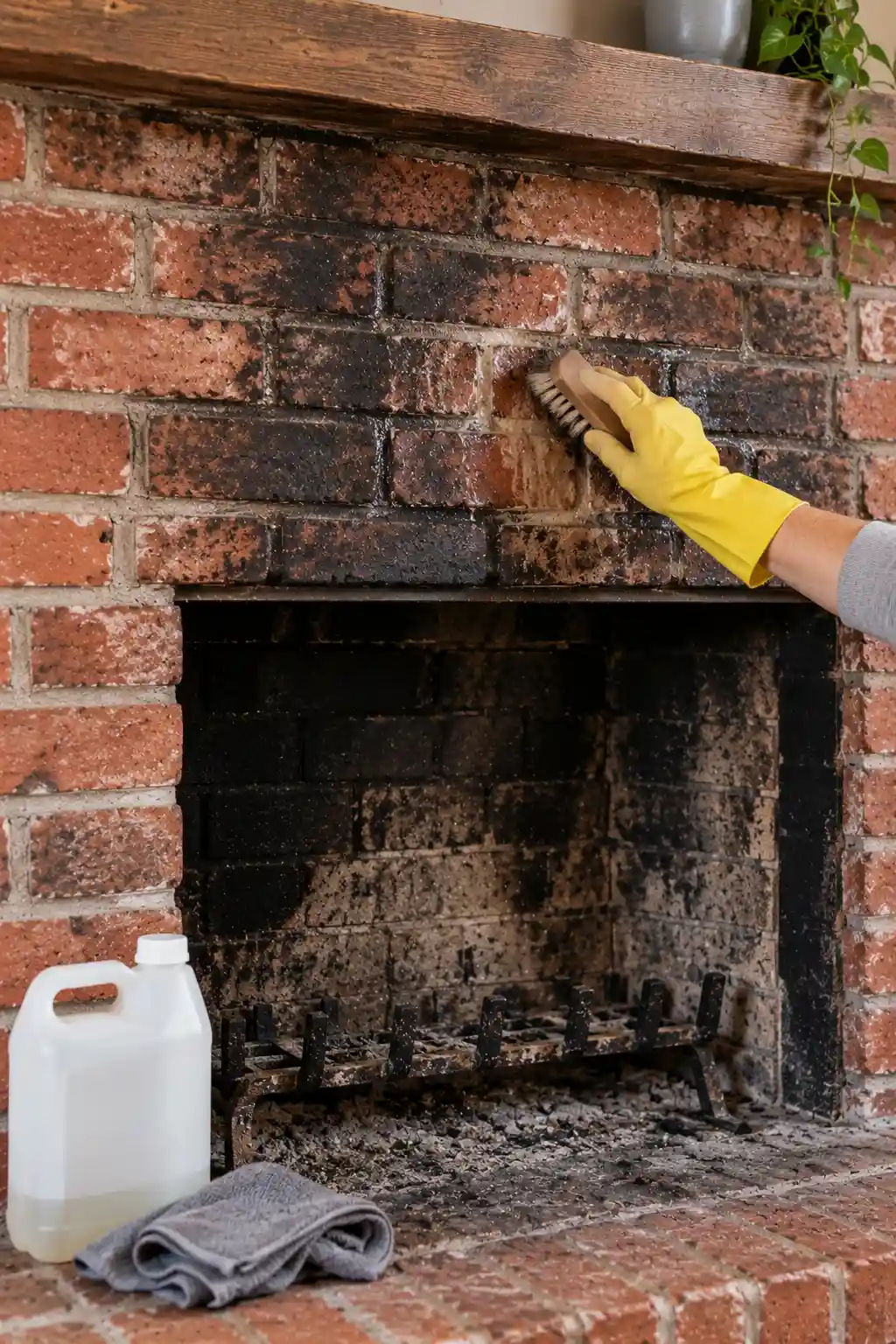
For stubborn, years-old soot staining that DIY mixtures can’t fully remove, a store-bought masonry cleaner, often a trisodium phosphate solution, works deeper into the brick than baking soda or vinegar alone. This step should generally come after trying the gentler options first.
- A dedicated brick or masonry cleaner
- Protective gloves and eye protection
- A small, inconspicuous test area
- A stiff brush for application
How To Do It: Spot-test the masonry cleaner on a small, hidden section of brick first to check for any discoloration, then follow the product’s instructions closely, applying it with a stiff brush and giving it the recommended dwell time before scrubbing the stained areas.
6. Scrub in Circular Motions, Not Straight Lines
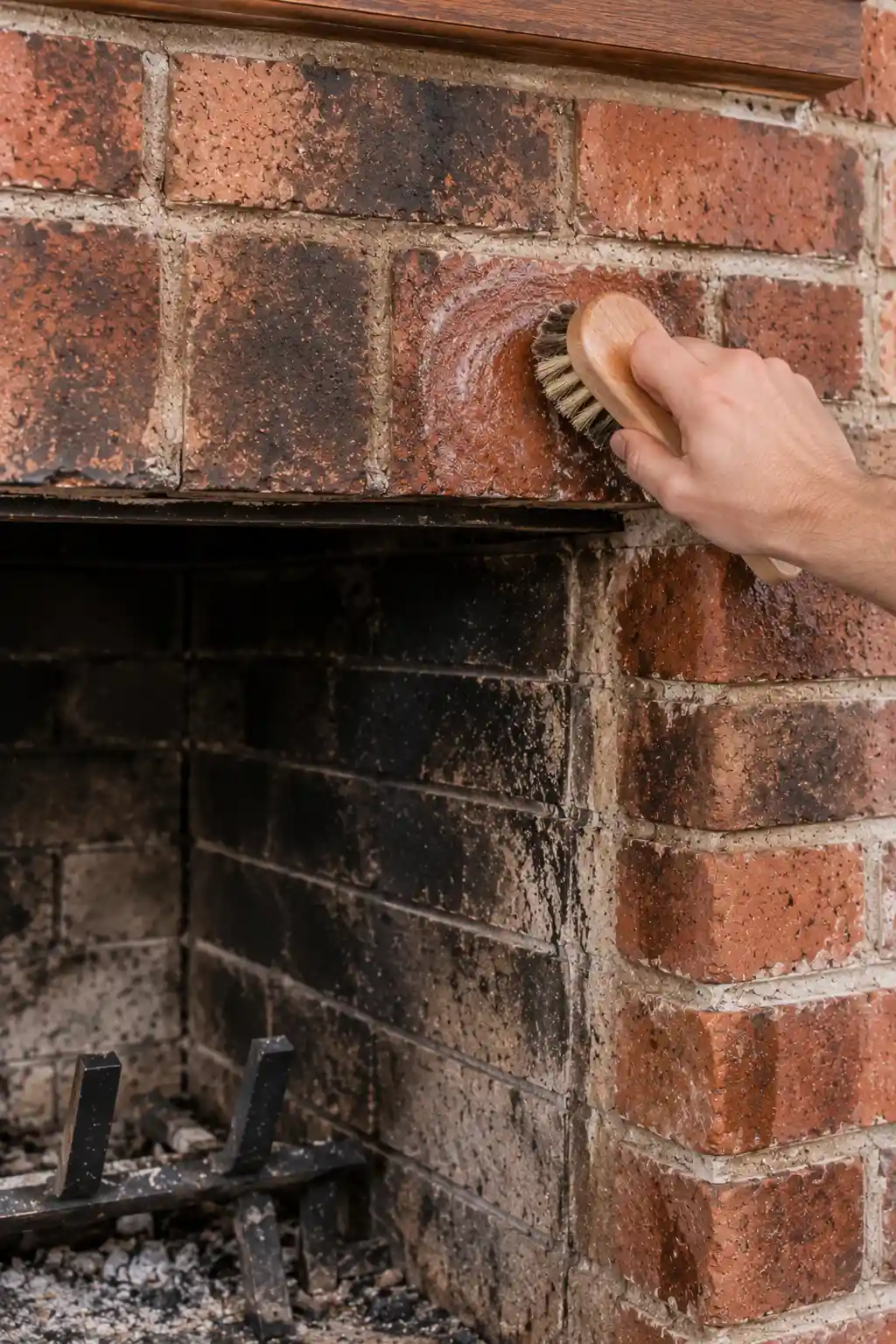
Regardless of which cleaner is being used, circular scrubbing lifts soot out of brick’s uneven texture more effectively than straight, back-and-forth strokes. This matters even more on rough or heavily textured brick where straight strokes tend to skip over recessed areas.
- Any of the brushes already being used for cleaning
- Extra time for slower, more deliberate scrubbing
- Good lighting to check progress as you go
How To Do It: Work the brush in small, overlapping circular motions across each section of brick rather than long straight strokes, checking periodically to see whether the soot is actually lifting rather than just being pushed around the surface.
7. Rinse and Dry Thoroughly
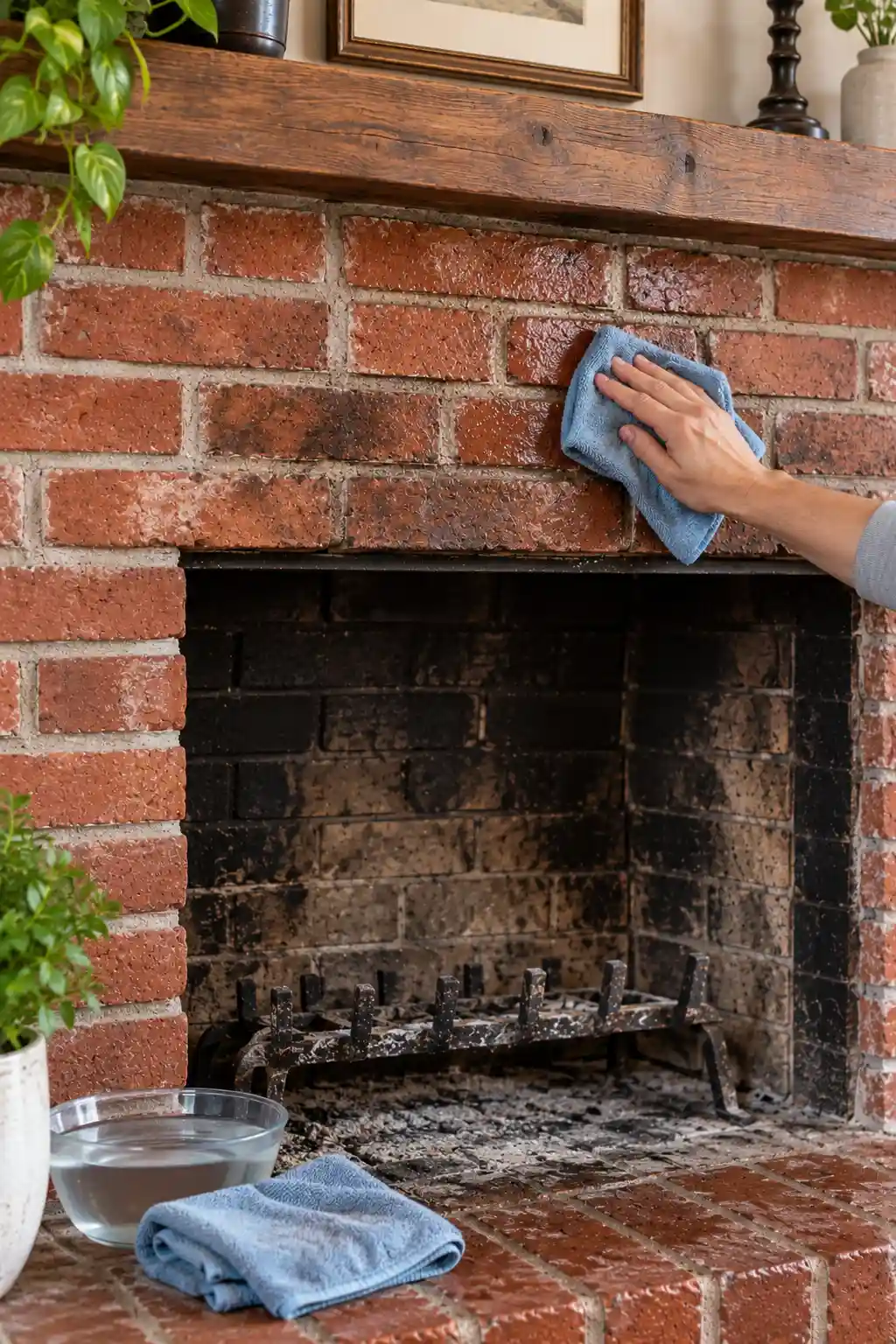
Once the scrubbing is done, wiping down the brick with a clean, damp cloth removes any leftover cleaner residue, and letting it fully air-dry prevents trapped moisture inside the porous brick. This step matters more than it might seem, since using the fireplace again before it’s fully dry can cause steam and uneven heating inside the brick.
- A clean cloth or sponge
- Fresh water for rinsing
- Time for the brick to air-dry completely before use
How To Do It: Wipe the entire cleaned area down with a clean, damp cloth to remove any remaining cleaner residue, then leave the fireplace unused for at least a full day, or longer in humid conditions, to give the brick time to dry out completely before lighting a fire again.
Keeping the Brick Easier to Clean Going Forward
Once a brick fireplace is fully clean and completely dry, applying a breathable masonry sealer makes future cleanups noticeably easier. A sealed surface keeps new soot from working as deeply into the brick’s pores, which means the next cleaning session can often skip straight to the dry brushing and baking soda steps rather than needing a stronger masonry cleaner again.
- Choose a sealer labeled specifically as breathable or vapor-permeable, since brick needs to release moisture naturally
- Apply the sealer only after the brick has been cleaned and is completely dry, never over existing soot or residue
- Follow the product’s recommended number of coats and drying time between applications
- Reapply the sealer every few years, or sooner in a fireplace that gets frequent use
Final Thoughts on How to Clean a Brick Fireplace
Cleaning a brick fireplace properly comes down to following the right order, dry first, then wet, then a stronger cleaner only if needed, rather than reaching straight for the harshest option available. Skipping the dry brushing and vacuuming steps is the single most common reason soot ends up smeared deeper into the brick instead of actually lifted out.
Work through the steps above in order, starting with the gentlest method that gets the job done, and finish with a breathable sealer once the brick is clean and dry. A little maintenance up front makes every future cleaning session considerably faster.