
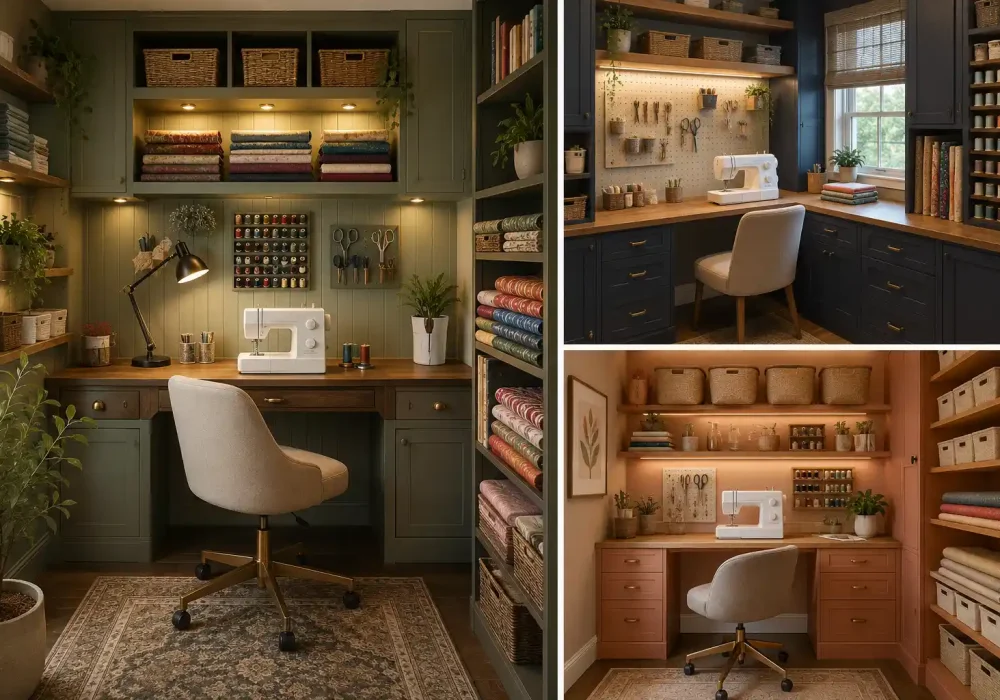
A well-designed sewing room can make every project more enjoyable, even when space is limited. With the right layout and thoughtful storage, a small room can feel organized, comfortable, and inspiring without sacrificing style.
From custom workstations to clever storage solutions, the best sewing rooms focus on making every inch work harder. Smart furniture, vertical organization, and practical design choices help create a space that is both functional and beautiful.
Whether you have a dedicated craft room, a spare bedroom, or just a compact corner to work with, these ideas will help you build a sewing space that feels larger, stays tidy, and supports your creativity every day.
Beautiful Small Sewing Room Ideas That Maximize Space
In this collection, you’ll find practical layouts, space saving furniture, organized storage solutions, and stylish design inspiration for every type of sewing space. Each idea combines functionality with beautiful finishes to help you create a sewing room that looks polished, feels comfortable, and makes every project easier to enjoy.
Also Read: 12 Small Closet Organization Ideas That Double Your Space
Also Read: 10 Modern Laundry Room Ideas That Balance Style and Storage
1. Create a Custom Wall to Wall Sewing Station for Maximum Efficiency
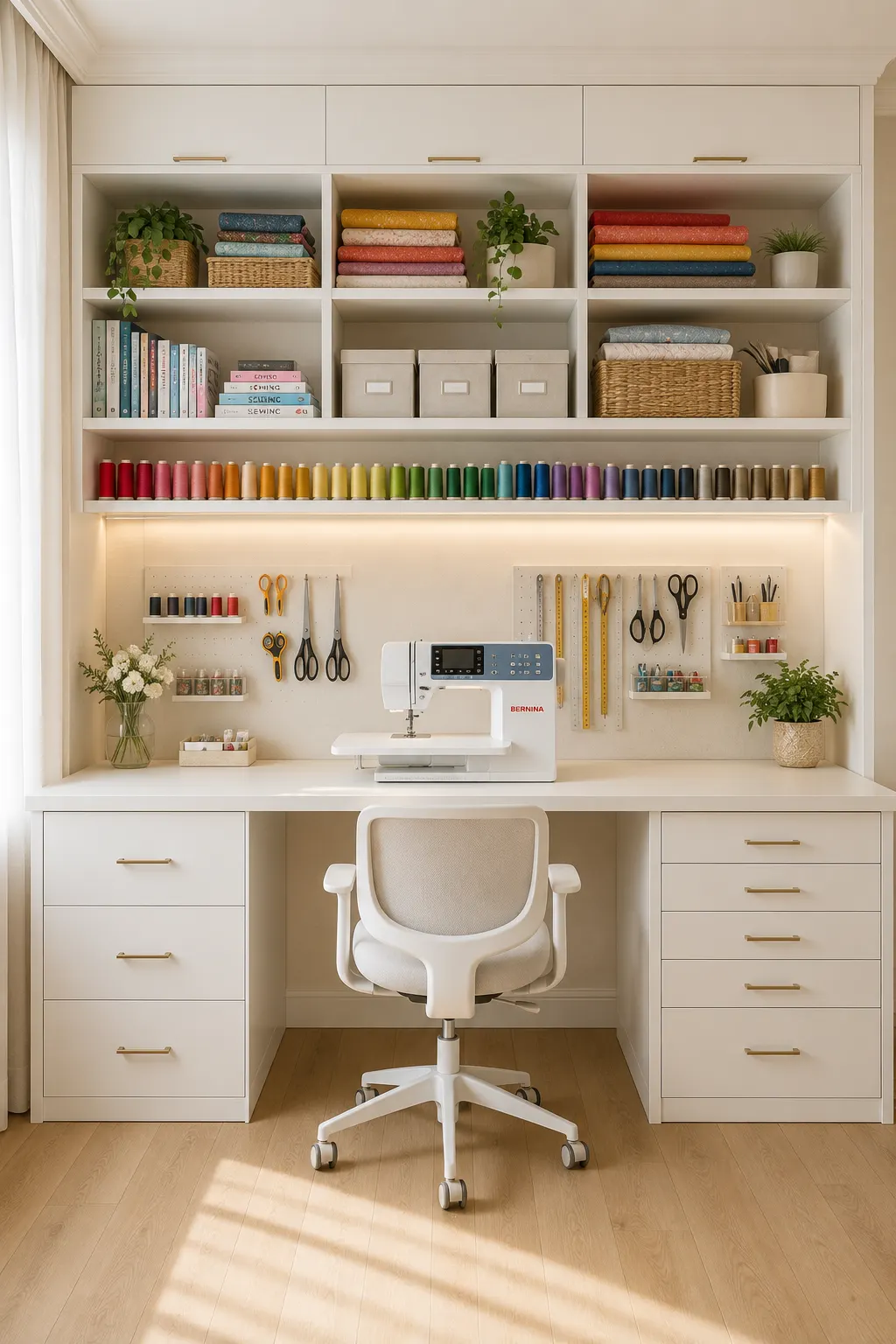
A wall to wall sewing station instantly makes a small sewing room feel more functional by creating one continuous workspace for every task. As shown here, the full width desk offers plenty of room for a sewing machine while leaving enough surface for cutting fabric, organizing patterns, and working on projects without feeling crowded. This type of layout also gives the room a clean, custom built appearance that looks far more expensive than a standard desk.
The built in drawers below the countertop provide dedicated storage for thread, sewing tools, rulers, patterns, and other everyday essentials. Above the workstation, open shelving keeps colorful fabrics, storage baskets, and sewing books neatly displayed while making everything easy to reach. Adding a pegboard behind the sewing machine is another practical touch because frequently used tools stay visible instead of getting lost inside drawers.
Good lighting and thoughtful organization make this workspace even more enjoyable to use. Under shelf LED lighting brightens the entire work area, while decorative plants and neatly arranged supplies give the room warmth without creating clutter. Keeping similar items grouped together helps maintain an organized sewing space that stays efficient no matter how often you use it.
Pro Tip: Reserve the top shelves for fabrics and seasonal supplies you use less often, while keeping everyday sewing tools and thread at eye level for faster and more comfortable workflow.
2. Organize Your Sewing Room with a Functional Pegboard Wall
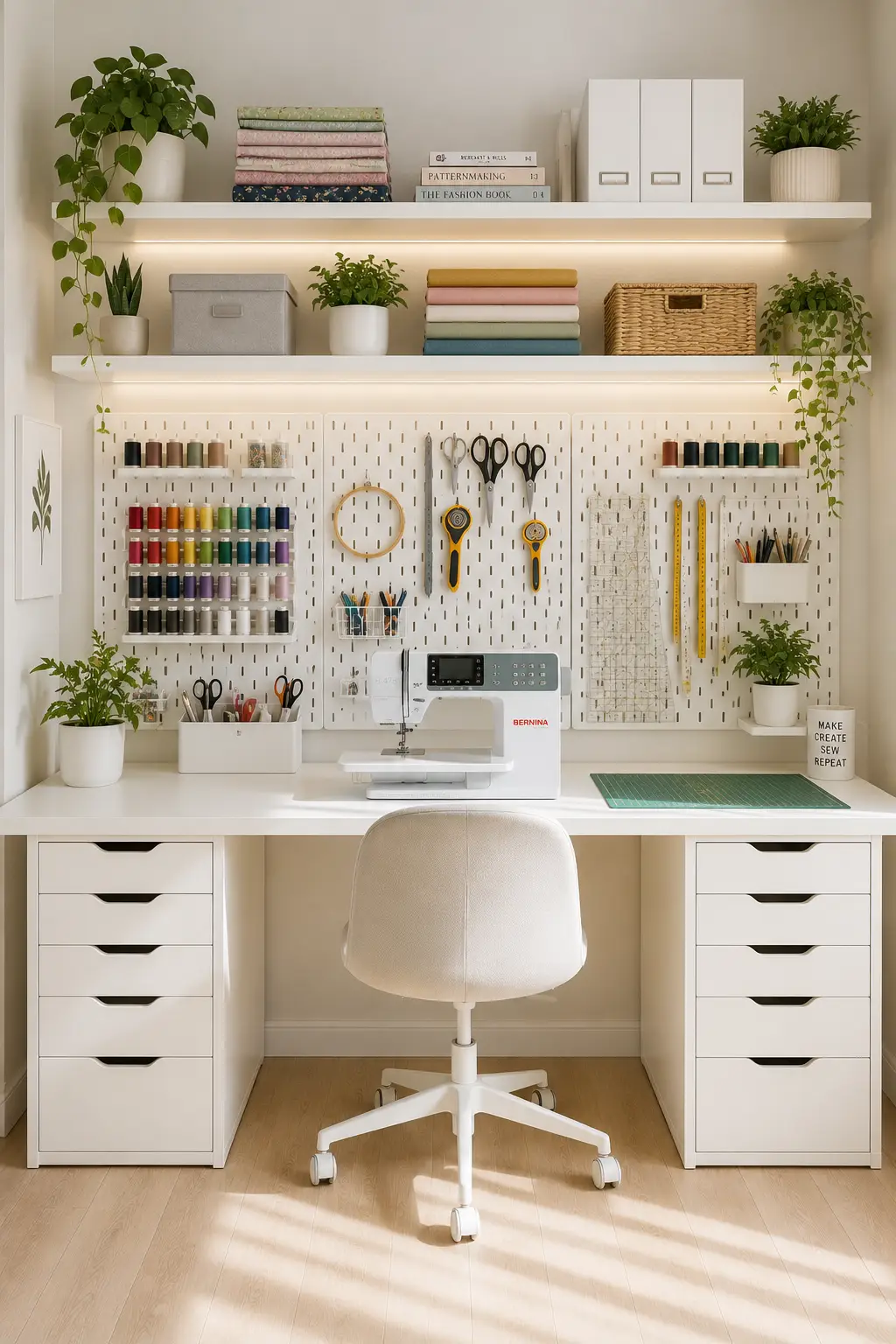
A pegboard wall is one of the smartest upgrades for a small sewing room because it transforms empty wall space into practical storage. In this setup, the pegboards keep scissors, rulers, rotary cutters, thread, and everyday sewing tools neatly arranged while leaving the desktop clear for projects. Having everything displayed in plain sight also makes it much easier to find what you need without searching through drawers.
Floating shelves above the workstation provide additional storage without making the room feel crowded. Folded fabrics, labeled boxes, woven baskets, and decorative plants add both function and style, creating a workspace that feels organized and welcoming. The under shelf lighting brightens the entire station, making detailed sewing tasks more comfortable while giving the room a polished custom look.
Pairing a spacious desk with drawer units on both sides creates plenty of hidden storage for patterns, fabric scraps, and sewing accessories. This balanced layout keeps the room looking tidy while maximizing every inch of available space. The combination of open organization and concealed storage is ideal for maintaining a clean sewing area that stays efficient for daily use.
Pro Tip: Arrange your pegboard by grouping similar tools together, such as cutting supplies, measuring tools, and thread, so every item has a dedicated place and is always within easy reach.
3. Design a Stylish Thread Display Wall That Doubles as Décor
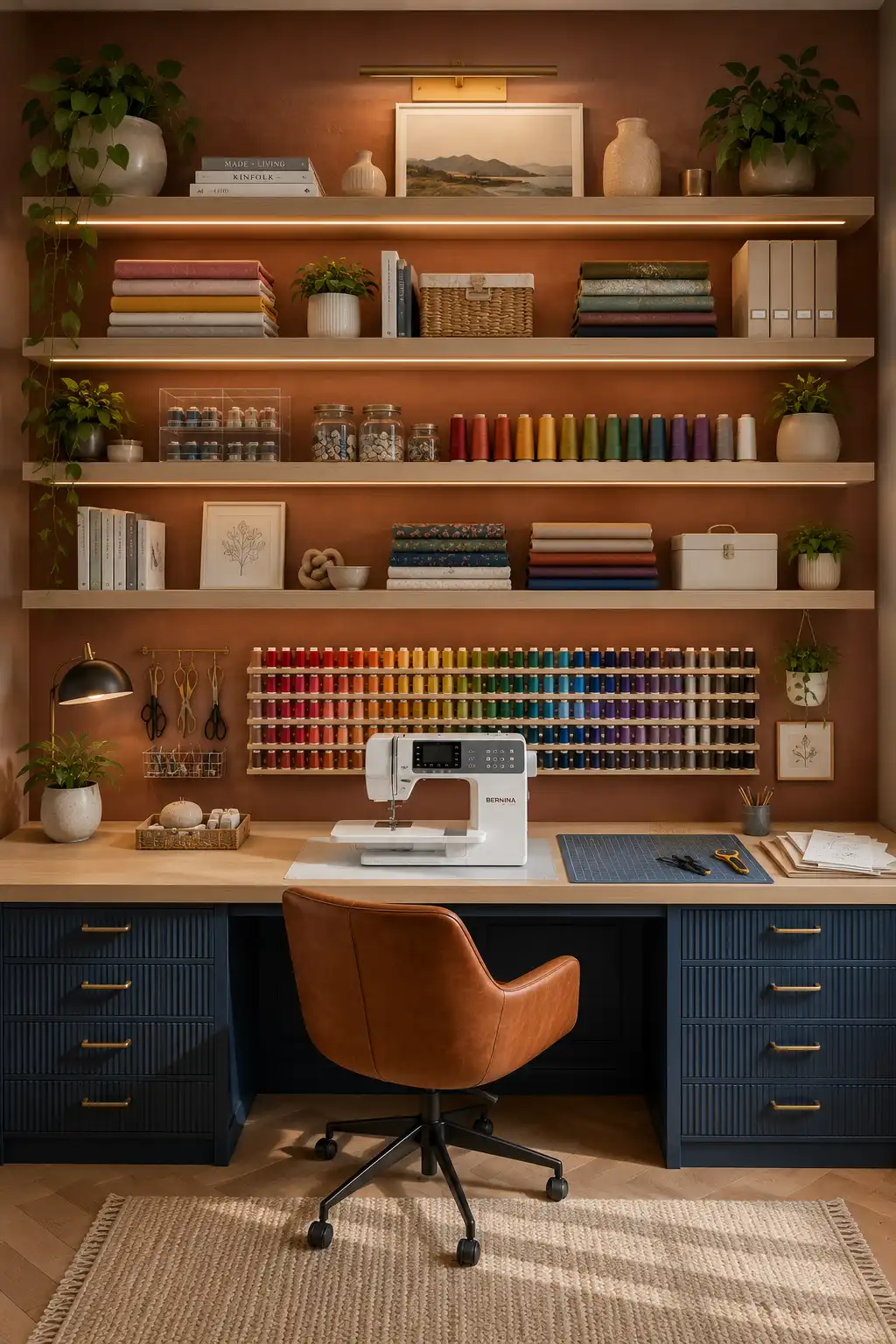
A dedicated thread display wall is a simple way to make a small sewing room feel both organized and visually impressive. In this workspace, hundreds of colorful thread spools are arranged in neat rows behind the sewing machine, turning everyday supplies into a decorative feature. Keeping thread visible also makes it much easier to choose the right color without searching through boxes or drawers.
Floating shelves above the workstation provide generous storage for folded fabrics, sewing books, storage boxes, and decorative accessories while maintaining an open, airy feel. The warm terracotta wall, soft LED shelf lighting, and navy blue cabinetry create a rich color palette that adds depth and character to the room. These layered design elements help transform a practical workspace into a studio that feels warm and inviting.
The spacious countertop leaves plenty of room for sewing, pattern tracing, and fabric preparation, while the deep drawer units keep less frequently used supplies neatly hidden. Adding comfortable seating and thoughtful lighting completes a workspace that is both highly functional and beautiful enough to enjoy every day. The result is a sewing room that blends smart organization with high end interior style.
Pro Tip: Mount your thread rack directly behind or beside your sewing machine so you can quickly compare colors and grab the right spool without interrupting your workflow.
4. Add a Rolling Storage Cart for Flexible Organization
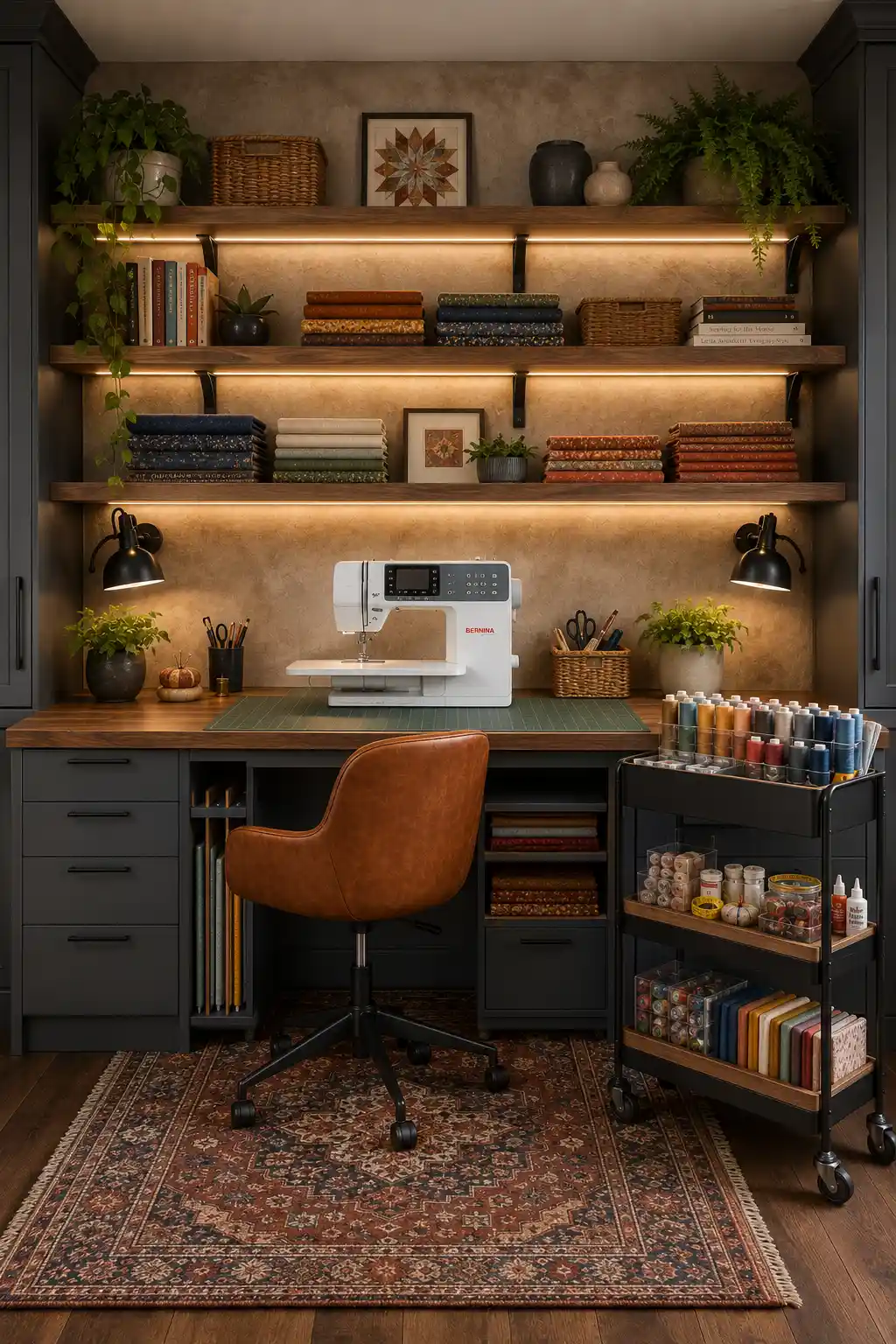
A rolling storage cart is a practical addition to any small sewing room because it provides extra storage without taking up permanent workspace. In this setup, the cart keeps thread, sewing notions, fabric clips, and frequently used supplies neatly organized beside the desk, making them easy to access while working. Since it can be moved wherever it is needed, it also adds flexibility to your sewing routine without creating clutter.
The workstation combines dark cabinetry with warm wood shelves to create a cozy and sophisticated atmosphere. Open shelving displays folded fabrics, baskets, books, and decorative accents while keeping everything within reach. Under shelf LED lighting and adjustable task lamps brighten the workspace, making detailed sewing projects more comfortable and giving the room a polished custom built appearance.
The built in desk offers plenty of room for sewing, cutting patterns, and preparing fabric, while the lower cabinets provide hidden storage for larger supplies. Together with the mobile storage cart, the layout keeps every essential item organized without overcrowding the room. This combination is ideal for anyone who wants a workspace that feels efficient, stylish, and easy to maintain.
Pro Tip: Store your most frequently used tools and thread on the top shelf of the rolling cart, and place heavier supplies on the lower shelves to keep the cart stable and easy to move around your sewing room.
5. Maximize Vertical Storage with Floating Shelves
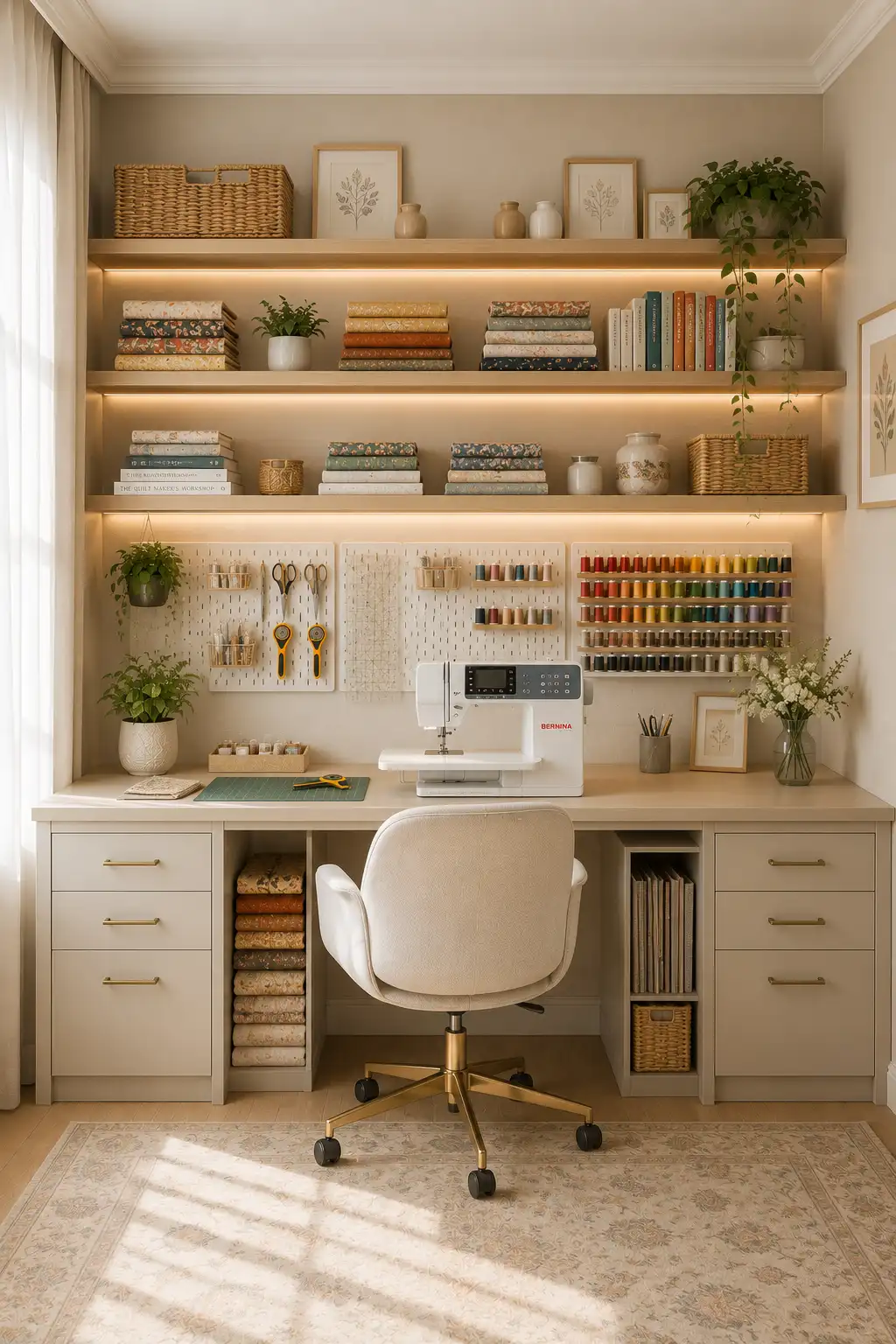
Making use of vertical wall space is one of the easiest ways to keep a small sewing room organized without sacrificing valuable floor space. This workspace uses long floating shelves to store folded fabrics, sewing books, baskets, decorative accessories, and plants, creating a clean and balanced look. By moving storage upward, the desk stays clear for sewing projects while the room feels more open and spacious.
The combination of floating shelves, pegboards, and a dedicated thread rack keeps every essential supply within easy reach. Frequently used tools are displayed neatly on the wall, while fabrics are stacked by color and size for quick access. Warm LED strip lighting beneath each shelf adds depth to the room, highlights the storage displays, and creates a cozy atmosphere that makes the workspace feel both inviting and highly functional.
The built in desk with drawer storage offers plenty of room for sewing, pattern making, and fabric cutting without feeling crowded. Soft neutral cabinetry paired with natural wood finishes gives the room a timeless look that works with almost any decorating style. Together, the thoughtful storage solutions and warm lighting create a sewing room that is practical enough for everyday use while still looking polished and professionally designed.
Pro Tip: Keep your most frequently used fabrics on the lower shelves and place decorative baskets or seasonal supplies on the highest shelves to maintain a workspace that is both organized and easy to access.
6. Include a Multi Functional Cutting Table with Built In Storage
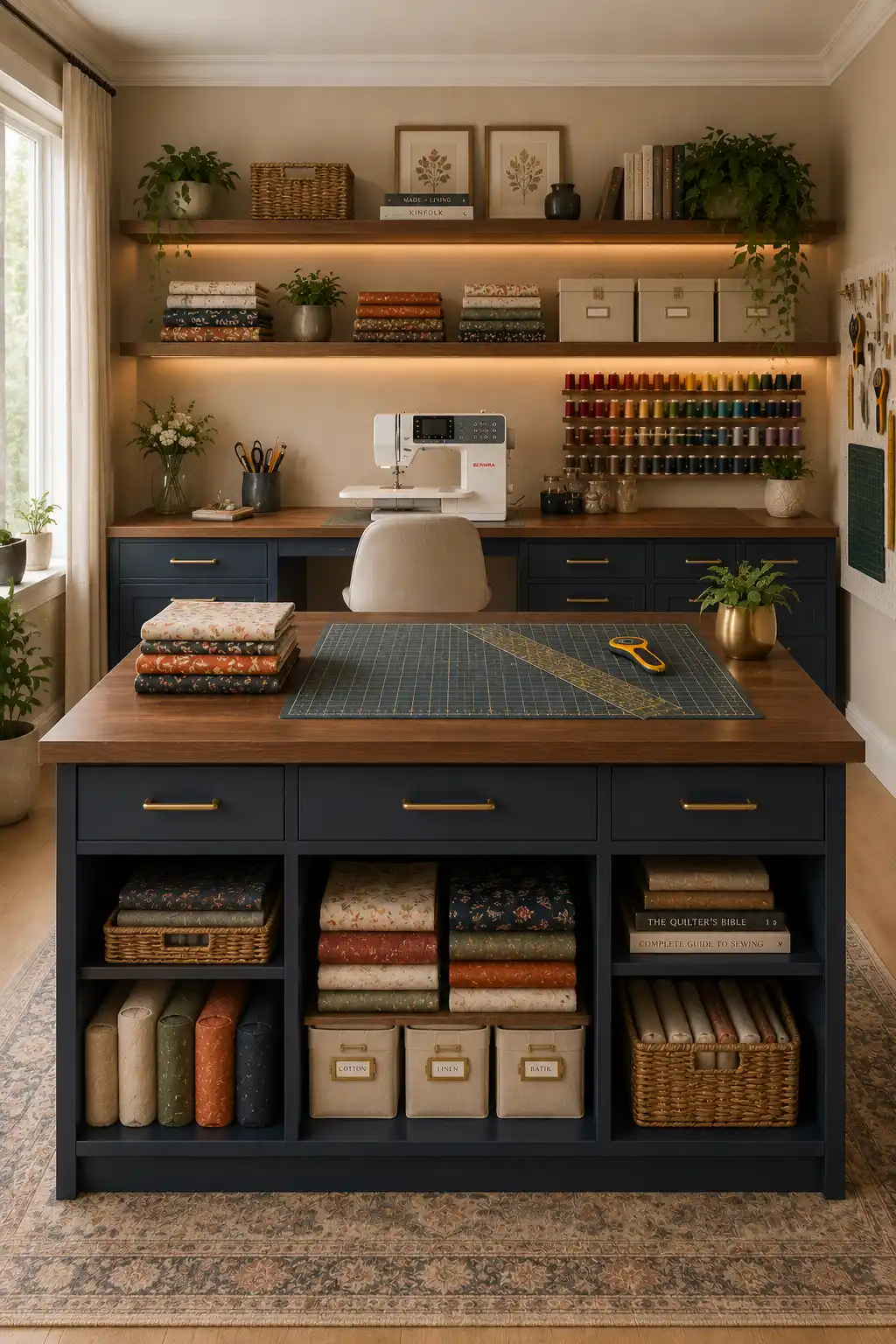
A dedicated cutting table can completely transform a small sewing room by giving you a spacious surface for measuring, cutting, and preparing fabric while adding valuable storage underneath. In this design, the central island becomes the heart of the workspace, offering easy access from every side and making larger sewing projects much more comfortable to handle. It also helps separate cutting tasks from the main sewing station, keeping the workflow organized and efficient.
The built in cubbies, drawers, and storage bins beneath the island make excellent use of every inch of space. Folded fabrics, fabric rolls, baskets, and labeled containers are neatly organized so supplies stay visible and easy to access without cluttering the room. Combined with the surrounding workstation, floating shelves, and wall mounted thread rack, the entire space feels thoughtfully planned and highly functional.
Dark navy cabinetry paired with rich walnut countertops creates a timeless, high end look that adds warmth and character to the room. Soft LED shelf lighting, decorative plants, and brass hardware complete the design, making the sewing room feel welcoming while maintaining a clean and professional appearance. This combination of style and storage is perfect for anyone working in a compact creative space.
Pro Tip: Choose a cutting island with open shelving on at least one side so your most frequently used fabrics, rulers, and cutting mats remain easy to grab while you work.
Also Read: 12 Smart Entrance Hall Ideas That Blend Style and Function
7. Keep Every Supply Organized with Labeled Storage Solutions
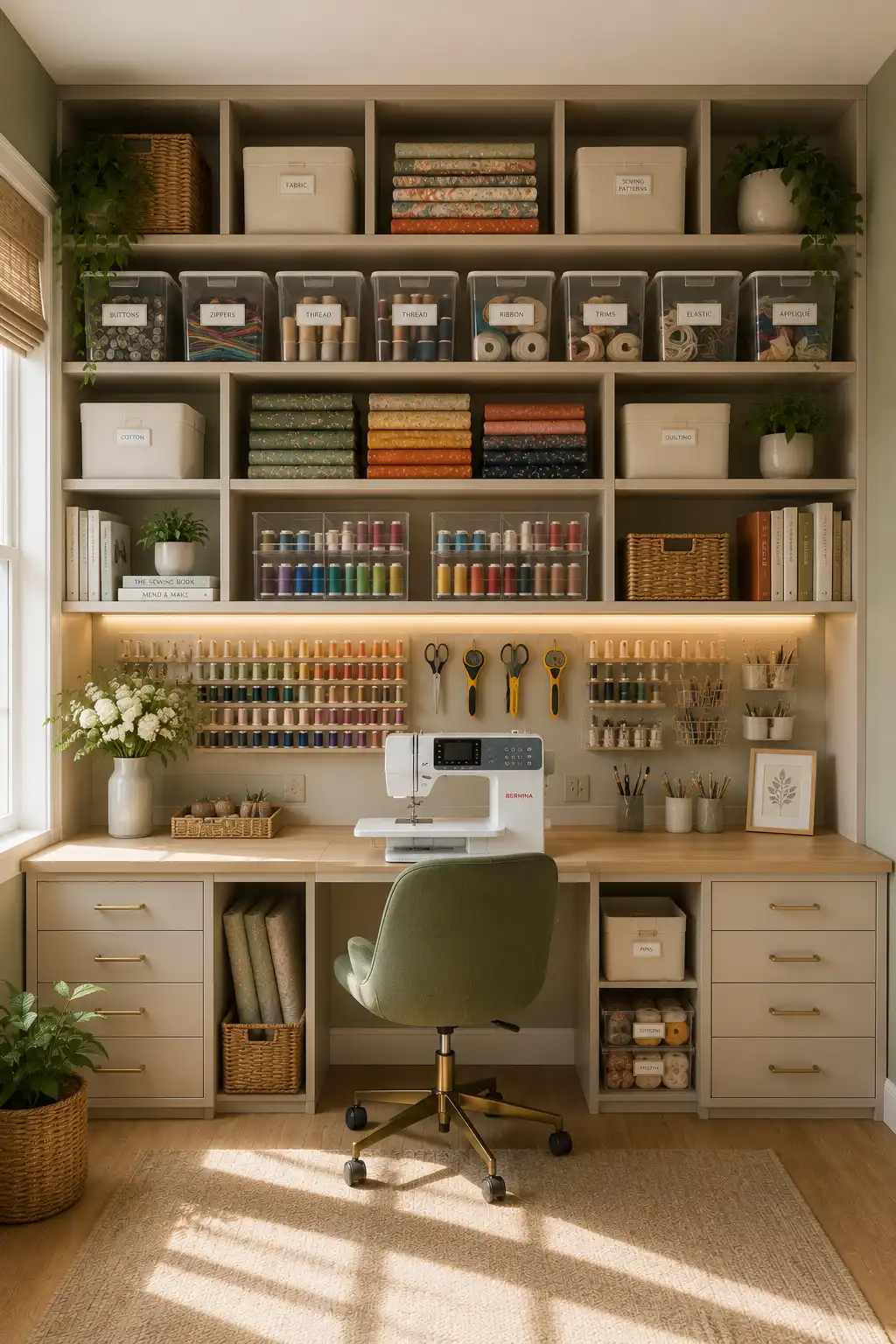
A well organized sewing room becomes much easier to use when every supply has a designated place. This workspace makes excellent use of labeled storage bins, clear containers, and open shelving to organize thread, buttons, ribbons, trims, elastic, fabric, and sewing patterns. Keeping everything sorted by category not only saves time during projects but also prevents clutter from building up on the work surface.
Floor to ceiling shelving provides impressive storage while making the room feel clean and intentional rather than overcrowded. Clear containers allow you to see supplies at a glance, while folded fabrics are neatly arranged by color for a polished display. The dedicated thread racks, wall organizers, and drawer storage ensure that frequently used tools remain close to the sewing machine, creating an efficient workspace that supports every stage of the sewing process.
The soft neutral cabinetry, warm wood countertop, and natural daylight create a bright and welcoming atmosphere that feels both stylish and practical. Decorative baskets, indoor plants, and subtle lighting add warmth without distracting from the organized layout. This thoughtful combination of smart storage and elegant design proves that even a compact sewing room can feel spacious, functional, and beautifully put together.
Pro Tip: Use clear labeled bins for small sewing notions like buttons, zippers, trims, and elastic so you can quickly find exactly what you need without opening multiple containers.
8. Create a Hidden Closet Sewing Room That Saves Space
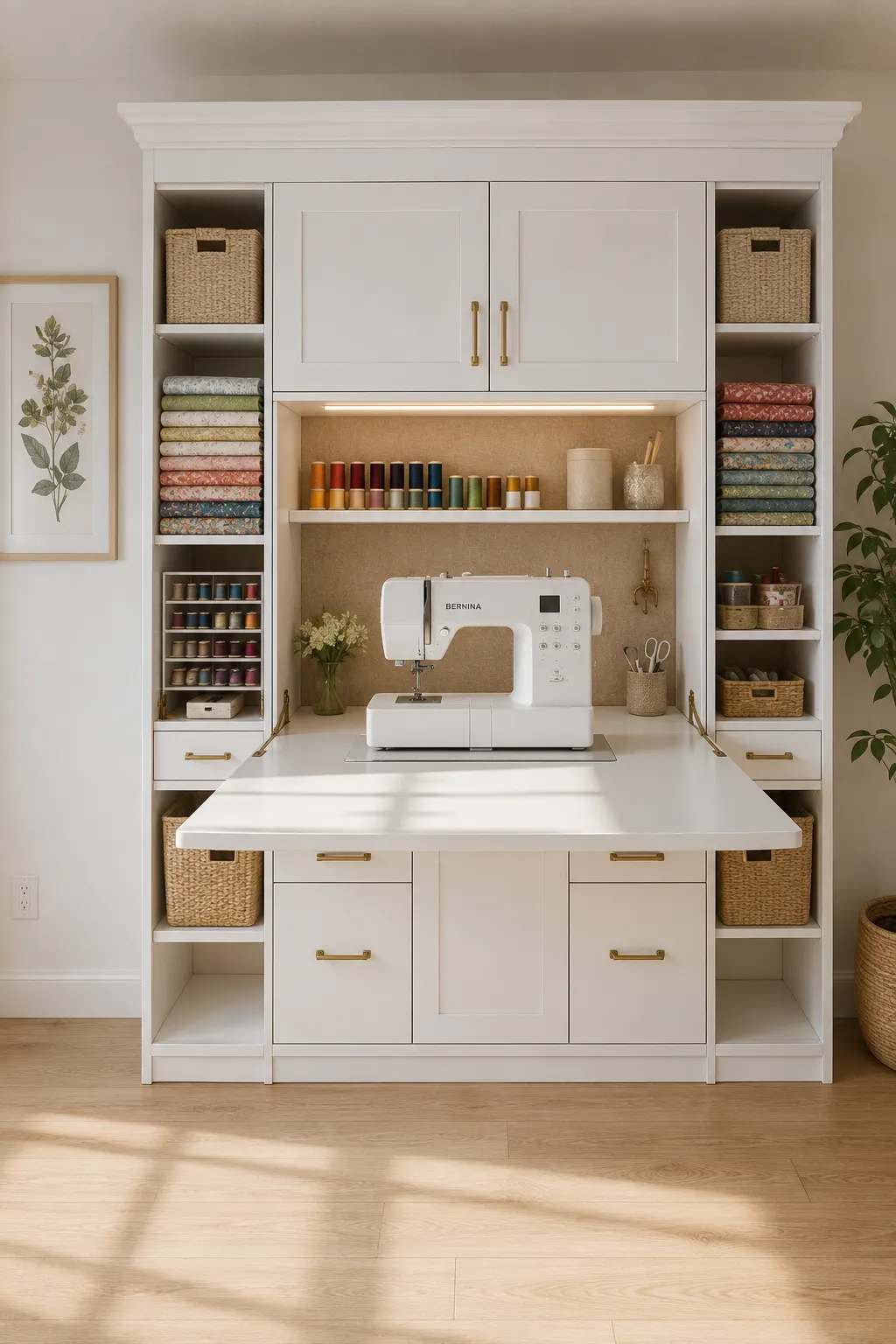
Transforming a closet into a dedicated sewing station is one of the smartest ways to create a functional workspace without giving up an entire room. This design combines a fold out work surface with built in cabinets, open shelving, and drawer storage to keep everything neatly organized behind a single unit. When the workspace is not in use, it can be folded away to maintain a clean and uncluttered appearance, making it perfect for smaller homes and multipurpose rooms.
The tall side shelves provide generous storage for folded fabrics, thread, baskets, and sewing essentials while making excellent use of vertical space. Upper cabinets keep seasonal supplies and larger items tucked out of sight, while the open shelf above the sewing machine displays frequently used thread within easy reach. Soft under cabinet lighting brightens the workspace and creates a comfortable environment for detailed sewing projects throughout the day.
The neutral cabinetry, brass hardware, and natural wood flooring give the sewing station a timeless look that blends seamlessly with the rest of the home. Every section of the cabinet has a clear purpose, allowing the room to stay organized without feeling crowded. This custom style setup proves that even a compact closet can become a beautiful and highly productive sewing studio.
Pro Tip: Choose a fold out work surface that locks securely in place so you have extra room for cutting fabric and assembling projects while still being able to tuck everything away when you are finished.
9. Turn a Pegboard Wall into a Complete Sewing Organization Center
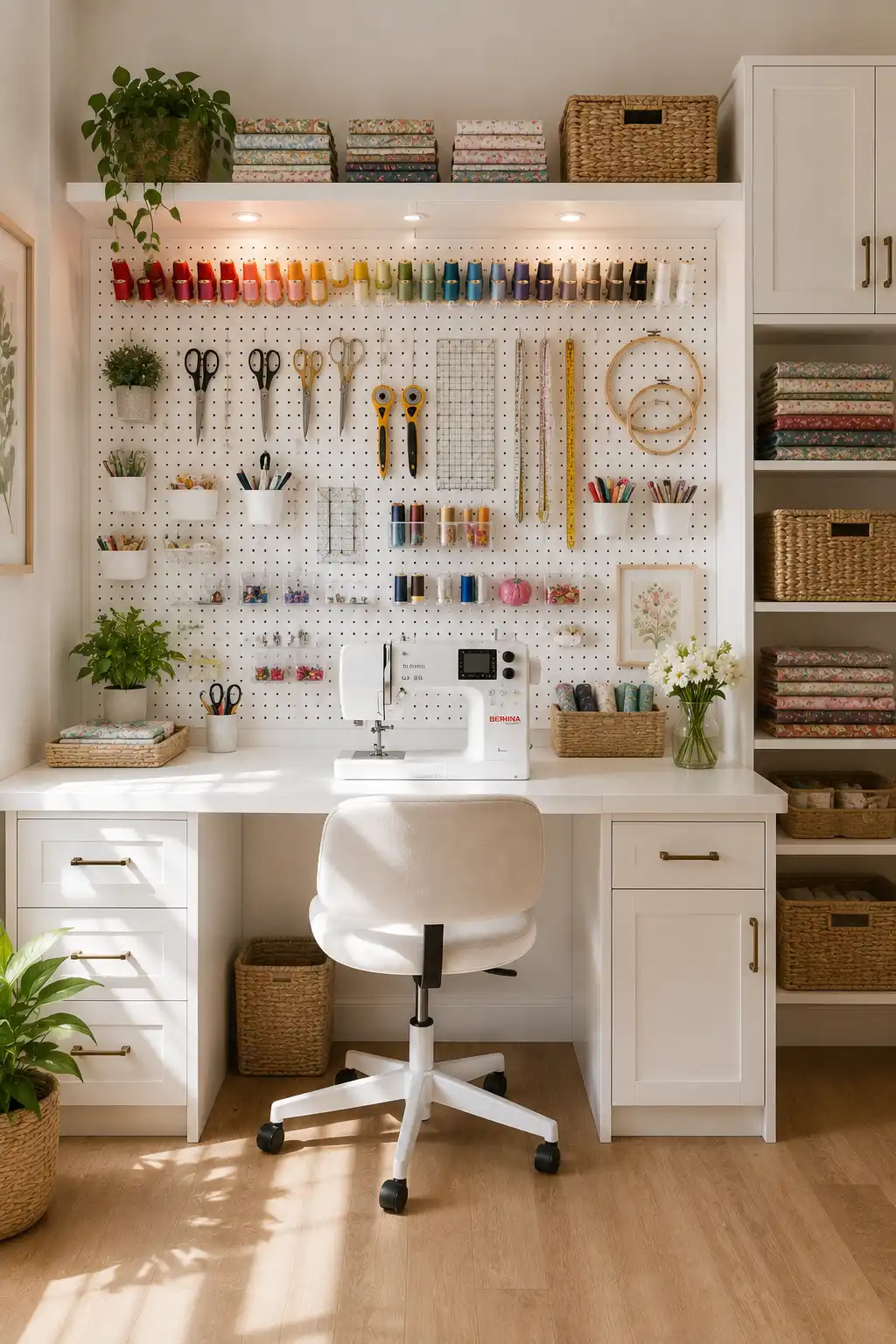
A full pegboard wall is one of the most effective ways to organize a small sewing room while keeping your workspace clean and efficient. In this setup, thread spools, scissors, rotary cutters, rulers, embroidery hoops, and everyday sewing tools are neatly displayed across the wall, making every essential item easy to find. Instead of filling drawers with frequently used supplies, everything remains visible and within arm’s reach, helping you work faster and stay organized.
The surrounding cabinetry and open shelving provide even more storage for folded fabrics, woven baskets, and sewing materials without making the room feel crowded. Small storage cups and clear containers keep pins, clips, bobbins, and other tiny notions neatly sorted, while the floating shelf above the pegboard adds decorative storage for plants and fabric stacks. The bright white cabinetry combined with natural wood flooring creates a fresh and timeless look that makes the room feel larger and more inviting.
Task lighting above the pegboard ensures the entire workstation stays bright for detailed sewing projects, while the spacious desktop provides enough room for sewing, cutting, and assembling fabric. By combining wall organization with hidden cabinet storage, this sewing room achieves the perfect balance between beauty and functionality. It is an excellent example of how thoughtful planning can maximize every inch of a compact creative space.
Pro Tip: Leave a few empty hooks on your pegboard so you can easily rearrange tools or add new supplies as your sewing collection grows without reorganizing the entire wall.
10. Store Fabric Vertically for a Beautiful and Organized Display
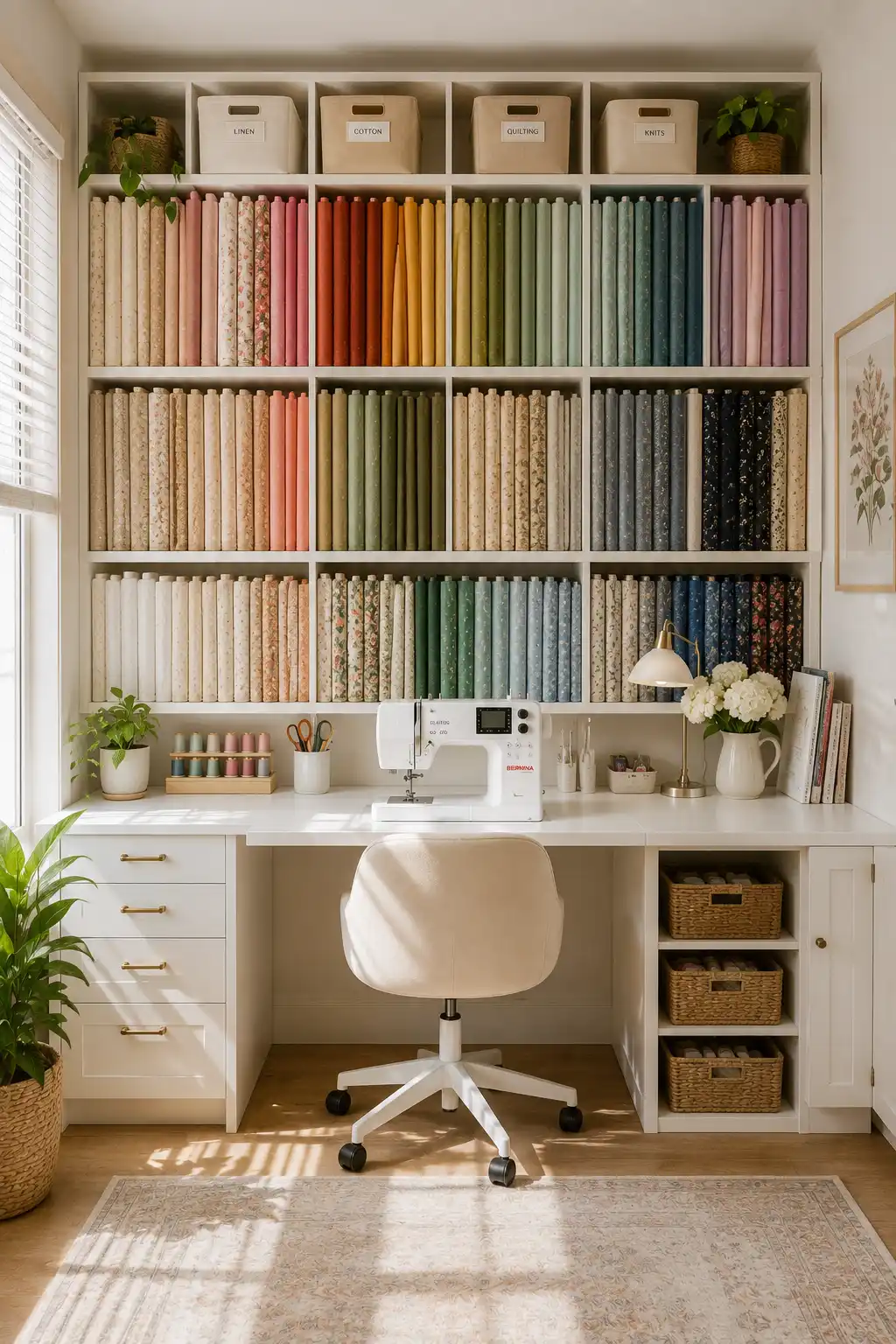
Storing fabric vertically is one of the simplest ways to maximize storage while giving a small sewing room a polished, boutique inspired look. Instead of stacking fabric in uneven piles, this setup arranges every piece upright like books on a shelf, making each color and pattern easy to see at a glance. It also prevents fabrics from becoming wrinkled or buried beneath larger stacks, saving time whenever you start a new project.
The floor to ceiling shelving transforms an entire wall into dedicated fabric storage while leaving the work surface completely clear. Organizing fabrics by color family creates a beautiful visual display and makes it much easier to coordinate materials for quilting, garment sewing, or home décor projects. The labeled storage bins above the shelves provide additional space for specialty fabrics, seasonal materials, and sewing supplies that are not used every day.
The compact workstation below blends seamlessly into the storage wall, creating a clean and efficient layout that feels custom built. Soft natural light, neutral cabinetry, decorative baskets, and a simple desk lamp add warmth without distracting from the organized design. This thoughtful arrangement proves that smart storage can become one of the most attractive features in a sewing room while making everyday projects more enjoyable.
Pro Tip: Fold all fabrics to the same height before storing them vertically so every shelf looks neat, stays organized, and makes it easier to find the exact fabric you need in seconds.
11. Make the Most of Every Corner with an L Shaped Sewing Station
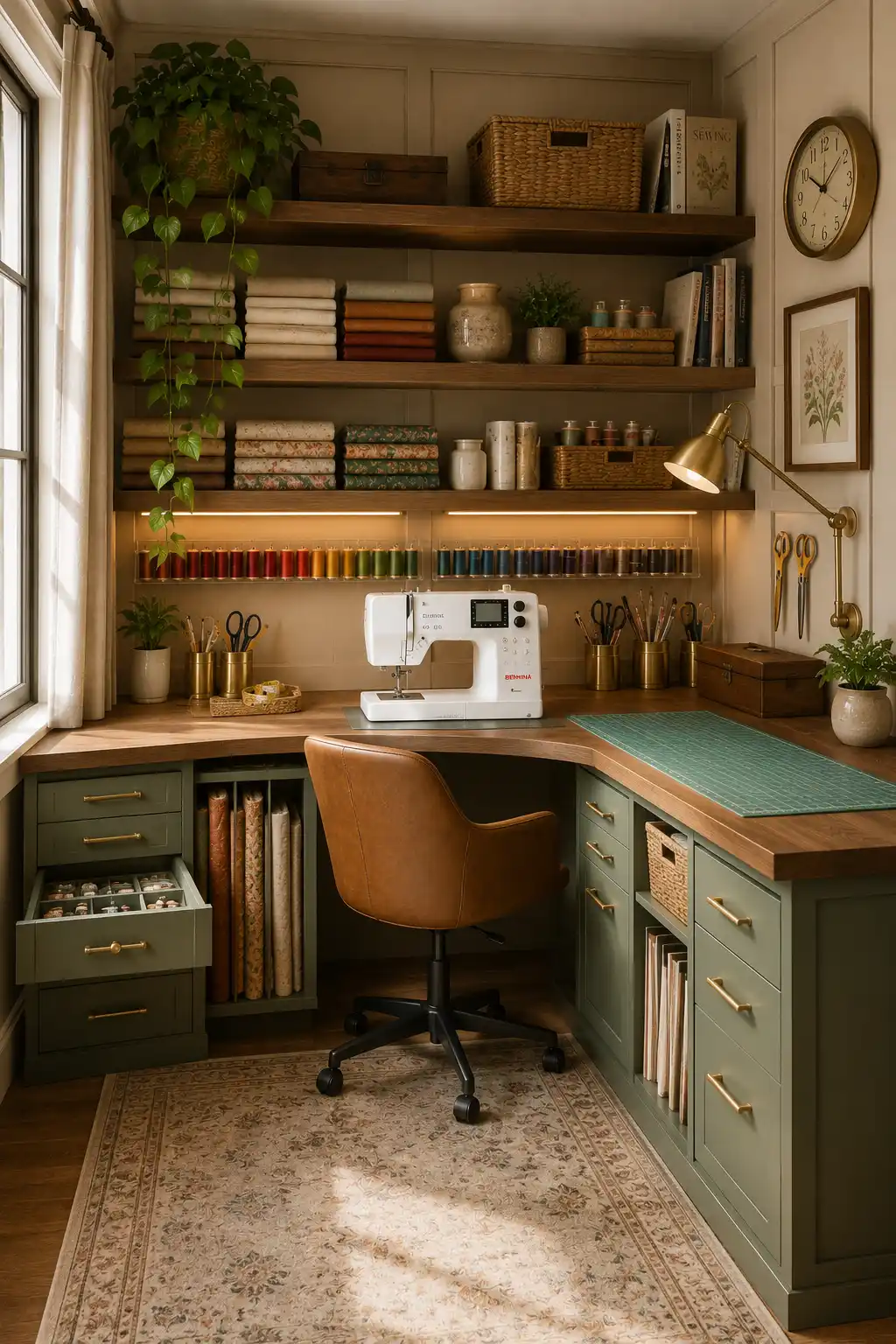
An L shaped sewing station is a smart choice for small sewing rooms because it makes excellent use of corner space while creating separate areas for different tasks. In this design, one side of the desk is dedicated to the sewing machine while the larger countertop provides plenty of room for cutting fabric, tracing patterns, and organizing materials. The layout keeps everything within easy reach, making it easier to move from one project step to the next without feeling cramped.
Open floating shelves above the workstation provide generous storage for folded fabrics, baskets, books, and decorative accents while keeping the room feeling open and inviting. Built in drawers, vertical storage for fabric rolls, and dedicated compartments for patterns help keep supplies neatly organized and out of sight. Warm LED shelf lighting, brass task lamps, and natural daylight from the nearby window create a bright workspace that is both comfortable and inspiring throughout the day.
The combination of sage green cabinetry, rich walnut countertops, and warm neutral walls gives this sewing room a timeless, custom built appearance. Decorative plants, framed artwork, and coordinated storage containers add personality without creating visual clutter. Every element has been thoughtfully placed to maximize both storage and functionality, proving that even a compact corner can become a beautiful and highly productive sewing studio.
Pro Tip: Design your L shaped workstation so your sewing machine and cutting surface sit on separate sides of the desk, allowing you to switch between tasks quickly without constantly moving supplies around.
12. Convert a Storage Closet into a Fully Functional Sewing Studio
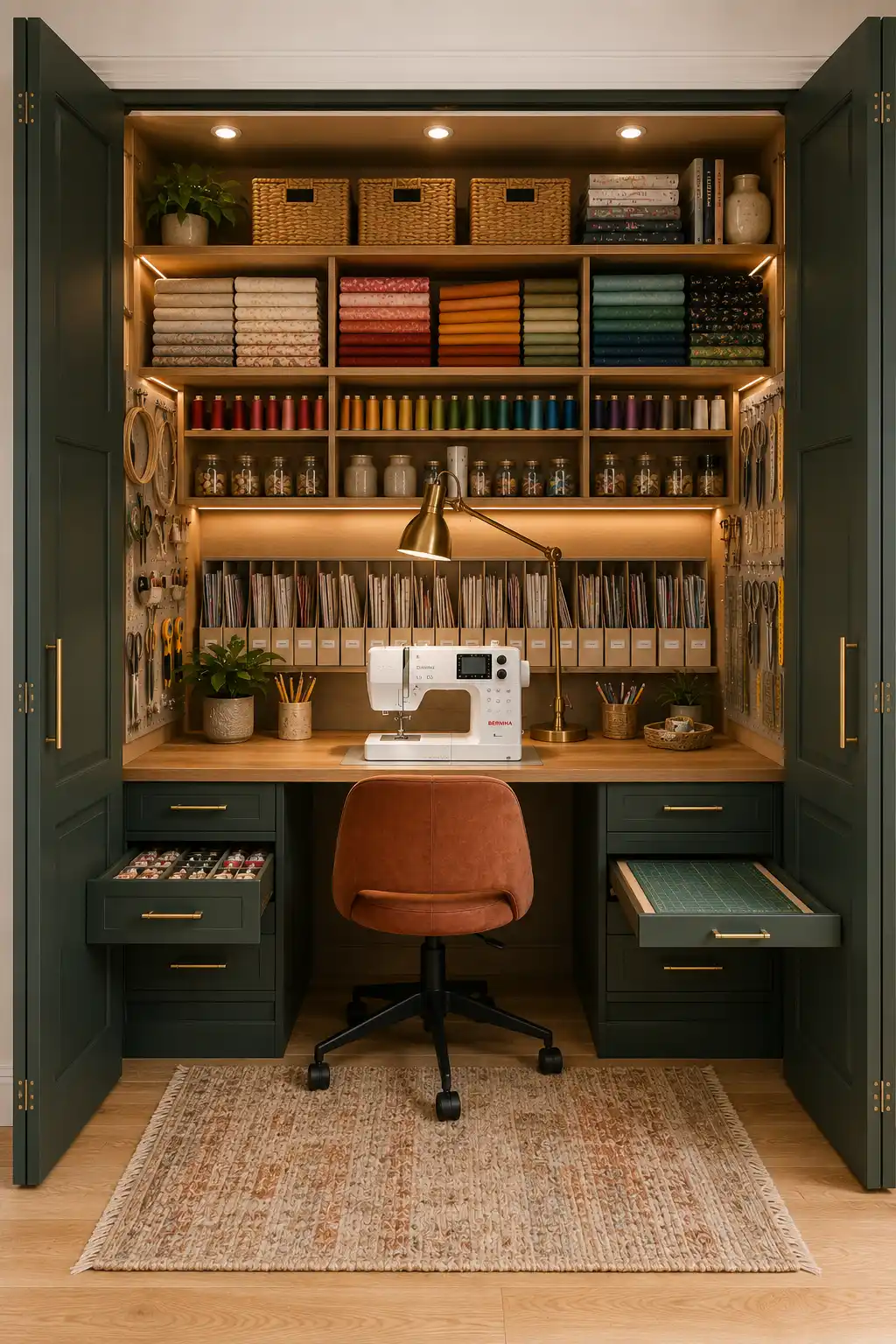
Turning a storage closet into a dedicated sewing studio is a brilliant solution when you have limited space but still want a well organized creative area. This custom built setup makes full use of every inch with built in shelving, drawers, and a spacious work surface, allowing all of your sewing essentials to stay in one place. The large cabinet doors can be closed when you’re finished, instantly hiding the workspace and keeping the room looking neat and uncluttered.
Inside the cabinet, carefully planned storage keeps fabrics, thread, patterns, tools, and sewing notions beautifully organized. Open shelves display folded fabric by color, while labeled files, glass jars, and drawer organizers ensure that smaller supplies are always easy to find. Integrated pegboards on the cabinet doors provide additional space for scissors, rulers, embroidery hoops, and other frequently used tools, making the most of areas that often go unused.
Warm LED lighting, rich wood shelving, and deep green cabinetry give this compact sewing studio a sophisticated custom built appearance. The comfortable chair, spacious desktop, and dedicated task lighting create an inviting workspace that feels much larger than its footprint. This design proves that with thoughtful planning, even a simple closet can become a stylish and highly productive sewing room.
Pro Tip: Install lighting that turns on automatically when the cabinet doors open so your entire workspace is instantly illuminated and ready for sewing without needing extra lamps or switches.
13. Showcase Colorful Thread Storage as a Decorative Feature.
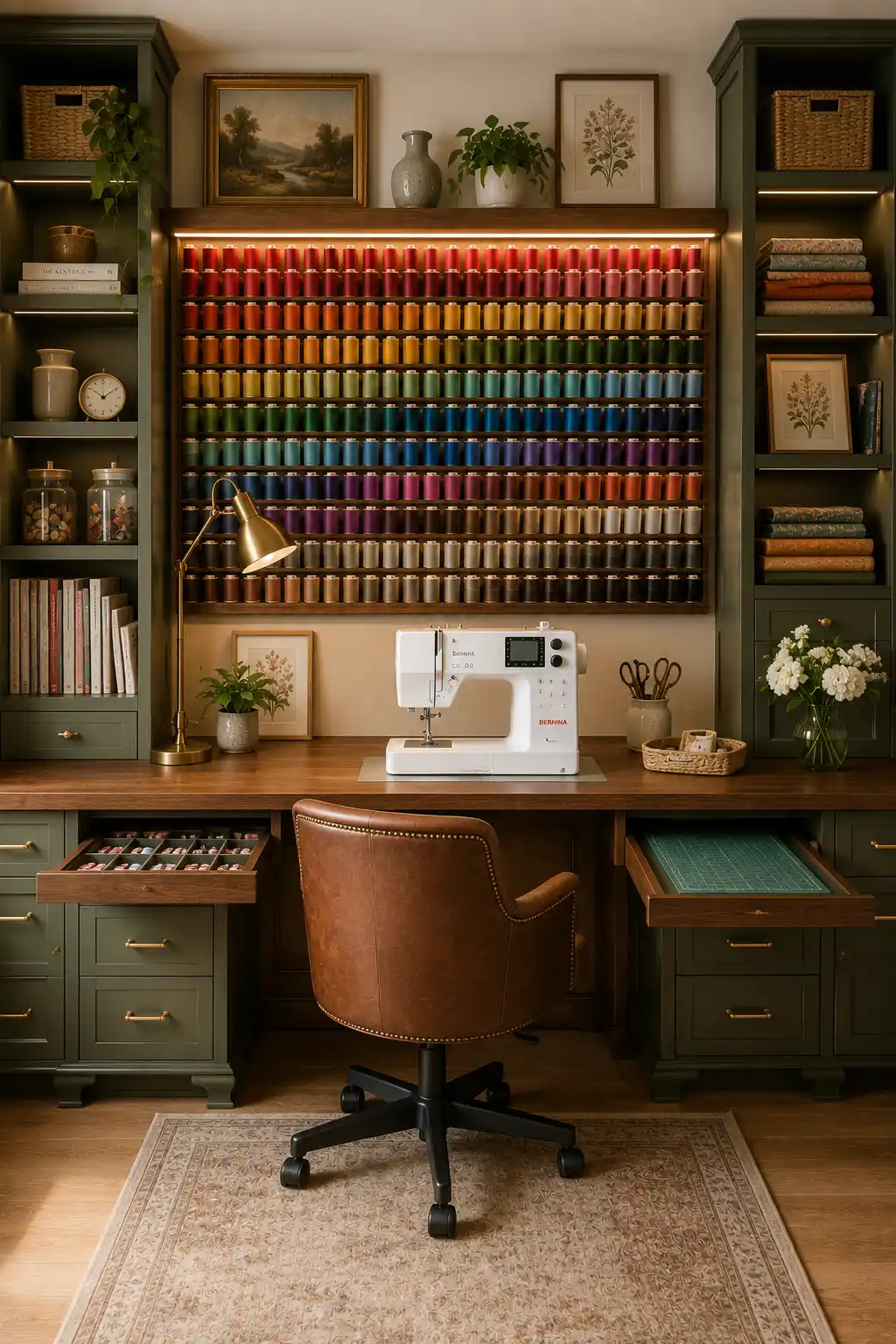
A dedicated thread display can do much more than keep your sewing supplies organized. In this beautifully designed workspace, hundreds of thread spools are arranged in a color gradient, transforming a simple storage solution into the room’s main focal point. Keeping thread visible also makes it easier to compare shades and quickly choose the right color for every project without searching through drawers or storage boxes.
The custom cabinetry on both sides of the workstation provides generous storage for fabrics, sewing books, tools, and decorative accessories while framing the thread display perfectly. Pull out trays keep sewing notions and cutting mats neatly hidden but easily accessible whenever needed. The rich olive green cabinetry, warm walnut countertop, brass accents, and soft task lighting create a sophisticated atmosphere that feels more like a luxury studio than a traditional craft room.
Every detail in this sewing room is designed to balance beauty with functionality. Decorative artwork, fresh flowers, indoor plants, and carefully styled shelving soften the space while maintaining a highly organized layout. The result is a sewing room that feels inspiring, practical, and elegant enough to spend hours creating quilts, garments, or handmade home décor projects.
Pro Tip: Arrange thread spools in color order from warm to cool tones or by brand to create a display that is both visually striking and much easier to navigate during sewing projects.
14. Brighten Your Sewing Room with Layered Task Lighting
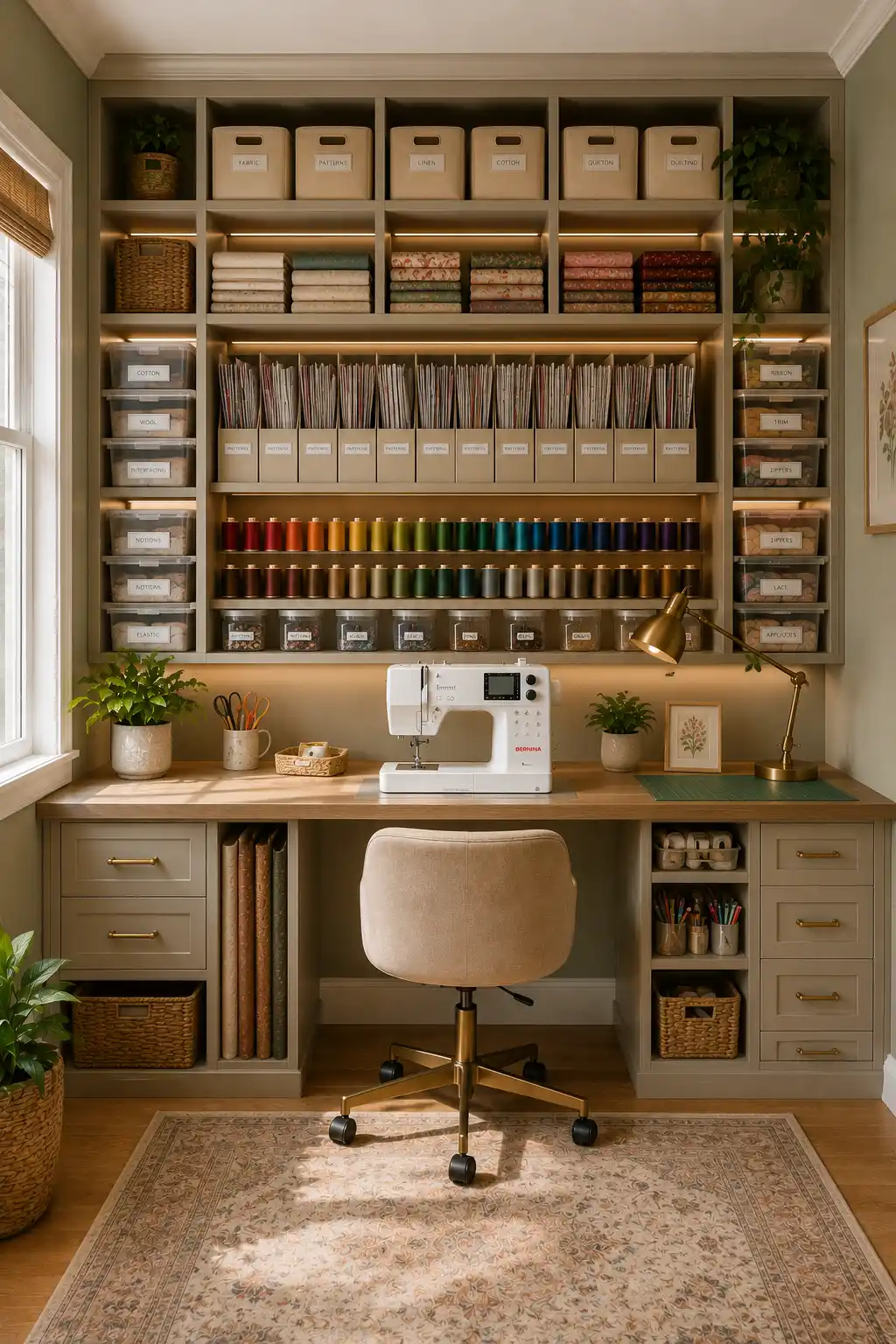
Good lighting can completely change how a small sewing room looks and functions. In this beautifully organized workspace, layered lighting combines under shelf LED strips, a focused task lamp, and natural daylight to eliminate shadows and create a bright, comfortable environment for sewing. Proper illumination makes it easier to see fabric colors, thread details, and precise stitching while also making the entire room feel larger and more inviting.
The custom storage wall is thoughtfully designed with labeled bins, pattern organizers, thread racks, and open shelving that keep every supply neatly arranged and easy to reach. Folded fabrics are grouped together on illuminated shelves, while clear containers make it simple to locate small notions without searching through multiple drawers. This organized layout allows the workspace to remain tidy even when working on larger sewing projects.
Soft neutral cabinetry, brass accents, and warm wood finishes give the room a timeless appearance that feels both elegant and practical. Decorative plants, woven baskets, and carefully styled accessories add warmth without creating unnecessary clutter. Together with the layered lighting, these design choices create a sewing room that feels bright, organized, and inspiring enough to enjoy every day.
Pro Tip: Combine natural daylight with adjustable task lighting positioned directly above your sewing machine to reduce eye strain and achieve better visibility for detailed stitching and fabric matching.
Conclusion
Creating a beautiful sewing room does not require a large space. With thoughtful planning, smart storage, and furniture that serves multiple purposes, even the smallest room can become an organized and inspiring place to sew. Features like pegboard walls, vertical shelving, built in workstations, labeled storage, and dedicated cutting areas help maximize every inch while keeping essential supplies within easy reach.
Whether you are setting up a compact sewing corner, converting a closet into a craft studio, or redesigning an entire room, these small sewing room ideas can help you create a workspace that is both functional and stylish. By choosing storage solutions that fit your needs and adding comfortable lighting and personalized décor, you can enjoy a sewing room that keeps you organized, boosts creativity, and makes every project more enjoyable.
